Domain 3: Information Security Program
Arrow keys or space to move, F for full screen. Read the notes
Information Security Program
38 topics · Program foundations · Assets and architecture · Frameworks and policies · Metrics · Controls · Awareness and training · External services · Communication and improvement
D3The Security Program: Charter, Scope and Objectives
What an information security program is, how it delivers the strategy, and how a charter gives it a clear mandate, scope, authority and objectives.
From strategy to program
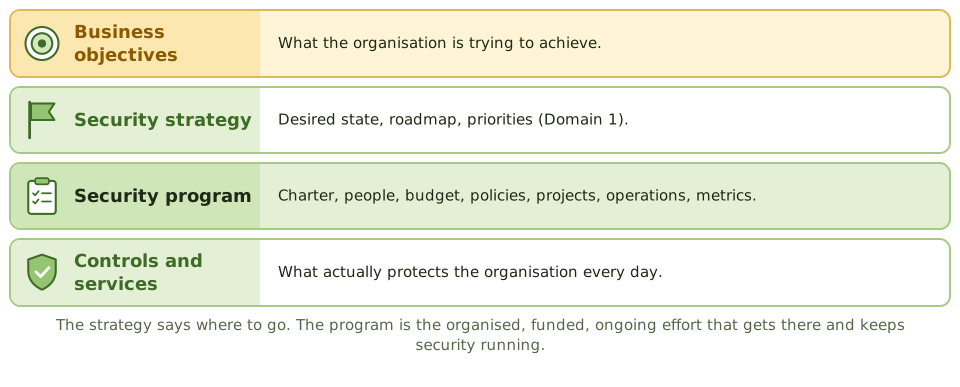
What the program includes
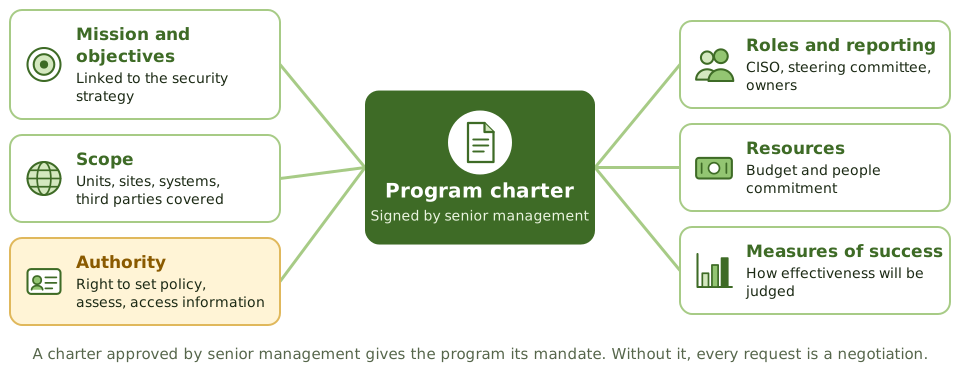
The charter
Getting scope right
Scope decides what the program protects. Anything left out, by accident or deliberately, needs to be a known, accepted decision.
Program objectives
- 1Derived from the strategy's desired state.
- 2Specific and measurable: 'MFA on 100% of remote access by Q4'.
- 3Aligned with the operational goals of other functions.
- 4Reviewed as the business changes.
How the exam asks about it
| If the question asks… | Answer |
|---|---|
| What the program must align with | The security strategy and business objectives |
| Document that establishes the program's mandate | A charter approved by senior management |
| Main purpose of defining scope | Clarify what is protected and who is responsible |
| Program vs project | Program is ongoing; projects are time-bound parts of it |
| Best basis for program objectives | The strategy's desired state |
Key takeaways
- ✓The information security program is the organised set of people, processes, technology and projects that delivers the security strategy and keeps security running.
- ✓Program objectives come from the strategy and must align with business objectives and with other business functions.
- ✓A charter approved by senior management gives the program its mandate: mission, scope, authority, roles, resources and measures of success.
- ✓Scope covers which business units, locations, systems, data and third parties are included; gaps in scope are gaps in protection.
- ✓The program combines ongoing operations (run) with time-bound projects (change).
- ✓Domain 3 is the largest part of the exam (33%); the 2026 outline puts extra emphasis on program development.
Exam traps
- !A program is not a single project; it's ongoing.
- !Program objectives come from the strategy and business needs, not from a product catalogue.
- !Without senior management approval, a charter has no authority.
- !Leaving parts of the organisation out of scope without a decision creates unmanaged risk.
Security Team Structure, Roles and Staffing
How the security manager organises the team, decides which roles are needed, builds skills and fills gaps through hiring, training, contractors or managed services.
People are the hardest resource
Tools can be bought in weeks; experienced security people take months to hire and years to develop. The security manager plans the team as carefully as the budget, matching skills to the roadmap.
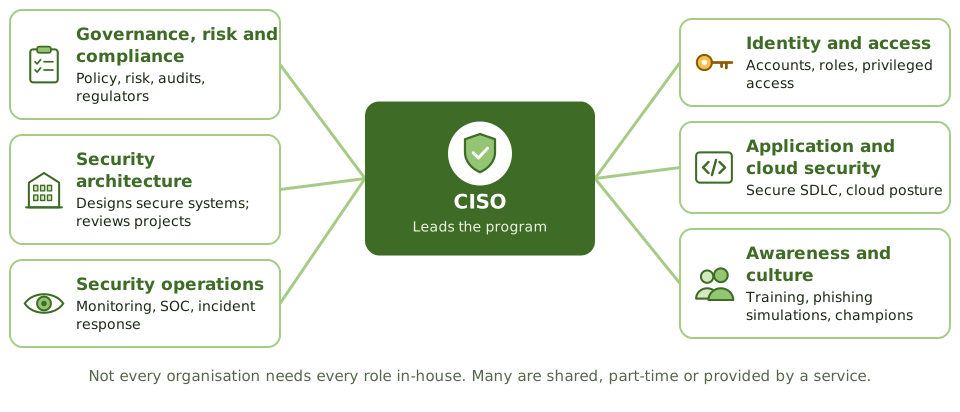
Security functions
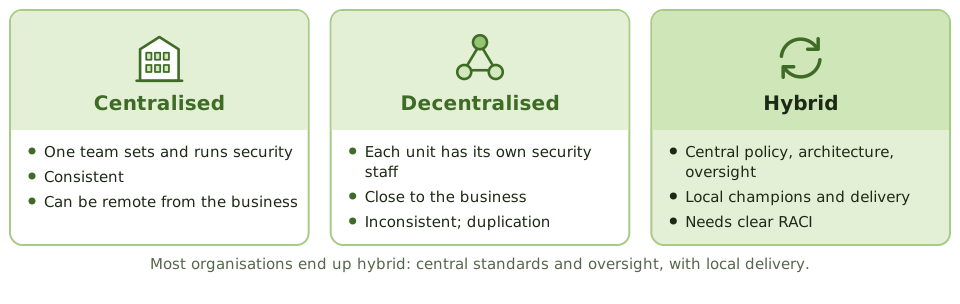
How to organise
Filling skills gaps
| Option | Best for | Watch out for |
|---|---|---|
| Hire | Core, long-term capabilities | Time to hire; salary competition |
| Train and develop | Growing existing staff; retention | Time away; may then leave |
| Contractors / consultants | Projects, peaks, specialist skills | Knowledge leaves with them |
| Managed services | 24x7 monitoring, scarce skills | Contract oversight; accountability stays |
Keeping the team resilient
- 1Document procedures and decisions.
- 2Cross-train so every critical task has a backup person.
- 3Succession plans for key roles.
- 4Career paths and training budgets to retain staff.
- 5Separate incompatible duties within security.
How the exam asks about it
| If the question asks… | Answer |
|---|---|
| First step in planning security staffing | Assess skills needed for the strategy vs skills available |
| Best way to reduce key-person risk | Cross-training, documentation, succession |
| Benefit of a managed security service | Access to scarce skills and 24x7 coverage |
| Common team model | Hybrid: central standards, local delivery |
| Security admin also approves access | Segregation-of-duties conflict |
Key takeaways
- ✓Program resources include people, tools and technologies; people are usually the hardest to find and keep.
- ✓Common security functions: governance, risk and compliance; architecture; operations and incident response; identity and access; application and cloud security; awareness.
- ✓Team models are centralised, decentralised or hybrid; most organisations use a hybrid with central standards and local delivery.
- ✓A skills assessment against the roadmap shows gaps, filled by hiring, training, contractors or managed services.
- ✓Avoid key-person dependency with documentation, cross-training and succession plans.
- ✓Segregation of duties applies inside security too: the people who administer access shouldn't also approve or audit it.
Exam traps
- !Buying tools without the people to run them is a common failure.
- !Outsourcing a function doesn't remove the need for in-house people who can manage the supplier.
- !One person who knows everything is a single point of failure.
- !Security administration combined with approving or auditing access is a segregation-of-duties conflict.
Working with Legal, HR, IT, Audit and the Business
How the security manager integrates security into the processes of other functions, so the program is delivered through them rather than around them.
Delivered through others
The security team can't hire, fire, sign contracts, patch every server or run every project. Most security controls live inside other functions' processes. The program works when security requirements are built into those processes.
Key partners
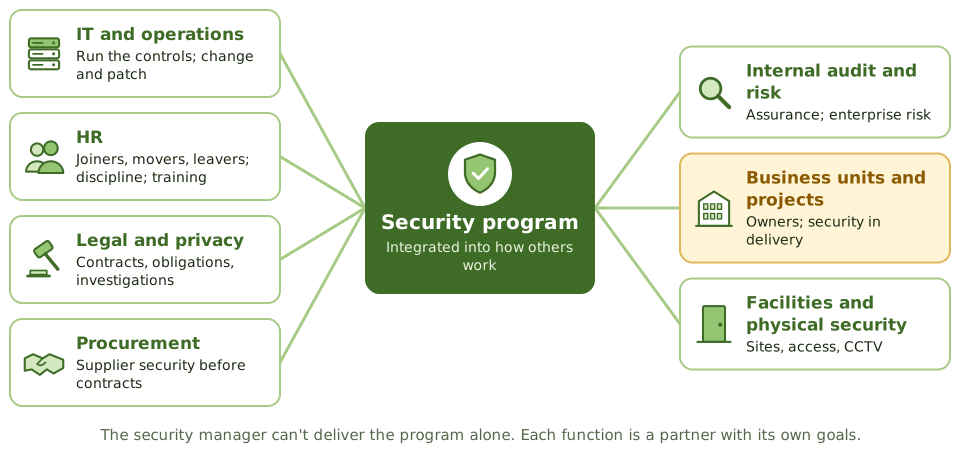
Where security plugs in
| Function | Process | Security requirement |
|---|---|---|
| HR | Hiring, moving, leaving | Background checks; access changes; prompt removal |
| Procurement | Buying services | Supplier assessment; security clauses |
| Legal | Contracts, investigations | Data protection terms; evidence handling |
| IT | Change, projects, operations | Security review; patching; logging |
| Business units | New products, processes | Risk assessment; owner decisions |
Making partnerships work
- 1Learn each function's goals and pressures.
- 2Make the secure way the easy way inside their process.
- 3Agree responsibilities explicitly (RACI, service agreements).
- 4Share metrics that matter to both sides.
- 5Escalate through governance, not through blame.
How the exam asks about it
| If the question asks… | Answer |
|---|---|
| Best way to embed security in the organisation | Integrate requirements into business processes |
| Who should trigger removal of a leaver's access | HR, through a defined process |
| When security should be involved in procurement | Before the contract is signed |
| Gaining cooperation from another function | Show how security supports their objectives |
| Security slows a process | Redesign the control to fit the process (e.g. risk tiers) |
Key takeaways
- ✓The program succeeds by integrating security requirements into other functions' processes, not by doing everything itself.
- ✓Key partners: IT, HR, legal and privacy, procurement, internal audit and risk, facilities, and business units.
- ✓Each partner has its own goals; show how security helps them meet theirs.
- ✓Integration points include hiring and leaving (HR), contracts (procurement and legal), change and projects (IT), and assurance (audit).
- ✓Agree responsibilities explicitly, for example in RACI charts or service agreements.
- ✓Aligning the program with the operational objectives of other business functions is a CISM task in its own right.
Exam traps
- !Security as a separate gatekeeper at the end of processes creates delays and workarounds.
- !HR owns the people processes; security defines the security requirements within them.
- !Procurement must involve security before contracts are signed, not after.
- !Internal audit is a partner, but must stay independent.
Program Implementation: From Plan to Operating Controls
How roadmap initiatives become controls that actually operate: planning, building, integrating with existing systems and processes, handing over to owners, and proving they work.
Installed isn't implemented
Organisations are full of security tools that were bought, installed and then left half-configured. 'Control implementation and integration' is a named CISM topic because turning plans into working controls is where programs most often stumble.
The implementation path
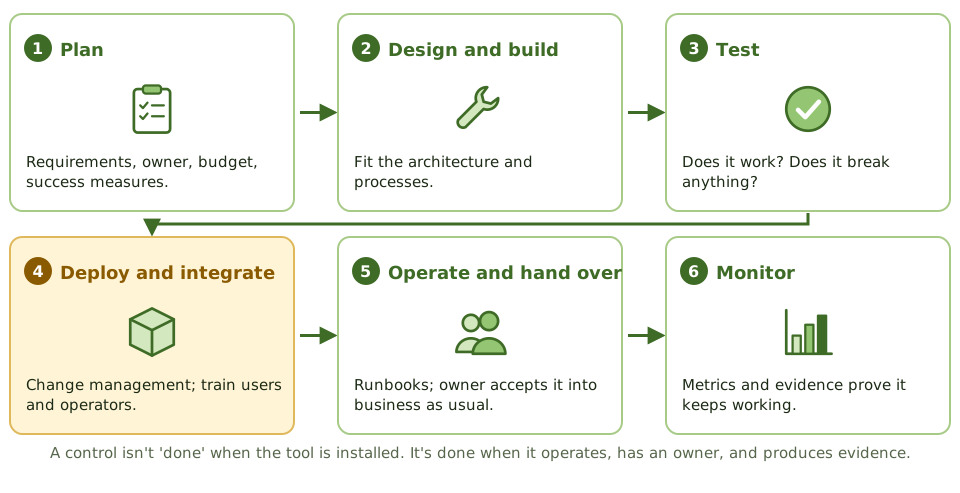
Integration is the hard part
Handover to business as usual
- 1A named operational owner who accepts it.
- 2Runbooks and procedures.
- 3Service levels and monitoring.
- 4Budget for ongoing running costs.
Did it work?
Post-implementation review asks whether the control meets its objective and reduces the risk it was meant to, not just whether the project was on time and on budget.
How the exam asks about it
| If the question asks… | Answer |
|---|---|
| Best indicator a control is implemented | It operates as designed and produces evidence |
| Risk of skipping change management | New outages or vulnerabilities |
| Key requirement before project closure | Named operational owner and runbooks |
| How to judge success | Against the control objective and risk reduced |
| New security tool fails to integrate | Review against architecture before buying |
Key takeaways
- ✓Implementing a control means it operates reliably, has an owner and produces evidence, not just that a tool is installed.
- ✓Security initiatives are run as projects with scope, budget, timeline, sponsor and success measures.
- ✓Integration with existing architecture, processes and other controls is where many implementations fail.
- ✓Changes go through change management; users and operators are trained before go-live.
- ✓Handover to business as usual needs runbooks, a named owner and agreed service levels.
- ✓Post-implementation monitoring confirms the control meets its objective; problems feed back into improvement.
Exam traps
- !Installed is not the same as effective.
- !Skipping change management to deliver security faster creates its own risks.
- !Projects that end without a named operational owner leave controls nobody runs.
- !Measure success against the control objective, not against project milestones.
Information Asset Identification and Valuation
Why the asset inventory is the foundation of the program, what counts as an information asset, and how owners value assets so protection matches their importance.
The foundation of everything
Risk assessments need a list of assets. So does classification, access control, backup, incident response and recovery. If the inventory is incomplete, every one of those has blind spots. That's why asset identification sits at the start of the program.
What counts as an asset
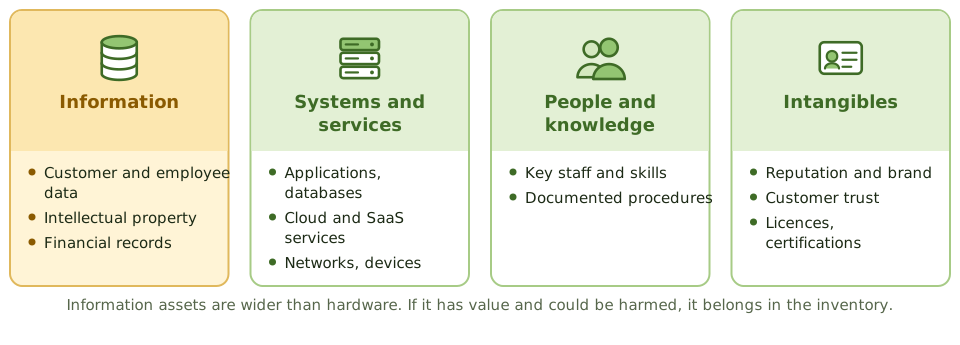
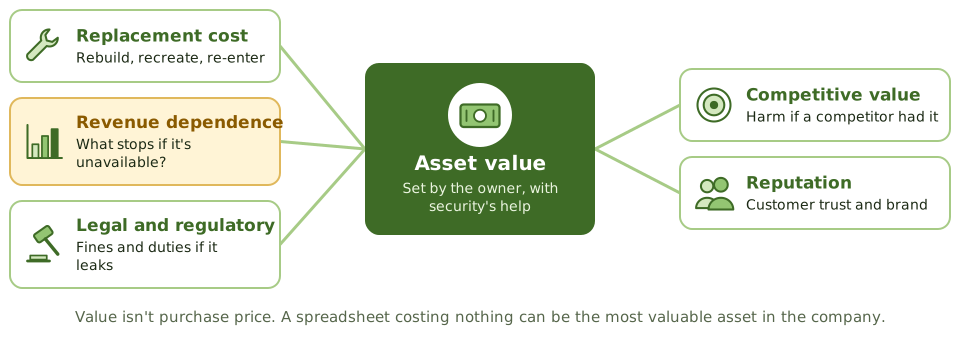
Valuing assets
Keeping the inventory complete
Owners make it work
- 1Every asset has a named owner (a person).
- 2The owner sets value and classification.
- 3The owner approves access and accepts residual risk.
- 4Unowned assets are escalated, not ignored.
How the exam asks about it
| If the question asks… | Answer |
|---|---|
| First step in an information security program | Identify and inventory information assets |
| Basis for asset value | Business impact if compromised |
| Who assigns value and classification | The asset owner |
| Best way to keep the inventory complete | Automated discovery reconciled with the inventory |
| Shadow SaaS found | Bring into inventory, assess, assign owner |
Key takeaways
- ✓You can't protect what you don't know you have: identifying assets is the foundation of risk assessment, classification and controls.
- ✓Information assets include data, systems and services, people and knowledge, and intangibles such as reputation.
- ✓Every asset needs a named owner who is accountable for it and decides its value and classification.
- ✓Asset value is based on business impact (revenue, legal, competitive, reputational), not on purchase price.
- ✓The inventory is kept current through discovery tools, procurement and change processes, and regular reconciliation.
- ✓Cloud services, SaaS and shadow IT must be included, or they become unmanaged risk.
Exam traps
- !The first step in protecting information is identifying it, not buying controls.
- !Asset value isn't the cost of the hardware; it's the impact on the business.
- !An inventory without owners can't drive protection decisions.
- !A one-off inventory goes stale quickly; it must be maintained.
Data Classification: Owners, Custodians and Users
How classification makes protection proportionate to sensitivity and criticality, who decides it, and how labels drive handling rules across the organisation.
Why classify?
Protecting every file to the highest level would be expensive and frustrating; protecting nothing would be reckless. Classification sorts information by how much harm it could cause, so the program spends its effort where it matters.
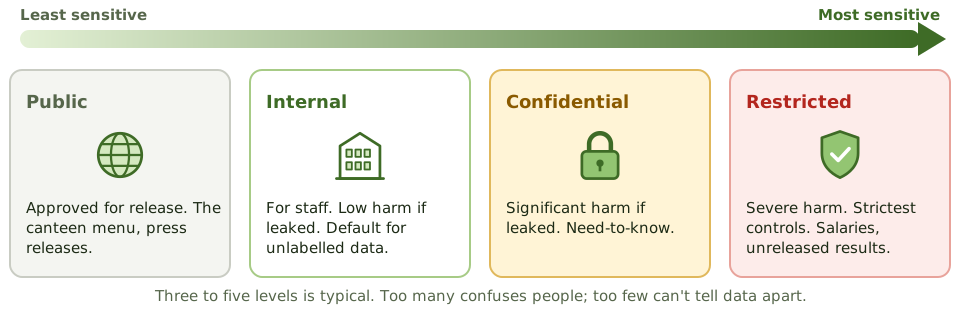
A typical scheme
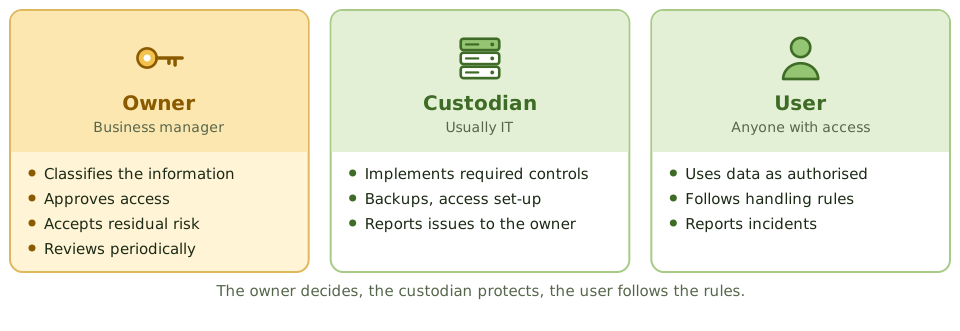
Who does what
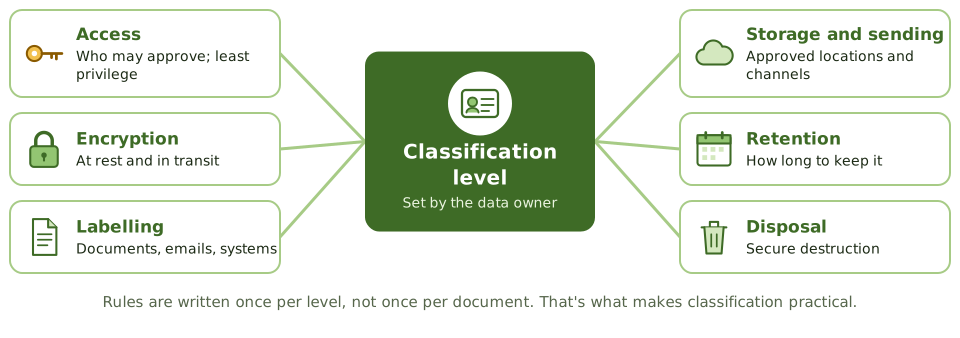
Levels drive handling rules
Making it work in practice
- 1Keep the scheme simple: three to five levels.
- 2Default unlabelled data to a protective level such as internal.
- 3Use tools: automatic labelling, DLP rules linked to labels.
- 4Train users with real examples from their work.
- 5Review classifications when data's value changes.
How the exam asks about it
| If the question asks… | Answer |
|---|---|
| Who decides classification | The information owner |
| Main benefit of classification | Cost-effective, proportionate protection |
| Custodian's role | Implement controls required by the owner |
| First step before classifying | Identify and inventory information |
| Data becomes less sensitive over time | Owner reviews and reclassifies |
Key takeaways
- ✓Data classification groups information by sensitivity (harm if disclosed) and criticality (harm if unavailable or corrupted), so protection is proportionate.
- ✓The information owner, a business manager, decides the classification and reviews it periodically.
- ✓Custodians (usually IT) implement the controls the classification requires; users follow the handling rules.
- ✓Each level has handling rules for access, encryption, labelling, storage, transmission, retention and disposal.
- ✓Typical schemes have three to five levels; simple schemes are applied more consistently.
- ✓Classification makes cost-effective protection possible: strong controls where they matter, lighter ones elsewhere.
Exam traps
- !IT or security doesn't decide classification; the owner does.
- !Too many levels confuse users and lead to inconsistent labelling.
- !Classification must be reviewed: sensitivity changes over time (e.g. results become public).
- !Aggregated data can be more sensitive than its parts.
Data Lifecycle: Retention, Archiving and Secure Disposal
How information is protected from creation to destruction, how retention schedules balance legal duties with risk, and how to dispose of data so it can't be recovered.
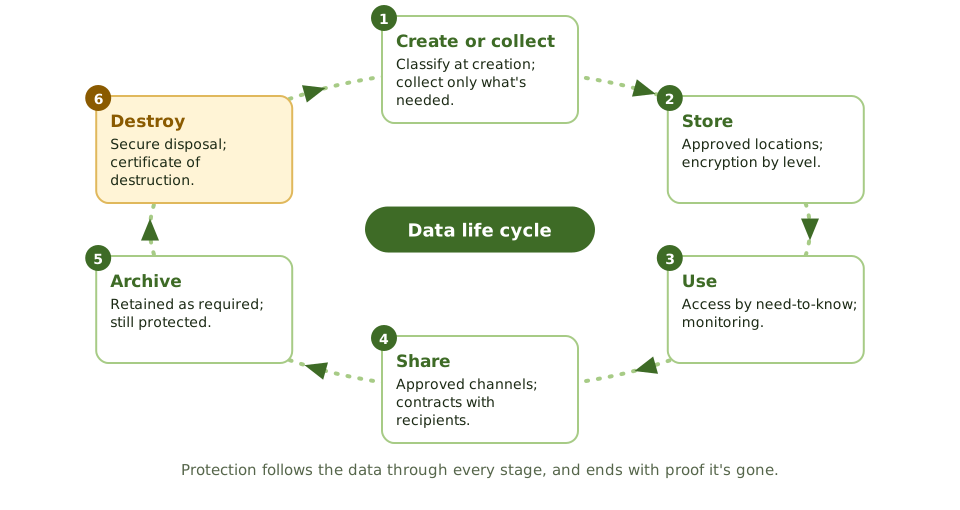
Protection follows the data
Retention schedules
| Record | Typical driver | Example period |
|---|---|---|
| Financial records | Tax and company law | 6-10 years |
| Employee records | Employment law | Duration + a few years |
| Customer data | Contract, privacy law | As long as needed for the purpose |
| Security logs | Investigation, regulation | 1 year+, sector rules vary |
| CCTV footage | Privacy, security need | 30 days unless an incident |
Too long is a risk too
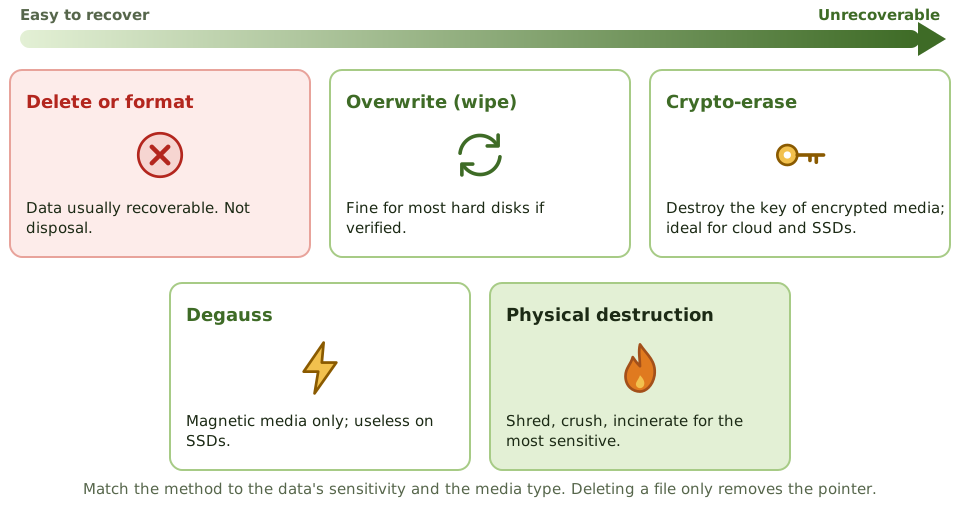
Secure disposal
How the exam asks about it
| If the question asks… | Answer |
|---|---|
| Basis for retention periods | Legal, regulatory, contractual and business requirements |
| Risk of keeping data too long | Greater breach impact; privacy non-compliance |
| Litigation expected | Apply a legal hold; suspend deletion |
| Disposing of SSDs | Crypto-erase / secure erase or physical destruction |
| Proof of disposal | Certificate of destruction |
Key takeaways
- ✓Data moves through a life cycle: create or collect, store, use, share, archive and destroy; protection must follow it at every stage.
- ✓Retention schedules set how long each type of record is kept, based on legal, regulatory, contractual and business needs.
- ✓Keeping data longer than needed increases risk and may break privacy law (storage limitation).
- ✓Legal holds suspend normal deletion when litigation or investigation is expected.
- ✓Disposal must make data unrecoverable: wiping, crypto-erasure, degaussing or physical destruction, matched to the media and sensitivity.
- ✓Disposal of devices and media, including by suppliers, is documented with certificates of destruction.
Exam traps
- !Deleting or formatting doesn't remove data; it can usually be recovered.
- !Degaussing doesn't work on solid-state drives.
- !'Keep everything forever' is a risk, not a safe default.
- !A legal hold overrides the normal retention schedule.
Enterprise Architecture for Security Managers
What enterprise architecture is, why the 2026 CISM outline adds it, and how the security manager uses it to build security into how the organisation's business, data, applications and technology fit together.
Why architecture matters to security
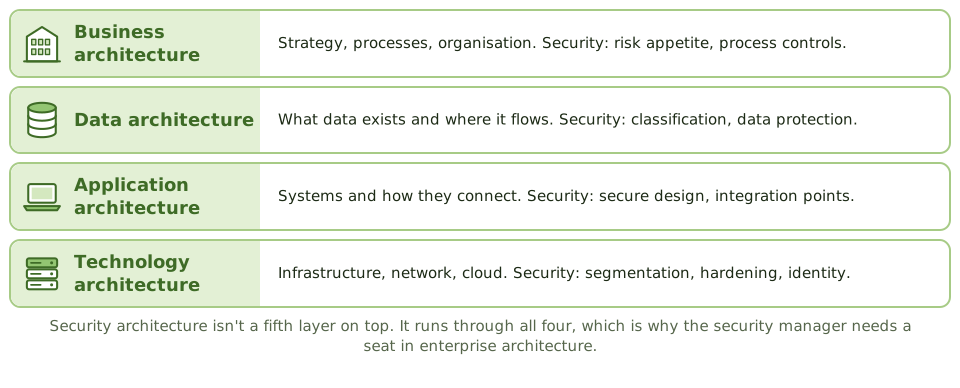
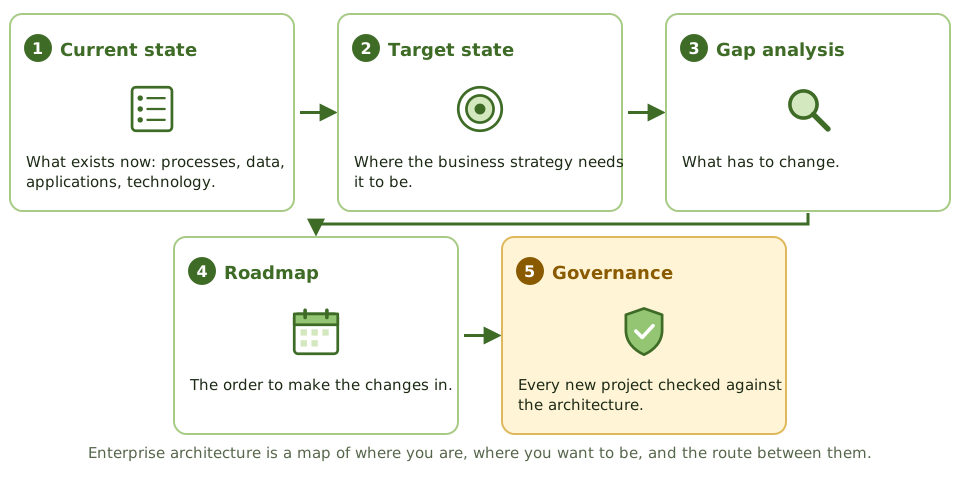
Enterprise architecture is the organisation's blueprint: how processes, data, applications and technology fit together, and how they should evolve. Decisions made there (cloud-first, a new ERP, shared identity) shape security for years. The 2026 CISM outline adds enterprise architecture so security managers engage at that level.
Four architecture domains
Current state to target state
TOGAF and Zachman
How the security manager uses EA
How the exam asks about it
| If the question asks… | Answer |
|---|---|
| Main benefit of involving security in EA | Security built in at design; consistent across the enterprise |
| Framework with a development method | TOGAF (ADM) |
| Classification grid for architecture | Zachman |
| Best evidence EA is used | Projects reviewed against it before approval |
| Security architecture relates to EA how? | It aligns with and supports it |
Key takeaways
- ✓Enterprise architecture (EA) describes how an organisation's business processes, data, applications and technology fit together, now and in the target state.
- ✓The 2026 CISM outline adds enterprise architecture as a new content area: security managers are expected to work within it, not around it.
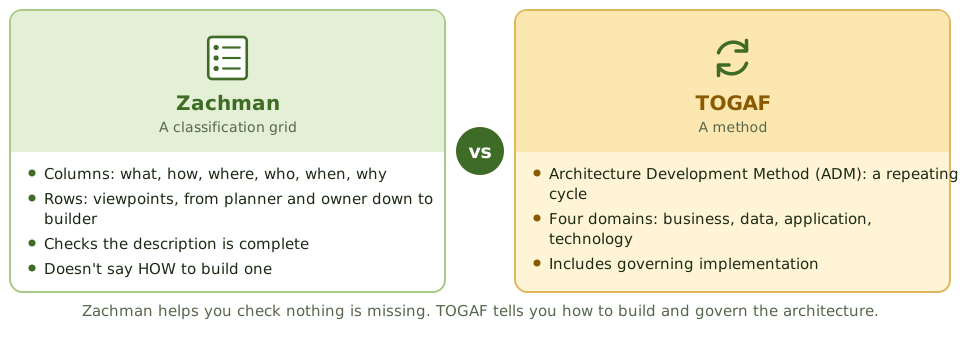
- ✓TOGAF provides a method (the Architecture Development Method) across business, data, application and technology domains; Zachman is a classification grid.
- ✓Security should be built into each architecture domain and into architecture governance, so every project is checked against security requirements.
- ✓EA helps security by giving an accurate picture of assets, data flows and dependencies, and a place to set standard secure patterns.
- ✓Security architecture (next article) is the security-specific view that aligns with the enterprise architecture.
Exam traps
- !Security added after the architecture is decided is costlier and weaker.
- !Zachman is a grid for classifying descriptions, not a method; TOGAF's ADM is the method.
- !An architecture nobody checks projects against has little value.
- !Security architecture must align with enterprise architecture, not run as a separate parallel design.
Information Security Architecture: Principles and SABSA
What an information security architecture is, the design principles behind it, how SABSA links security mechanisms to business requirements, and how the security manager governs it.
What security architecture is
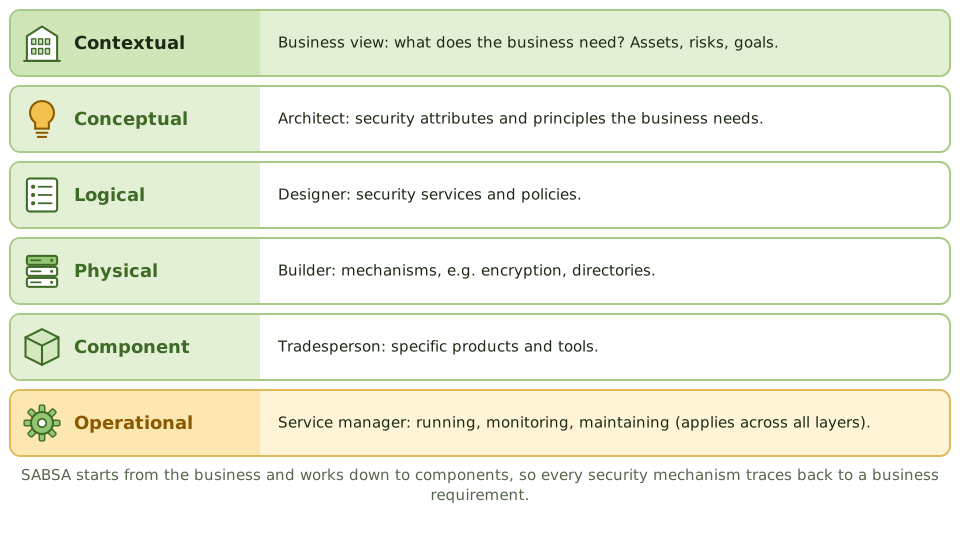
Security architecture is the blueprint for how security controls and services fit together across the organisation: identity, network zones, encryption, logging, monitoring. It turns the strategy's goals into a coherent design, so projects don't each invent their own security.
SABSA, from business to components
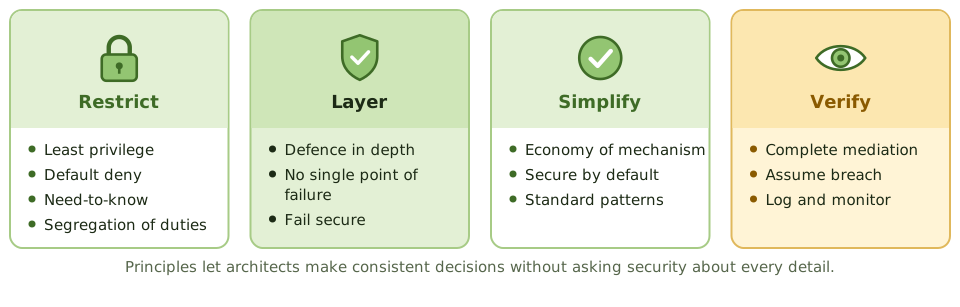
Design principles
Reference architectures and patterns
Governing the architecture
- 1Security reviews at project initiation and design.
- 2Architecture review board includes security.
- 3Exceptions recorded with owner and expiry.
- 4Architecture updated as threats and technology change.
How the exam asks about it
| If the question asks… | Answer |
|---|---|
| Business-driven security architecture framework | SABSA |
| Top layer of SABSA | Contextual (business requirements) |
| Main benefit of a security architecture | Consistent controls aligned with business needs |
| System fails; what should happen | Fail secure: default to a safe state |
| Project deviates from the architecture | Risk-assess and approve the exception |
Key takeaways
- ✓Information security architecture describes how security controls and services are structured across the enterprise to meet business requirements.
- ✓It's a new content area in the 2026 CISM outline, alongside enterprise architecture.
- ✓SABSA is a business-driven security architecture framework with six layers: contextual, conceptual, logical, physical, component and operational.
- ✓Design principles (least privilege, defence in depth, secure by default, fail secure, complete mediation, simplicity) guide consistent decisions.
- ✓Reference architectures and standard patterns let projects reuse approved secure designs.
- ✓Architecture is governed: projects are reviewed against it, and exceptions are risk-assessed.
Exam traps
- !Starting from products (component layer) rather than business requirements (contextual) is backwards.
- !Security architecture must align with enterprise architecture, not compete with it.
- !Fail secure means failing to a safe state (e.g. deny access), not staying open.
- !A reference architecture nobody is required to follow doesn't change anything.
Defence in Depth and Zero Trust
Two architecture strategies every security manager uses: layering independent controls so one failure isn't fatal, and zero trust, which stops trusting anything just because it's inside the network.
Don't rely on one wall
Every control eventually fails: a patch is missed, a password is phished, a rule is misconfigured. Architecture strategies assume this. Defence in depth adds layers; zero trust stops treating anything as safe just because of where it sits.
Defence in depth
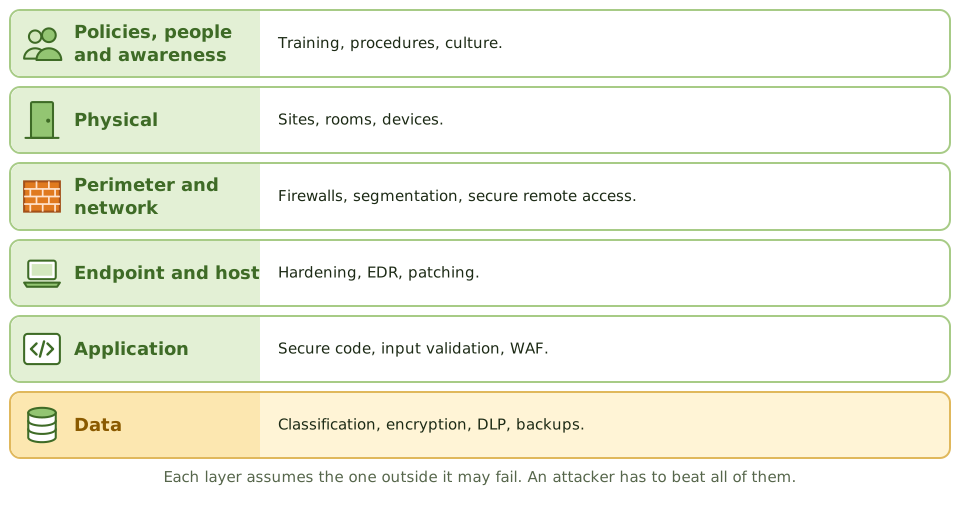
What makes layers work
Zero trust
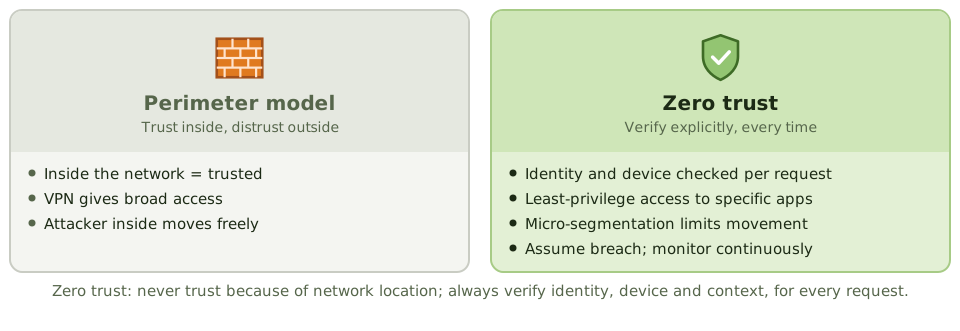
Adopting zero trust in stages
- 1 Identity Strong MFA, single identity provider
- 2 Devices Inventory and health checks
- 3 Access Per-application, least privilege
- 4 Segment Micro-segmentation
- 5 Monitor Continuous verification and analytics
How the exam asks about it
| If the question asks… | Answer |
|---|---|
| Purpose of defence in depth | One control's failure doesn't lead to compromise |
| Core idea of zero trust | Never trust by location; always verify |
| Main control plane in zero trust | Identity (plus device health) |
| Zero trust principle about attackers | Assume breach |
| How zero trust is adopted | Gradually, as a strategy, not one product |
Key takeaways
- ✓Defence in depth layers independent controls (people, physical, network, endpoint, application, data) so a single failure doesn't lead to compromise.
- ✓Layers should include preventive, detective and corrective controls, and should be genuinely independent.
- ✓Zero trust removes implicit trust based on network location: every request is verified using identity, device and context.
- ✓Zero trust principles: verify explicitly, least-privilege access, assume breach.
- ✓Identity becomes the main control plane; strong authentication and device health checks are foundations.
- ✓Zero trust is a strategy adopted in stages, not a product bought in one go.
Exam traps
- !Two firewalls from the same rule set aren't really two layers; layers should be independent.
- !Zero trust doesn't mean trusting nobody to do anything; it means verifying every access.
- !A VPN that gives full network access is the opposite of zero trust.
- !No vendor sells 'zero trust in a box'; it's an architecture and a journey.
Cloud Security and Shared Responsibility
How security responsibilities split between the organisation and its cloud providers, the risks the security manager must govern, and the controls that matter most in cloud environments.
Renting, not owning
Cloud computing hands parts of the technology stack to a provider. That changes who runs what, but not who is accountable for the data. The security manager's job is to know exactly where the line falls for each service, and govern the customer's side.
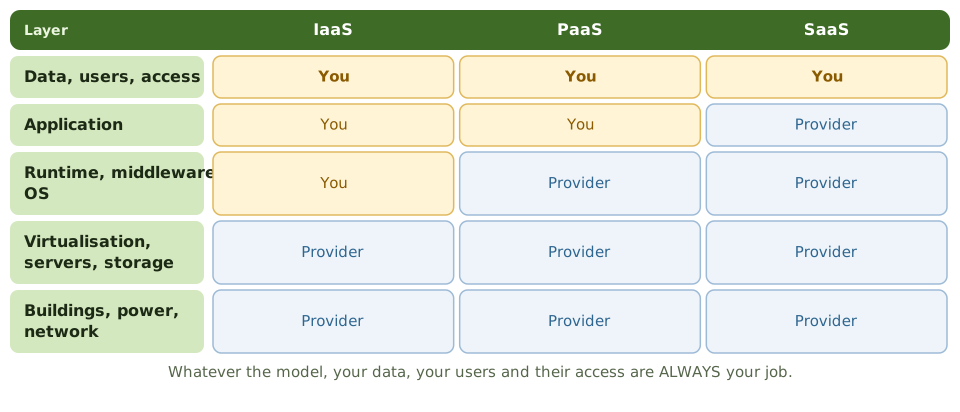
Who looks after what
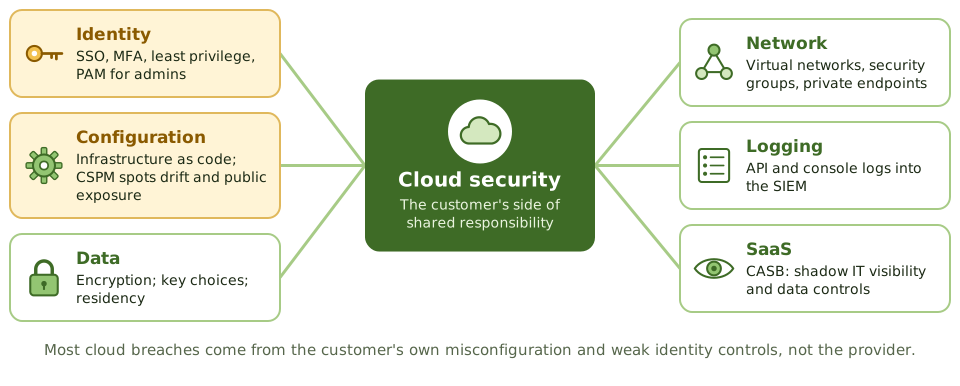
The customer's side
Cloud governance
Misconfiguration is the big risk
Preventive guardrails (policies that block risky settings) plus continuous posture monitoring catch most misconfigurations.
How the exam asks about it
| If the question asks… | Answer |
|---|---|
| What the customer is always responsible for | Its data, users and access |
| Most common cause of cloud breaches | Customer misconfiguration and weak identity |
| Tool that detects cloud misconfiguration | Cloud security posture management (CSPM) |
| Assurance over a large provider | Independent reports, checked for scope |
| Does moving to cloud transfer accountability? | No |
Key takeaways
- ✓In IaaS, PaaS and SaaS the provider takes on different layers, but the customer always remains responsible for its data, users and their access.
- ✓The shared responsibility split must be understood and documented; gaps appear where each side assumes the other covers something.
- ✓Most cloud incidents come from the customer's misconfiguration and weak identity controls, not from the provider.
- ✓Key cloud controls: strong identity and MFA, configuration monitoring (CSPM), encryption and key management, logging, and visibility of SaaS use (CASB).
- ✓Governance covers approved services, data location, exit plans and assurance from providers (SOC 2, ISO 27001 for the services used).
- ✓Accountability for data protection stays with the organisation, whatever the contract says.
Exam traps
- !Moving to the cloud doesn't transfer accountability for protecting data.
- !In SaaS, the customer still manages user access and data classification.
- !A provider's certificate must cover the specific services and regions in use.
- !Shadow cloud services bypass governance; discover and bring them in.
Control Frameworks: NIST SP 800-53, CIS Controls and ISO 27002
The detailed control catalogues a security manager uses to build the program, how they differ, and how to map them so one control set meets several obligations.
From outcomes to controls
Domain 1's frameworks (NIST CSF, ISO 27001, COBIT) describe what security must achieve and how to manage it. Control catalogues answer the next question: which specific safeguards? 'Industry standards and frameworks for information security' is a named Domain 3 topic.
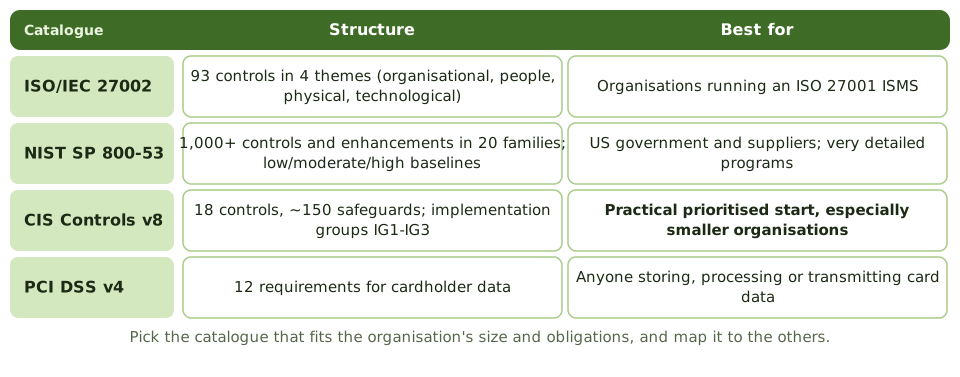
The main catalogues
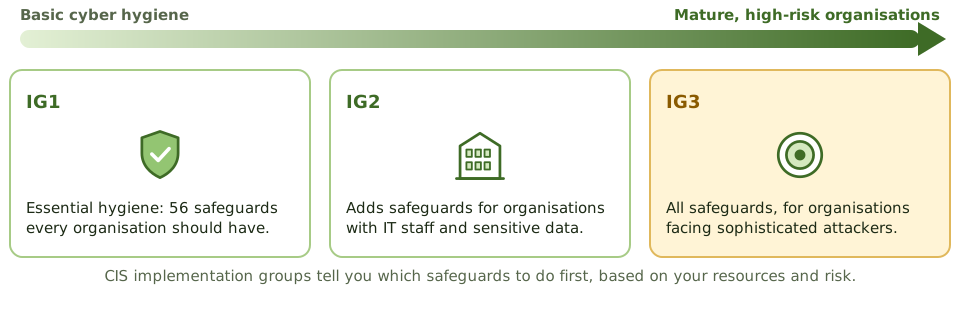
CIS implementation groups
Mapping one control to many requirements
| Control | ISO 27001 / 27002 | NIST CSF 2.0 | CIS v8 | PCI DSS v4 |
|---|---|---|---|---|
| Periodic access review | 5.18 Access rights | PR.AA | 5 and 6 (account and access mgmt) | 7.2.4 |
| MFA for remote access | 8.5 Secure authentication | PR.AA | 6.4 | 8.4.3 |
Choosing and using a catalogue
- 1Start from the risk assessment and obligations.
- 2Use CIS IG1 as a quick baseline if the program is immature.
- 3Use ISO 27002 if running an ISO 27001 ISMS.
- 4Use NIST SP 800-53 where regulation or customers require it.
- 5Map everything to one internal control set.
How the exam asks about it
| If the question asks… | Answer |
|---|---|
| Prioritised controls for a small organisation | CIS Controls (IG1) |
| Detailed US federal control catalogue | NIST SP 800-53 |
| Guidance supporting ISO 27001 Annex A | ISO/IEC 27002 |
| Benefit of mapping frameworks | One control set meets several requirements |
| How controls should be selected | Based on risk, not by implementing everything |
Key takeaways
- ✓Control catalogues list specific safeguards; governance frameworks (NIST CSF, ISO 27001, COBIT) say what to achieve and how to manage it.
- ✓ISO/IEC 27002 gives guidance on 93 controls in four themes, matching ISO 27001 Annex A.
- ✓NIST SP 800-53 is a very detailed catalogue (20 families) with low, moderate and high baselines, used widely by US government and its suppliers.
- ✓The CIS Controls (v8) are 18 prioritised controls with implementation groups IG1 to IG3; IG1 is essential hygiene for everyone.
- ✓Industry standards such as PCI DSS add mandatory requirements for specific data.
- ✓Mapping catalogues to each other avoids duplicate work and shows coverage of several requirements at once.
Exam traps
- !Implementing a whole catalogue without risk-based selection wastes effort.
- !ISO 27002 is guidance; certification is against ISO 27001.
- !CIS IG1 is a starting point, not the finish line, for organisations with significant risk.
- !Control catalogues don't replace a risk assessment; they help answer it.
Security Policy Development and Lifecycle
How the security manager writes, approves, communicates and maintains information security policies so they guide behaviour and support the rest of the documentation.
What policies are for
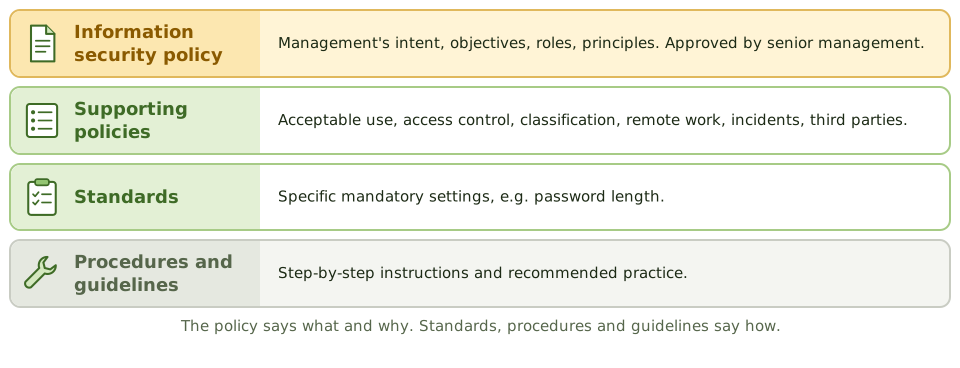
Policies are management's instructions to the organisation: what must be protected, who is responsible, and what is expected of everyone. They give the security program authority. Everything else (standards, procedures, guidelines) supports them.
The documentation hierarchy
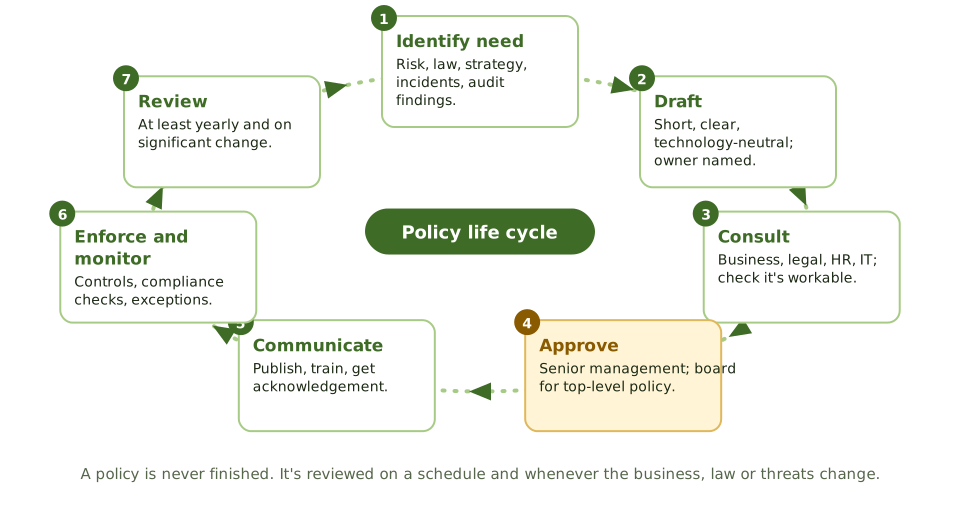
The policy life cycle
What makes a good policy
A common policy set
| Policy | Covers |
|---|---|
| Information security policy | Overall intent, scope, roles, principles |
| Acceptable use | Rules for using systems, email, internet, devices |
| Access control | Granting, reviewing, removing access |
| Data classification and handling | Levels and handling rules |
| Incident response | Reporting and handling incidents |
| Third-party security | Supplier requirements and oversight |
How the exam asks about it
| If the question asks… | Answer |
|---|---|
| Who approves the information security policy | Senior management (or the board) |
| Most important attribute of a policy | Alignment with business objectives and management intent |
| Where product-specific settings belong | Standards, not policy |
| When to review policies | At least annually and on significant change |
| First step when developing policy | Understand business needs, risks and requirements |
Key takeaways
- ✓Policies state management's intent and direction; standards, procedures and guidelines support them.
- ✓The information security policy is approved by senior management (the top-level policy often by the board) and signed or endorsed visibly.
- ✓Good policies are short, clear, technology-neutral, aligned with business objectives and enforceable.
- ✓The life cycle: identify need, draft, consult, approve, communicate, enforce and monitor, review.
- ✓Policies are reviewed at least annually and when the business, laws, technology or threats change significantly.
- ✓Every policy has an owner, a version, an effective date and a review date.
Exam traps
- !Policies don't name products or settings; standards do.
- !A policy written by security without consulting the business is often unworkable and ignored.
- !Approval by the CISO alone lacks authority; senior management approves.
- !A policy that isn't communicated or enforced is ineffective.
Security Standards and Baseline Requirements
How standards turn policy into specific, measurable requirements, and how security baselines define the minimum secure configuration for each type of system.
From intent to specifics
A policy says 'access must be strongly authenticated'. A standard says how: 'MFA for all remote and privileged access; passwords at least 14 characters; lockout after 10 failed attempts'. Standards make policy measurable and auditable.
Examples of standards
| Area | Example requirement |
|---|---|
| Authentication | MFA for remote and privileged access |
| Encryption | AES-256 at rest; TLS 1.2+ in transit |
| Logging | Security events kept 12 months; sent to SIEM |
| Patching | Critical patches on internet-facing systems within 7 days |
| Secure development | Code review and static analysis before release |
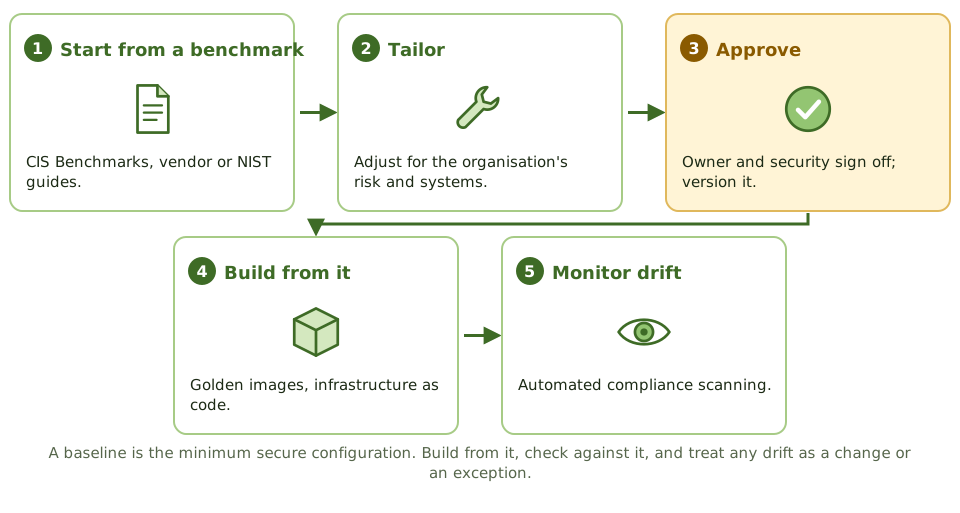
Security baselines
Using baselines well
How the exam asks about it
| If the question asks… | Answer |
|---|---|
| Document setting minimum password length | A standard |
| Minimum secure configuration for a system type | A security baseline |
| Good starting point for baselines | Recognised benchmarks such as CIS Benchmarks |
| How to detect configuration drift | Automated compliance scanning against the baseline |
| A system can't meet the baseline | Approved exception with compensating controls |
Key takeaways
- ✓Standards make policies specific and measurable: password length, encryption algorithms, logging requirements.
- ✓Standards are mandatory; they're approved by the security function or management under the authority of the policy.
- ✓A security baseline is the minimum secure configuration for a type of system (OS, database, cloud service, network device).
- ✓Baselines usually start from recognised benchmarks such as CIS Benchmarks, then are tailored to the organisation's risk.
- ✓Systems are built from baselines (golden images, infrastructure as code) and monitored for configuration drift.
- ✓Standards and baselines change more often than policies, as technology and threats evolve.
Exam traps
- !Standards belong under policy; they must not contradict it.
- !A baseline is a minimum, not a target; higher-risk systems may need more.
- !Configuration drift goes unnoticed without automated monitoring.
- !Deviations from a baseline need a change record or an approved exception.
Procedures, Guidelines and Acceptable Use
How procedures turn standards into repeatable steps, how guidelines help people make good choices, and what an acceptable use policy must cover for every user.
The lower levels of the pyramid
Policies and standards say what must happen. Procedures say exactly how, step by step, so different people get the same result. Guidelines help people choose well where no rule applies.
Procedures vs guidelines
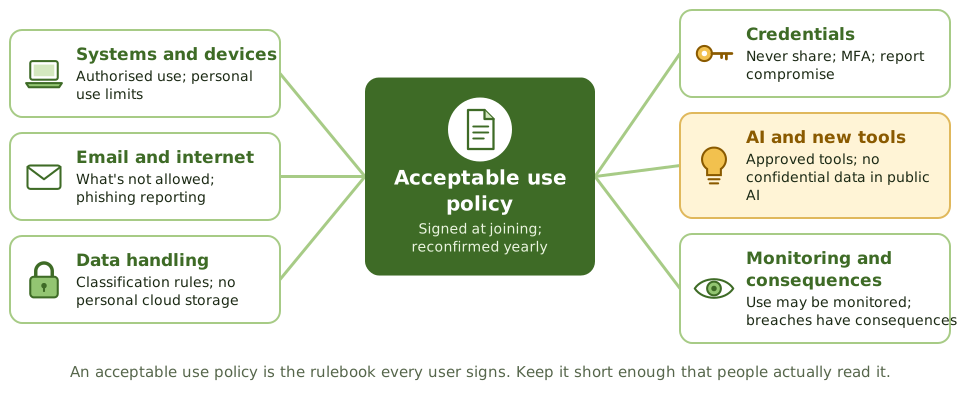
Acceptable use policy
Keeping procedures alive
- 1Written with the people who do the work.
- 2Tested, especially emergency and incident procedures.
- 3Reviewed after incidents, audits and system changes.
- 4Version-controlled and easy to find when needed.
How the exam asks about it
| If the question asks… | Answer |
|---|---|
| Document with step-by-step instructions | Procedure |
| Document that isn't mandatory | Guideline |
| Document every user signs at joining | Acceptable use policy |
| Who owns a procedure | The process owner |
| Best way to keep procedures effective | Test and update them regularly |
Key takeaways
- ✓Procedures are step-by-step instructions for carrying out a task consistently; they're mandatory for the people who perform them.
- ✓Procedures are owned by the process owner and kept close to where the work happens.
- ✓Guidelines are recommended practice; they're advisory and help people make good decisions where no rule fits.
- ✓The acceptable use policy (AUP) sets rules for every user: systems, email, internet, data handling, credentials and now AI tools.
- ✓Users acknowledge the AUP when they join and periodically after; it supports enforcement and accountability.
- ✓Procedures must be tested and updated, especially those used in emergencies such as incident response.
Exam traps
- !Guidelines are optional; procedures and standards are mandatory.
- !Procedures written once and never tested fail when they're needed.
- !An AUP nobody has acknowledged weakens disciplinary action.
- !The AUP should state that use may be monitored; secret monitoring can break privacy law and trust.
Policy Enforcement, Exceptions and Review
How the security manager makes policies stick: technical enforcement, compliance monitoring, a controlled exception process, consequences, and regular review.
A rule nobody enforces isn't a rule
Every policy needs a way to make it real. The most reliable is technical: the system simply won't allow the forbidden thing. Where that's impossible, compliance is monitored and there are consequences for breaking the rules.
Ways to enforce
| Method | Example |
|---|---|
| Technical control | MFA enforced by the identity platform; USB storage blocked |
| Automated monitoring | DLP alerts; configuration compliance scans |
| Process gate | Project can't go live without a security sign-off |
| Review and audit | Access recertification; internal audit |
| Consequences | Defined disciplinary process with HR |
Managing compliance
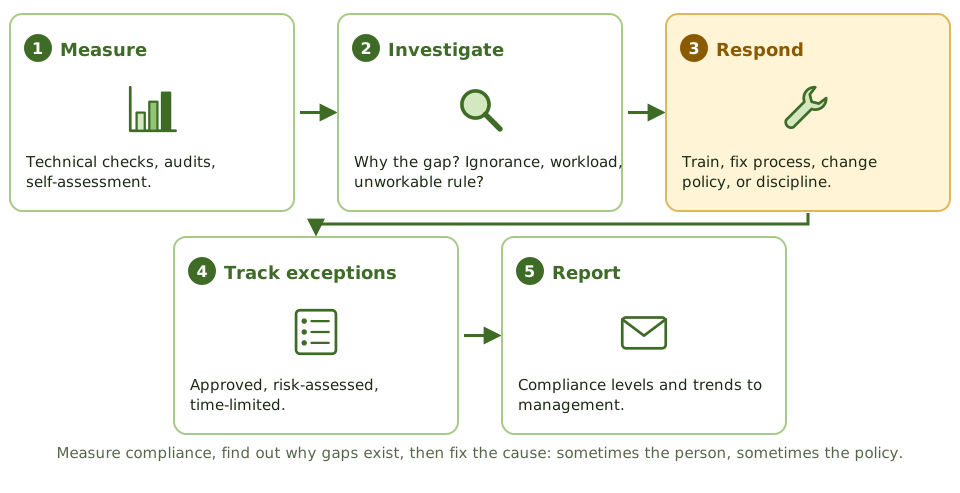
The exception process
Reviewing policies
- 1At least annually, and after significant change.
- 2Use compliance data, exceptions and incidents as evidence.
- 3Many exceptions to one rule? The rule may need changing.
- 4Re-communicate after changes; get fresh acknowledgement.
How the exam asks about it
| If the question asks… | Answer |
|---|---|
| Most reliable way to enforce a policy | Technical controls |
| Many staff violate the same policy | Investigate why; the policy or process may be wrong |
| Requirements for a policy exception | Risk assessment, right-level approval, time limit |
| Inputs to policy review | Compliance results, exceptions, incidents, changes |
| Consequences for violations | Defined, fair, applied consistently |
Key takeaways
- ✓Policies work only if they're enforced: preferably by technical controls, otherwise by monitoring and consequences.
- ✓Compliance is measured through technical checks, audits and self-assessments, and reported to management.
- ✓Widespread non-compliance may mean the policy is unworkable; investigate the cause before disciplining.
- ✓Exceptions are formal: risk-assessed, approved at the right level, time-limited, with compensating controls where possible.
- ✓Disciplinary consequences must be defined, fair and applied consistently, including to senior staff.
- ✓Policies are reviewed at least yearly and after significant changes, using compliance data and incidents as input.
Exam traps
- !Unenforced policies teach people that policies don't matter.
- !Granting permanent, undocumented exceptions creates hidden risk.
- !When most people break a rule, fixing the rule may be the right answer.
- !Technical enforcement is more reliable than relying on people to remember.
Designing Security Metrics: KPIs, KRIs and KCIs
How to choose security metrics that drive decisions: the main types, what makes a metric useful, and how to avoid measuring activity instead of outcomes.
Why measure?
Metrics tell the security manager, and management, whether the program is achieving its objectives, where it's weak, and whether investments are paying off. 'Information security program metrics' is a named CISM topic.
Four kinds of indicator
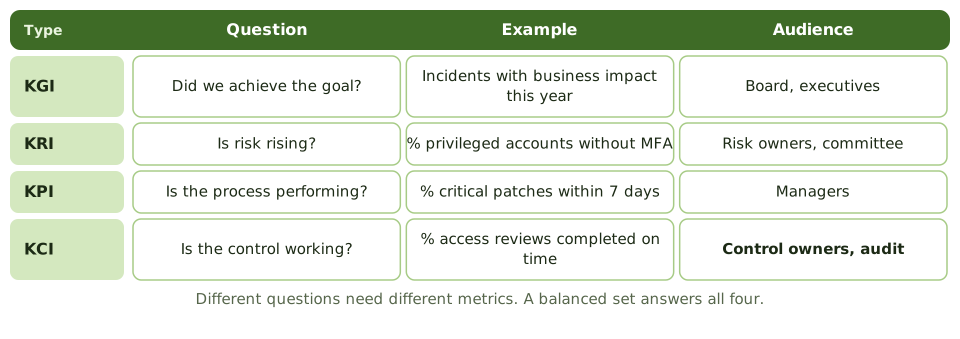
What makes a metric useful
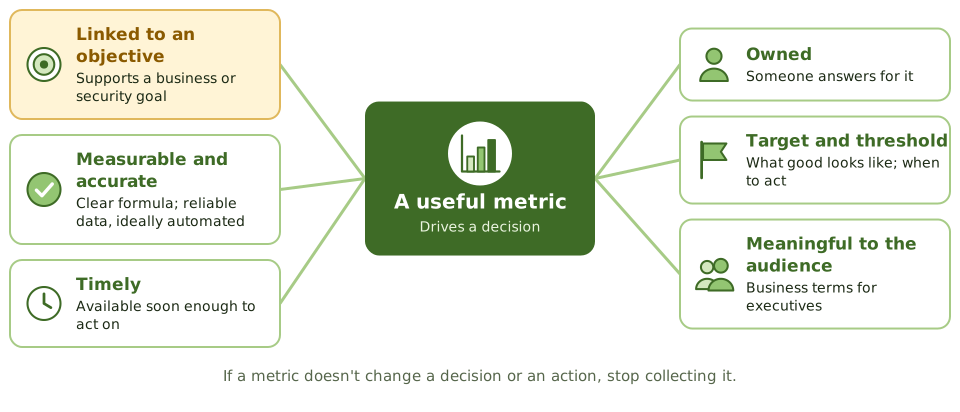
Metrics for each level
| Level | Audience | Example |
|---|---|---|
| Strategic | Board, executives | Top risks vs appetite; business impact of incidents |
| Management | CISO, steering committee | Program milestones; % critical systems meeting baseline |
| Operational | Security and IT teams | Mean time to patch; alert triage time |
Outcome, not activity
How the exam asks about it
| If the question asks… | Answer |
|---|---|
| Most important characteristic of a security metric | Linked to objectives; supports decisions |
| Indicator showing a control works | Key control indicator (KCI) |
| Indicator showing rising risk | Key risk indicator (KRI) |
| Best metrics for the board | Strategic, business-linked outcomes |
| Weak metric | Activity counts with no link to outcomes |
Key takeaways
- ✓Security metrics exist to support decisions about the program; a metric that changes no decision isn't worth collecting.
- ✓Main types: KGIs (goal achieved?), KRIs (risk rising?), KPIs (process performing?) and KCIs (control working?).
- ✓Good metrics are linked to objectives, measurable, accurate, timely, owned, have targets and thresholds, and suit their audience.
- ✓Strategic metrics for the board link to business goals; operational and technical metrics serve managers and engineers.
- ✓Prefer outcome measures (fewer successful phishing attacks) over activity measures (training sessions held).
- ✓Defining and monitoring management and operational metrics for the program is a CISM task.
Exam traps
- !Counting activity (alerts handled, scans run) isn't measuring effectiveness.
- !Technical metrics aren't suitable for board reporting without translation.
- !A metric without a target or threshold doesn't tell anyone whether to act.
- !Metrics that are easy to game encourage the wrong behaviour.
Collecting, Analysing and Reporting Metrics
How the security manager turns raw data into reliable metrics, analyses trends, and reports them so stakeholders act on what they show.
From data to decisions
Data alone isn't a metric, and a metric alone isn't a decision. The security manager runs a repeatable process that turns raw data from tools and processes into trustworthy information people act on. Evaluating and reporting metrics to key stakeholders is a CISM task.
The metrics process
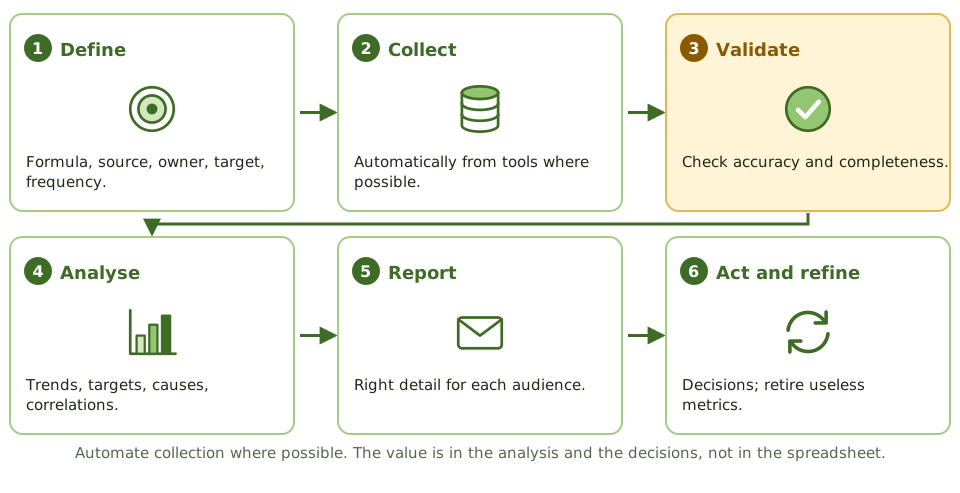
Getting good data
Analysing and reporting
- 1Show trends over time, not single snapshots.
- 2Compare against targets and thresholds.
- 3Explain causes, not just numbers.
- 4Summarise for executives; detail for teams.
- 5Highlight the decisions or actions needed.
How the exam asks about it
| If the question asks… | Answer |
|---|---|
| Most reliable way to collect metrics | Automated collection from source systems |
| Before reporting metrics | Validate accuracy and completeness |
| Most useful presentation | Trends against targets |
| Metric no longer drives decisions | Retire or replace it |
| Audience for detailed technical metrics | Operational teams, not the board |
Key takeaways
- ✓The metrics process: define, collect, validate, analyse, report, act and refine.
- ✓Automated collection from source systems is more reliable and cheaper than manual collection.
- ✓Validate data before reporting: inaccurate metrics destroy credibility and lead to bad decisions.
- ✓Trends over time say more than single values; compare against targets and thresholds.
- ✓Reports are tailored: summaries and business impact for executives, detail for operational teams.
- ✓Metrics are reviewed periodically; retire those that no longer drive decisions.
Exam traps
- !Self-reported data from the team being measured may be biased; verify independently.
- !A single data point says little; show trends.
- !Reporting too many metrics hides the important ones.
- !Metrics that nobody acts on are a waste of effort.
Security Maturity Models and Program Assessment
How maturity models describe how well-run the security program is, how to set realistic targets per area, and how assessments feed the strategy and roadmap.
How well run is the program?
Two organisations can both 'have' incident response. In one, it depends on whoever is on shift; in the other, it's documented, practised, measured and improved. Maturity models put a number on that difference, giving a common language for current state, target and progress.
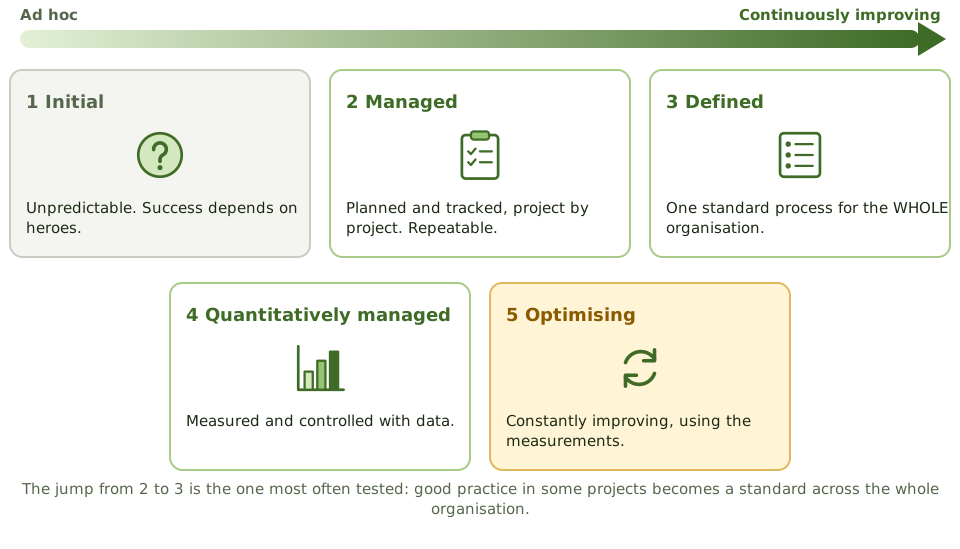
The levels
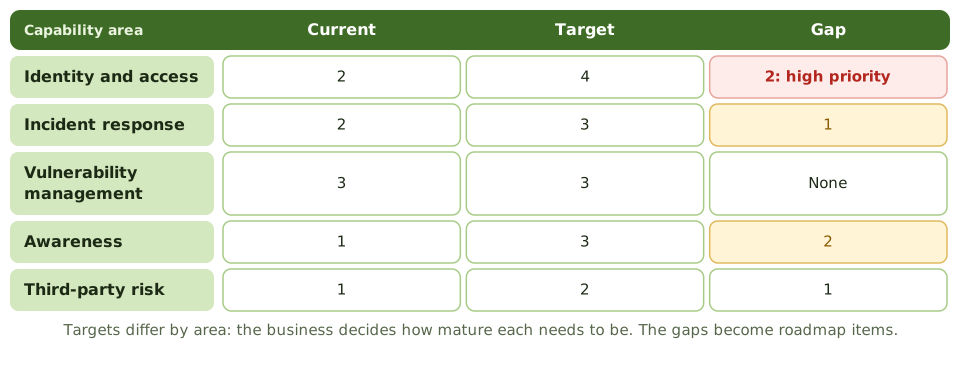
Current vs target, area by area
Running an assessment
- 1Choose the model and capability areas (COBIT, CMMI, NIST CSF tiers, C2M2).
- 2Gather evidence: documents, interviews, records, tests.
- 3Rate each area consistently, with evidence for each rating.
- 4Agree targets with the business, based on risk.
- 5Turn gaps into roadmap initiatives and reassess yearly.
Other program assessments
How the exam asks about it
| If the question asks… | Answer |
|---|---|
| Level with standard organisation-wide processes | Level 3: defined |
| How to set target maturity | By business need and risk, per area |
| Main use of a maturity assessment | Define current state and gaps for the strategy |
| Self-assessed maturity seems high | Validate with evidence / independent review |
| Does maturity prove controls work? | No; it shows process discipline |
Key takeaways
- ✓Maturity models rate how well defined, managed and improved processes are, usually on a 0 or 1 to 5 scale.
- ✓CMMI-style levels: initial, managed, defined, quantitatively managed, optimising; COBIT 2019 uses capability levels 0 to 5.
- ✓Targets are set per capability area by business need and risk; not everything needs level 5.
- ✓Maturity assessments define the current and desired state for the strategy, and the gaps become roadmap items.
- ✓Other program assessments include NIST CSF profiles, ISO 27001 internal audits, and external benchmarks.
- ✓Maturity shows process discipline; it doesn't prove that every individual control works.
Exam traps
- !Recommending the highest maturity everywhere ignores cost and need.
- !Level 3 means one standard process across the organisation, not just good practice in some teams.
- !Maturity scores self-assessed without evidence tend to be inflated.
- !A mature process can still contain a badly designed control.
Control Types and Categories
How controls are classified by function (deterrent, preventive, detective, corrective, compensating) and by type (administrative, technical, physical), and why good designs layer them.
What a control is
A control is any measure that reduces the likelihood or impact of a risk: a policy, a process, a technology or a physical barrier. Classifying controls helps the security manager check that the design is balanced and that nothing relies on a single kind of protection.
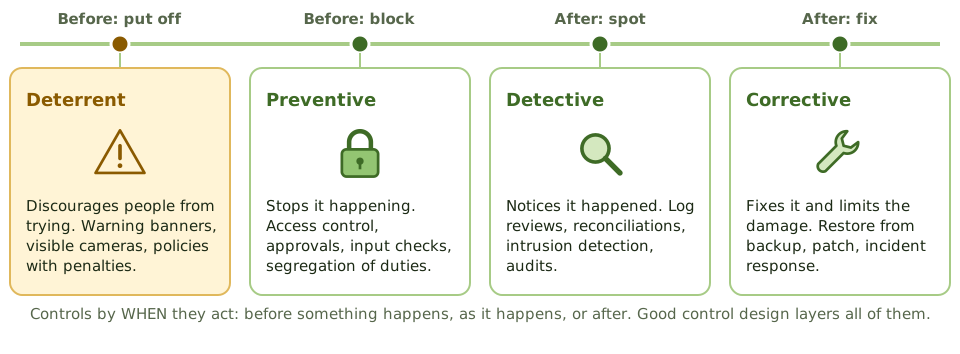
Controls by when they act
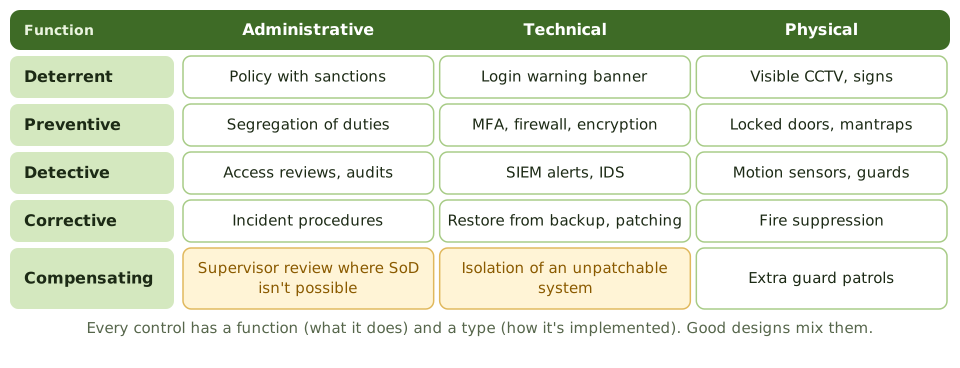
Function and type together
Compensating controls
When the preferred control isn't feasible (too costly, technically impossible, too small a team), a compensating control reduces the same risk another way.
Choosing the mix
- 1Prefer prevention where it's cost-effective.
- 2Add detection: prevention eventually fails.
- 3Plan correction: some events will happen anyway.
- 4Prefer automated controls, protected by change management.
- 5Mix administrative, technical and physical controls.
How the exam asks about it
| If the question asks… | Answer |
|---|---|
| Control that stops an event happening | Preventive |
| Reconciliation or log review | Detective |
| Restoring from backup | Corrective |
| Substitute when the main control isn't possible | Compensating |
| Why automated controls are preferred | Consistency, if change is controlled |
Key takeaways
- ✓By function: deterrent (discourage), preventive (stop), detective (find), corrective (fix and recover), compensating (substitute for a control that isn't feasible).
- ✓By type: administrative (policies, procedures, training), technical or logical (systems), physical (locks, guards, environment).
- ✓Preventive controls are usually preferred because stopping an event is cheaper than dealing with it, but prevention fails, so detection and correction are essential.
- ✓Compensating controls reduce risk when the preferred control isn't possible; they must address the same risk.
- ✓Automated controls are more consistent than manual ones, as long as change management protects them.
- ✓Control objectives state what a control must achieve; the control is how.
Exam traps
- !Logs nobody reviews aren't a detective control.
- !Backups are corrective (recovery), not preventive.
- !A compensating control must address the same risk as the control it replaces.
- !Warning banners deter; they don't prevent.
Control Design and Selection Based on Risk and Cost
How the security manager designs and selects controls: starting from risk and control objectives, weighing effectiveness against cost and usability, and designing in ownership and evidence from the start.
Start from the risk
Control design and selection is a named CISM topic. The question isn't 'what's the best product?' but 'what's the most cost-effective way to bring this risk within appetite, in a way people will actually use?'
The selection process
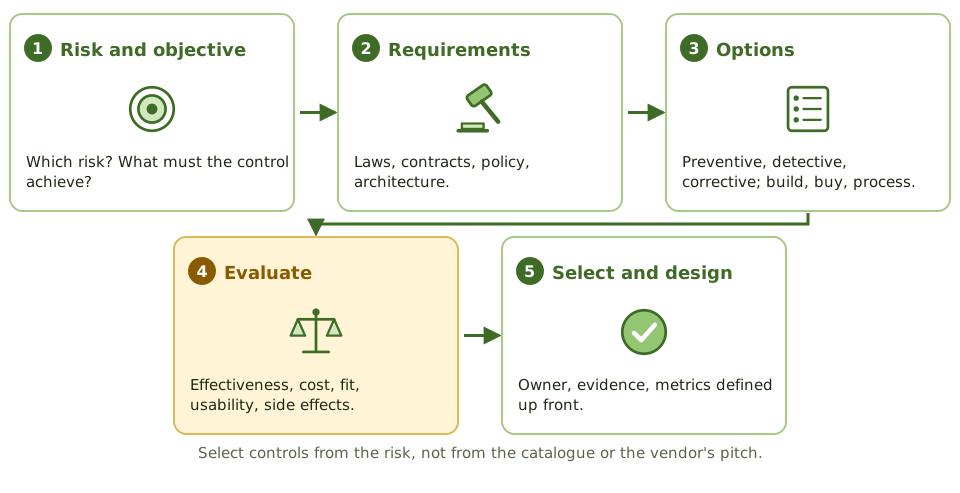
Evaluation criteria
| Criterion | Question |
|---|---|
| Effectiveness | How much does it reduce likelihood or impact? |
| Cost | Total cost of ownership, including people |
| Fit | Works with our architecture and processes? |
| Usability | Will people use it or work around it? |
| Requirements | Mandated by law, contract or policy? |
| Side effects | New risks, performance impact, single points of failure |
Design for operation
How the exam asks about it
| If the question asks… | Answer |
|---|---|
| Primary basis for selecting controls | Risk assessment and control objectives |
| Most important factor in control selection | Effectiveness against the risk, at reasonable cost |
| Control is effective but users bypass it | Redesign for usability; address the cause |
| What to define when designing a control | Owner, evidence and metrics |
| Control costs more than the risk | Usually not justified unless required |
Key takeaways
- ✓Controls are selected to treat specific risks and meet control objectives, not because a catalogue lists them.
- ✓Selection criteria: effectiveness against the risk, cost (total cost of ownership), fit with architecture and processes, usability, legal requirements and side effects.
- ✓Prefer controls that address root causes and protect several risks at once.
- ✓Design controls with an owner, evidence and metrics from the start, so they can be operated and tested.
- ✓Usability matters: controls that obstruct work are bypassed.
- ✓Determining whether controls are appropriate and effectively manage risk is a core CISM task.
Exam traps
- !Choosing the most technically advanced control isn't the same as choosing the right one.
- !A control that costs more than the risk it reduces is rarely justified, unless required.
- !Controls that nobody can operate or evidence fail in practice and in audit.
- !Ignoring user impact leads to workarounds that create new risks.
Control Testing: Design vs Operating Effectiveness
How the security manager evaluates controls: whether they're designed to meet their objective, whether they actually operate as designed over time, and which testing methods give reliable evidence.
Two different questions
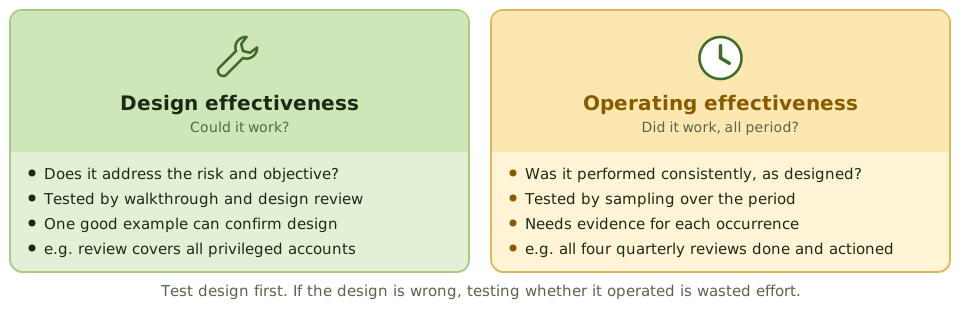
Testing methods
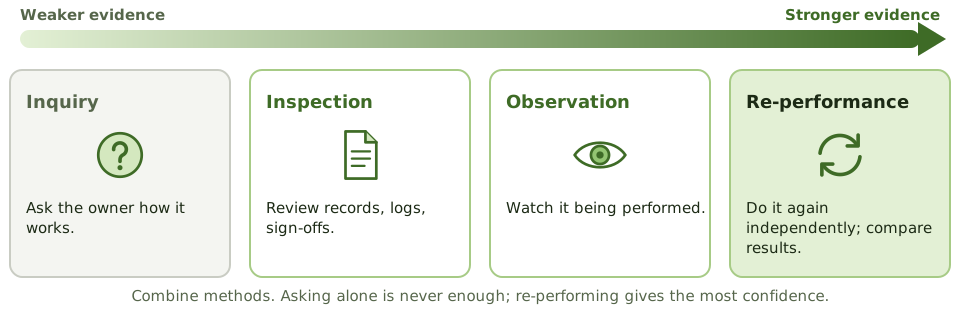
Who tests
| Tester | Strength | Limitation |
|---|---|---|
| Control owner (self-assessment) | Cheap, frequent | Not independent |
| Security / second line | Expertise, some independence | Part of management |
| Internal audit | Independent | Periodic, limited coverage |
| Automated monitoring | Continuous, complete | Only for technical controls |
An example
Results feed the risk register, metrics and the improvement plan.
Continuous control monitoring
- 1Automated checks of technical controls, daily or continuously.
- 2e.g. MFA coverage, backup success, configuration compliance.
- 3Exceptions raise alerts or tickets immediately.
- 4Frees people to test complex manual controls.
How the exam asks about it
| If the question asks… | Answer |
|---|---|
| Would the control meet its objective if performed? | Design effectiveness |
| Was the control performed consistently over time? | Operating effectiveness |
| Strongest testing method | Re-performance |
| Weakest testing method | Inquiry |
| What to test first | Design |
Key takeaways
- ✓Design effectiveness asks whether a control, if performed as intended, would meet its objective.
- ✓Operating effectiveness asks whether it was actually performed consistently, as designed, over the period.
- ✓Test design first; a badly designed control isn't worth testing for operation.
- ✓Testing methods, from weakest to strongest: inquiry, inspection, observation, re-performance.
- ✓Continuous control monitoring automates testing for technical controls and catches failures quickly.
- ✓Control testing and evaluation is a named CISM topic; results feed risk ratings, metrics and improvement.
Exam traps
- !Inquiry alone is never sufficient evidence.
- !A control that operated perfectly but is badly designed still leaves the risk.
- !One successful example proves design, not operation over a period.
- !Control owners testing their own controls lack independence; use second- or third-line testing for key controls.
Identity and Access Management
The security manager's view of IAM: the identity life cycle, strong authentication, least-privilege authorisation, privileged access and access reviews, and the governance that ties them together.
Identity is the new perimeter
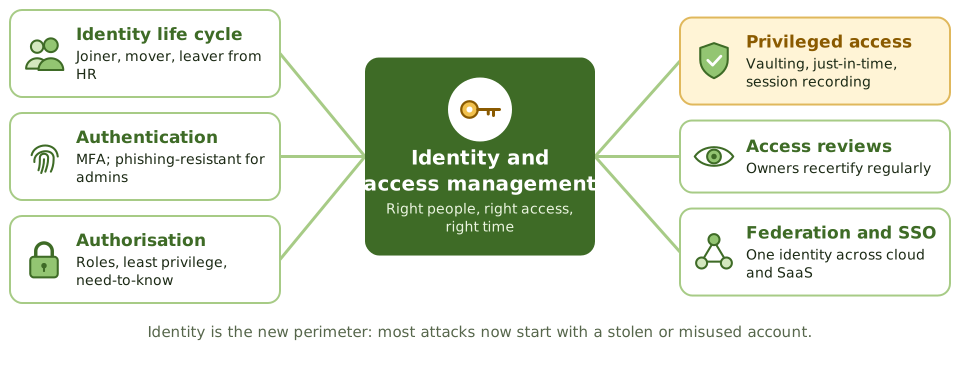
With cloud services, remote working and SaaS, there's no single network edge to defend. Most attacks now start with a stolen, weak or over-privileged account. That makes identity and access management one of the program's most important control areas.
The parts of IAM
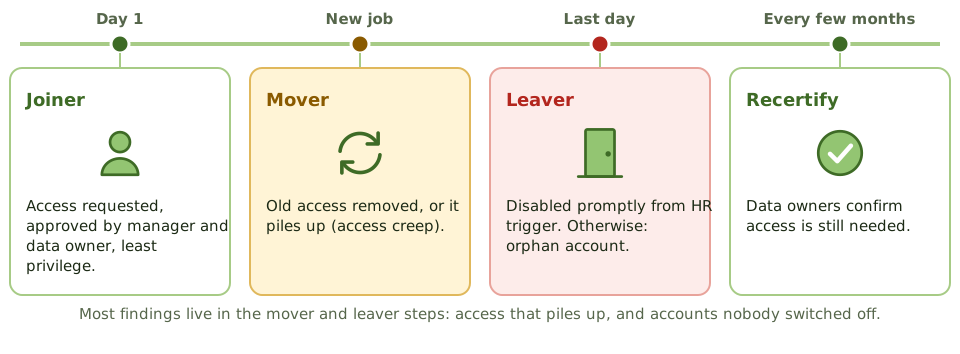
Joiners, movers, leavers
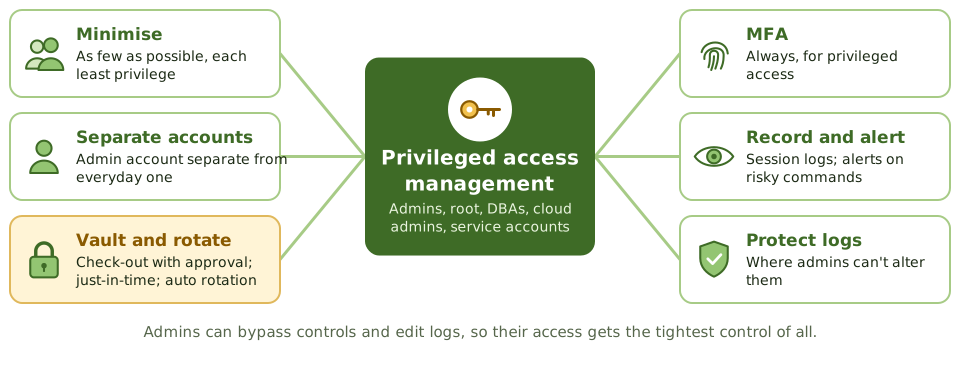
Privileged access
Governance of access
- 1Information owners approve access and recertify it.
- 2Access requests and approvals are recorded.
- 3Leavers disabled within hours, triggered by HR.
- 4Machine identities have owners and rotated credentials.
- 5Metrics: MFA coverage, orphan accounts, review completion.
How the exam asks about it
| If the question asks… | Answer |
|---|---|
| Who approves access to data | The information owner |
| Best control over admin accounts | Privileged access management |
| Best way to detect access creep | Periodic access reviews by owners |
| Trigger for removing a leaver's access | HR notification, automated where possible |
| Strongest MFA for admins | Phishing-resistant (FIDO2 / smart card) |
Key takeaways
- ✓IAM makes sure the right people (and machines) have the right access, for the right reasons, at the right time, and that it's removed when no longer needed.
- ✓The identity life cycle (joiner, mover, leaver) should be driven by HR, with access approved by information owners.
- ✓MFA is a baseline control; phishing-resistant MFA (FIDO2, passkeys, smart cards) is expected for privileged and remote access.
- ✓Authorisation follows least privilege and need-to-know, typically through role-based access.
- ✓Privileged access management (PAM) vaults admin credentials, grants just-in-time access and records sessions.
- ✓Regular access reviews by owners catch access creep and orphan accounts; results are evidence for auditors.
Exam traps
- !Access is approved by the information owner, not by IT or the security administrator.
- !Access reviews done only by IT don't confirm business need.
- !Service accounts and API keys are identities too, and are often forgotten.
- !SSO without MFA concentrates risk in one password.
Network and Endpoint Security Controls
The core network and endpoint controls a security program needs, what each protects against, and what the security manager monitors to know they're working.
The manager's view
The security manager doesn't configure firewalls, but must make sure the right network and endpoint controls exist, cover everything they should, have owners and are measured. CISA covers the technical detail; CISM focuses on choosing, governing and evaluating them.
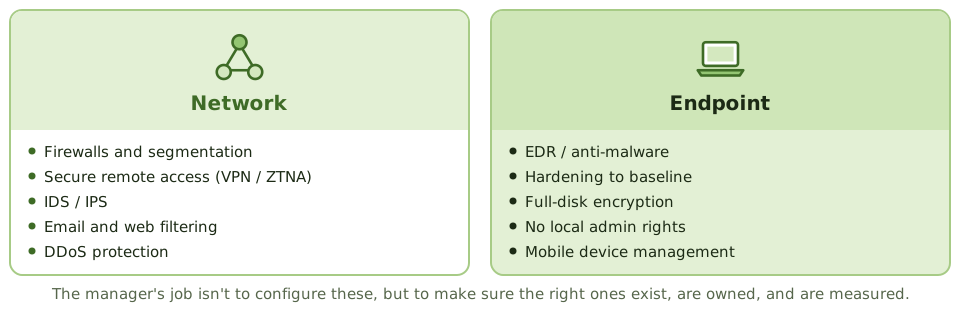
Core controls
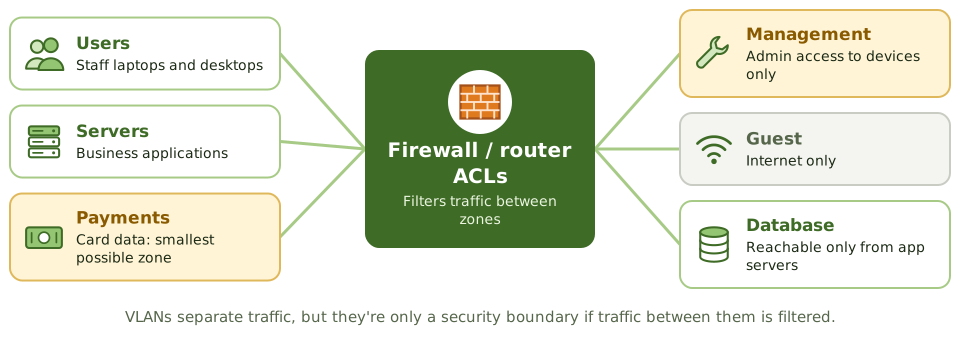
Segmentation limits damage
What each stops
| Control | Main threat addressed |
|---|---|
| Email filtering | Phishing and malicious attachments |
| EDR | Malware, ransomware, attacker activity on hosts |
| Segmentation | Lateral movement after a breach |
| Secure remote access with MFA | Credential theft and VPN attacks |
| Full-disk encryption | Data loss from lost or stolen devices |
| DDoS protection | Service outages from traffic floods |
Measuring coverage and effect
- 1% of endpoints with healthy EDR.
- 2% of laptops encrypted.
- 3Critical systems in segmented zones.
- 4Users with local admin rights.
- 5Mean time to contain detected endpoint threats.
How the exam asks about it
| If the question asks… | Answer |
|---|---|
| Control that limits lateral movement | Network segmentation |
| Endpoint tool that detects malicious behaviour | EDR |
| Best control for data on lost laptops | Full-disk encryption |
| Main weakness of endpoint programs | Incomplete coverage |
| Best measure of endpoint control | Coverage against the asset inventory |
Key takeaways
- ✓Network controls include firewalls and segmentation, secure remote access, intrusion detection and prevention, email and web filtering, and DDoS protection.
- ✓Segmentation limits how far an attacker can move; critical systems sit in their own zones.
- ✓Endpoint controls include EDR, hardening to baselines, full-disk encryption, no local admin rights, application control and mobile device management.
- ✓EDR detects and responds to malicious behaviour, not just known malware signatures.
- ✓Coverage gaps are the main weakness: an unmanaged device or unsegmented network undoes the rest.
- ✓Managers track coverage and effectiveness metrics, such as EDR coverage, critical-system segmentation and encrypted laptops.
Exam traps
- !A firewall at the perimeter doesn't stop an attacker who is already inside; segmentation does.
- !Signature-based antivirus alone misses new malware.
- !Users with local admin rights can disable endpoint protection.
- !Controls that cover 90% of devices leave the attacker the other 10%.
Application Security and the Secure SDLC
How the security manager builds security into how software is built and bought: requirements, threat modelling, secure coding, testing, release gates and the supply chain of code.
Built in, not bolted on
Most breaches of web applications exploit flaws that could have been prevented during design or coding. The security manager's role is to make the secure way the normal way of building and buying software, through requirements, tools, training and gates.
The secure SDLC
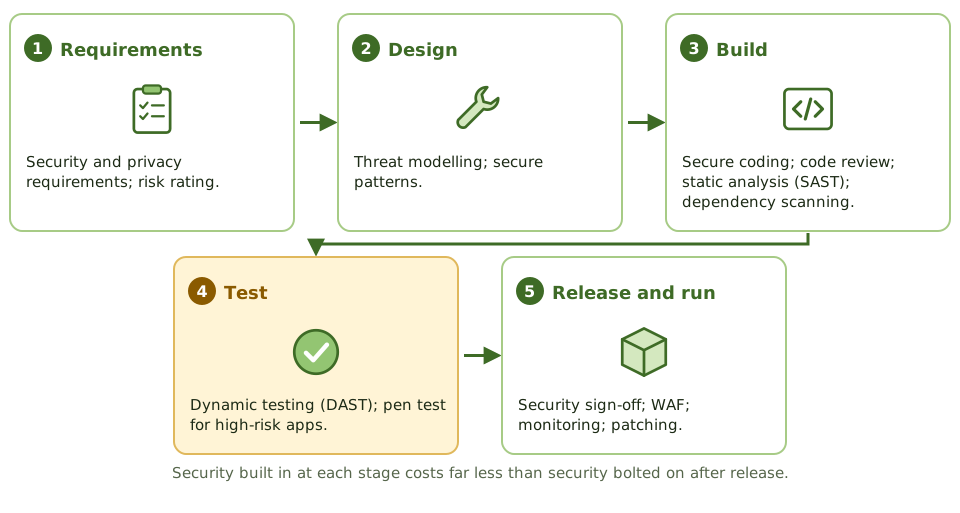
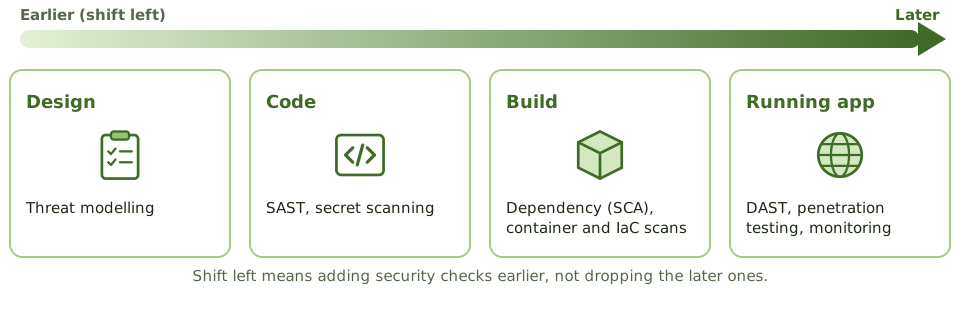
Shift left in DevSecOps
The software supply chain
Program-level controls
- 1Secure coding standard and developer training.
- 2Security requirements in project templates.
- 3Automated security tests that can block releases.
- 4Risk-based pen testing of high-risk applications.
- 5Metrics: open critical flaws, time to fix, coverage of scanning.
How the exam asks about it
| If the question asks… | Answer |
|---|---|
| When to address security in development | From requirements onward |
| Most cost-effective time to fix a flaw | Design |
| Testing source code for flaws | Static analysis (SAST) |
| Inventory of software components | SBOM |
| Role of a WAF | Compensating layer, not a replacement for secure code |
Key takeaways
- ✓Security is integrated into each stage of the software development life cycle (SDLC), from requirements to operation.
- ✓Fixing a flaw in design costs a fraction of fixing it after release.
- ✓Key practices: security requirements, threat modelling, secure coding standards, code review, SAST, DAST, dependency scanning and penetration testing.
- ✓In DevOps, security checks are automated in the pipeline (DevSecOps), and 'shift left' adds them earlier without removing later ones.
- ✓Third-party and open-source components need inventory (SBOM) and vulnerability tracking.
- ✓Purchased software also needs security requirements in contracts and testing before use.
Exam traps
- !A web application firewall is a compensating layer, not a substitute for secure code.
- !Shift left means testing earlier, not skipping testing later.
- !Developers shouldn't approve and deploy their own code to production without review.
- !Ignoring open-source dependencies leaves known vulnerabilities in production.
Configuration, Change and Patch Management
How three IT processes keep systems in a known secure state, why they matter so much to security, and what the security manager watches to know they're working.
Keeping systems in a known good state
Most systems start secure and drift: settings change, patches are missed, emergency fixes become permanent. Three IT processes keep production in a known, approved state. The security manager doesn't run them, but depends on them and must make sure security is built in.
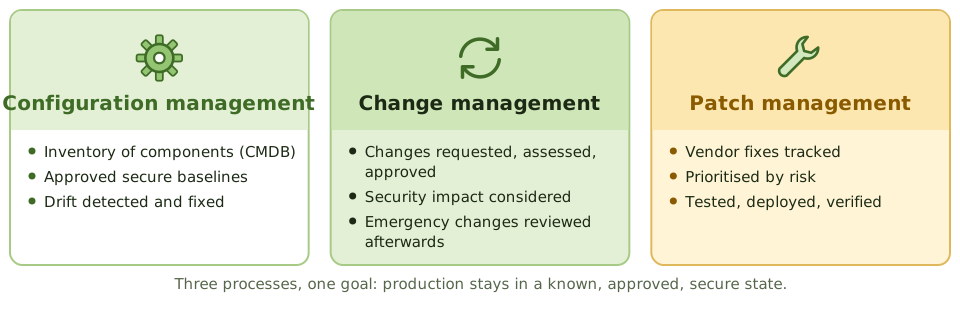
Three processes, one goal
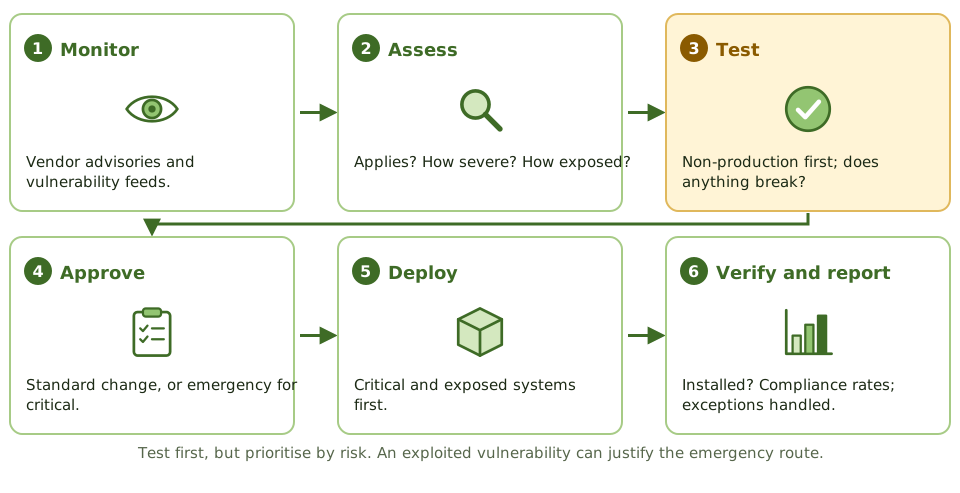
Patch management
Security's role in each
| Process | Security contributes |
|---|---|
| Configuration | Secure baselines; drift monitoring |
| Change | Security impact assessment for significant changes; seat on the change board |
| Patch | Risk-based prioritisation; patch SLAs; exceptions |
| All three | Metrics and escalation when they slip |
When patching isn't possible
- 1Isolate the system (segmentation).
- 2Add monitoring and virtual patching (IPS, WAF).
- 3Document risk acceptance with an expiry.
- 4Plan replacement for end-of-life systems.
How the exam asks about it
| If the question asks… | Answer |
|---|---|
| Step before deploying a patch to production | Test it |
| How to prioritise patches | By risk: exploitation, exposure, criticality |
| System can't be patched | Compensating controls and documented acceptance |
| Emergency change made without approval | Document and review it afterwards |
| Detecting unauthorised configuration change | Compare against the baseline (drift monitoring) |
Key takeaways
- ✓Configuration management keeps an inventory of components and their approved secure configurations (baselines), and detects drift.
- ✓Change management makes sure every change is requested, assessed (including for security impact), approved, tested and recorded.
- ✓Patch management tracks vendor fixes, prioritises them by risk, tests and deploys them, and verifies installation.
- ✓Unpatched systems and misconfigurations are among the most common causes of breaches.
- ✓Emergency changes and patches may skip prior approval but must be documented and reviewed afterwards.
- ✓Systems that can't be patched need compensating controls and documented risk acceptance.
Exam traps
- !Patching purely by severity score, ignoring exploitation and exposure, is inefficient.
- !Applying patches straight to production without testing risks outages.
- !Unsupported (end-of-life) systems that no longer get patches need replacement or isolation.
- !A change process that security isn't part of can introduce new vulnerabilities unnoticed.
Cryptography for Security Managers
What a security manager needs to decide about cryptography: where to encrypt, which standards to allow, how keys are managed, and how to prepare for change such as post-quantum algorithms.
Decisions, not mathematics
The security manager doesn't need to design algorithms. They need to decide what must be encrypted, which standards are allowed, who controls the keys, and how the organisation will cope when an algorithm becomes unsafe. Those are governance decisions with long consequences.
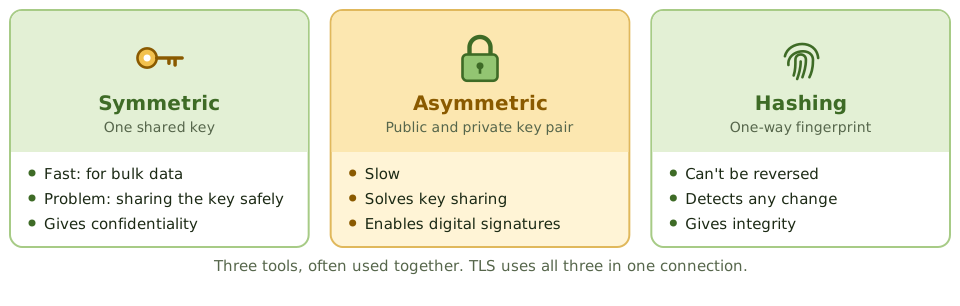
What cryptography gives you
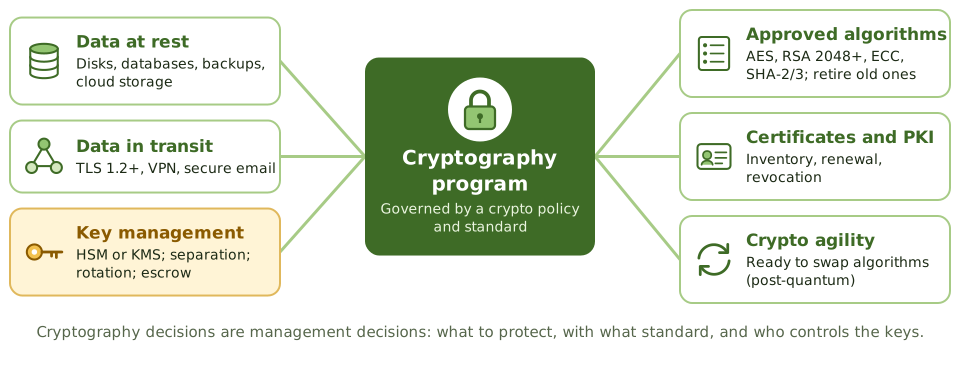
The cryptography program
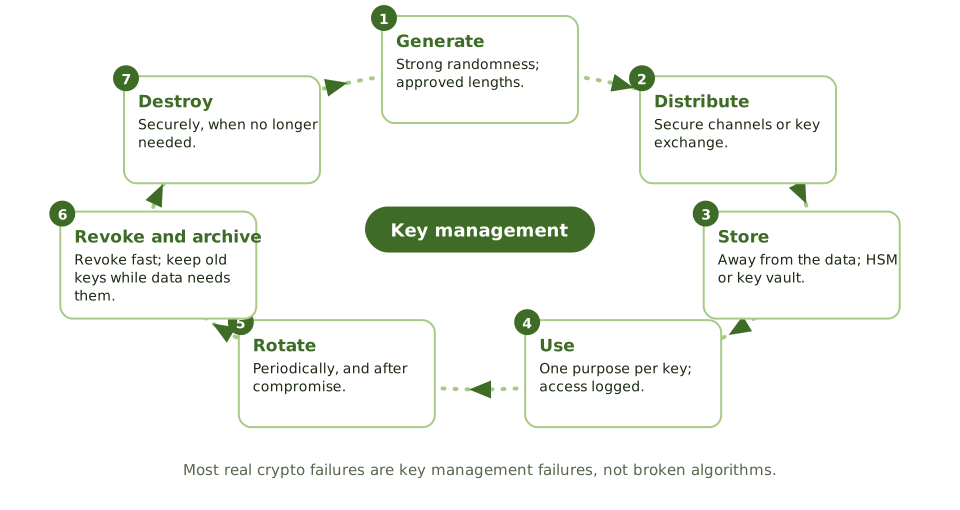
Key management
Preparing for change
How the exam asks about it
| If the question asks… | Answer |
|---|---|
| Most common weakness in encryption programs | Key management |
| Where encryption keys should be stored | HSM or KMS, separate from the data |
| What decides where encryption is required | Data classification and risk |
| Control providing non-repudiation | Digital signatures |
| Preparing for post-quantum | Crypto inventory and agility |
Key takeaways
- ✓Cryptography provides confidentiality (encryption), integrity (hashing, MACs), authentication and non-repudiation (digital signatures).
- ✓A cryptography policy and standard set where encryption is required, which algorithms and key lengths are approved, and how keys are managed.
- ✓Key management is where most crypto fails: keys belong in HSMs or key management services, separate from the data, with controlled access and rotation.
- ✓Encryption follows classification: required for confidential data at rest and in transit, and for portable devices.
- ✓Certificates need an inventory and renewal process; expired certificates cause outages.
- ✓Crypto agility, the ability to swap algorithms, prepares for deprecated algorithms and post-quantum migration.
Exam traps
- !Encryption without good key management gives little protection.
- !Keys stored with the encrypted data protect almost nothing if the system is breached.
- !Encryption gives confidentiality; non-repudiation needs digital signatures.
- !Escrowing signing keys undermines non-repudiation; escrow is for encryption keys.
Security Testing: Scanning, Pen Testing and Tracking Remediation
How the security manager plans a security testing program (scans, reviews, penetration tests, red teams), authorises tests properly, and makes sure findings get fixed.
Prove it, don't assume it
Controls that look good on paper can fail in practice. Security testing gives evidence of how the organisation would fare against a real attacker. The security manager plans a program of tests that matches the risk, gets them authorised, and makes sure findings are fixed.
Types of testing
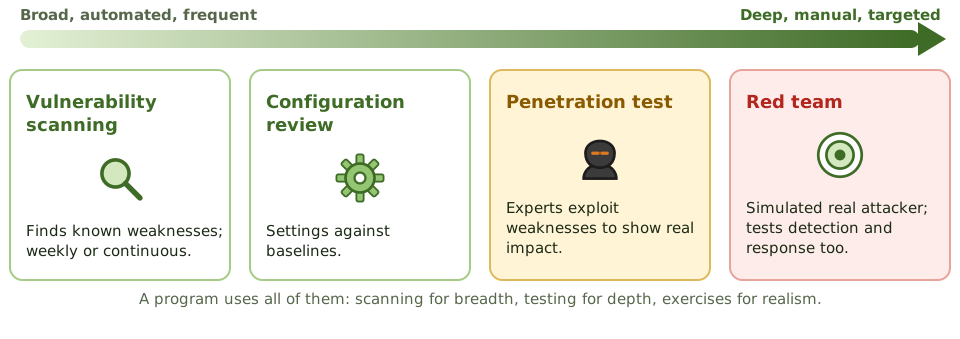
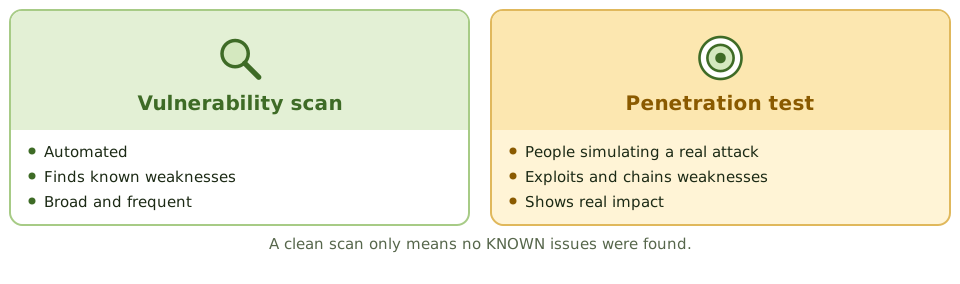
Scanning vs penetration testing
Authorisation and planning
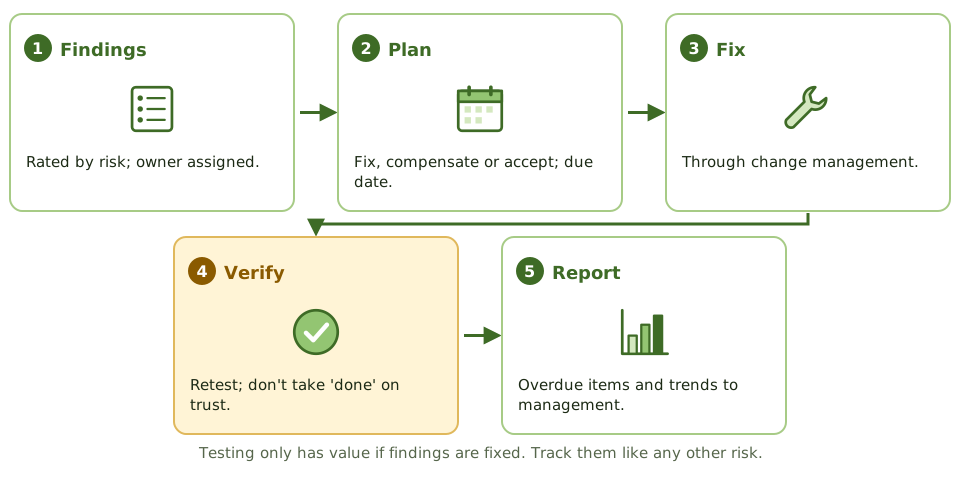
Fixing what's found
How the exam asks about it
| If the question asks… | Answer |
|---|---|
| Most important requirement before a pen test | Written management authorisation and agreed scope |
| Test that also checks detection and response | Red team exercise |
| How to decide testing frequency | By risk and after significant change |
| How to confirm a finding is fixed | Retest / verify |
| Main purpose of security testing | Evidence of control effectiveness |
Key takeaways
- ✓A testing program combines vulnerability scanning (breadth), configuration review, penetration testing (depth) and red teaming (realism).
- ✓Penetration testing exploits weaknesses to show real impact; red teaming also tests detection and response.
- ✓Every test needs written authorisation from management with scope and rules of engagement.
- ✓Testing is risk-based: higher-risk systems are tested more often and more deeply, and after major change.
- ✓Findings are tracked like risks: owner, plan, due date, retest to verify.
- ✓Test results feed control evaluation, metrics, the risk register and the roadmap.
Exam traps
- !Testing without written authorisation can be illegal and disruptive.
- !A clean scan doesn't mean the system is secure.
- !Findings closed without retesting may not be fixed.
- !Testers shouldn't fix what they find during the test; they report it.
Security Awareness Program Design
How the security manager designs an awareness program that changes behaviour: starting from human risk, setting measurable objectives, using varied delivery and measuring outcomes rather than attendance.
People as a control
Many incidents start with a person: clicking a link, sharing a password, sending a file to the wrong address. But people also spot and report attacks no tool would catch. Awareness turns the workforce from the weakest link into an early-warning network.
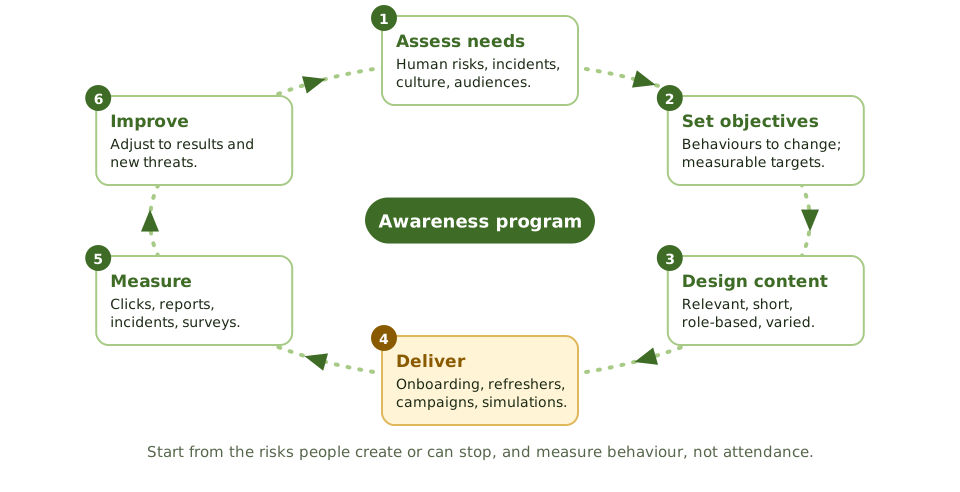
The program cycle
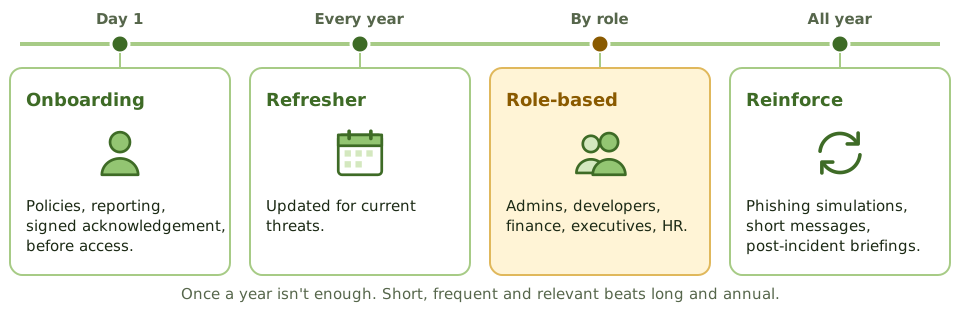
Delivery through the year
Measure behaviour, not attendance
| Activity measure (weak) | Behaviour measure (strong) |
|---|---|
| Training completion rate | Phishing simulation report rate |
| Hours of training delivered | Click rate trend on simulations |
| Posters displayed | Incidents caused by user error |
| Quiz pass rate | Time from phishing email to first report |
What makes it work
How the exam asks about it
| If the question asks… | Answer |
|---|---|
| Best measure of awareness effectiveness | Behaviour change (e.g. reporting rate, fewer incidents) |
| First step in designing awareness | Assess the human risks and audiences |
| When new staff should be trained | At onboarding, before access |
| Most important success factor | Senior management support and participation |
| Staff who report mistakes | Encourage; no-blame culture |
Key takeaways
- ✓Establishing, promoting and maintaining an awareness and training program is a CISM task; people are both a major risk and a strong control.
- ✓Design starts from the human risks: which behaviours cause incidents, and which behaviours can stop them.
- ✓Objectives are behavioural and measurable, such as 'raise phishing report rate to 70%'.
- ✓Content is relevant, short, frequent, varied and tailored to audiences; onboarding before access, then regular reinforcement.
- ✓Measure behaviour (reporting, click rates, incidents, policy exceptions), not completion rates alone.
- ✓Senior management participation and a no-blame reporting culture make awareness work.
Exam traps
- !Annual compliance training alone rarely changes behaviour.
- !100% completion says nothing about effectiveness.
- !Generic content ignores the risks of specific roles.
- !Shaming people who click discourages reporting, which is the behaviour you want most.
Role-Based Security Training
Why different roles need different training, what to cover for executives, finance, IT, developers and others, and how the security team keeps its own skills current.
One size doesn't fit all
A receptionist, a payroll clerk, a database administrator and the CEO face very different threats and hold very different powers. Role-based training puts the most effort where a mistake would do the most damage.
Training by role
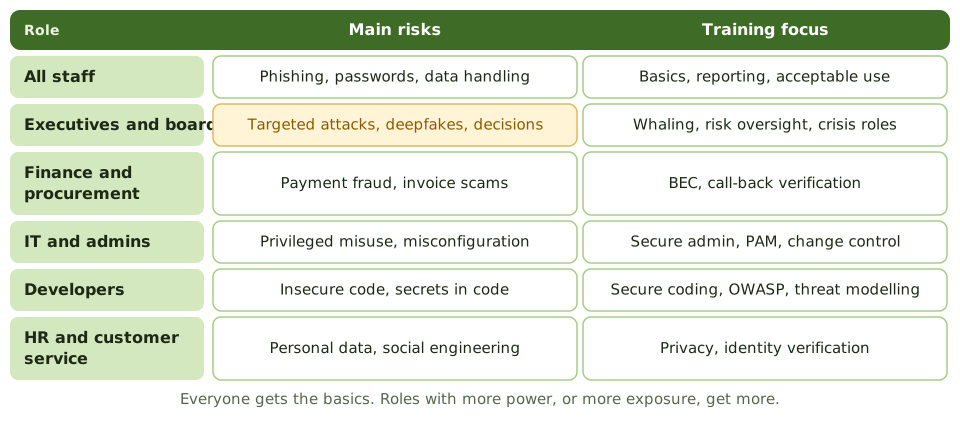
Executives and the board
- 1How they're targeted: whaling, deepfakes, impersonation.
- 2Their governance duties: risk appetite, oversight, approval.
- 3Their role in a crisis: decisions, communications, regulators.
- 4Short, scenario-based sessions; tabletop exercises.
Developing the security team
How the exam asks about it
| If the question asks… | Answer |
|---|---|
| Why role-based training | Addresses role-specific risks and privileges |
| Training for finance staff | Payment fraud and business email compromise |
| Training for developers | Secure coding |
| Executives skip training | Senior management must take part; they're targets |
| Source of training needs | Risk assessments, incidents, audits, role changes |
Key takeaways
- ✓Everyone needs basic awareness; roles with more privilege or exposure need targeted training.
- ✓High-risk roles include executives (targeted attacks), finance (payment fraud), IT administrators (privileged access), developers (secure code) and staff handling personal data.
- ✓Executives and board members need training on their oversight duties and crisis roles, as well as on being targets.
- ✓The security team itself needs ongoing technical training and certifications to keep pace with threats.
- ✓Training needs come from risk assessments, incidents, audits and role changes.
- ✓Completion and effectiveness are tracked per role; people moving roles get the new role's training.
Exam traps
- !One generic course for everyone misses the biggest role-specific risks.
- !Executives are often exempted from training but are prime targets.
- !Developers without secure coding training repeat the same vulnerabilities.
- !Training the security team is part of the program budget, not a perk.
Phishing Simulations and Social Engineering Defences
How social engineering works on people, how to run phishing simulations that teach rather than shame, and the layered technical and process defences that back up awareness.
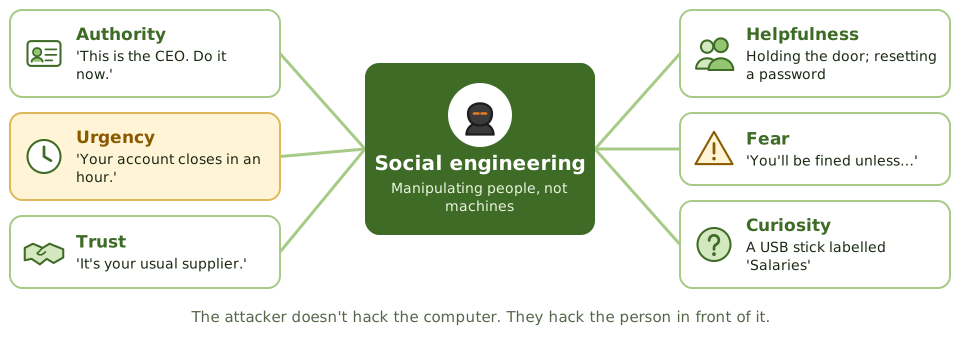
Hacking the human
Running simulations well
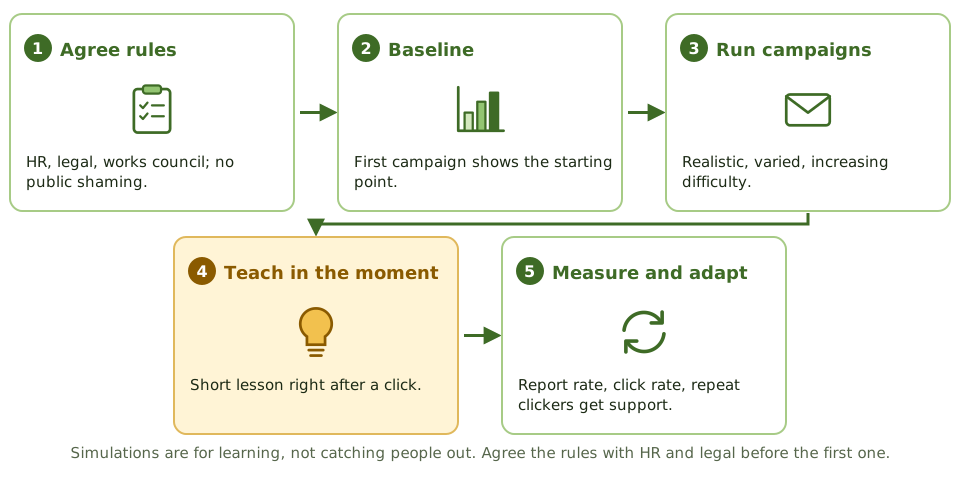
Click rate vs report rate
Layered defences
| Layer | Controls |
|---|---|
| Technical | Email filtering, sandboxing, DMARC/SPF/DKIM, phishing-resistant MFA |
| Process | Call-back on known numbers, dual approval for payments and bank changes |
| People | Awareness, simulations, easy reporting |
How the exam asks about it
| If the question asks… | Answer |
|---|---|
| Main purpose of phishing simulations | Measure and improve user behaviour |
| Best indicator of a healthy reporting culture | Rising report rate and speed |
| Best control against business email compromise | Independent verification and dual approval |
| Most effective control against social engineering | Security awareness, backed by technical and process controls |
| Simulation results used to shame staff | Wrong; it undermines reporting |
Key takeaways
- ✓Social engineering exploits trust, authority, urgency, fear, helpfulness and curiosity rather than technical flaws.
- ✓Phishing simulations measure and improve how people respond; the report rate matters more than the click rate.
- ✓Run simulations with agreed rules (HR, legal), realistic content, immediate teaching and no public shaming.
- ✓Awareness is backed by technical controls (email filtering, DMARC, phishing-resistant MFA) and process controls (call-back verification, dual approval).
- ✓Business email compromise and deepfake impersonation are best stopped by verification procedures, not training alone.
- ✓Repeat clickers get extra support; persistent deliberate disregard goes through the normal disciplinary process.
Exam traps
- !Click rate alone is a misleading measure; report rate and speed show a healthy culture.
- !Simulations used to punish people destroy trust and reporting.
- !Calling the number in a suspicious email isn't independent verification.
- !Training can't be the only defence; layer technical and process controls.
Third-Party Risk Management and Due Diligence
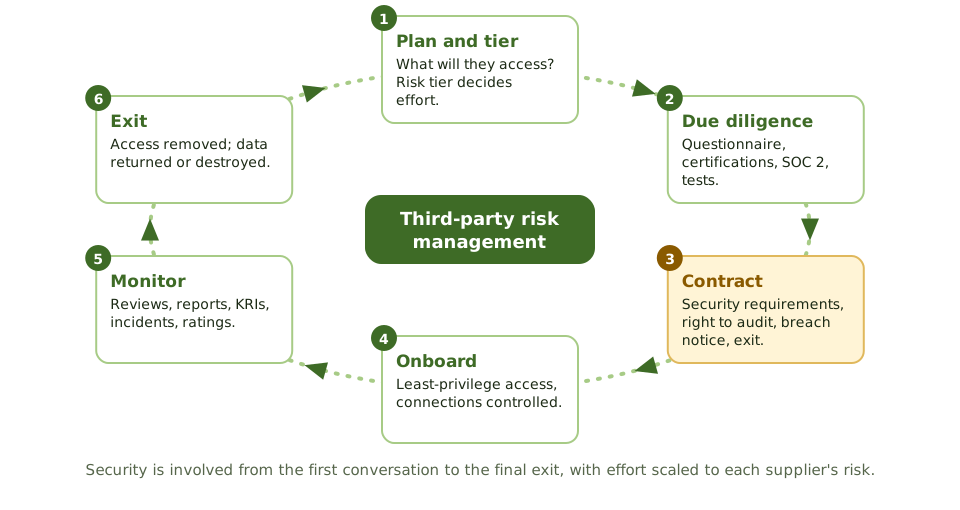
How the security manager governs the risk of suppliers and service providers: tiering, due diligence, contractual requirements, monitoring and exit, scaled to each supplier's risk.
Your risk, their hands
Most organisations rely on dozens or hundreds of suppliers: cloud platforms, payroll, IT support, marketing agencies. Each one that touches data or systems carries part of the organisation's risk. Many major breaches start at a supplier.
The third-party life cycle
Tier suppliers by risk
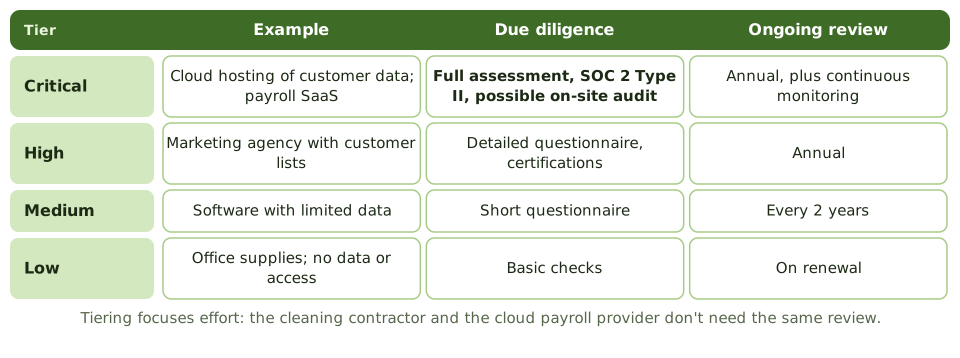
Due diligence evidence
| Evidence | Gives you |
|---|---|
| Security questionnaire | Supplier's own description; needs verification |
| ISO 27001 certificate | Management system certified, for the stated scope |
| SOC 2 Type II report | Independent testing of controls over a period |
| Penetration test summary | Evidence of testing and remediation |
| On-site or remote audit | Direct verification (right to audit) |
Monitoring throughout
- 1Periodic reassessment by tier.
- 2Breach and incident notification within agreed times.
- 3Review of new SOC reports and certificates.
- 4Security ratings and threat intelligence on suppliers.
- 5Access reviews for supplier accounts.
How the exam asks about it
| If the question asks… | Answer |
|---|---|
| When to assess a supplier's security | Before signing the contract |
| How to focus third-party effort | Tier suppliers by risk |
| Best independent assurance over a provider | SOC 2 Type II report, checked for scope |
| Who is accountable after outsourcing | The organisation |
| Supplier risk changes mid-contract | Reassess and act under the contract |
Key takeaways
- ✓Management of external services (providers, suppliers, third and fourth parties) is a named CISM topic; outsourcing work doesn't outsource accountability.
- ✓Third-party risk management covers the whole life cycle: plan and tier, due diligence, contract, onboard, monitor, exit.
- ✓Tiering by risk (data access, criticality, connectivity) scales effort so critical suppliers get the most scrutiny.
- ✓Due diligence uses questionnaires, certifications (ISO 27001), SOC 2 reports, evidence review and sometimes audits.
- ✓Monitoring continues throughout: periodic reviews, incident notification, performance against security requirements.
- ✓Integrating security requirements into contracts and monitoring third parties' adherence are CISM tasks.
Exam traps
- !Due diligence happens before the contract is signed, not after.
- !A supplier's certificate must cover the services you actually use.
- !Assessing every supplier the same way wastes effort and misses critical ones.
- !The organisation stays accountable for its data and customers, whatever the contract says.
Vendor Contracts, SLAs and Right to Audit
How to build security into supplier contracts: requirements, right to audit, breach notification, data handling, service levels and exit, so they can be enforced later.
Write it in, before signing
Once a contract is signed, the organisation's leverage drops sharply. Security requirements, audit rights and breach notification duties have to be agreed before signature, which is why security must be part of procurement from the start.
Key security clauses
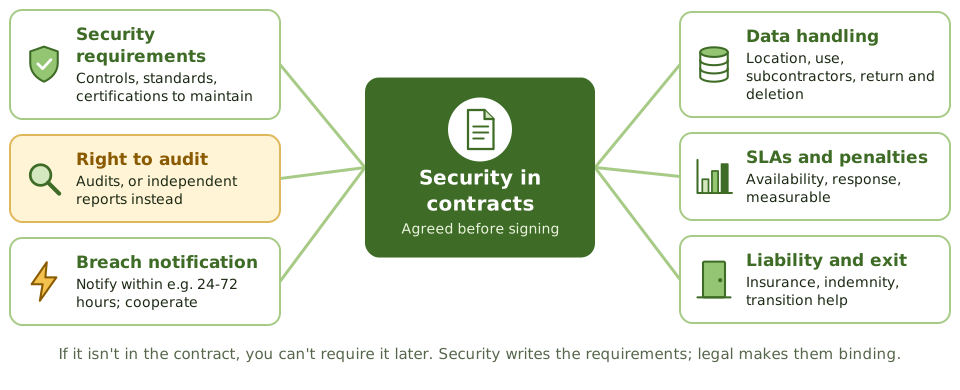
Measurable service levels
| SLA | Example target |
|---|---|
| Availability | 99.9% per month, measured by customer monitoring |
| Security incident notification | Within 24 hours of detection |
| Critical vulnerability remediation | Within 14 days |
| Access removal for leavers | Within 1 business day |
| Evidence | Annual SOC 2 Type II report |
Right to audit, in practice
How the exam asks about it
| If the question asks… | Answer |
|---|---|
| Most important clause for verifying controls | Right to audit |
| When to agree security requirements | Before the contract is signed |
| Large cloud provider won't allow audits | Rely on independent reports, checked for scope |
| SLA requirement | Measurable and monitored |
| Clause protecting data at the end | Exit: return or destruction of data |
Key takeaways
- ✓Security requirements must be written into the contract before signing; they're hard to add later.
- ✓Key clauses: security requirements and certifications, right to audit, breach notification, data handling and location, subcontractor approval, SLAs, liability and exit.
- ✓A right-to-audit clause lets the organisation, its auditors and regulators verify controls; large providers may offer independent reports instead.
- ✓SLAs must be measurable, monitored and backed by consequences; security-related SLAs include incident response and patch times.
- ✓Exit clauses cover return or destruction of data, transition assistance and access removal.
- ✓Monitoring external parties' adherence to these requirements is a CISM task; contracts are only as good as their enforcement.
Exam traps
- !Without a right-to-audit clause, you only see what the supplier chooses to show.
- !An SLA that can't be measured can't be enforced.
- !Penalties compensate for failures; they don't fix the security risk.
- !Missing exit terms leave data with the supplier after the relationship ends.
Fourth-Party and Supply Chain Risk
Risk that comes from your suppliers' suppliers, concentrations on shared providers, and compromised software, and what a security manager can realistically do about it.
The chain behind the supplier
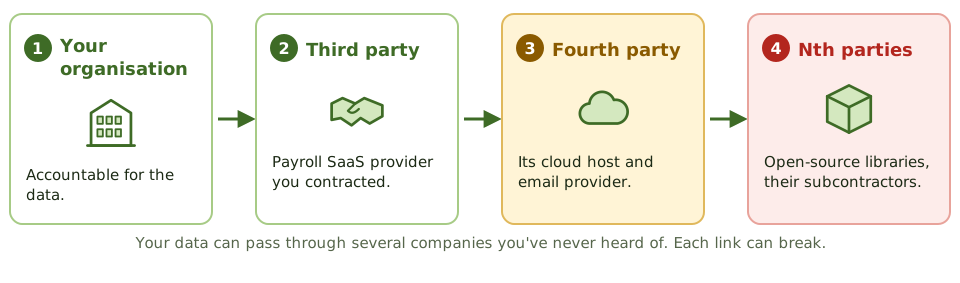
Four kinds of supply chain risk
What you can do
| Risk | Control |
|---|---|
| Unknown subcontractors | Disclosure and approval of material subcontractors; flow-down clauses |
| Compromised software | SBOMs, trusted sources, signed updates, monitoring, segmentation |
| Concentration | Map dependencies; diversify or plan alternatives for critical services |
| Supplier failure | Continuity requirements, escrow, exit plans |
An example
Knowing your dependencies before an incident is what makes a fast response possible.
How the exam asks about it
| If the question asks… | Answer |
|---|---|
| Your supplier's subcontractor | Fourth party |
| Best way to manage fourth-party risk | Require suppliers to manage and disclose their subcontractors |
| Many services depend on one provider | Concentration risk |
| Control for compromised software components | SBOM and dependency monitoring |
| Plan for critical supplier failure | Continuity and exit planning |
Key takeaways
- ✓Fourth parties are your suppliers' suppliers; your data and services may depend on companies you've never contracted.
- ✓Supply chain attacks compromise one trusted supplier or software product to reach many victims.
- ✓Concentration risk arises when many critical services depend on the same provider.
- ✓Controls: require suppliers to disclose and manage their subcontractors, flow down security requirements, and approve material changes.
- ✓For software, use SBOMs, trusted sources, signed updates and monitoring of vendor advisories.
- ✓Plan for supplier failure: continuity arrangements, alternatives and exit plans for critical dependencies.
Exam traps
- !Assessing only direct suppliers leaves the wider chain invisible.
- !Signed, trusted updates can still be malicious if the vendor itself is compromised; layer detection too.
- !Diversifying providers reduces concentration risk but adds complexity and cost.
- !You can't audit every fourth party; require your suppliers to manage theirs.
Outsourcing and Managed Security Services
When outsourcing security functions makes sense, what managed security providers typically do, and how the organisation keeps accountability and control.
Why outsource security?
Running a 24x7 security operations centre needs at least eight to ten skilled analysts, plus tools and threat intelligence. For many organisations, a managed service gives better coverage for less money. The question is how to outsource the work without losing control.
What's commonly outsourced
| Service | Why |
|---|---|
| SOC monitoring / MDR | 24x7 coverage, analysts, threat intelligence |
| Vulnerability scanning | Tools and expertise as a service |
| Penetration testing | Independence and specialist skills |
| Incident response retainer | Experts on call for major incidents |
| Security awareness platforms | Content and simulation tools |
Who does what
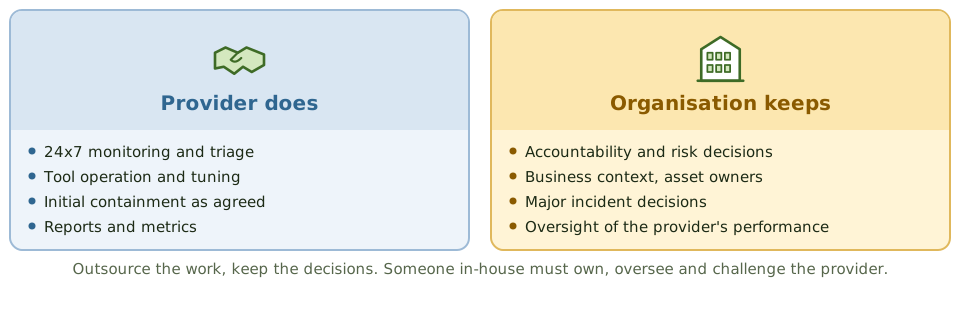
Making it work
- 1A RACI agreed for detection, escalation and containment.
- 2Measurable SLAs: time to detect, notify and contain.
- 3Business context shared: critical assets, owners, normal patterns.
- 4Regular service reviews with metrics and sample checks.
- 5Exit terms: logs, rules and knowledge transferable.
How the exam asks about it
| If the question asks… | Answer |
|---|---|
| Main benefit of an MSSP | 24x7 coverage and scarce skills |
| Who is accountable after outsourcing | The organisation |
| Most important thing to keep in-house | Oversight, decisions and business context |
| How to measure the provider | SLAs and regular service reviews |
| Plan before signing | Exit and transferability of data and rules |
Key takeaways
- ✓Managed security service providers (MSSPs) and MDR services offer 24x7 monitoring, scarce skills and scale that many organisations can't build.
- ✓Commonly outsourced: SOC monitoring, managed detection and response, vulnerability scanning, penetration testing, incident response retainers.
- ✓Accountability, risk decisions and business context stay with the organisation.
- ✓Clear responsibilities (RACI), measurable SLAs, escalation paths and reporting are agreed in the contract.
- ✓Keep in-house expertise to manage the provider, interpret results and make decisions.
- ✓Plan for exit: data, logs, detection rules and knowledge must be transferable.
Exam traps
- !Outsourcing a function doesn't outsource accountability for it.
- !A provider without business context can't judge which alerts matter; give them it.
- !Without in-house oversight, poor provider performance goes unnoticed.
- !Lock-in: if detection rules and logs belong to the provider, leaving is painful.
Security Stakeholder Communication
How the security manager plans communication with every stakeholder group, tailors the message, and uses communication to build support for the program.
Communication is part of the program
Security depends on people far outside the security team: executives who fund it, owners who decide risk, IT teams who run controls, staff who follow policy. Communication is how the security manager gets them all pulling the same way.
Plan by stakeholder
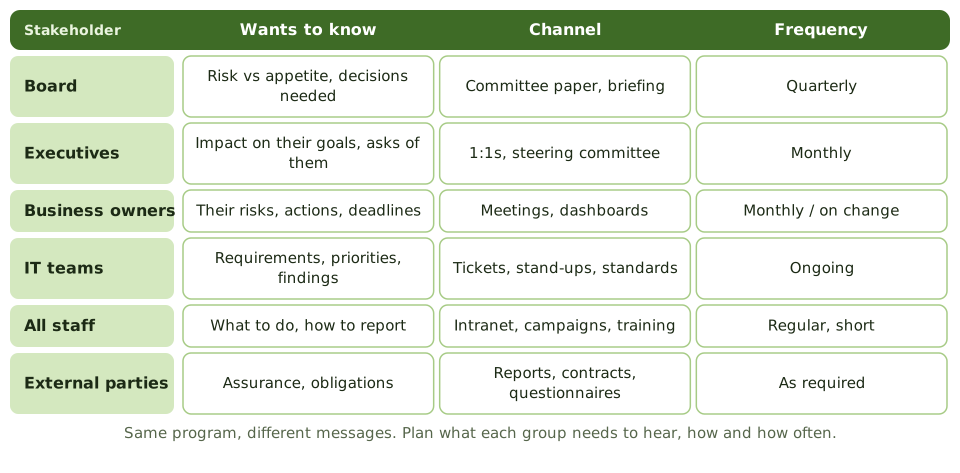
Making messages land
Listen as well as tell
- 1Regular conversations with business leaders.
- 2Feedback from awareness campaigns and surveys.
- 3Security champions as two-way channels.
- 4Post-incident reviews with affected teams.
How the exam asks about it
| If the question asks… | Answer |
|---|---|
| First step in a communication plan | Identify stakeholders and their needs |
| Best way to communicate with executives | Business impact, in business terms, with clear asks |
| Purpose of two-way communication | Understand business needs and obstacles |
| Staff ignore security messages | Make them relevant; find the cause |
| What builds credibility | Consistent, honest, timely communication |
Key takeaways
- ✓Program communications and reporting is a named CISM topic: the program succeeds only if stakeholders understand and support it.
- ✓A communication plan identifies stakeholders, what each needs to know, the channel, frequency and owner.
- ✓Tailor messages: business impact and decisions for executives, actions for owners, practical guidance for staff.
- ✓Communication is two-way: listening to the business reveals needs, pain points and risks.
- ✓Use plain language and real examples; avoid jargon and fear.
- ✓Consistent, honest communication builds the credibility that wins resources and cooperation.
Exam traps
- !One technical report sent to everyone serves nobody.
- !Communicating only during incidents makes security look like bad news.
- !Fear-based messaging wins attention once and trust never.
- !Ignoring feedback from the business leads to controls people work around.
Executive Dashboards and Board Reporting
How to report on the security program's effectiveness to executives and the board: one-page dashboards, trends, progress against the strategy, and the decisions leaders need to take.
What leaders need
Directors and executives have limited time and many topics. They need to know three things: are we within our risk appetite, is the program delivering what we approved, and what do you need from us? Everything else is supporting detail.
A one-page board view
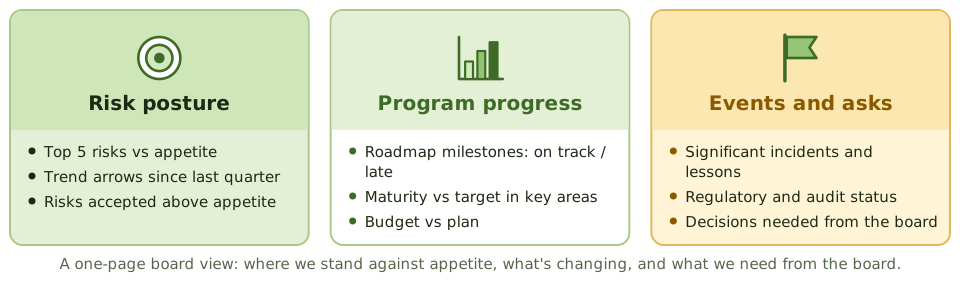
Effectiveness, not activity
| Activity (avoid at board level) | Effectiveness (use) |
|---|---|
| '2.3 million attacks blocked' | 'Ransomware risk reduced from High to Medium' |
| '412 patches deployed' | 'Critical exposure window down from 30 to 6 days' |
| 'Training completed by 98%' | 'Phishing report rate up from 15% to 60%' |
| 'New SIEM installed' | 'Time to detect intrusions down from weeks to hours' |
Design principles
How the exam asks about it
| If the question asks… | Answer |
|---|---|
| Most important content for the board | Risk vs appetite and decisions needed |
| Best way to show program effectiveness | Trends in outcomes against objectives |
| Board-level metric | Business-linked outcomes, not technical counts |
| Program is behind plan | Report it honestly with a recovery plan |
| Format for executives | Concise dashboard with detail available |
Key takeaways
- ✓Preparing and presenting reports on program activities, trends and overall effectiveness is a CISM task.
- ✓Board and executive reporting focuses on risk posture against appetite, program progress, significant events and decisions needed.
- ✓Dashboards show trends and status at a glance, with detail available underneath for those who want it.
- ✓Report effectiveness (risk reduced, maturity improved, objectives met), not just activity.
- ✓Be honest about problems and setbacks; credibility is the security manager's most valuable asset.
- ✓Reports should end with clear asks: decisions, approvals or support needed.
Exam traps
- !Technical metrics (blocked attacks, patches deployed) aren't board-level effectiveness measures.
- !A dashboard of green lights with no trends or context gives false comfort.
- !Reporting only good news erodes trust when problems surface.
- !Too much detail buries the message; use one page plus appendix.
Continuous Improvement of the Security Program
How the security program keeps getting better: Plan-Do-Check-Act, the evidence that drives improvement, management review, and keeping the program aligned as the business and threats change.
Never finished
Threats evolve, the business changes, controls degrade and people move on. A security program that stands still slowly falls behind. Continuous improvement builds learning into how the program runs, so it gets better every cycle.
Plan-Do-Check-Act
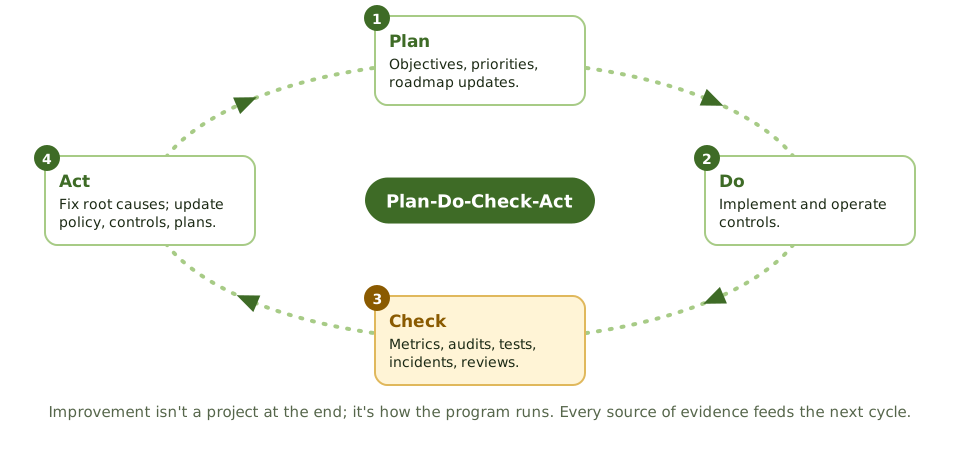
Where improvement comes from
Management review
- 1Held at planned intervals (at least yearly).
- 2Reviews: objectives, metrics, audit results, incidents, risks, changes.
- 3Decides: is the program still suitable, adequate and effective?
- 4Outputs: improvement decisions, resources, updated objectives.
How the exam asks about it
| If the question asks… | Answer |
|---|---|
| Model for continuous improvement | Plan-Do-Check-Act |
| Same finding repeats every year | Fix the root cause |
| Who decides program suitability and effectiveness | Management, through management review |
| When to realign the program | When strategy, appetite, regulation or technology change |
| Proactive source of improvement | Near misses and others' incidents |
Key takeaways
- ✓Continuous improvement follows Plan-Do-Check-Act: plan objectives, do the work, check results, act on what's learned.
- ✓Inputs include metrics, audits, assessments, tests, incidents, near misses, exceptions, stakeholder feedback and changes in threats and the business.
- ✓Management review, as in ISO 27001, periodically decides whether the program is still suitable, adequate and effective.
- ✓Fix root causes, not just symptoms, and track improvement actions to completion.
- ✓The program is re-aligned when the business strategy, risk appetite, regulation or technology changes.
- ✓Mature programs learn from near misses and other organisations' incidents, not only their own.
Exam traps
- !Improvement actions without owners and dates rarely happen.
- !Repeating the same audit finding year after year means the root cause wasn't fixed.
- !Waiting for an incident to drive improvement is reactive and costly.
- !A program aligned to last year's strategy can drift out of alignment without anyone noticing.