CISM: the full course
All five domains in study order. Arrow keys or space to move, F for full screen, or jump to a domain or topic below.
Certified Information Security Manager
Domain 1: Information Security Governance · Domain 2: Information Security Risk Management · Domain 3: Information Security Program · Domain 4: Incident Management
CISMInformation Security Governance
Exam technique · Governance foundations · Legal and compliance · Roles and structures · Strategy · Frameworks · Strategic planning
Exam Technique: Thinking Like a Security Manager
How CISM questions are built, why two answers often look right, and a simple method for choosing the answer a security manager would give: business-first, risk-based and in the right order.
The exam in numbers
| Item | Detail |
|---|---|
| Questions | 150 multiple choice, one best answer |
| Time | 4 hours |
| Scoring | Scaled 200-800; 450 passes |
| Weights (from Nov 2026) | Governance 18%, Risk 20%, Program 33%, Incident 29% |
| Experience to certify | 5 years in information security, 3 in management |
Two answers look right
Most CISM questions have two or three plausible options. They're written so that a good engineer and a good security manager would choose differently. The exam is testing which one you are thinking as.
A method for every question
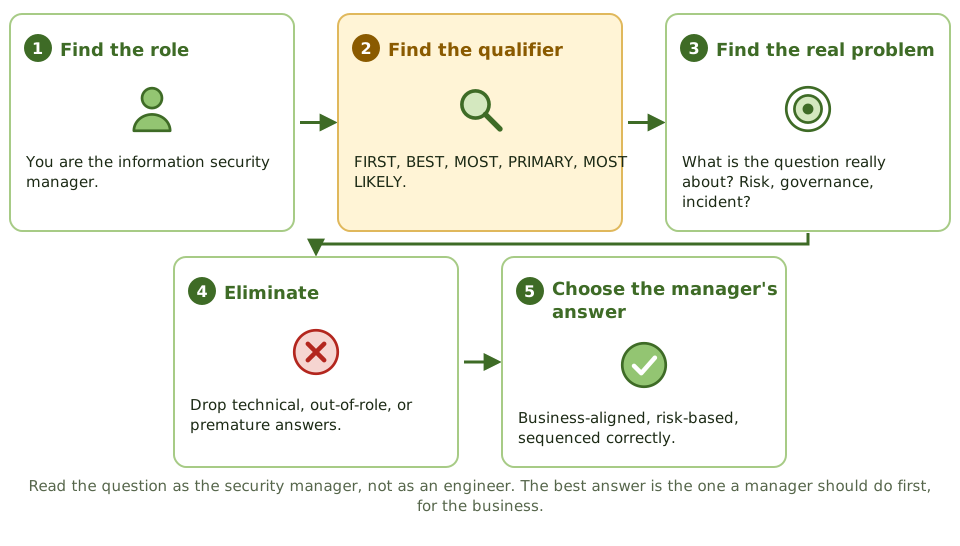
The manager's mindset
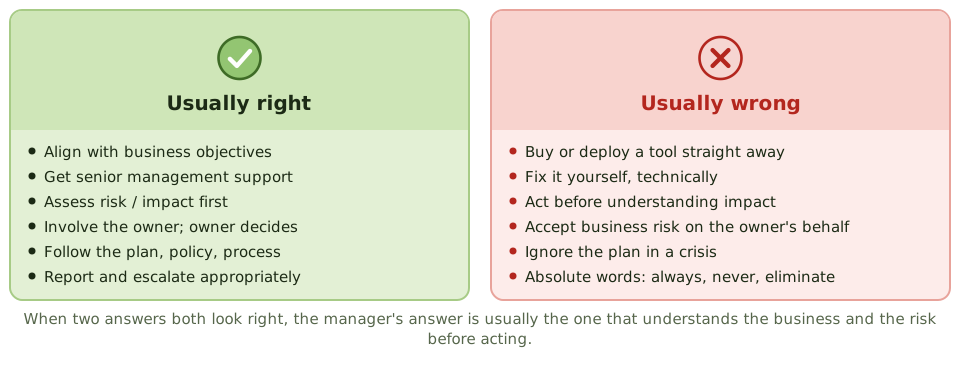
Reading the qualifiers
| Qualifier | What it's really asking |
|---|---|
| FIRST | The correct sequence: what has to happen before anything else? |
| BEST / MOST effective | The option with the greatest benefit for the business, all things considered |
| PRIMARY / MAIN | The fundamental purpose, not a side benefit |
| MOST LIKELY | The probable cause or result, not the worst case |
| GREATEST concern / risk | What would hurt the business most |
Preparing well
- 1Learn concepts, then practise questions and read every explanation.
- 2For wrong answers, ask: why is the right one more 'manager'?
- 3Study by weight: Domain 3 and 4 are 62% of the exam.
- 4Time: about 1.5 minutes per question; flag and return.
- 5Answer every question; there's no penalty for guessing.
Key takeaways
- ✓The CISM exam has 150 multiple-choice questions in 4 hours; scores are scaled from 200 to 800 and 450 passes.
- ✓Every question is answered from the information security manager's viewpoint: business-aligned, risk-based and working through others.
- ✓Read the qualifier carefully: FIRST, BEST, MOST, PRIMARY and MOST LIKELY change which answer is right.
- ✓FIRST questions are about order: understand, assess and get support before acting.
- ✓Eliminate answers that are too technical, outside the manager's role, premature, or absolute.
- ✓Answers that point to business objectives, senior management, risk assessment and the owner's decision are usually right.
Exam traps
- !Picking the most technically impressive answer; CISM rewards management judgement.
- !Choosing what you'd do second when the question asks what to do FIRST.
- !Making the security manager accept or own business risk; the owner does.
- !Ignoring an established plan, policy or process in a scenario that already has one.
- !Choosing answers with 'always', 'never' or 'eliminate all risk'.
Security Governance vs Security Management
Why information security needs governance at board level, what governance delivers, and how it differs from the day-to-day management the CISO runs.
Why security needs governance
Information is now one of the most valuable things most organisations own, and losing it can sink them. Decisions about how much to protect it, and how much risk to accept, are business decisions. That makes them the board's job, not just IT's.
Governance vs management
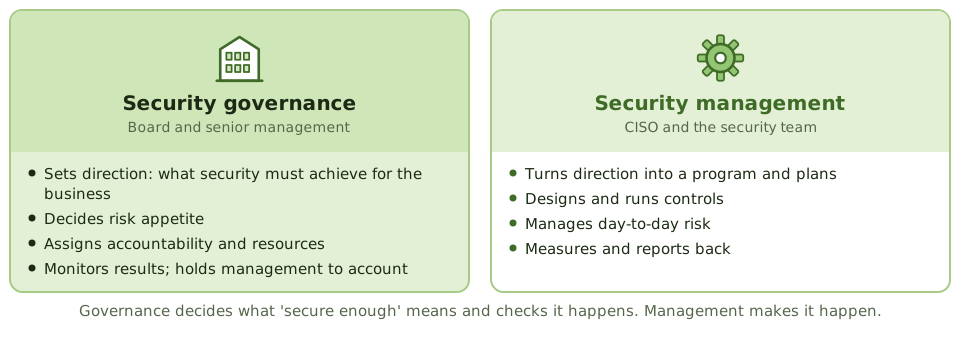
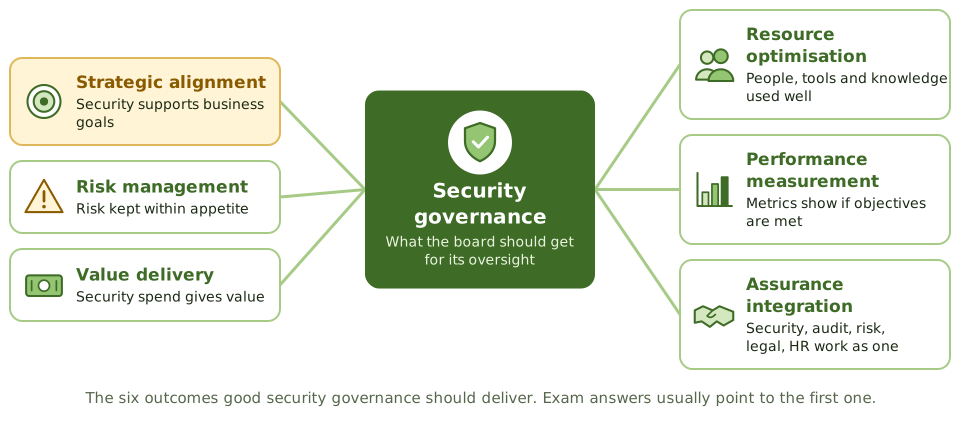
What governance should deliver
Who is accountable for what
| Role | Governance or management? | Main job |
|---|---|---|
| Board of directors | Governance | Accountable; sets direction and risk appetite |
| Executive management | Governance and management | Implements direction; provides resources |
| Security steering committee | Bridge | Aligns security with business priorities |
| CISO / security manager | Management | Develops and runs the security program |
| Business owners | Management | Own their information and its risk |
Signs governance is working
- 1The board discusses security risk regularly, in business terms.
- 2A documented strategy links security to business objectives.
- 3Risk appetite is defined, and decisions are made against it.
- 4Roles and accountability are clear and assigned.
- 5Metrics show progress, and management acts on them.
How the exam asks about it
| If the question asks… | Answer |
|---|---|
| Who is ultimately accountable for information security | The board / senior management |
| Most important factor for effective governance | Senior management commitment and support |
| What should drive security governance | Business objectives and strategy |
| Main outcome of security governance | Strategic alignment with the business |
| Which activity is governance, not management | Setting direction, appetite and accountability |
Key takeaways
- ✓Information security governance is the board and senior management setting direction, deciding risk appetite, assigning accountability and monitoring results.
- ✓Security management is the CISO and team turning that direction into a program, controls and day-to-day decisions.
- ✓Governance is part of corporate governance. Accountability for protecting information sits with the board, not the IT department.
- ✓Six outcomes of good governance: strategic alignment, risk management, value delivery, resource optimisation, performance measurement and assurance integration.
- ✓The most important ingredient is senior management commitment; without it, the program has no authority or money.
- ✓Governance asks 'are we protecting the right things, to the right level?'; management asks 'are the controls working?'.
Exam traps
- !The CISO manages security; the board is accountable for it. Don't confuse responsibility with accountability.
- !Governance isn't a technical activity. Buying tools or writing firewall rules is management, not governance.
- !Security governance is driven by business objectives, not by the latest threats or by technology.
- !A strong security team with no board oversight is a governance gap, even if operations look fine.
Organisational Culture and Tone at the Top
How an organisation's culture and its leaders' behaviour shape what security can achieve, and how a security manager works with culture rather than against it.
Culture beats policy
Every organisation has written rules and unwritten ones. The unwritten ones, its culture, decide what people actually do when nobody is checking. A security program that ignores culture ends up with policies everybody signs and nobody follows.
Where is the organisation today?
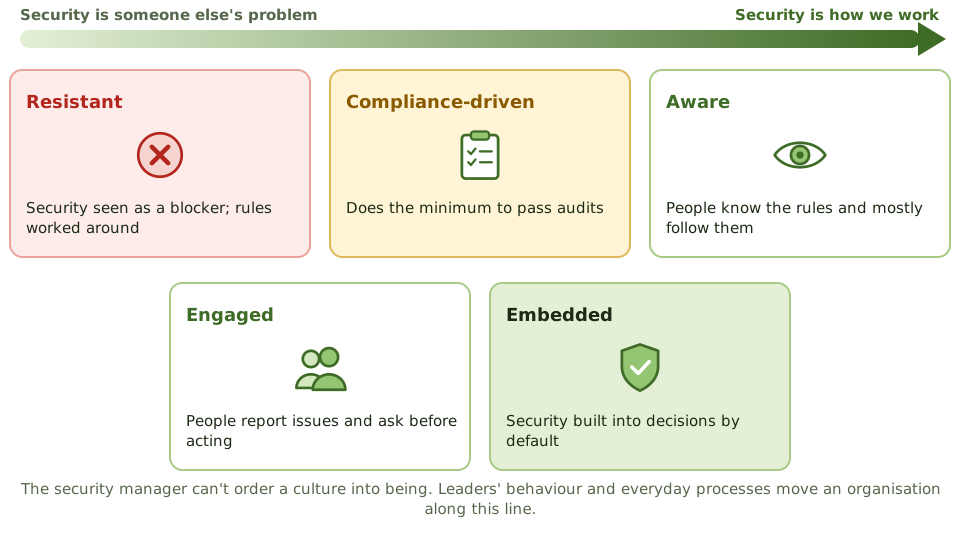
Tone at the top
Staff copy what leaders do, not what they say. When executives skip MFA, demand exceptions or ignore reports, everyone learns that security is optional. When they follow the rules visibly, ask about risk in meetings and fund the program, security becomes normal.
Fit the strategy to the culture
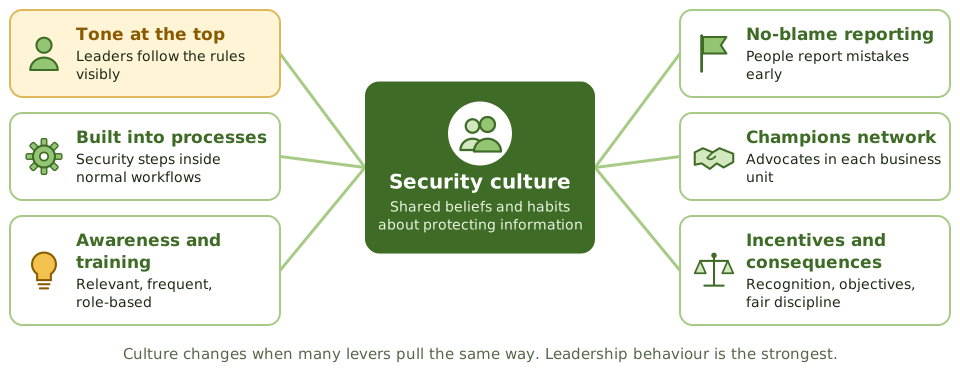
Levers that change culture
How the exam asks about it
| If the question asks… | Answer |
|---|---|
| Most important factor for a strong security culture | Senior management commitment, visibly shown |
| Staff routinely bypass a control | Find out why; the control may not fit the culture or process |
| Best way to embed security | Integrate it into business processes |
| Strategy must reflect… | The organisation's culture and risk appetite |
| Best measure of culture change | Behaviour: reporting, exceptions, incidents |
Key takeaways
- ✓Organisational culture is the shared values and habits that decide how people actually behave, whatever the policy says.
- ✓Tone at the top, the visible behaviour of senior leaders, is the strongest single influence on security culture.
- ✓A security strategy must fit the organisation's culture and risk appetite; one that fights the culture will be worked around.
- ✓A healthy security culture rewards reporting mistakes early instead of punishing them.
- ✓Culture changes through many levers: leadership, processes, training, champions, incentives and fair consequences.
- ✓Measure culture with behaviour (reporting rates, policy exceptions, surveys), not just training completion.
Exam traps
- !The security manager can't create culture alone; senior management commitment is the key factor.
- !More rules don't fix a weak culture; they usually create more workarounds.
- !A risk-averse bank and a fast-moving start-up need different strategies; 'best practice' isn't one size fits all.
- !Punishing people who report incidents drives problems underground.
Ethics, Codes of Conduct and Accountability
The ISACA Code of Professional Ethics, how an organisation's code of conduct supports security, and what it takes to make people genuinely accountable.
Why ethics matters in security
Security managers see things others don't: salaries, investigations, private messages, weaknesses in the business. Their power to read, block and monitor has to be used honestly. Ethics is what makes the rest of the organisation trust the security function.
The ISACA Code of Professional Ethics
- 1Support good governance and controls; follow standards and procedures.
- 2Act with diligence, objectivity and professional care.
- 3Serve stakeholders lawfully, with integrity, and don't discredit the profession.
- 4Keep information private and confidential, unless legally required to disclose.
- 5Stay competent; take on only work you can do well.
- 6Inform appropriate parties of the results of work, including significant facts.
The organisation's own rules
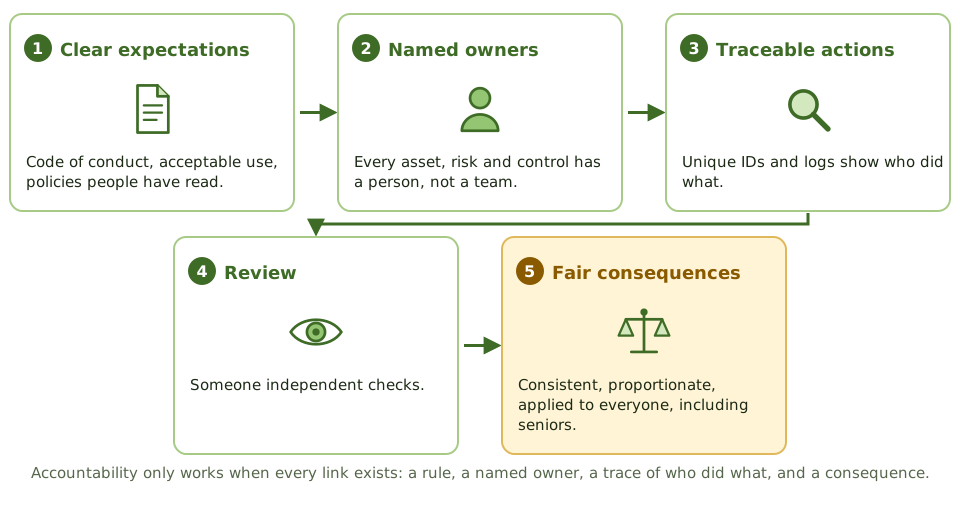
What makes accountability real
An ethical grey area
Monitoring staff email can catch data theft, but it touches privacy. The security manager shouldn't decide alone.
How the exam asks about it
| If the question asks… | Answer |
|---|---|
| What makes actions traceable to a person | Unique user IDs plus logging |
| Best way to show staff were told the rules | Signed acknowledgement of policies |
| Can an owner delegate accountability? | No; only the work (responsibility) |
| Request to monitor an employee | Check policy and law; involve HR and legal; document |
| CISM holder breaks the code of ethics | ISACA can investigate and revoke the certification |
Key takeaways
- ✓CISM holders must follow the ISACA Code of Professional Ethics; breaching it can lead to losing the certification.
- ✓A code of conduct and an acceptable use policy set clear expectations for everyone; staff should acknowledge them when they join and periodically after.
- ✓Accountability needs clear expectations, named owners, traceable actions, review and fair consequences.
- ✓Unique user IDs are what make actions traceable; shared accounts destroy accountability.
- ✓Consequences must apply consistently, including to senior people, or the code loses credibility.
- ✓Ethical dilemmas, such as monitoring staff, need legal and HR input and a documented basis.
Exam traps
- !Responsibility can be delegated; accountability can't. The owner stays accountable even when someone else does the work.
- !A code of conduct nobody has read or acknowledged doesn't create accountability.
- !Ethics isn't only about not committing crimes: concealing a known risk from management is an ethical failure too.
- !Monitoring employees without a legal basis and a clear policy can itself break laws and trust.
Integrating Security into Corporate Governance
How information security becomes part of how the whole organisation is governed: one risk language, board oversight, integrated assurance and security built into business decisions.
One organisation, one governance
Boards already govern finance, legal risk and operations. Information security belongs in the same structure, using the same committees, the same risk language and the same reporting cycle. When it sits apart, the board can't weigh security against everything else it has to decide.
Speak the language of enterprise risk
Information risks should go into the enterprise risk process, rated on the same likelihood and impact scales and compared with the same appetite as financial or operational risks.
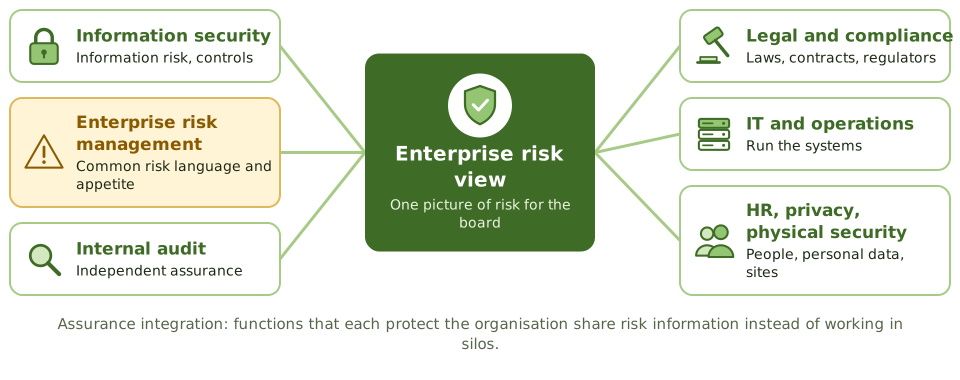
Assurance integration
Built into business decisions
Board oversight
- 1A board committee (audit or risk) has security oversight in its charter.
- 2Regular reporting: top risks, trends, major incidents, program progress, decisions needed.
- 3Risk appetite for information risk approved by the board.
- 4Independent assurance from internal audit.
How the exam asks about it
| If the question asks… | Answer |
|---|---|
| Best way to integrate security into corporate governance | Through enterprise risk management |
| What the board should receive | Business-focused risk reporting |
| When to involve security in projects | From the start: in approval and requirements |
| Benefit of assurance integration | Fewer gaps and overlaps; one view of risk |
| Information risk should be expressed… | On the same scales as other business risks |
Key takeaways
- ✓Information security governance is a subset of corporate governance, not a separate IT activity.
- ✓The most effective integration is through enterprise risk management: information risk described in the same language, scales and appetite as other business risks.
- ✓The board oversees security through its committees (audit or risk) and through regular reporting in business terms.
- ✓Assurance integration means security, audit, risk, legal, privacy, HR, physical security and IT share information and avoid gaps and overlaps.
- ✓Security is integrated into business processes such as project approval, procurement, mergers and new products.
- ✓Reporting to the board focuses on risk, trends and decisions needed, not on technical detail.
Exam traps
- !Reporting firewall statistics to the board isn't integration; reporting business risk is.
- !A separate security risk register with its own scales makes information risk hard to compare with other risks.
- !Integration doesn't mean the CISO reports to internal audit; audit must stay independent.
- !Security added at the end of a project or deal is too late; it belongs in the approval process.
Legal, Regulatory and Contractual Requirements
Where security obligations come from (laws, sector regulation, contracts, standards), how the security manager identifies them with legal counsel, and how they shape the strategy.
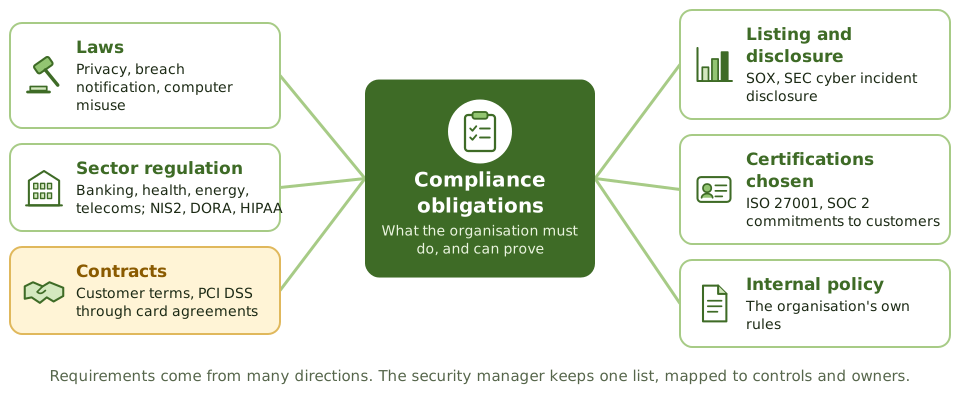
Where obligations come from
Examples you should recognise
| Requirement | Type | Security impact |
|---|---|---|
| GDPR and other privacy laws | Law | Lawful processing, breach notice in 72 hours, rights |
| NIS2 (EU) | Regulation | Risk management and incident reporting for essential sectors |
| DORA (EU financial sector) | Regulation | ICT risk, resilience testing, third-party oversight |
| HIPAA (US health) | Law | Protect health information |
| SOX (US listed companies) | Law | Controls over financial reporting |
| PCI DSS | Contract | Protect cardholder data |
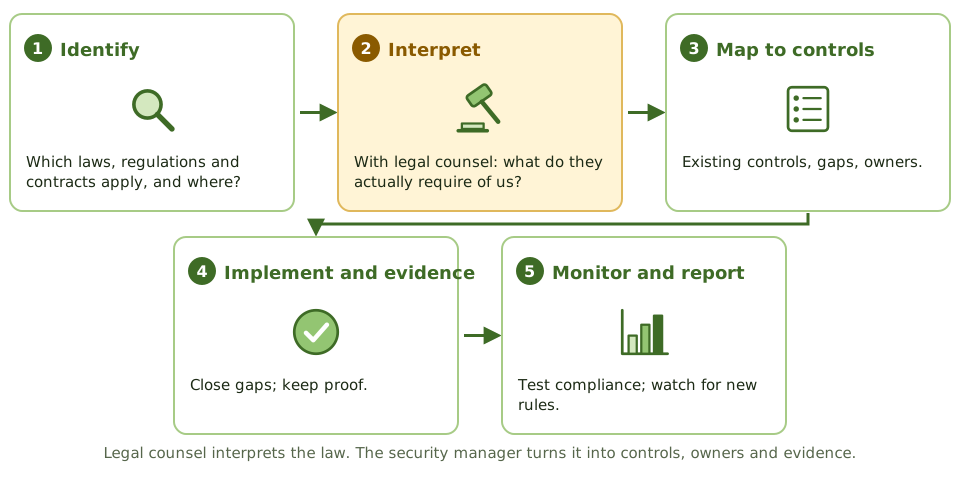
The compliance process
Jurisdiction and data location
One organisation can be subject to many legal systems at once: where it's incorporated, where it trades, where its servers sit, and where its customers live.
Compliance is a floor, not a ceiling
How the exam asks about it
| If the question asks… | Answer |
|---|---|
| First step when a new regulation is announced | Determine whether and how it applies (with legal) |
| Who interprets legal requirements | Legal counsel |
| Is PCI DSS a law? | No; a contractual obligation |
| Relationship of compliance to security | Compliance is a minimum input to a risk-based program |
| Who decides to accept non-compliance | Senior management, informed of the risk |
Key takeaways
- ✓Security obligations come from laws, sector regulations, contracts, listing rules, certifications the organisation commits to, and its own policies.
- ✓Identifying which requirements apply is the first step; legal counsel interprets them, the security manager turns them into controls.
- ✓Jurisdiction matters: where the organisation operates, where data is stored and where customers live can all bring in different laws.
- ✓Contractual obligations such as PCI DSS or customer security clauses are as binding as laws for the organisation.
- ✓Compliance is a minimum, not the goal: a compliant organisation can still be insecure.
- ✓Regulatory change must be monitored so the strategy and controls stay current.
Exam traps
- !The security manager doesn't interpret the law alone; consult legal counsel.
- !When a new regulation appears, the first step is to assess what it requires and the gap, not to buy tools.
- !Non-compliance is a business risk decision: management may accept some, knowingly, if the impact is understood.
- !Being compliant doesn't mean being secure, and being secure doesn't automatically prove compliance.
Due Diligence, Due Care and Legal Liability
What 'reasonable' security means in law, the difference between due diligence and due care, and how documentation protects the organisation and its leaders.
What does 'reasonable' mean?
After a breach, regulators, courts and customers ask one question: did the organisation do what a reasonable, prudent organisation would have done? Nobody expects perfection. They expect sensible, documented effort proportionate to the risk.
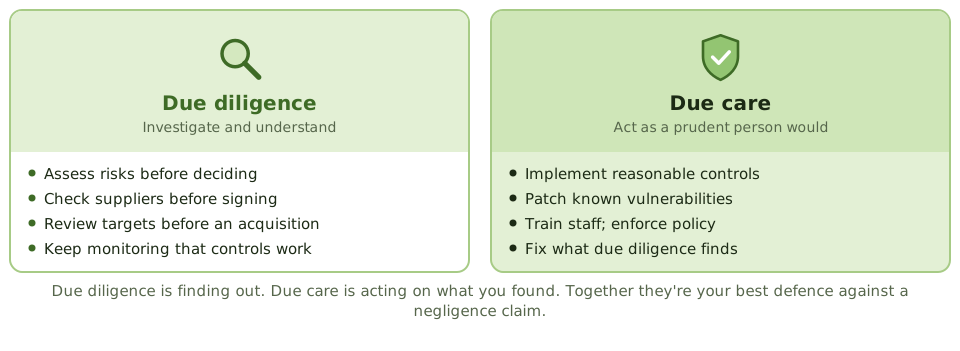
Due diligence vs due care
How liability arises
Proving you took care
- 1Risk assessments showing risks were identified.
- 2Recorded decisions: who accepted which risk, and why.
- 3Policies, standards and evidence that controls operate.
- 4Supplier assessments before and during contracts.
- 5Training records and incident response records.
How the exam asks about it
| If the question asks… | Answer |
|---|---|
| Assessing a supplier before signing | Due diligence |
| Implementing controls to address known risk | Due care |
| Best protection against negligence claims | Documented, reasonable, risk-based decisions |
| Legal standard for security | What a prudent person would do (reasonable care) |
| Does outsourcing remove the duty? | No; due diligence and oversight still required |
Key takeaways
- ✓Due diligence is investigating and understanding risk; due care is acting reasonably on what you know.
- ✓The legal test is usually what a prudent person in a similar organisation would have done: the standard of care.
- ✓Negligence is failing to exercise due care when harm was foreseeable; it can create liability for the organisation and, sometimes, its directors.
- ✓Documentation (risk assessments, decisions, approvals, evidence of controls) is how an organisation proves it exercised due care.
- ✓Downstream liability arises when weak security at one organisation harms its customers or partners.
- ✓Following recognised frameworks and industry practice helps show a reasonable standard of care.
Exam traps
- !Due diligence = find out; due care = act. Exam options often swap them.
- !Accepting a known risk without documentation looks like negligence, even if the decision was reasonable.
- !Outsourcing doesn't remove the duty of care; you must still do due diligence on the supplier.
- !Perfect security isn't the legal standard; reasonable security is.
Privacy and Data Protection Governance
How privacy differs from security, what a privacy program contains, how the security manager works with the privacy officer, and the privacy-by-design practices the exam expects.
Privacy isn't just security
A hospital can lock patient records in a perfect vault and still break privacy law, by collecting data it doesn't need, using it for marketing, or keeping it forever. Security asks 'is the data protected?'. Privacy asks 'should we have it, and are we using it as promised?'.
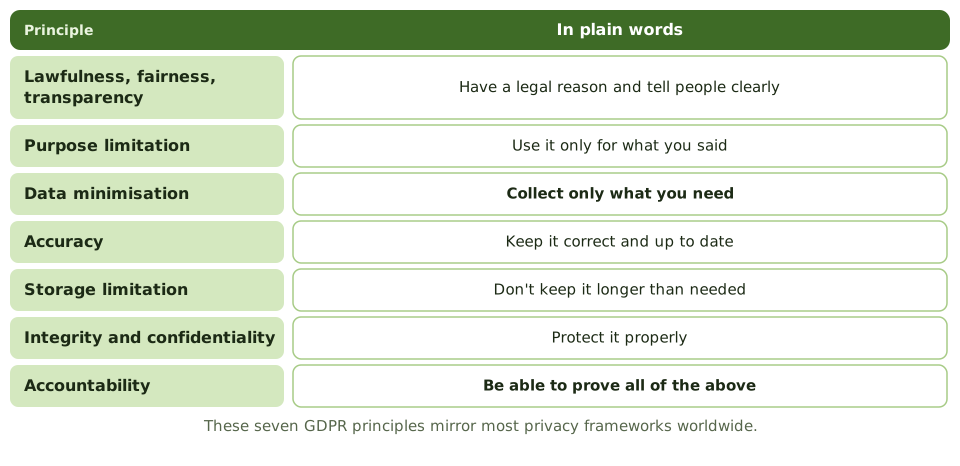
The privacy principles
What a privacy program contains
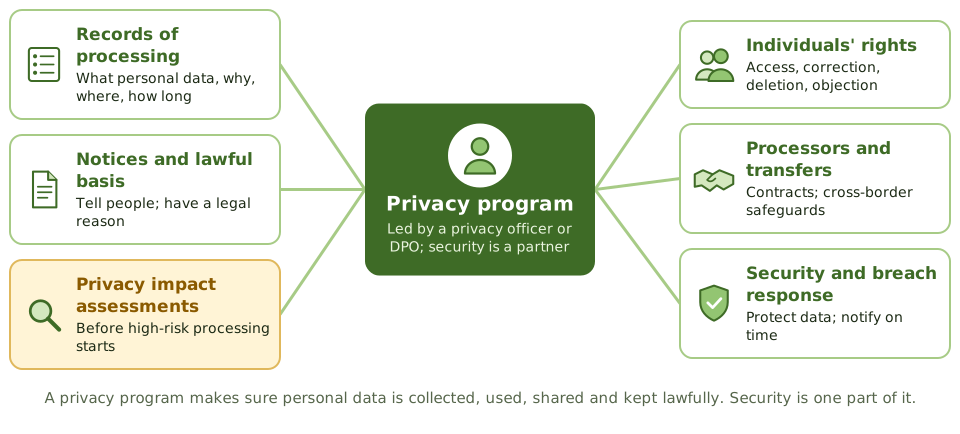
Who does what
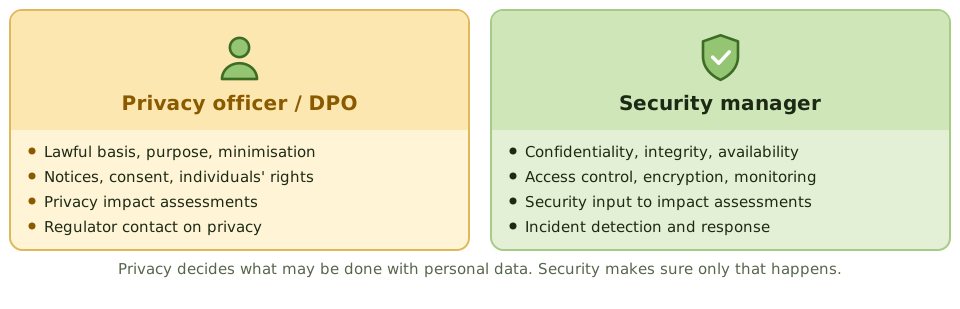
Privacy by design
How the exam asks about it
| If the question asks… | Answer |
|---|---|
| Privacy vs security | Privacy: appropriate use. Security: protection |
| Collecting more data than needed | Breaks data minimisation |
| When to do a privacy impact assessment | Before high-risk processing starts |
| Is pseudonymised data personal data? | Yes |
| Security manager's role in privacy | Protect data; support impact assessments and breach response |
Key takeaways
- ✓Privacy is about whether personal data should be collected, how it's used and shared, and people's rights over it; security is one of the means to protect it.
- ✓Privacy laws such as GDPR rest on principles: lawfulness, fairness and transparency, purpose limitation, data minimisation, accuracy, storage limitation, integrity and confidentiality, accountability.
- ✓A privacy program includes records of processing, notices, lawful bases, privacy impact assessments, rights handling, processor contracts, transfer safeguards and breach response.
- ✓The privacy officer or DPO leads privacy; the security manager provides the protection and contributes to impact assessments and breaches.
- ✓Privacy by design and by default builds protection into systems from the start, with the most protective settings as standard.
- ✓Privacy-enhancing techniques include minimisation, pseudonymisation, anonymisation, encryption and access restriction.
Exam traps
- !A perfectly secure system can still break privacy law if it collects data it doesn't need.
- !Pseudonymised data is still personal data; only truly anonymised data falls outside privacy law.
- !Privacy impact assessments happen before processing starts, not after.
- !The controller stays accountable even when a processor causes the breach.
Governance Roles, the CISO and Reporting Lines
Who does what in information security, from the board to the user, what the CISO is responsible for, and why the CISO's reporting line matters.
Who does what
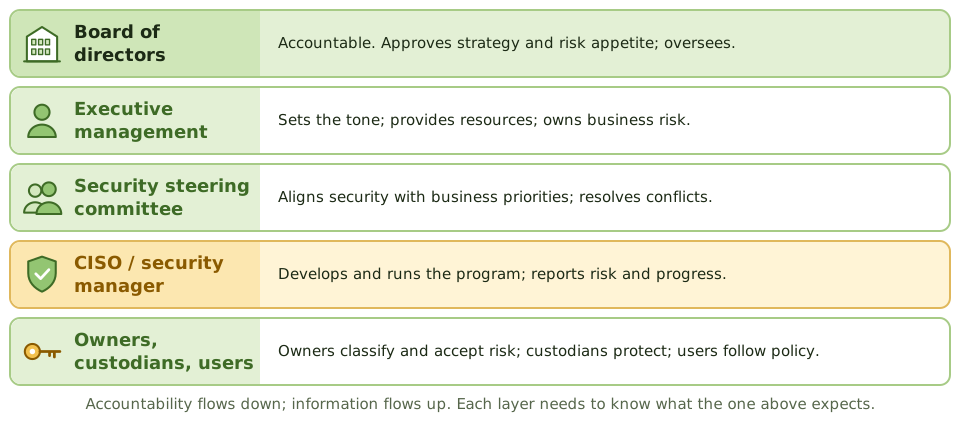
The CISO's job
- 1Develop the security strategy and program with the business.
- 2Advise management on information risk, in business terms.
- 3Set policies and standards; oversee controls.
- 4Lead incident management and security operations.
- 5Measure and report on program effectiveness.
- 6Build and lead the security team and its budget.
Owners, custodians and users
| Role | Usually | Responsible for |
|---|---|---|
| Information owner | Business manager | Classification, access approval, accepting risk |
| Custodian | IT, DBAs, cloud teams | Implementing protection the owner requires |
| User | Everyone with access | Following policy; reporting incidents |
| Security administrator | Security or IT | Granting access as approved; not deciding it |
Where the CISO reports
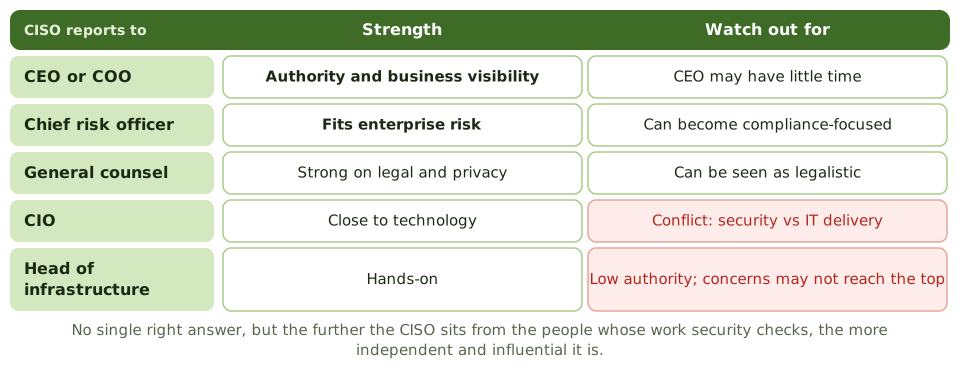
Writing roles down
How the exam asks about it
| If the question asks… | Answer |
|---|---|
| Who is accountable for information security | Board / senior management |
| Who classifies data and approves access | The information owner |
| Concern with CISO reporting to the CIO | Conflict of interest; reduced independence |
| The CISO's main role | Develop and manage the program; advise on risk |
| Best way to clarify responsibilities | Documented roles (RACI) communicated to all |
Key takeaways
- ✓The board is accountable for information security; executive management provides resources and owns business risk.
- ✓The CISO or information security manager develops, runs and reports on the security program; they don't own the business's risks.
- ✓Information owners (business managers) classify data, approve access and accept residual risk; custodians (often IT) implement the protection.
- ✓The CISO should report high enough, and independently enough of IT delivery, to raise risks without being overruled.
- ✓Roles and responsibilities should be written down (job descriptions, RACI) and communicated.
- ✓Clear lines of authority let the security manager escalate issues quickly when risk exceeds appetite.
Exam traps
- !Security is everyone's responsibility, but accountability must be assigned to named roles.
- !The CISO doesn't accept business risk on the owner's behalf.
- !A CISO reporting to the CIO can face conflicts between security and delivery deadlines.
- !IT is usually the custodian of data, not its owner.
The Security Steering Committee
Why a cross-functional security steering committee is the security manager's best tool for alignment and support, who sits on it and what it should decide.
Why have one?
Security decisions affect every part of the business: budgets, projects, how people work. No CISO can make them alone and expect support. A steering committee gives the business a seat at the table, so security priorities become business priorities.
Who sits on it
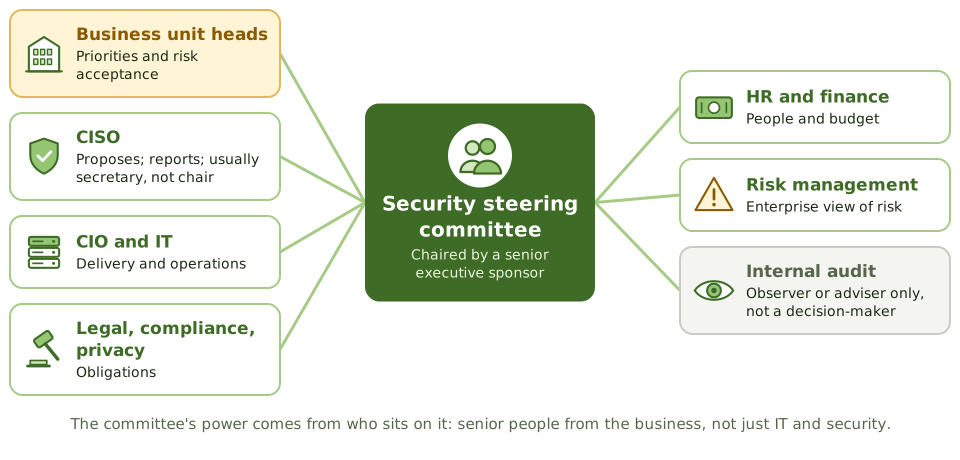
What it does
Making it work
- 1A written charter: purpose, authority, membership, quorum.
- 2Senior members who can commit their departments.
- 3Regular meetings with an agenda tied to risk and strategy.
- 4Minutes recording decisions, owners and dates.
- 5Follow-up on actions at the next meeting.
How the exam asks about it
| If the question asks… | Answer |
|---|---|
| Best way to gain cross-functional support | A steering committee with senior business representation |
| Main purpose of the committee | Align security with business objectives and priorities |
| Who should chair it | A senior business executive / sponsor |
| Internal audit's role on it | Adviser or observer, not decision-maker |
| Best evidence it works | Minutes showing decisions and follow-up |
Key takeaways
- ✓A security steering committee brings senior business, IT, legal, HR and risk leaders together to align security with business priorities.
- ✓It's the most effective way to get cross-functional support and resolve conflicts between security and business goals.
- ✓It reviews strategy and policy, prioritises initiatives, monitors risk and program progress, and escalates to the board.
- ✓Membership must be senior and business-led; a committee of only IT and security people can't ensure alignment.
- ✓Internal audit may attend as an adviser but shouldn't make decisions, to protect its independence.
- ✓A charter, regular meetings and recorded decisions are the evidence that it works.
Exam traps
- !A committee of IT managers can't ensure business alignment.
- !The CISO usually presents and coordinates; a senior business executive should chair.
- !Internal audit voting on security decisions would impair its independence.
- !A charter alone proves nothing; minutes and follow-up show the committee works.
The Three Lines Model and Independent Assurance
How the IIA's Three Lines Model divides risk work between management, oversight functions such as security, and internal audit, and why independent assurance matters to the security manager.
Who checks the checkers?
Organisations need people who manage risk, people who oversee and challenge that management, and people who independently confirm the whole system works. The Institute of Internal Auditors calls this the Three Lines Model.
The three lines
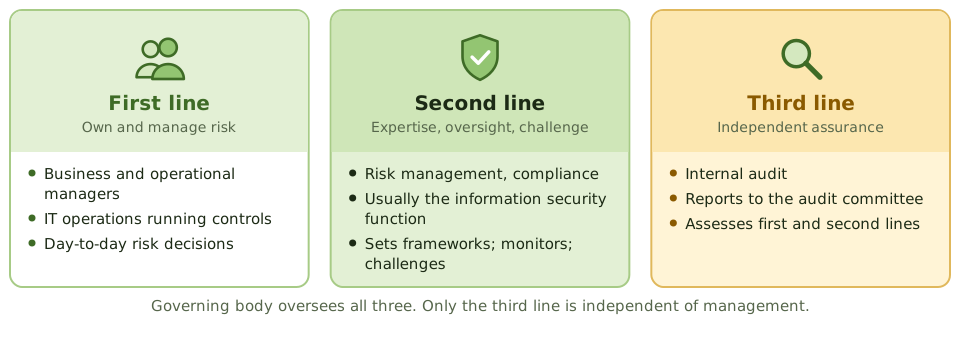
Where security fits
Working with audit
- 1Treat findings as independent evidence, not criticism.
- 2Agree action plans with owners and dates.
- 3Use audit results to support budget requests.
- 4Don't ask audit to design controls you want them to approve later.
How the exam asks about it
| If the question asks… | Answer |
|---|---|
| Who provides independent assurance | Internal audit (third line) |
| Who owns and manages risk | First line: business and operational management |
| Role of risk and compliance functions | Second line: oversight, frameworks, challenge |
| Can audit design the controls it will test? | No; it impairs independence |
| Best use of audit findings | Drive agreed remediation and support resourcing |
Key takeaways
- ✓First line: management and operations own and manage risk, including running controls day to day.
- ✓Second line: specialist functions (risk, compliance, usually information security) provide frameworks, expertise, monitoring and challenge.
- ✓Third line: internal audit gives independent, objective assurance to the board through the audit committee.
- ✓The governing body is accountable and oversees all three; external auditors and regulators add assurance from outside.
- ✓The security manager should welcome audit findings as independent evidence and use them to drive improvement.
- ✓Independence means auditors don't design or run the controls they will later assess.
Exam traps
- !Internal audit is independent of management; the security function is not.
- !The CISO shouldn't report to internal audit; that would compromise audit's independence.
- !Where security sits (first or second line) varies; what matters is that ownership and oversight are clear.
- !Audit giving assurance doesn't transfer responsibility for controls away from management.
Aligning Security Strategy with Business Objectives
Why strategic alignment is the first goal of security governance, how to understand what the business needs, and how to show that every security initiative supports a business goal.
Security exists to serve the business
A security program can be technically excellent and still fail if it protects the wrong things, slows down what the business most needs, or costs more than the risks it reduces. Alignment means security decisions start from what the business is trying to achieve.
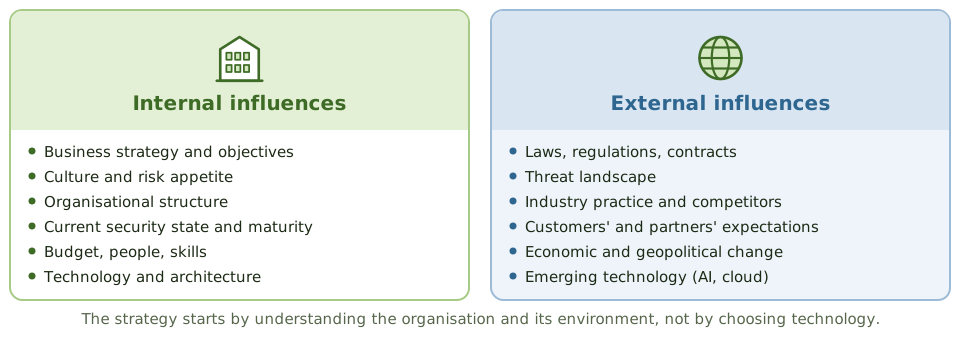
Understand the organisation first
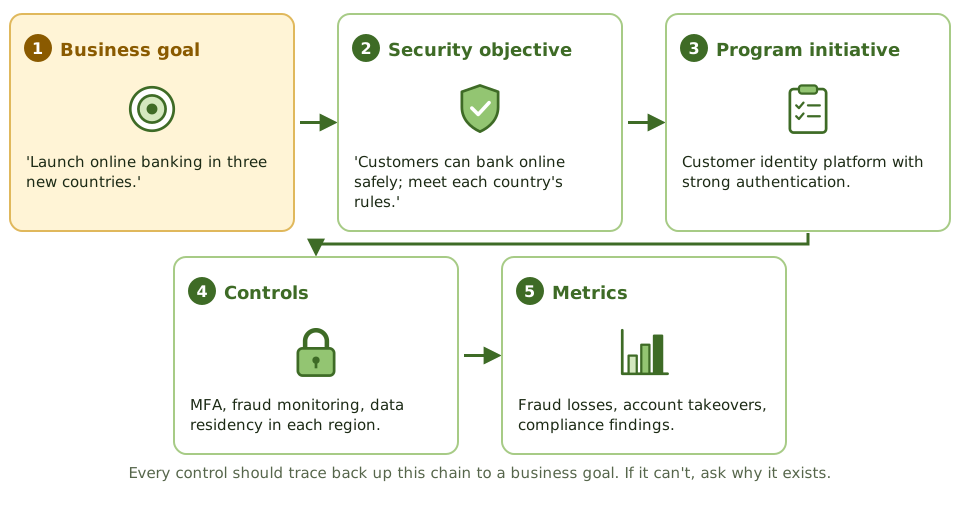
Trace every control to a goal
How to stay aligned
- 1Meet business leaders; learn their plans and pain points.
- 2Express security objectives in business terms.
- 3Use the steering committee to set priorities with the business.
- 4Join strategic planning, not just IT planning.
- 5Review the strategy when the business changes direction.
Signs of misalignment
How the exam asks about it
| If the question asks… | Answer |
|---|---|
| Primary goal of security governance | Strategic alignment with business objectives |
| First step in developing a security strategy | Understand business strategy and objectives |
| Best indicator of alignment | Security initiatives trace to business goals, with business support |
| Business enters a new market | Reassess risk and update the strategy |
| Most important input to the strategy | Business objectives (not threats or technology) |
Key takeaways
- ✓Strategic alignment, security supporting business goals, is the primary outcome of information security governance.
- ✓The first step in developing a security strategy is understanding the business strategy, objectives and culture.
- ✓The strategy must account for internal influences (strategy, culture, appetite, resources) and external ones (laws, threats, industry, customers).
- ✓Security objectives should be stated in business terms and trace down to initiatives, controls and metrics.
- ✓Good security enables the business: new markets, customer trust, faster safe delivery.
- ✓Alignment is continuous: when the business changes direction, the security strategy is reviewed.
Exam traps
- !Starting a strategy with a technology choice or a threat list, before understanding business objectives, is wrong.
- !A strategy that only aims for compliance isn't aligned; compliance is one input.
- !Security that blocks the business without explaining risk leads to workarounds and loss of support.
- !IT's priorities aren't the same as the business's priorities.
Developing a Security Strategy and Roadmap
How the security manager builds a strategy: define the desired state, assess the current state, analyse the gap, account for constraints, and turn it into a funded roadmap.
What a strategy is
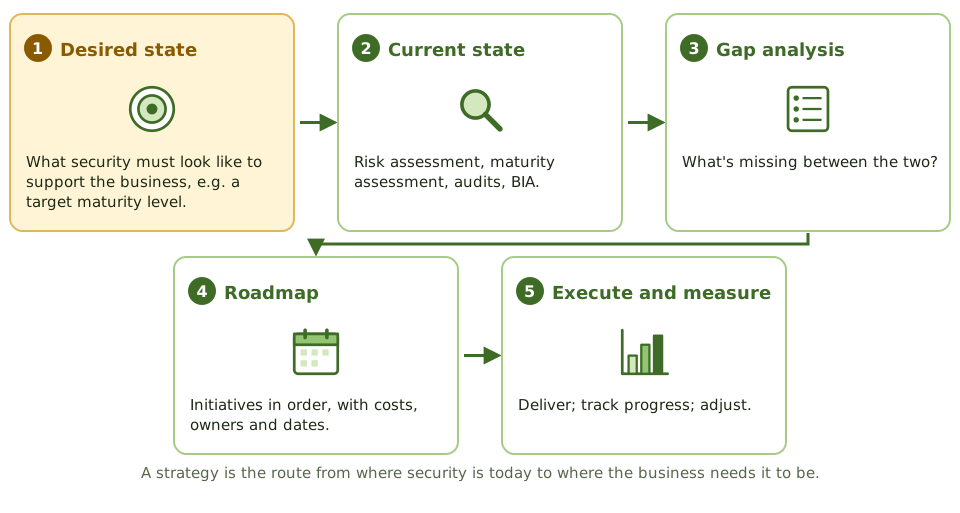
A strategy answers three questions: where do we need to be, where are we now, and how do we get there? Without it, security spending follows the latest incident or vendor pitch instead of the business's needs.
From current state to desired state
Defining the desired state
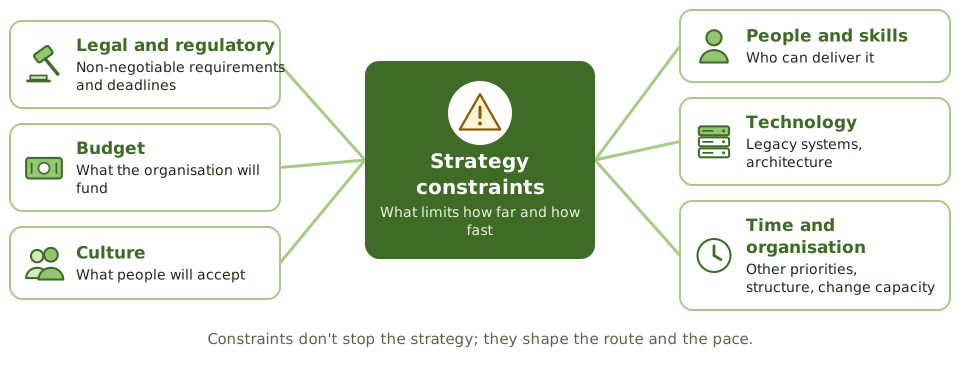
Constraints shape the route
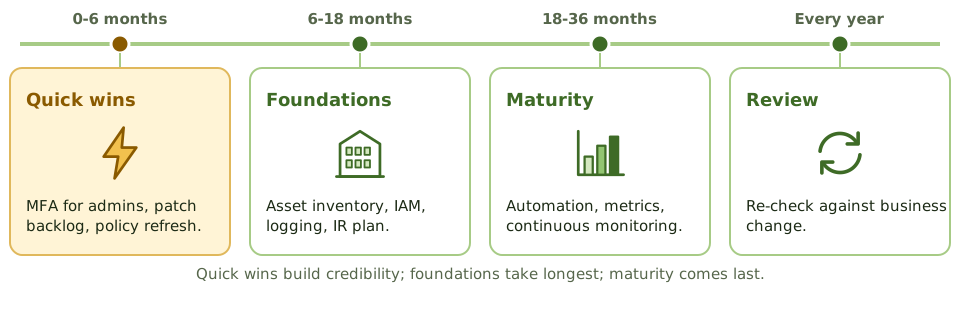
The roadmap
How the exam asks about it
| If the question asks… | Answer |
|---|---|
| First step in building a strategy | Understand business objectives / define desired state |
| Best way to establish the current state | Risk and maturity assessments, gap analysis |
| What the roadmap is based on | Gaps prioritised by risk and business need |
| Who approves the strategy | Senior management / the board |
| When to update the strategy | Regularly, and after significant business change |
Key takeaways
- ✓A security strategy is a plan to move from the current state to a desired state that supports business objectives.
- ✓The desired state is defined with business input, often using frameworks or maturity targets (COBIT, CMMI, ISO 27001, NIST CSF).
- ✓The current state comes from risk assessments, maturity assessments, audit findings, BIA results and metrics.
- ✓Gap analysis shows what must change; the roadmap orders initiatives by risk, dependencies, cost and quick wins.
- ✓Constraints (legal, budget, culture, skills, technology, time) shape the route and pace.
- ✓The strategy is approved by senior management and reviewed regularly, and whenever the business changes.
Exam traps
- !Don't start with solutions: define objectives and assess the current state first.
- !A list of projects isn't a strategy unless it links to business objectives and a desired state.
- !Ignoring culture or budget constraints gives a strategy that can't be delivered.
- !The desired state isn't 'maximum security'; it's the level the business needs and can afford.
Gaining and Keeping Executive Commitment
Why senior management support is the deciding factor for every security program, and practical ways the security manager earns and keeps it.
Why it decides everything
Senior management controls the budget, sets priorities and models behaviour. Without their visible support, policies have no authority, projects lose funding and business units ignore security. That's why CISM answers so often point to senior management commitment.
How to earn it
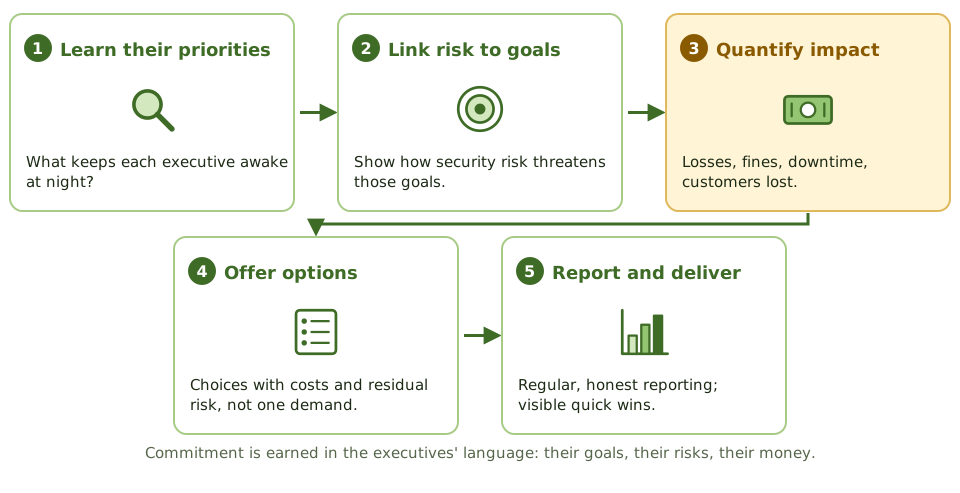
Speak their language
| Instead of… | Say… |
|---|---|
| 'We have 400 critical vulnerabilities.' | 'Our online store could be down for a week; that's 3 million in sales.' |
| 'We need a SIEM.' | 'We'd currently take months to notice a breach; this cuts it to hours.' |
| 'ISO 27001 requires it.' | 'Two of our largest customers require it to renew contracts.' |
| 'Phishing is rising.' | 'Fraudulent payment requests cost a peer company 4 million last year.' |
Opportunities to win support
Keeping it
- 1Regular, concise reporting on risk and progress.
- 2Deliver what was promised; show quick wins early.
- 3Be honest about problems and setbacks.
- 4Keep executives involved through the steering committee.
How the exam asks about it
| If the question asks… | Answer |
|---|---|
| Most important factor for program success | Senior management commitment |
| Best way to obtain management support | Show how security supports business objectives, in business terms |
| Most effective way to present risk | Business impact, with options and costs |
| Management declines to fund a control | Document the decision and the accepted risk |
| How to maintain support | Regular reporting on progress and risk |
Key takeaways
- ✓Senior management commitment is the most important success factor for an information security program.
- ✓Executives commit when security is explained in their terms: business goals, risk, money and reputation.
- ✓Offer options with costs and residual risk, so executives make informed decisions rather than approve demands.
- ✓Incidents, audits, regulation and peer benchmarks can create interest, but lasting commitment comes from alignment.
- ✓Keep support through regular, honest reporting, delivered quick wins and a seat on the steering committee.
- ✓Visible commitment (policy signed by the CEO, executives following the rules) tells everyone security matters.
Exam traps
- !Fear, uncertainty and doubt may get a one-off budget, but not lasting support.
- !Technical detail loses executives; business impact keeps them.
- !Commitment isn't a one-time approval; it must be maintained.
- !Without senior support, the right answer is rarely 'push ahead anyway'; it's to build the case and get it.
Governing AI and Emerging Technology
How the security manager helps the organisation adopt AI and other emerging technology safely: an AI policy, inventory, risk assessment, approval with controls, and the frameworks (NIST AI RMF, ISO/IEC 42001, EU AI Act) that guide it.
Enable, don't block
Staff are already using AI tools, and the business wants the productivity they promise. A security manager who simply says no loses influence and pushes use into the shadows. The 2026 CISM outline emphasises today's technologies: the job is to make adoption safe.
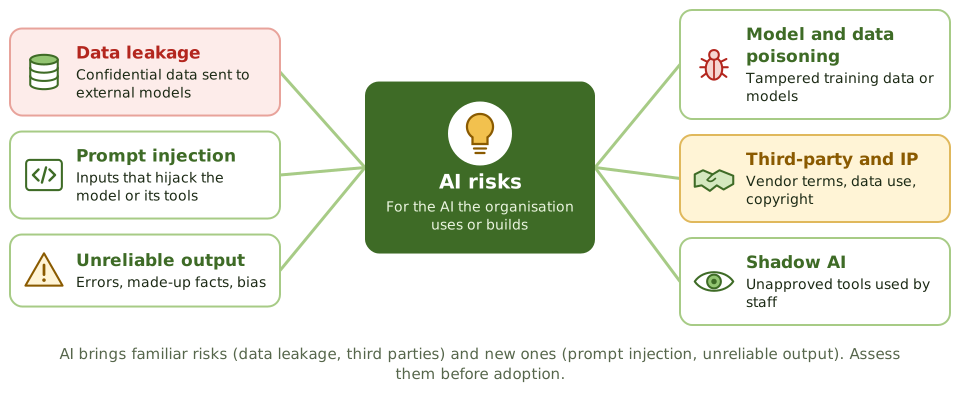
What can go wrong
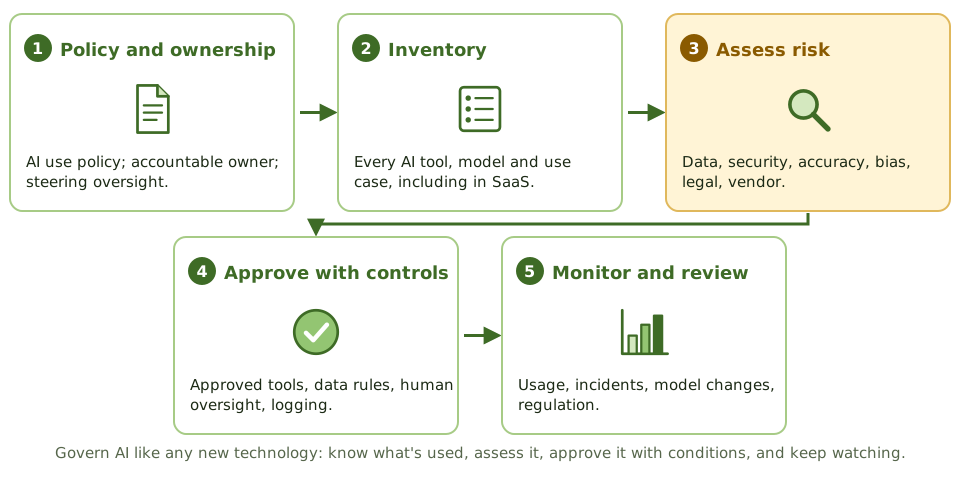
Governing AI
Frameworks and regulation
| Framework | What it gives you |
|---|---|
| NIST AI RMF | Govern, Map, Measure, Manage functions for AI risk |
| ISO/IEC 42001 | Certifiable AI management system (2023) |
| EU AI Act | Risk tiers: prohibited, high-risk, limited, minimal; obligations phasing in from 2025 |
| OWASP Top 10 for LLMs | Common technical risks in AI applications |
Controls that work
How the exam asks about it
| If the question asks… | Answer |
|---|---|
| First step before adopting a new technology | Assess the business case and the risk |
| Best response to unapproved AI use | Govern it: policy, approved tools, data rules |
| Certifiable AI management standard | ISO/IEC 42001 |
| NIST AI RMF functions | Govern, Map, Measure, Manage |
| Who owns the AI use case's risk | The business owner, advised by security, legal and privacy |
Key takeaways
- ✓Emerging technology is a business opportunity and a risk; the security manager's job is to enable safe adoption, not to block it.
- ✓AI risks include data leakage, prompt injection, unreliable or biased output, poisoned models or data, vendor and IP issues, and shadow AI.
- ✓Governance steps: policy and ownership, inventory, risk assessment, approval with controls, monitoring and review.
- ✓NIST AI RMF (Govern, Map, Measure, Manage) and ISO/IEC 42001 (a certifiable AI management system) provide structure.
- ✓The EU AI Act takes a risk-based approach, from prohibited uses to high-risk systems with strict obligations, phasing in from 2025.
- ✓The same approach applies to any emerging technology: understand the business case, assess the risk, set guardrails, monitor.
Exam traps
- !Banning AI outright usually drives it underground (shadow AI); govern it instead.
- !AI risk isn't only a security issue; legal, privacy, ethics and the business owner are involved.
- !AI features inside existing SaaS products need assessment too.
- !Approving a tool once isn't enough; models and vendor terms change.
Security Frameworks Compared: NIST CSF, ISO 27001 and COBIT
The three frameworks a security manager meets most, what each is for, how they differ and how they fit together in one governance program.
Why frameworks?
A framework gives the security program a recognised structure: a checklist of what good looks like, a common language for the board and auditors, and evidence of a reasonable standard of care. It saves the security manager from inventing everything from scratch.
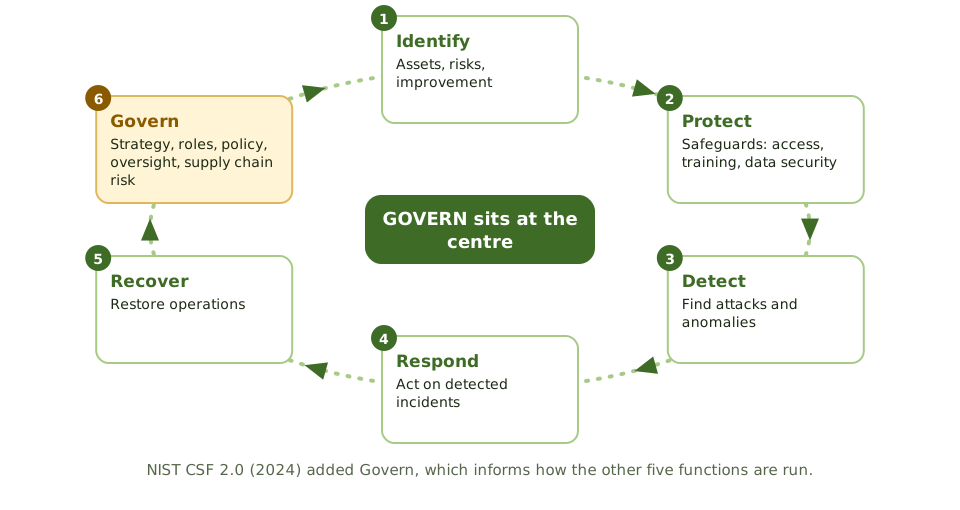
NIST Cybersecurity Framework 2.0
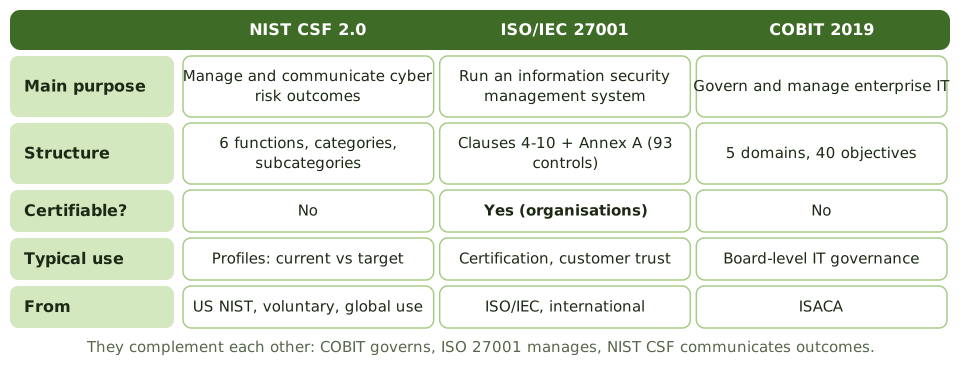
The three side by side
How they fit together
Using CSF profiles
A profile is a snapshot of which CSF outcomes the organisation achieves. Comparing a current profile with a target profile shows the gaps.
How the exam asks about it
| If the question asks… | Answer |
|---|---|
| Framework an organisation can be certified against | ISO/IEC 27001 |
| Function added in NIST CSF 2.0 | Govern |
| ISACA's IT governance framework | COBIT |
| How to use a CSF profile | Compare current and target profiles to find gaps |
| Should a framework be adopted as-is? | No; tailor it to the organisation |
Key takeaways
- ✓NIST Cybersecurity Framework 2.0 organises outcomes into six functions: Govern, Identify, Protect, Detect, Respond and Recover.
- ✓ISO/IEC 27001 sets requirements for an information security management system (ISMS); organisations can be certified against it.
- ✓COBIT 2019 is ISACA's framework for governance and management of enterprise IT, with governance (EDM) separate from management.
- ✓Frameworks complement each other: COBIT for IT governance, ISO 27001 for the management system, NIST CSF to describe and communicate outcomes.
- ✓CSF profiles compare a current profile with a target profile, which feeds gap analysis and the roadmap.
- ✓No framework should be adopted unchanged; it's tailored to the organisation's risks and needs.
Exam traps
- !Only ISO 27001 is certifiable among these three; NIST CSF and COBIT aren't.
- !ISO 27002 is guidance on controls; you get certified to 27001, not 27002.
- !Govern is the function added in CSF 2.0; older material lists only five functions.
- !A framework is a structure, not a strategy; the strategy comes from business objectives.
Selecting and Implementing a Framework
How a security manager chooses a governance or security framework, tailors it to the organisation, maps it to others, and puts it into practice.
There's no single right framework
A small software company, a national bank and a hospital all need security governance, but not the same framework. The security manager's job is to pick the one that fits, and make it work.
What drives the choice
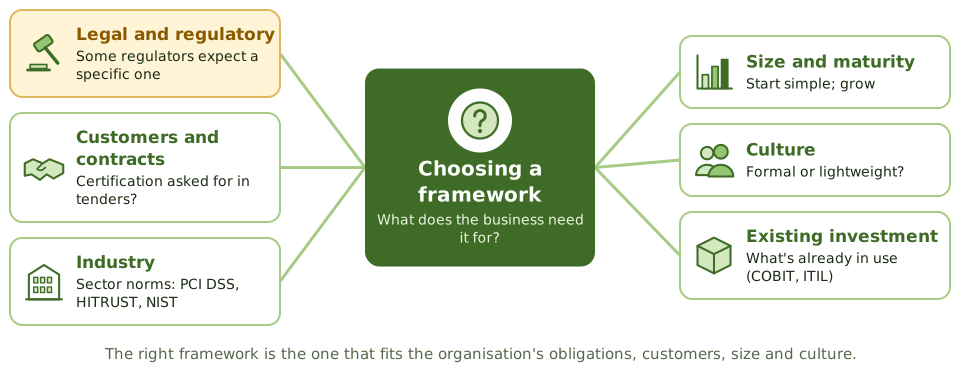
Tailor and map
Putting it into practice
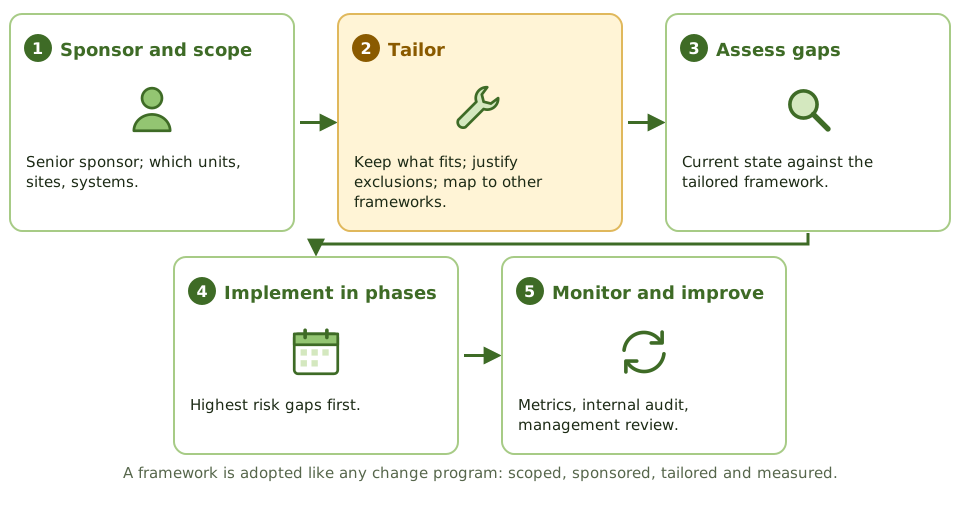
How the exam asks about it
| If the question asks… | Answer |
|---|---|
| Main factor in choosing a framework | Business, legal and regulatory requirements |
| Benefit of mapping frameworks | One control set meets several requirements |
| Implement every control in the catalogue? | No; select based on risk |
| First step in framework adoption | Senior sponsorship and scope |
| Measure of success | Risk reduction and maturity, not control count |
Key takeaways
- ✓The framework choice is driven by business needs: legal and regulatory expectations, customers, industry, size, maturity and culture.
- ✓Frameworks are tailored: keep what fits the organisation's risks, and document why anything is excluded.
- ✓Mapping (crosswalking) one framework to others lets a single control set meet several requirements.
- ✓Implementation needs a senior sponsor, a defined scope, a gap assessment and phased delivery.
- ✓Success is measured by risk reduction and maturity improvement, not by the number of controls implemented.
- ✓A governance framework covers decisions, roles, policies, metrics and reporting, not just a control list.
Exam traps
- !Choosing a framework because it's popular, without checking business and regulatory needs, is a mistake.
- !Implementing every control in a catalogue regardless of risk wastes money.
- !A framework doesn't replace the strategy; it supports it.
- !Starting implementation without a sponsor and scope leads to stalled, partial adoption.
Governance Models: BMIS and the Security Balanced Scorecard
Two models a security manager uses to think and report about security as part of the business: ISACA's Business Model for Information Security (BMIS) and the security balanced scorecard.
Security as a system
A new tool fails because people find it awkward. A strong policy fails because the culture ignores it. ISACA's Business Model for Information Security (BMIS) explains why: security depends on organisation, people, process and technology together, and changing one affects the others.
BMIS elements and links
The six dynamic interconnections
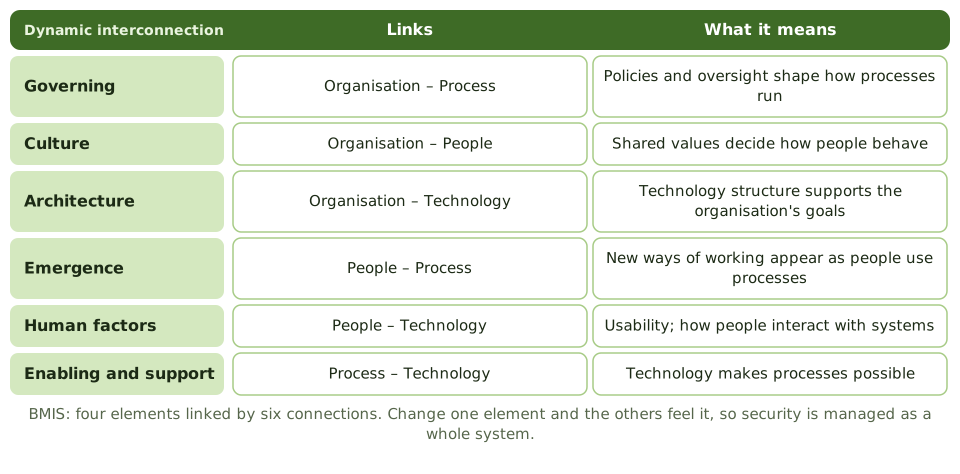
Using BMIS
BMIS helps the security manager ask the right questions before a change: who will use it, how will processes adapt, does it fit the culture and architecture?
The security balanced scorecard
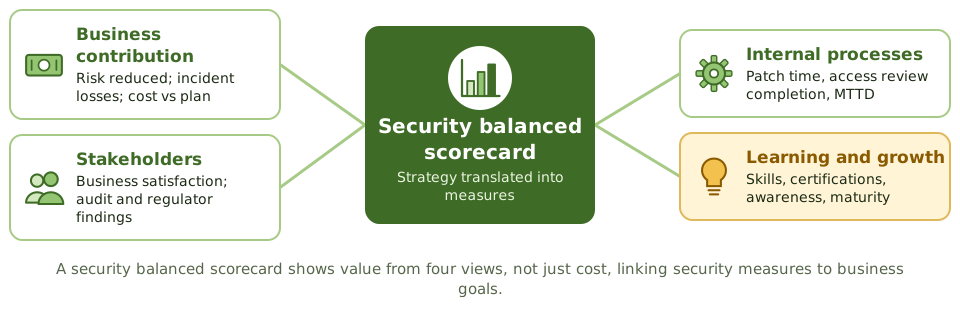
How the exam asks about it
| If the question asks… | Answer |
|---|---|
| ISACA model linking organisation, people, process, technology | BMIS |
| BMIS link between organisation and people | Culture |
| BMIS link between people and technology | Human factors |
| Purpose of a balanced scorecard | Measure strategy from several perspectives |
| Weakness of cost-only security reporting | Not balanced; misses value and capability |
Key takeaways
- ✓BMIS (Business Model for Information Security) is ISACA's systems-thinking model: security depends on organisation, people, process and technology together.
- ✓Its four elements are linked by six dynamic interconnections: governing, culture, architecture, emergence, human factors, and enabling and support.
- ✓BMIS explains why changing one element (say, new technology) affects the others (people, processes, culture).
- ✓A balanced scorecard translates strategy into measures from several perspectives, not just financial ones.
- ✓A security balanced scorecard typically covers business contribution, stakeholders, internal processes, and learning and growth.
- ✓Both models support governance: BMIS for understanding, the scorecard for measuring and reporting.
Exam traps
- !BMIS isn't a control framework; it's a way of understanding how security fits the business.
- !Culture links organisation and people; governing links organisation and process. Don't swap them.
- !A scorecard with only cost measures isn't balanced.
- !Technology-only solutions ignore the human factors and culture links.
Resource Planning and Security Budgets
How the security manager plans people, technology and services for the strategy, builds a risk-based budget, and decides what to build, buy or outsource.
Turning strategy into resources
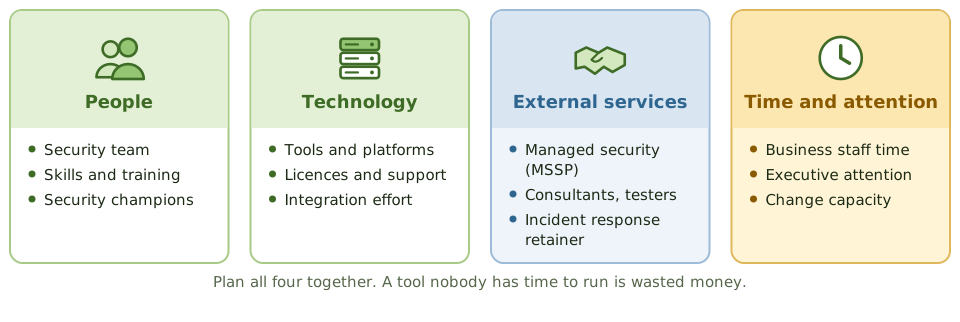
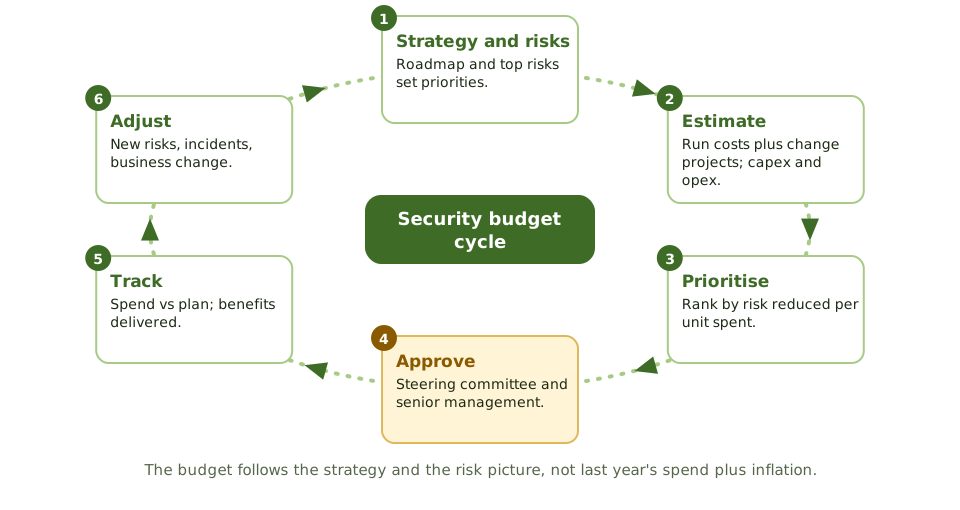
A strategy without resources is a wish list. Strategic planning works out what the roadmap needs, what the organisation already has, and how to fill the gap, then turns it into a budget the business can approve.
Four kinds of resource
The budget cycle
Build, buy or outsource?
| Option | Good when | Watch out for |
|---|---|---|
| Build in-house | Core capability; need control; skills exist | Hiring, retention, time |
| Buy a product | Mature market; standard need | Total cost of ownership; staff to run it |
| Outsource (MSSP) | 24x7 coverage; scarce skills | Contract, oversight, accountability stays |
| Hybrid | Most organisations | Clear split of responsibilities |
Counting the real cost
- 1Licences or subscriptions, and annual increases.
- 2People to configure, run and tune it.
- 3Integration with existing systems.
- 4Training and certification.
- 5Support, upgrades and eventual replacement.
How the exam asks about it
| If the question asks… | Answer |
|---|---|
| What should drive the security budget | The strategy and risk priorities |
| Main concern when buying a security tool | Total cost of ownership, including people to run it |
| Benefit of a managed security service | Access to skills and 24x7 coverage |
| Who stays accountable after outsourcing | The organisation |
| Where project security costs belong | In the project's own budget, from the start |
Key takeaways
- ✓Strategic planning turns the security strategy into resources: people, technology, external services and time.
- ✓The budget should follow the strategy and risk priorities, not last year's spend plus a percentage.
- ✓Separate 'run' costs (keeping existing controls working) from 'change' costs (new initiatives).
- ✓Total cost of ownership includes licences, people to run tools, integration, training and support, not just purchase price.
- ✓Build, buy or outsource decisions weigh cost, skills, control, speed and risk.
- ✓Security costs should be built into business projects from the start, not added later from the security budget.
Exam traps
- !Buying a tool without the people or process to run it is a classic waste.
- !Benchmarks (percent of IT budget spent on security) are context, not a justification on their own.
- !Outsourcing a security service doesn't outsource accountability.
- !Cutting run costs to fund new projects can quietly weaken existing controls.
Building a Business Case for Security Investment
How to write a security business case that executives approve: framing the business problem, comparing options, costing them honestly and showing the benefits.
Why business cases matter
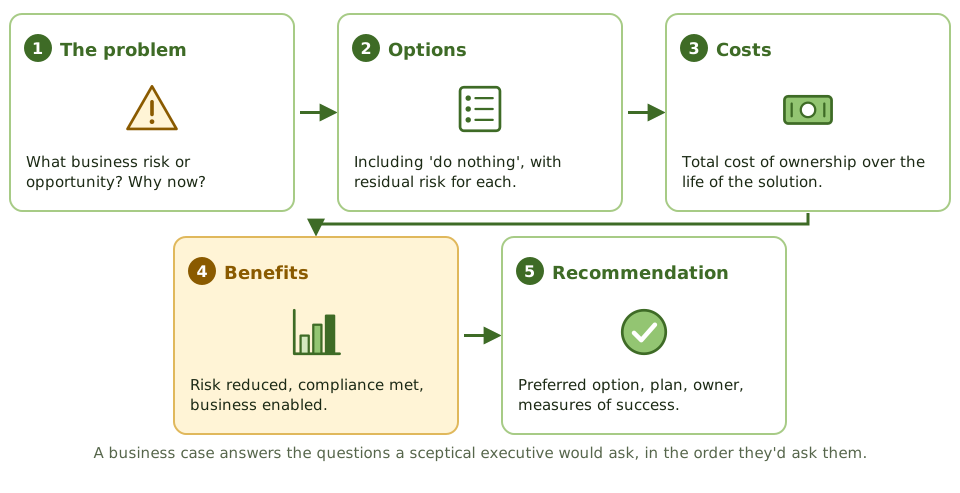
Every security investment competes with other uses of the same money: a new product, more sales staff, a new warehouse. A business case puts security on the same footing, explaining in business terms why this spending is worth more than the alternatives.
What goes in it
Options, not demands
| Option | 3-year cost | Residual risk |
|---|---|---|
| Do nothing | 0 | High: unmonitored privileged access; audit finding stays open |
| Manual quarterly reviews | 180,000 (staff time) | Medium: gaps between reviews |
| PAM tool, phased | 420,000 | Low: vaulted, recorded admin access |
| PAM as a managed service | 390,000 | Low, with supplier dependency |
Benefits beyond money
After approval
- 1Track delivery against the plan and budget.
- 2Measure the promised benefits.
- 3Report results to the sponsor and steering committee.
How the exam asks about it
| If the question asks… | Answer |
|---|---|
| Most important element of a security business case | Link to business objectives and risk |
| Must every business case include 'do nothing'? | Yes, with its residual risk |
| Main purpose of a business case | Help management make an informed investment decision |
| Costs to include | Total cost of ownership over the life |
| After approval | Track and report benefits realised |
Key takeaways
- ✓A business case justifies an investment in business terms: the problem, options, costs, benefits, risks and a recommendation.
- ✓Always include a 'do nothing' option and the residual risk of each option, so executives can make an informed choice.
- ✓Costs should be total cost of ownership over the solution's life; benefits include risk reduction, compliance and business enablement.
- ✓Link the investment to business objectives and the security strategy, not to technology for its own sake.
- ✓Financial measures (ROI, NPV, payback) help, but security benefits are often avoided losses, so be realistic about estimates.
- ✓Approved cases are tracked afterwards to show the benefits were delivered.
Exam traps
- !A business case built on fear rather than business impact rarely survives scrutiny.
- !Leaving out running costs makes the case look cheap now and damages credibility later.
- !The business case should be owned by a business sponsor where possible, not only by security.
- !Approval isn't the end: benefits realisation should be measured.
Demonstrating Value and Return on Security Investment
How security shows it's worth what it costs: return on security investment, its limits, and the non-financial value that matters just as much to executives.
Is security worth it?
Executives ask the same question of security as of any other spending: what do we get for it? Because security's main benefit is things that don't happen, the answer needs both numbers and a clear story.
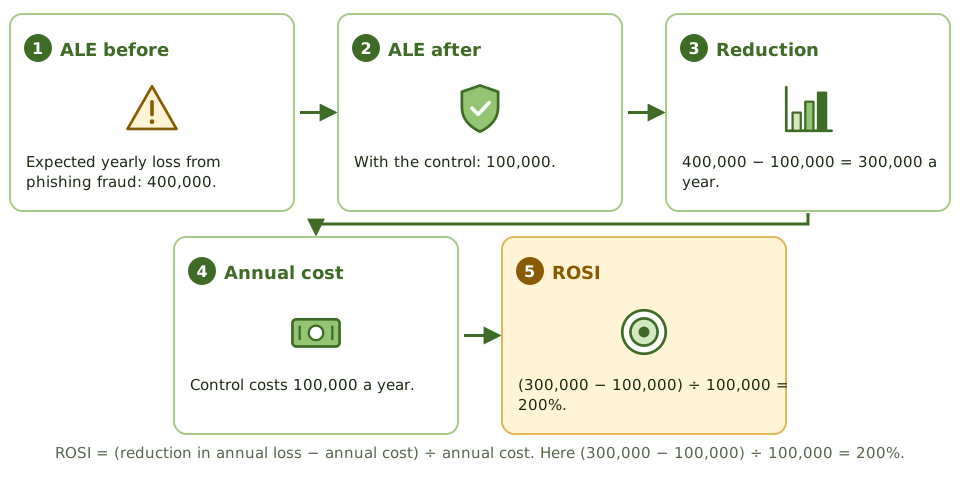
Return on security investment
Handle estimates honestly
- 1Show the assumptions behind loss and likelihood.
- 2Use ranges: best, likely, worst case.
- 3Use internal incident data and industry loss studies.
- 4Agree assumptions with finance before presenting.
Value beyond money
Showing value over time
Report measures that link security to business outcomes, quarter after quarter.
How the exam asks about it
| If the question asks… | Answer |
|---|---|
| Governance outcome about getting worth from spend | Value delivery |
| When is a control cost-justified? | Loss reduction exceeds its cost (or it's required) |
| Main weakness of ROSI | Relies on estimates of loss and likelihood |
| Best way to show value to executives | Metrics linked to business outcomes |
| Is security value only cost avoidance? | No; enablement and trust count too |
Key takeaways
- ✓Value delivery, security investments being worth what they cost, is one of the six outcomes of security governance.
- ✓Return on security investment (ROSI) = (reduction in annual loss expectancy − annual cost of the control) ÷ annual cost.
- ✓ROSI depends on estimates of loss and likelihood; show assumptions and ranges rather than false precision.
- ✓Much security value is non-financial: customer trust, regulatory standing, enabling new business, lower insurance premiums.
- ✓Value is demonstrated through metrics tied to business outcomes, reported regularly.
- ✓Spending more than a risk could ever cost is poor value, however good the control.
Exam traps
- !A control costing more than the loss it prevents is rarely justified, unless law or contract requires it.
- !Counting 'attacks blocked' isn't a measure of value; reduced business impact is.
- !Security value isn't only cost avoidance; enablement counts too.
- !Precise-looking ROSI figures built on guesses damage credibility when challenged.
Information Security Risk Management
Risk foundations · Threats and vulnerabilities · Risk analysis · Risk treatment · Ownership and monitoring
Risk Management Concepts and Frameworks
What information risk is, the life cycle for managing it, and the frameworks (ISO 31000, ISO 27005, NIST, FAIR, COSO, Risk IT) a security manager draws on.
What risk is
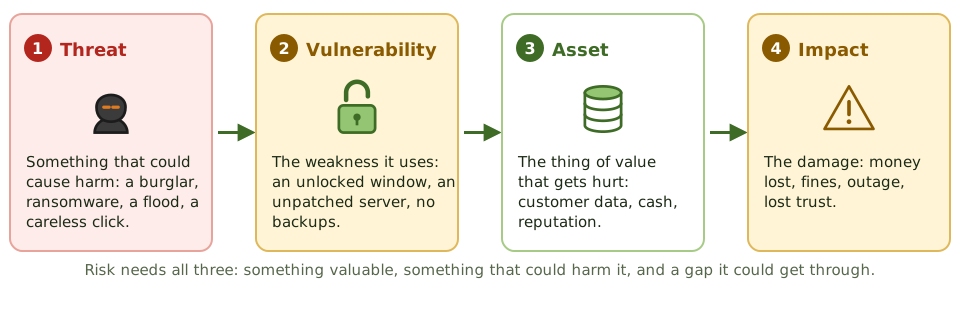
ISO 31000 defines risk as the effect of uncertainty on objectives. For information security, risk exists when something of value could be harmed because a threat could exploit a weakness. Take away any of those ingredients and the risk shrinks.
The risk management life cycle
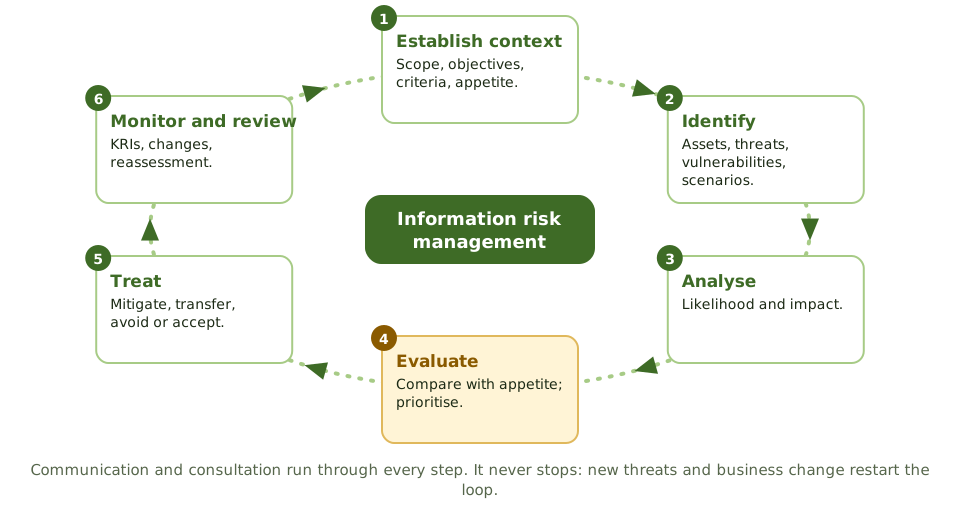
Key terms
| Term | Meaning |
|---|---|
| Asset | Anything of value: data, systems, people, reputation |
| Threat | A potential cause of harm: attacker, error, flood |
| Vulnerability | A weakness a threat can exploit |
| Likelihood | How probable the event is |
| Impact | The harm if it happens: money, legal, customers, safety |
| Control | A measure that reduces likelihood or impact |
Frameworks you'll meet
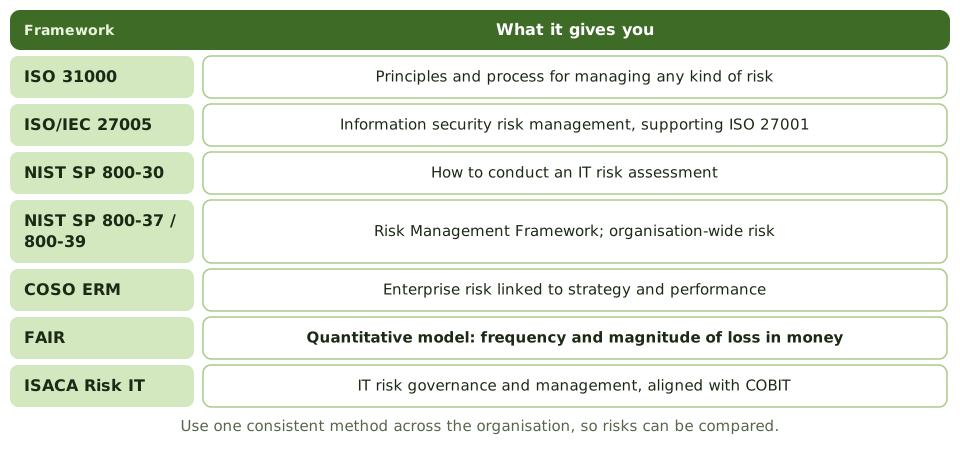
Why one method matters
If IT rates risks on a 3-point scale and finance on a 5-point scale with different impact bands, the board can't compare them. The security manager should use the organisation's enterprise method, or align with it.
How the exam asks about it
| If the question asks… | Answer |
|---|---|
| Purpose of information risk management | Keep risk within appetite while supporting objectives |
| First step in the risk management process | Establish context: scope, criteria, appetite |
| Quantitative risk framework | FAIR |
| Standard for information security risk management | ISO/IEC 27005 |
| Benefit of a common method | Risks can be compared and prioritised enterprise-wide |
Key takeaways
- ✓Risk is the effect of uncertainty on objectives; information risk arises when a threat can exploit a vulnerability to harm an asset.
- ✓Risk is usually expressed as a combination of likelihood and impact.
- ✓The risk life cycle: establish context, identify, analyse, evaluate, treat, and monitor, with communication throughout.
- ✓Common frameworks: ISO 31000 (general), ISO 27005 (information security), NIST SP 800-30 and 800-39, COSO ERM, FAIR (quantitative) and ISACA Risk IT.
- ✓The purpose of information risk management is to keep risk within the organisation's appetite while supporting business objectives.
- ✓A consistent, organisation-wide method lets information risks be compared with other business risks.
Exam traps
- !Risk management aims to keep risk acceptable, not to eliminate it.
- !Establishing context (scope, criteria, appetite) comes before identifying risks.
- !A vulnerability with no credible threat, or a threat with nothing to exploit, carries little risk.
- !Using different methods in different departments makes risks impossible to compare.
Inherent Risk, Residual Risk, Appetite and Tolerance
The yardsticks of risk management: risk before and after controls, how much risk the organisation is willing and able to take, and how the security manager uses them to make decisions.
Before and after controls
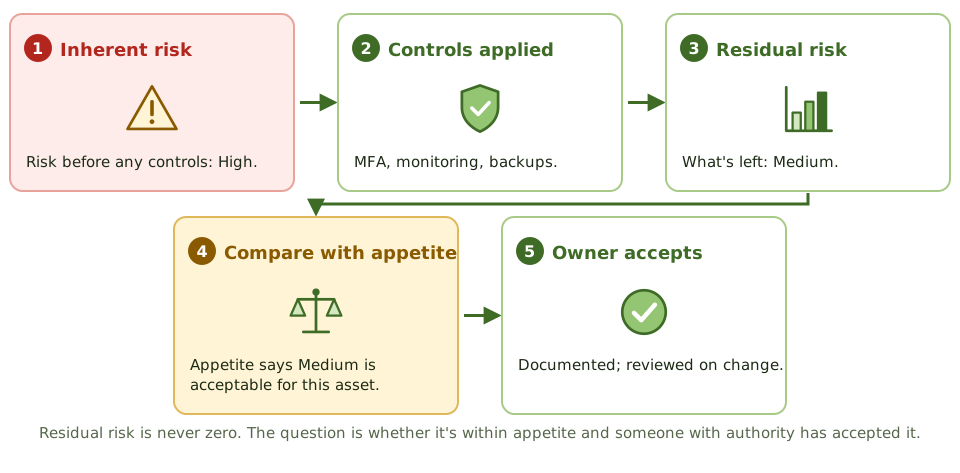
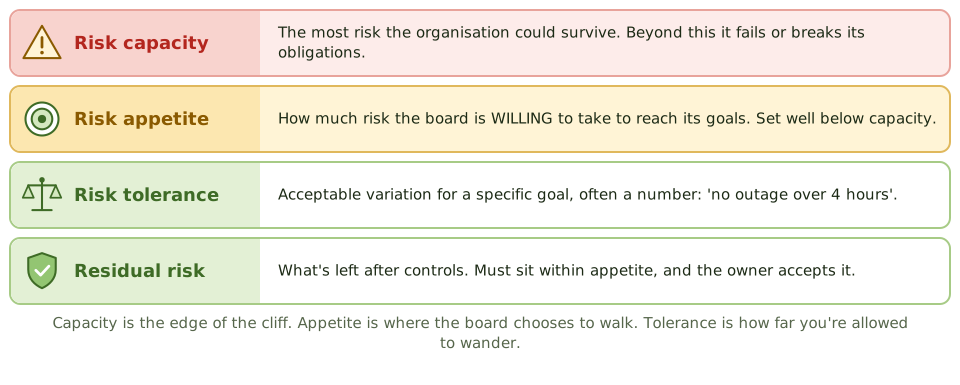
Capacity, appetite, tolerance
Writing appetite down
| Vague | Usable appetite statement |
|---|---|
| 'We take security seriously.' | 'No more than 4 hours unplanned downtime for payment systems per year.' |
| 'Protect customer data.' | 'Zero tolerance for unencrypted customer data on portable devices.' |
| 'Moderate risk is fine.' | 'Residual risks rated High need executive acceptance, reviewed quarterly.' |
| 'Innovate safely.' | 'Moderate appetite for cloud and AI pilots using non-sensitive data.' |
Using the yardstick
In practice
Appetite turns risk discussions into decisions: either the gap is closed, or someone senior knowingly accepts it.
How the exam asks about it
| If the question asks… | Answer |
|---|---|
| Who sets risk appetite | The board / senior management |
| Risk after controls | Residual risk |
| Goal of risk treatment | Residual risk within appetite |
| Residual risk exceeds appetite | Further treatment or escalation for acceptance |
| Acceptable variation for one objective | Risk tolerance |
Key takeaways
- ✓Inherent risk is the risk before controls; residual risk is what remains after them.
- ✓Risk appetite is the amount of risk the organisation is willing to take to pursue its objectives; the board sets it.
- ✓Risk tolerance is the acceptable variation around a specific objective; risk capacity is the most risk the organisation could survive.
- ✓Treatment aims to bring residual risk within appetite, at reasonable cost, not to reduce it to zero.
- ✓Residual risk must be formally accepted by the risk owner, at a level of authority matching its size.
- ✓Appetite statements turn a vague attitude into usable thresholds, such as 'no more than 4 hours downtime for payments'.
Exam traps
- !Appetite is set by the board and senior management, not by the CISO.
- !If residual risk exceeds appetite, more treatment or higher-level acceptance is needed; doing nothing isn't an option.
- !Risk tolerance is narrower and more specific than appetite.
- !Controls that push residual risk far below appetite may be wasting money.
Threat Actors, Motivations and Attack Vectors
Who attacks organisations and why, the most common ways in, and how understanding attackers helps the security manager assess risk realistically.
Know your adversary
A small online shop and a defence contractor face very different attackers. Understanding who would target the organisation, what they want and what they can do makes likelihood estimates realistic, and stops the program spending on threats that barely apply.
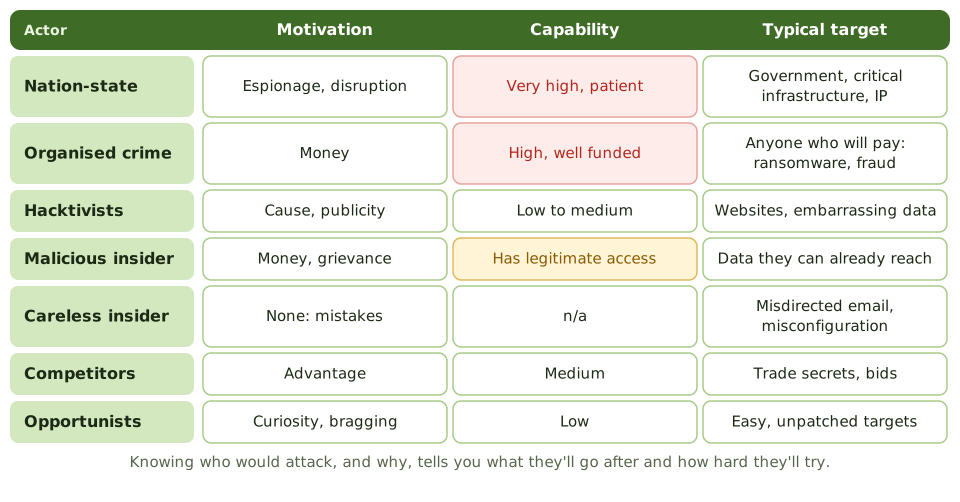
Who attacks, and why
The usual ways in
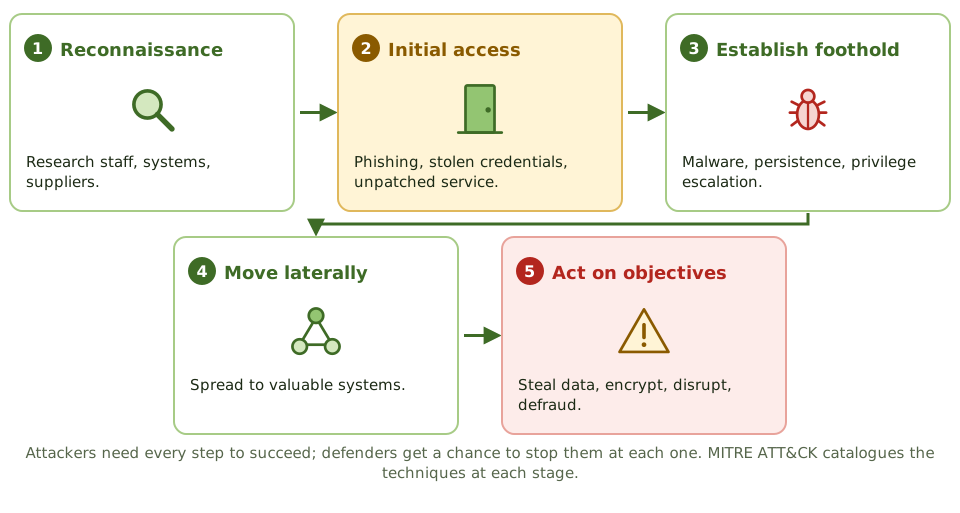
How an attack unfolds
Building a threat profile
- 1Which actors are likely, given the industry, size and geography?
- 2What assets would they want?
- 3Which vectors do they favour?
- 4What does threat intelligence say about current campaigns?
- 5Include non-malicious threats: error, failure, disaster.
How the exam asks about it
| If the question asks… | Answer |
|---|---|
| Most common initial attack vector | Phishing / social engineering |
| Actor with legitimate access | Insider |
| Threat actor motivated by money | Organised crime |
| Tool listing real attacker techniques | MITRE ATT&CK |
| Why profile threat actors | Realistic likelihood and targeted controls |
Key takeaways
- ✓Threat actors differ in motivation, capability and persistence: nation-states, organised crime, hacktivists, insiders, competitors and opportunists.
- ✓Insiders include malicious people with legitimate access and careless staff who make mistakes; both are significant sources of risk.
- ✓The most common attack vectors are phishing and social engineering, stolen or weak credentials, unpatched vulnerabilities, misconfiguration and third parties.
- ✓Attacks unfold in stages (reconnaissance, initial access, foothold, lateral movement, objective), giving defenders several chances to stop them.
- ✓MITRE ATT&CK catalogues real attacker techniques and helps check whether controls cover them.
- ✓Threats also include non-malicious events: errors, system failures, natural disasters.
Exam traps
- !Not all threats are external or malicious; accidental insider errors cause many incidents.
- !Likelihood depends on the actor's motivation and capability, not just on the existence of a vulnerability.
- !A threat profile should be specific to the organisation and its industry, not a generic list.
- !Prevention alone isn't enough; attacks have stages where detection can still stop them.
The Evolving Threat Landscape: AI, Cloud and Supply Chain
The emerging risks a security manager watches today (AI, cloud, supply chain, extortion, operational technology, quantum) and a disciplined way to respond when something new appears.
The landscape never stands still
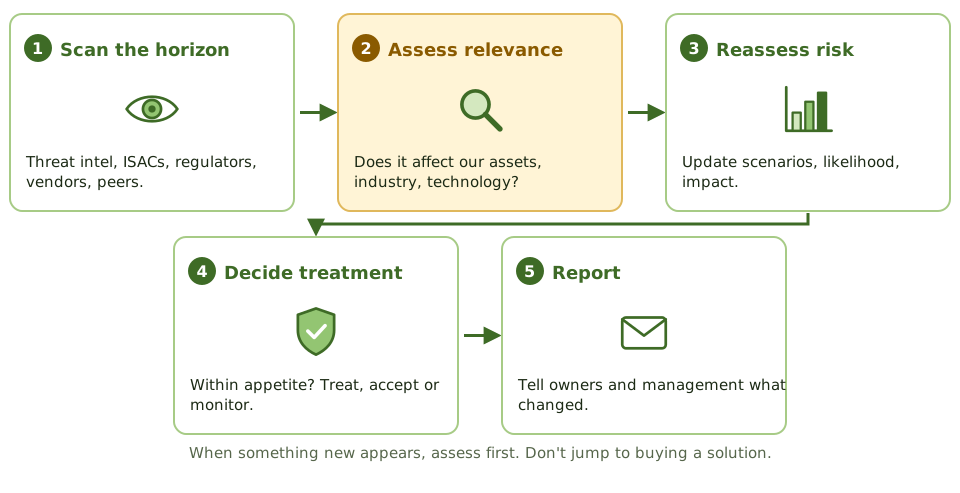
Attack techniques, technology and the business all change constantly. A risk assessment from last year may already be out of date. CISM expects the security manager to monitor for internal and external factors that require risk to be reassessed.
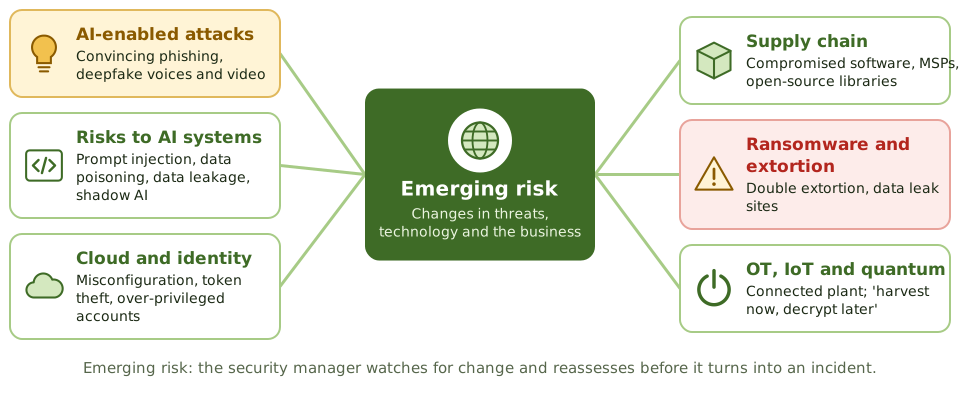
What's emerging now
AI, both ways
Responding to something new
Where to watch
- 1Threat intelligence feeds and sector ISACs.
- 2Government agencies and regulators' alerts.
- 3Vendor advisories and known-exploited lists.
- 4Peers, conferences, incident reports.
- 5The organisation's own business plans: new tech, markets, suppliers.
How the exam asks about it
| If the question asks… | Answer |
|---|---|
| First step when a new threat emerges | Assess relevance and reassess risk |
| Best approach to generative AI use | Govern it: policy, approved tools, data rules |
| Main cloud risk | Misconfiguration and identity weaknesses |
| Why ransomware risk remains with good backups | Data theft and extortion |
| When to reassess risk | When internal or external factors change |
Key takeaways
- ✓Emerging risk is a CISM topic in its own right: threats, technology and the business keep changing, so risk assessments must too.
- ✓AI cuts both ways: attackers use it for convincing phishing and deepfakes; the organisation's own AI systems bring new risks such as prompt injection, data poisoning and leakage.
- ✓Cloud risk is dominated by misconfiguration and identity: stolen tokens and over-privileged accounts.
- ✓Supply chain attacks reach many victims through one trusted supplier or software update.
- ✓Ransomware groups now steal data before encrypting it, adding extortion even when backups work.
- ✓When a new threat appears, the first step is to assess its relevance and reassess risk, not to buy a product.
Exam traps
- !Reacting to headlines without assessing relevance wastes resources.
- !Banning new technology outright (such as generative AI) often drives shadow use; govern it instead.
- !Good backups don't remove the risk of data-theft extortion.
- !Emerging risks still go through the normal risk process: assess, treat within appetite, report.
Threat Modelling and Cyber Threat Intelligence
Two ways to understand threats: threat modelling looks at a system's design from the attacker's view; cyber threat intelligence tells you what attackers are actually doing.
Two views of threats
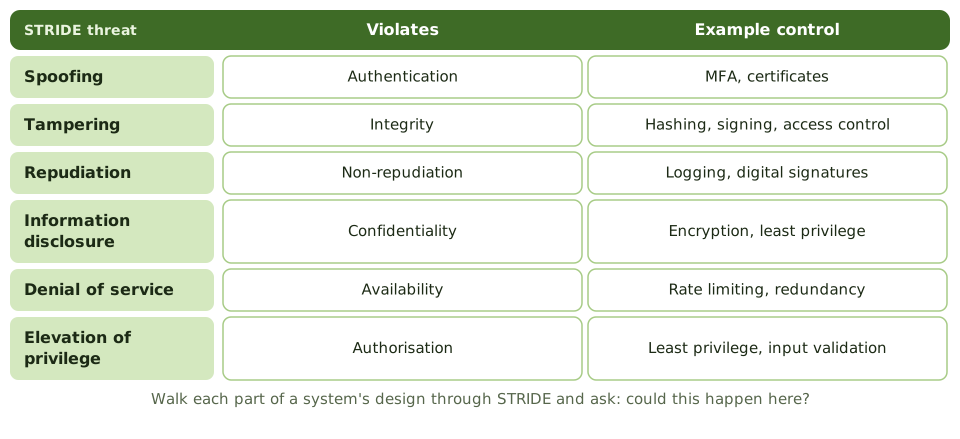
Threat modelling with STRIDE
When and how to model
- 1During design of new systems and major changes.
- 2Draw the system: components, data flows, trust boundaries.
- 3Walk each element through STRIDE (or attack trees, PASTA).
- 4Rate the threats; design controls; record decisions.
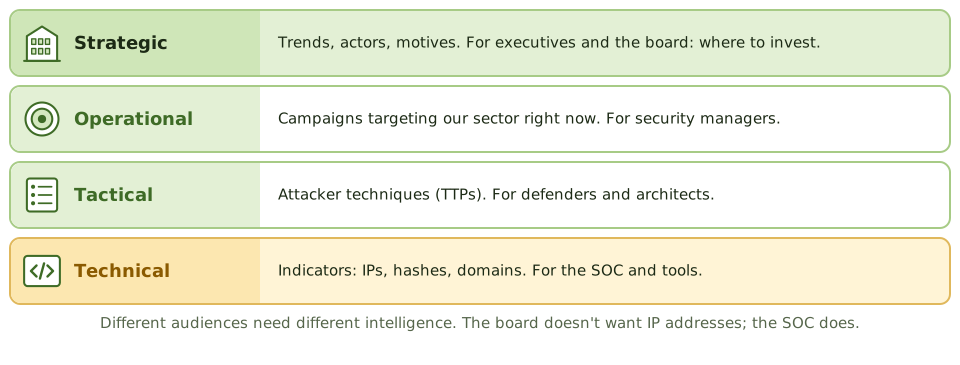
Levels of intelligence
The intelligence cycle
- 1 Direction What do we need to know?
- 2 Collection Feeds, ISACs, OSINT, government
- 3 Processing Filter, normalise
- 4 Analysis Relevance to us
- 5 Dissemination Right audience
- 6 Feedback Was it useful?
How the exam asks about it
| If the question asks… | Answer |
|---|---|
| Best time for threat modelling | During design |
| Threat category violating integrity | Tampering |
| Intelligence for the board | Strategic |
| Indicators such as IPs and file hashes | Technical intelligence |
| Main value of threat intelligence | Better, informed risk and control decisions |
Key takeaways
- ✓Threat modelling identifies how a system could be attacked, ideally during design, when fixing is cheapest.
- ✓STRIDE groups threats into spoofing, tampering, repudiation, information disclosure, denial of service and elevation of privilege.
- ✓Other methods include attack trees and PASTA; the method matters less than doing it systematically.
- ✓Cyber threat intelligence (CTI) is evidence-based knowledge about threats, used to make decisions.
- ✓CTI works at four levels (strategic, operational, tactical, technical) for different audiences.
- ✓Intelligence is only valuable if it's relevant, timely and acted on; it feeds risk assessments, controls and detection.
Exam traps
- !Threat modelling done after go-live misses the cheapest chance to fix design flaws.
- !Raw threat feeds aren't intelligence until they're analysed for relevance.
- !Strategic intelligence is for executives; technical indicators are for the SOC. Don't mix the audience.
- !Intelligence that nobody acts on has no value.
Vulnerability Assessment and Scanning
How the security manager runs a vulnerability assessment program: finding technical and non-technical weaknesses, scanning methods, and prioritising fixes by risk rather than by score.
Why it matters to risk
Risk needs a threat, a vulnerability and an asset. Vulnerability assessment finds the weaknesses, so the security manager knows where threats could get in and can fix what matters most first.
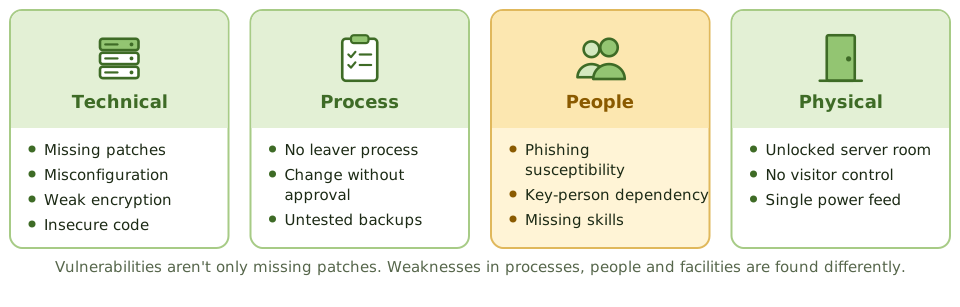
Not just missing patches
Scanning methods
| Method | What it gives |
|---|---|
| Authenticated (credentialed) | Deep view: installed software, missing patches, settings |
| Unauthenticated | What an outsider sees; misses a lot |
| External vs internal | Internet exposure vs what an insider or intruder could reach |
| Web application (DAST) | Flaws such as injection in running apps |
| Agent-based | Continuous view of laptops and cloud servers |
| Cloud posture (CSPM) | Misconfigured cloud services |
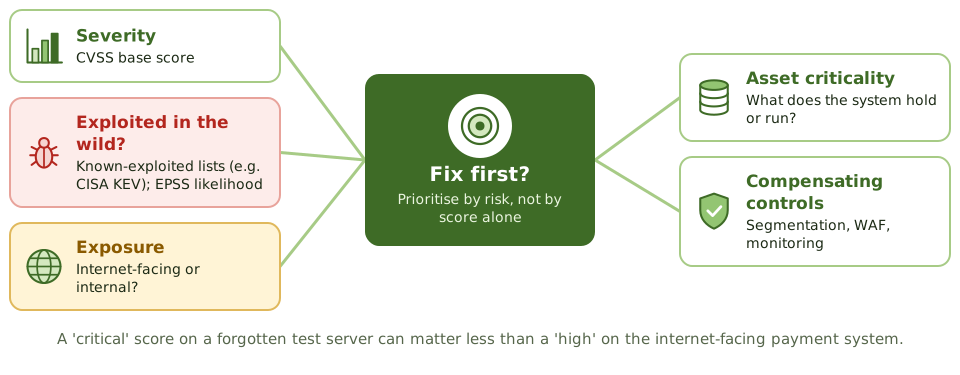
Prioritise by risk
The program
- 1 Inventory Know every asset
- 2 Scan Regular and on change
- 3 Prioritise By risk
- 4 Remediate Owners, deadlines
- 5 Verify Rescan
- 6 Report Trends, overdue, exceptions
How the exam asks about it
| If the question asks… | Answer |
|---|---|
| Prerequisite for vulnerability scanning | Accurate asset inventory |
| Scan that finds the most | Authenticated / credentialed |
| How to prioritise vulnerabilities | By risk: exploitability, exposure, asset criticality |
| A clean scan means… | No known issues found, not that it's secure |
| Unpatchable system | Compensating controls and documented acceptance |
Key takeaways
- ✓Vulnerability assessment identifies weaknesses that threats could exploit; it feeds the risk assessment and remediation plans.
- ✓Vulnerabilities aren't only technical: processes, people and physical facilities have weaknesses too.
- ✓Scanning methods: authenticated vs unauthenticated, internal vs external, network, web application, agent-based, cloud configuration.
- ✓Prioritise by risk: severity (CVSS), active exploitation (known-exploited lists, EPSS), exposure, asset criticality and compensating controls.
- ✓A complete, current asset inventory comes first; you can't scan what you don't know about.
- ✓Track remediation against agreed timelines and rescan to verify fixes.
Exam traps
- !Fixing purely by CVSS score ignores exploitation and business criticality.
- !A clean scan only means no known issues were found by that scan.
- !Unauthenticated scans miss many vulnerabilities that authenticated scans find.
- !Vulnerability assessment finds weaknesses; penetration testing tries to exploit them. Don't confuse the two.
Control Deficiencies and Security Gap Analysis
How to find where controls are missing, badly designed or not working, compare the current state with a benchmark, and turn gaps into prioritised, root-cause fixes.
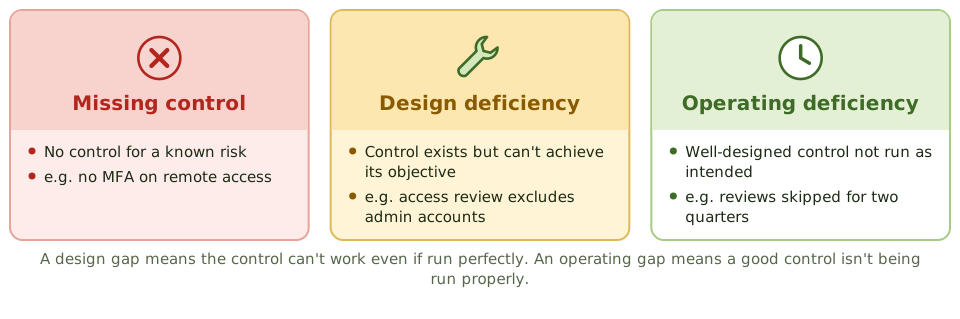
Three kinds of deficiency
Where the evidence comes from
Gap analysis
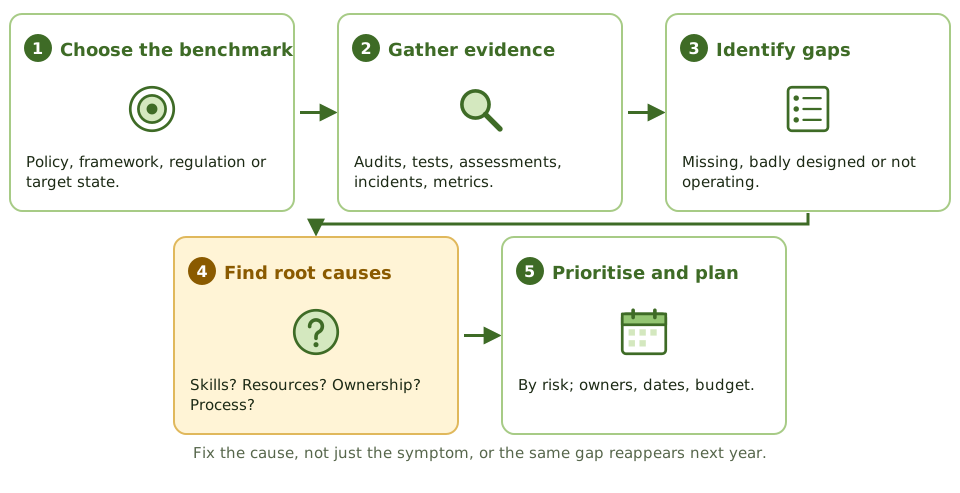
Find the root cause
The same finding returning every year is a sign that only the symptom was fixed.
Prioritise and track
- 1Rate each gap by the risk it leaves.
- 2Group related gaps into initiatives.
- 3Assign owners, dates and budgets.
- 4Report progress and overdue items to the steering committee.
- 5Verify fixes before closing.
How the exam asks about it
| If the question asks… | Answer |
|---|---|
| Control exists but can't meet its objective | Design deficiency |
| Good control not performed as intended | Operating deficiency |
| Same finding repeats every year | Address the root cause |
| How to prioritise gaps | By the risk they leave |
| Benchmark for gap analysis | Policy, framework, regulation or target state |
Key takeaways
- ✓A control deficiency is a missing control, a design deficiency (can't achieve its objective) or an operating deficiency (not run as designed).
- ✓Evidence of deficiencies comes from audits, assessments, tests, incidents, metrics and regulator findings.
- ✓Gap analysis compares the current state with a benchmark: policy, framework, regulation or target state.
- ✓Gaps are prioritised by the risk they leave, not by how easy they are to fix.
- ✓Find the root cause (ownership, skills, resources, process) so the gap doesn't return.
- ✓Remediation plans have owners, deadlines and budgets, and are tracked to closure.
Exam traps
- !Fixing only the symptom (one missed review) without the cause (no owner) means the gap reappears.
- !A control that exists on paper but doesn't operate is a deficiency.
- !Prioritise by risk, not by the number of gaps closed.
- !Gap analysis against a framework doesn't replace risk assessment; not every framework gap is a significant risk.
The Risk Assessment Process
The steps of an information security risk assessment, who should take part, how often it's done and what it produces for the security manager and the business.
Why assess risk?
Resources are limited. A risk assessment tells the security manager, and the business, which risks matter most, so money and effort go where they reduce the most risk. It's the foundation for the strategy, the program and every treatment decision.
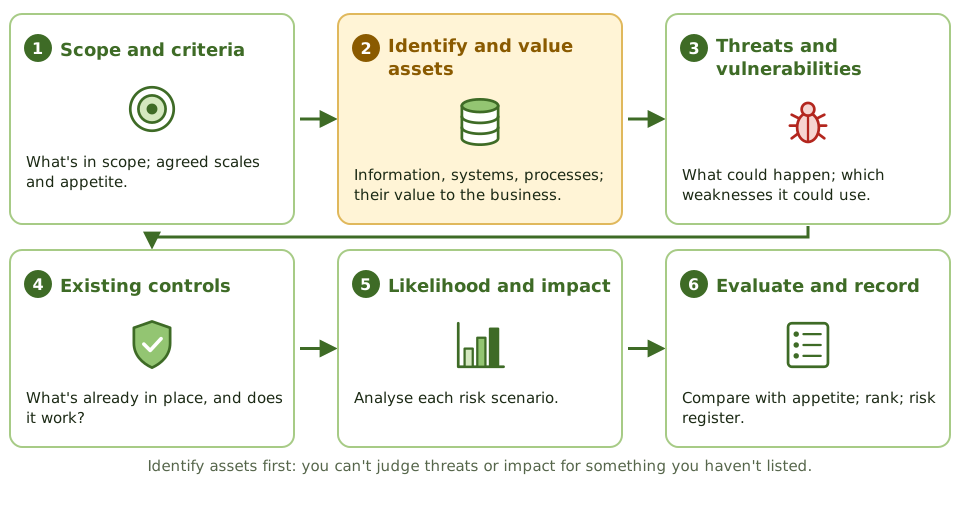
The steps
Who takes part
| Participant | Contributes |
|---|---|
| Business / risk owners | Asset value, business impact, acceptance |
| IT and system owners | Systems, dependencies, existing controls |
| Security team | Threats, vulnerabilities, method, facilitation |
| Legal, compliance, privacy | Obligations and penalties |
| Internal audit | Findings as evidence (not ownership) |
When to assess
An example
Focused assessments for specific changes sit alongside the periodic enterprise assessment.
How the exam asks about it
| If the question asks… | Answer |
|---|---|
| First step in a risk assessment | Identify (and value) the assets |
| Who determines business impact | The business / asset owner |
| When to reassess risk | Periodically and on significant change |
| Main output of a risk assessment | Prioritised risks for treatment decisions |
| Before selecting controls | Assess the risk |
Key takeaways
- ✓A risk assessment identifies, analyses and evaluates risks so the organisation can decide how to treat them.
- ✓The key steps: scope and criteria, identify and value assets, threats and vulnerabilities, existing controls, likelihood and impact, evaluate and record.
- ✓Identifying and valuing assets comes first; business owners provide the value and impact.
- ✓Assessments are done periodically and whenever significant change happens: new systems, acquisitions, new threats, incidents.
- ✓Business owners, IT, security and others take part; risk owners must agree the results.
- ✓The output is a prioritised set of risks, recorded in the risk register, that drives treatment decisions.
Exam traps
- !Selecting controls before assessing risk is the wrong order.
- !An annual assessment alone isn't enough when the environment changes significantly.
- !Impact is judged by the business, not estimated by IT alone.
- !Existing controls must be checked for effectiveness, not just listed.
Qualitative Risk Analysis: Likelihood and Impact
How qualitative and semi-quantitative analysis rate risks with scales and heat maps, what makes the scales reliable, and where the method falls short.
Rating without hard numbers
Most organisations don't have reliable data on how often each kind of incident happens or exactly what it would cost. Qualitative analysis uses informed judgement on defined scales instead, which is quick and good enough to decide priorities.
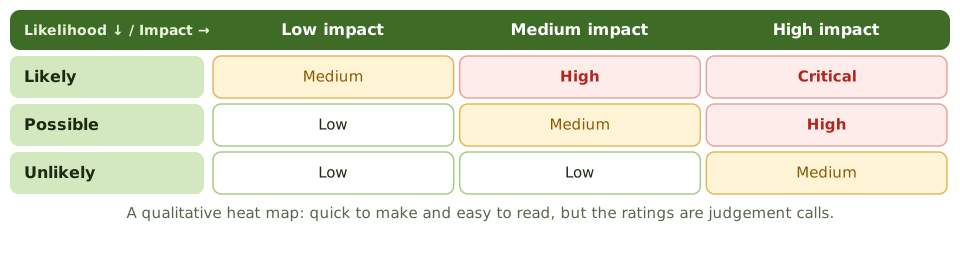
The heat map
Make the scales concrete
| Impact | Financial | Operations | Customers / legal |
|---|---|---|---|
| 1 Minor | < 50,000 | < 1 hour disruption | No customer impact |
| 2 Moderate | 50,000 – 500,000 | Up to 1 day | Small group affected |
| 3 Major | 500,000 – 5 million | Up to 1 week | Regulator notified |
| 4 Severe | > 5 million | > 1 week | Large fine; national news |
Strengths and weaknesses
In practice
Workshops with business owners give better ratings than the security team guessing alone.
How the exam asks about it
| If the question asks… | Answer |
|---|---|
| Main advantage of qualitative analysis | Quick, simple, works without hard data |
| Main disadvantage | Subjectivity |
| How to improve consistency | Defined criteria for each scale level |
| Numbers assigned to qualitative scales | Semi-quantitative analysis |
| Best tool to show the risk profile to executives | A heat map |
Key takeaways
- ✓Qualitative analysis rates likelihood and impact on descriptive scales (such as low, medium, high) and combines them into a risk level.
- ✓It's fast, easy to explain and works when hard data is scarce, so it's the most common method.
- ✓Its weakness is subjectivity: different people rate the same risk differently.
- ✓Defined scales with concrete descriptions (money, downtime, customers affected) make ratings consistent.
- ✓Semi-quantitative analysis assigns numbers to the scales, helping ranking but not producing real money values.
- ✓Heat maps show the risk profile at a glance and are good for communicating with executives.
Exam traps
- !Qualitative isn't wrong or inferior; it's the normal choice when data is limited.
- !Multiplying scale numbers (3 × 4 = 12) doesn't create a real money value.
- !Ratings without defined criteria aren't comparable between assessors.
- !A heat map communicates priority; it doesn't justify a specific spend amount by itself.
Quantitative Risk Analysis: SLE, ALE and Loss Estimation
How to put a money value on risk with SLE and ALE, how models such as FAIR improve the estimates, and when quantitative analysis is worth the effort.
Putting a price on risk
Executives think in money. Quantitative analysis expresses risk as an expected loss, so it can be compared directly with the cost of controls and with other investments.
SLE and ALE
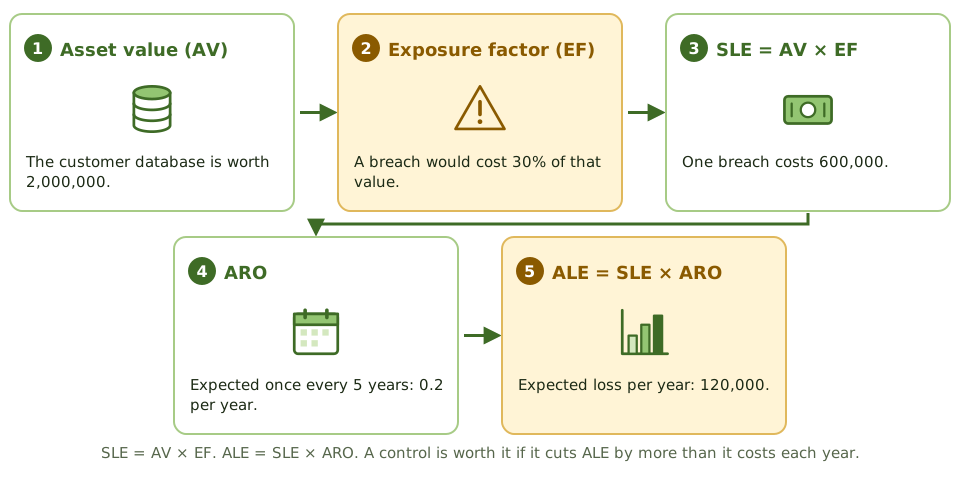
Is the control worth it?
| Without control | With control | |
|---|---|---|
| SLE | 600,000 | 600,000 |
| ARO | 0.2 (once in 5 years) | 0.05 (once in 20 years) |
| ALE | 120,000 | 30,000 |
| Annual control cost | – | 40,000 |
| Net annual benefit | – | 120,000 − 30,000 − 40,000 = 50,000 |
Better estimates with FAIR
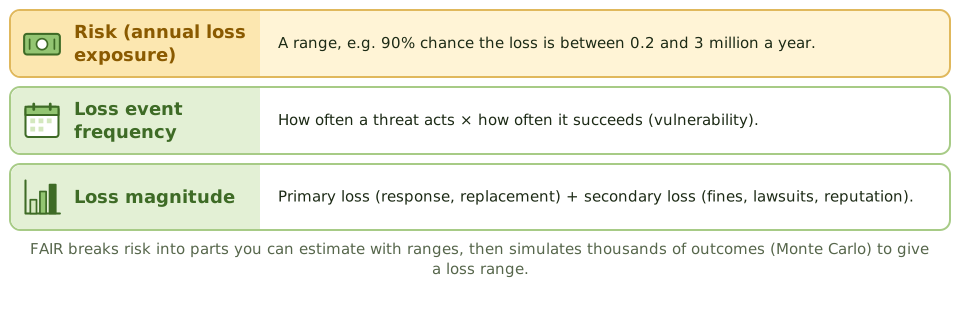
Choosing a method
How the exam asks about it
| If the question asks… | Answer |
|---|---|
| Formula for ALE | SLE × ARO |
| Formula for SLE | Asset value × exposure factor |
| Main advantage of quantitative analysis | Supports cost-benefit decisions |
| Main disadvantage | Reliable data is hard to obtain |
| When a control is cost-justified | ALE reduction exceeds annual cost |
Key takeaways
- ✓Single loss expectancy (SLE) = asset value × exposure factor: the cost of one occurrence.
- ✓Annualised loss expectancy (ALE) = SLE × annualised rate of occurrence (ARO): the expected loss per year.
- ✓Quantitative analysis supports cost-benefit decisions: a control is justified when it reduces ALE by more than it costs each year.
- ✓Its weakness is data: estimates of value, frequency and loss can be uncertain and look more precise than they are.
- ✓FAIR models risk as loss event frequency and loss magnitude, using ranges and simulation instead of single guesses.
- ✓Many organisations combine methods: qualitative to triage, quantitative for the biggest decisions.
Exam traps
- !Exposure factor is the share of value lost in one event, not a probability.
- !ARO is occurrences per year: once every 4 years is 0.25.
- !Precise-looking figures built on guesses can mislead decision makers.
- !Quantitative isn't always better; it's chosen when the decision justifies the effort and data exists.
Risk Scenarios and Prioritisation
How to describe risks as concrete scenarios the business recognises, build them top-down and bottom-up, and prioritise them for treatment.
From vague to concrete
'Cyber attack' is too vague to rate or own. 'A criminal group encrypts order-processing systems through phishing during year-end, stopping orders for five days' is something the sales director can judge and act on.
What a scenario contains
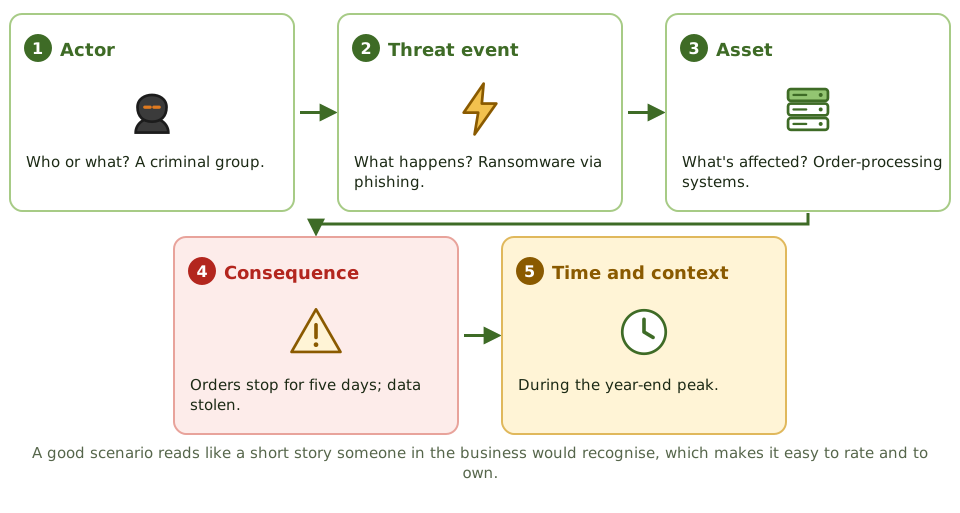
Building scenarios
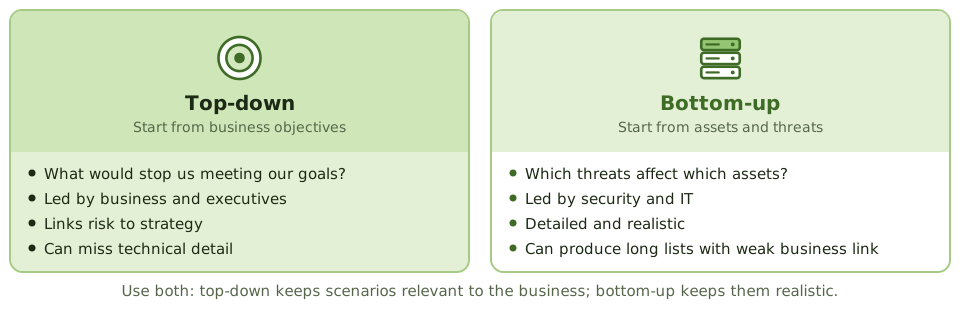
Prioritising
Watch for aggregation
Look across the register for common causes and concentrations.
How the exam asks about it
| If the question asks… | Answer |
|---|---|
| Main benefit of risk scenarios | Make risk concrete for business owners to rate and own |
| Scenarios from business objectives | Top-down |
| Scenarios from assets and threats | Bottom-up |
| Best approach | Combine top-down and bottom-up |
| Several related medium risks | Consider aggregation; may be high together |
Key takeaways
- ✓A risk scenario describes a plausible event: actor, threat event, asset, consequence, and timing or context.
- ✓Scenarios make risk concrete, so business owners can rate likelihood and impact and take ownership.
- ✓Top-down scenarios start from business objectives; bottom-up scenarios start from assets and threats. Using both gives relevant, realistic scenarios.
- ✓Prioritisation weighs risk level against appetite, plus factors such as velocity, legal exposure and how many risks share a cause.
- ✓Related small risks can aggregate into a large one; look across scenarios, not only at each in isolation.
- ✓Keep scenarios current: review them when threats, assets or the business change.
Exam traps
- !Vague risks ('cyber attack') can't be rated or owned; write specific scenarios.
- !Ranking only by likelihood × impact can miss fast-moving or legally severe risks.
- !Hundreds of narrow scenarios bury the important ones; group them sensibly.
- !Scenarios built only by IT may miss what matters most to the business.
Risk Treatment Options: Mitigate, Transfer, Avoid, Accept
The four ways to respond to a risk, how the security manager recommends between them, and why the final choice belongs to the business risk owner.
Four ways to respond
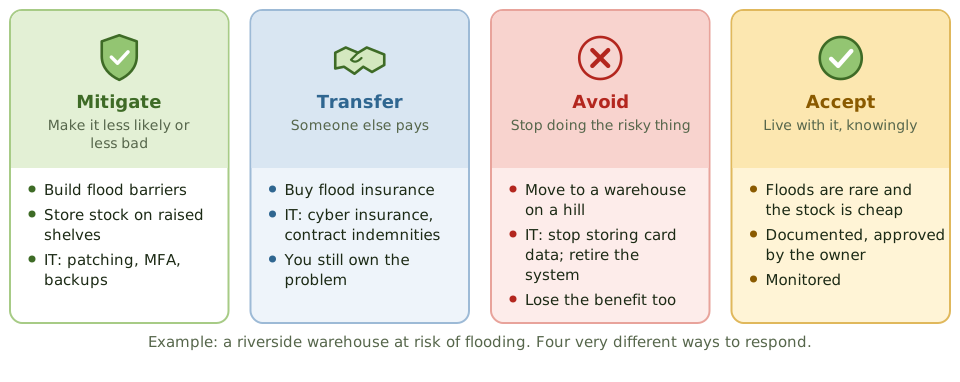
Choosing a response
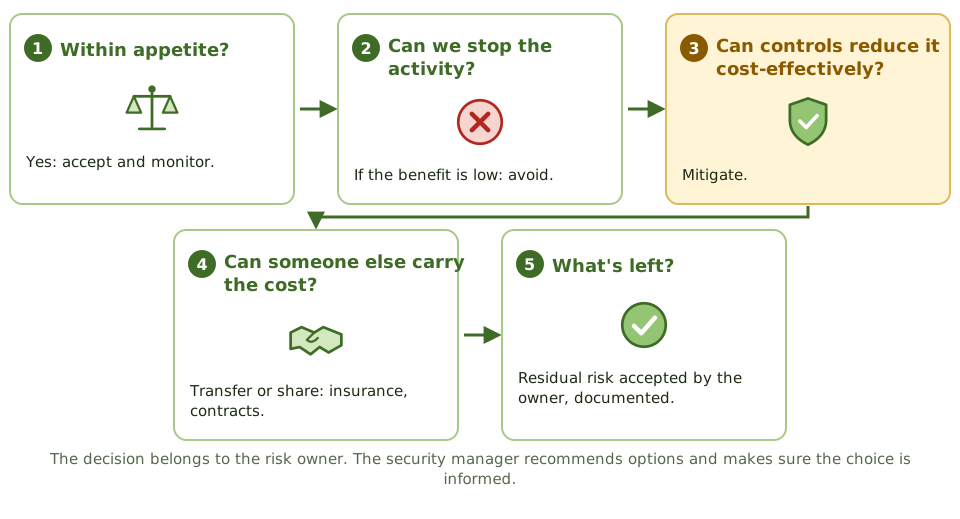
IT examples
| Response | Example |
|---|---|
| Mitigate | MFA, patching, encryption, backups, monitoring |
| Transfer / share | Cyber insurance; indemnities in supplier contracts |
| Avoid | Stop storing card data; retire an unsupported system |
| Accept | Low-value internal wiki without MFA; documented and reviewed |
Combining responses
Most real decisions use more than one response.
Who decides
How the exam asks about it
| If the question asks… | Answer |
|---|---|
| Buying cyber insurance is… | Risk transfer |
| Who decides the treatment | The risk owner |
| Goal of treatment | Residual risk within appetite, cost-effectively |
| Stopping a risky activity | Avoidance |
| Does outsourcing transfer accountability? | No |
Key takeaways
- ✓The four responses: mitigate (reduce), transfer (share), avoid (stop the activity) and accept (knowingly retain).
- ✓The goal is residual risk within appetite at reasonable cost, not zero risk.
- ✓Responses are often combined: mitigate, then insure what's left, then accept the remainder.
- ✓Transferring risk moves financial impact, not accountability, reputational damage or regulatory duty.
- ✓The security manager recommends options with costs and residual risk; the risk owner decides.
- ✓Every treatment decision is recorded in the risk register with an owner and review date.
Exam traps
- !Insurance doesn't transfer accountability or reputational damage.
- !Ignoring a risk isn't acceptance; acceptance is informed, documented and approved.
- !The security manager doesn't accept business risk on the owner's behalf.
- !Avoidance removes the risk but also the benefit of the activity.
Risk Acceptance: Approval, Expiry and Review
How to accept risk properly: who may approve it, what must be recorded, how policy exceptions fit in, and why every acceptance needs an expiry date.
Acceptance is a decision
Sometimes the best answer is to live with a risk: treatment costs more than the risk, a fix is coming later, or the risk is small. That's fine, as long as someone with authority decides knowingly, writes it down and looks at it again.
Who may accept
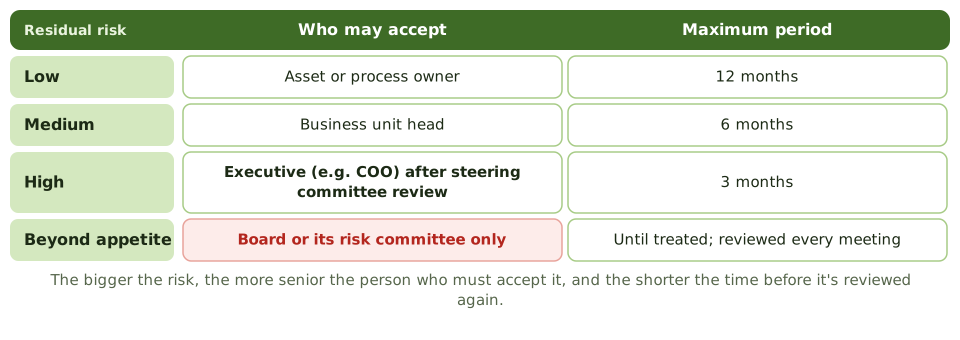
The acceptance process
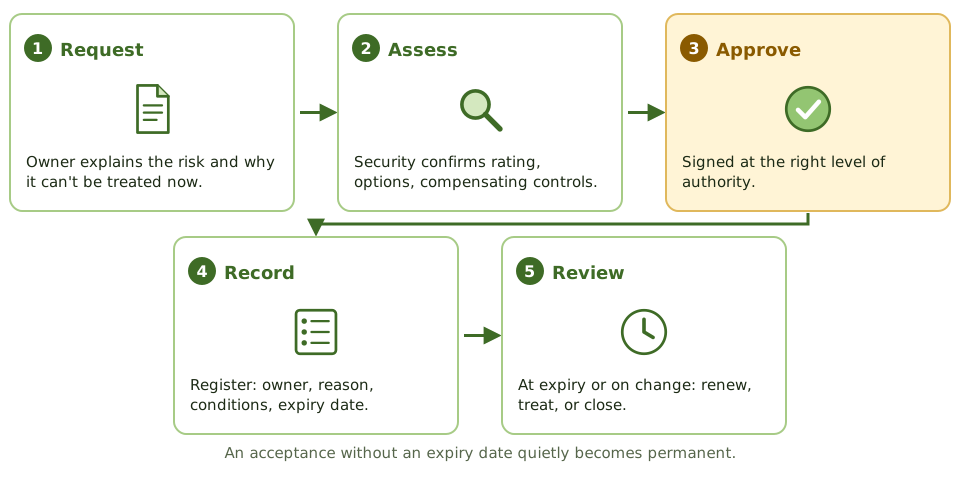
Policy exceptions are acceptances too
When someone can't comply with a policy or standard, the exception goes through the same process.
Keeping acceptances honest
- 1One register of all accepted risks and exceptions.
- 2Automatic reminders before expiry.
- 3Regular report of accepted risks to the steering committee.
- 4Reassess immediately if threats or the system change.
- 5Close the acceptance when the risk is treated.
How the exam asks about it
| If the question asks… | Answer |
|---|---|
| Requirement for valid risk acceptance | Informed, documented approval at the right level |
| Who accepts a risk beyond appetite | Board / senior management |
| What every acceptance should include | Owner, reason, conditions, expiry/review date |
| A request for a policy exception | Assess risk; approve at the right level; time-limit it |
| Accepted risk changes | Reassess the acceptance |
Key takeaways
- ✓Risk acceptance is a legitimate, deliberate decision to retain a risk; it must be informed, documented and approved.
- ✓The approver's seniority depends on the size of the risk; risks beyond appetite need the board or its committee.
- ✓Each acceptance records the owner, the reason, any compensating controls and conditions, and an expiry date.
- ✓Policy exceptions are a form of risk acceptance and follow the same process.
- ✓Acceptances are reviewed at expiry and whenever the risk changes, and are then renewed, treated or closed.
- ✓The security manager tracks and reports accepted risks so they don't become forgotten permanent gaps.
Exam traps
- !The CISO doesn't accept risks for the business; the owner or management does.
- !Acceptance without an expiry or review date tends to become permanent.
- !An exception approved by someone without enough authority isn't valid acceptance.
- !Accepting a risk doesn't mean forgetting it; it stays in the register and is monitored.
Cost-Benefit Analysis for Risk Treatment
How to compare treatment options by what they cost and how much risk they remove, including the costs people forget and the benefits that aren't financial.
Is it worth it?
Every control costs something. Cost-benefit analysis asks whether the risk it removes is worth that cost, and which of several options gives the best value. It's how the security manager turns risk analysis into a sensible recommendation.
Comparing options
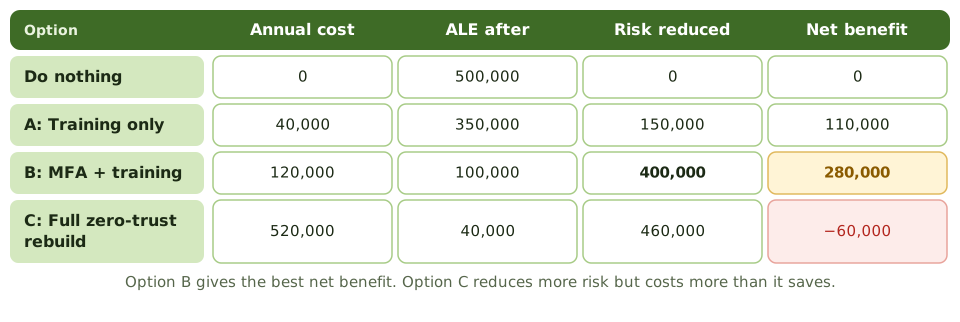
The costs people forget
Beyond the numbers
- 1Is the control required by law, regulation or contract?
- 2Would a failure cause harm to people or safety?
- 3How would customers and regulators view the decision?
- 4Does the option fit the culture and architecture?
How the exam asks about it
| If the question asks… | Answer |
|---|---|
| Main purpose of cost-benefit analysis | Choose cost-effective treatment |
| Benefit of a control | Reduction in expected loss (ALE) |
| Control costs more than the loss it prevents | Usually not justified, unless required |
| Costs to include | Full life cycle, including running and productivity |
| Who decides after the analysis | The risk owner |
Key takeaways
- ✓Cost-benefit analysis compares the cost of a treatment with the risk it removes, to choose the option with the best value.
- ✓Benefit is usually the reduction in expected loss (ALE before minus ALE after).
- ✓Costs include the full life cycle: purchase, implementation, running, people, training, maintenance and impact on productivity.
- ✓A control costing more than the loss it prevents is rarely justified, unless a law or contract requires it.
- ✓Non-financial factors (regulatory requirements, reputation, safety, customer demands) also weigh in the decision.
- ✓Compare several options, including doing nothing, and choose the one that brings residual risk within appetite most cost-effectively.
Exam traps
- !Choosing the option with the most risk reduction ignores cost; choose the best value within appetite.
- !Ignoring running and productivity costs makes options look cheaper than they are.
- !Legal or regulatory requirements can override a negative cost-benefit result.
- !Cost-benefit analysis informs the risk owner's decision; it doesn't replace it.
Risk Ownership vs Control Ownership
Who owns a risk, who owns the controls that treat it, why they're usually different people, and how clear ownership makes risk management work.
Why ownership matters
A risk with no owner is a risk nobody is managing. Ownership gives every risk someone who watches it, decides what to do about it, and answers for the outcome. CISM lists 'risk and control ownership' as its own topic.
Two kinds of owner
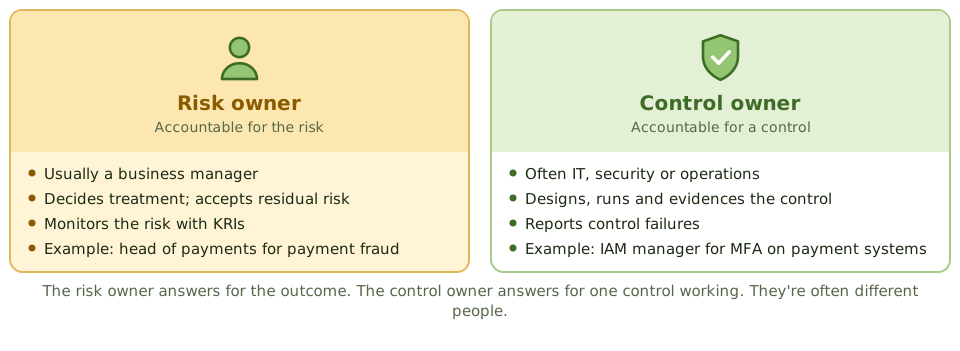
Choosing the right risk owner
- 1The person whose objectives the risk threatens.
- 2Senior enough to decide and fund treatment.
- 3Able to accept residual risk within their authority.
- 4Named individually, not as a department.
How the pieces connect
One risk, several controls, several control owners, one accountable risk owner.
The security manager's role
How the exam asks about it
| If the question asks… | Answer |
|---|---|
| Who should own an information risk | The business manager responsible for the affected objective |
| Who accepts residual risk | The risk owner (within their authority) |
| Who ensures a specific control operates | The control owner |
| The security manager's role in ownership | Facilitate, advise, escalate |
| Best way to ensure accountability | Named owners for every risk and control |
Key takeaways
- ✓A risk owner is the person accountable for a risk and has the authority to decide how it's treated and to accept what remains.
- ✓Risk owners are usually business managers, because information risk is business risk.
- ✓A control owner is accountable for a specific control being designed, operated and evidenced correctly.
- ✓One risk can be treated by several controls with different owners; one control can treat several risks.
- ✓Every risk and every control needs a named owner, a person rather than a department.
- ✓The security manager facilitates and advises; owning the risk management process isn't the same as owning the risks.
Exam traps
- !The CISO or IT is rarely the right risk owner for a business risk.
- !'IT owns it' or 'the business owns it' isn't ownership; name a person.
- !Owning a control doesn't mean owning the risk it treats.
- !Risk owners need enough seniority and budget authority to act on the risk.
RACI and Risk Escalation Paths
Using RACI charts to make risk responsibilities clear, and designing escalation paths so risks reach the right level of authority quickly.
Who does what, exactly?
'Security is everyone's job' is true but unhelpful when a decision is needed. A RACI chart lists the key activities and says, for each one, who does it, who answers for it, who must be asked and who must be told.
A RACI example
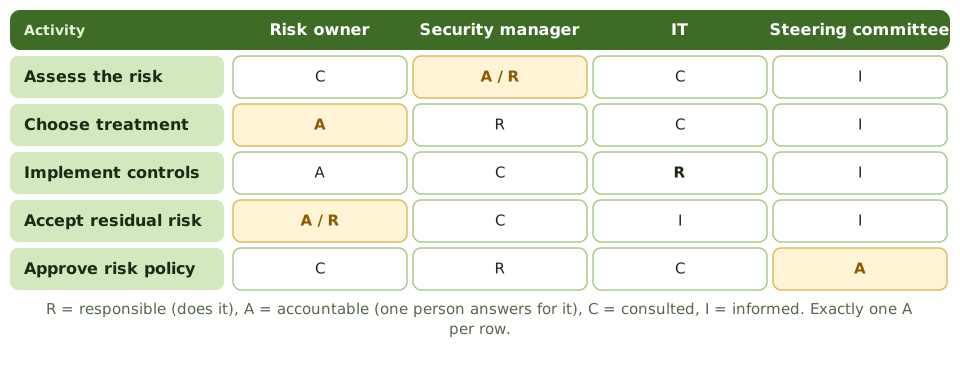
RACI rules
Escalation paths
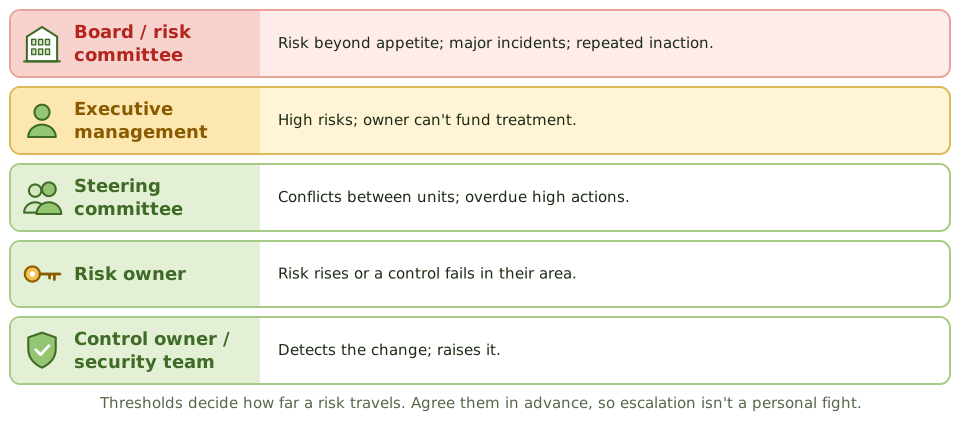
When to escalate
- 1Residual risk exceeds appetite or the owner's authority.
- 2An owner can't, or won't, act on a high risk.
- 3Remediation actions are significantly overdue.
- 4A major incident, or a new threat with high impact.
- 5Conflict between business units over a risk decision.
How the exam asks about it
| If the question asks… | Answer |
|---|---|
| How many Accountable per activity | Exactly one |
| Person who does the work | Responsible |
| Owner won't treat a high risk | Escalate per the agreed path |
| Benefit of agreed thresholds | Consistent, timely, non-personal escalation |
| Risk beyond appetite goes to… | Senior management / board |
Key takeaways
- ✓RACI shows who is Responsible (does the work), Accountable (answers for it), Consulted and Informed for each activity.
- ✓Each activity has exactly one Accountable person; several people can be Responsible.
- ✓RACI charts remove confusion about who decides, who acts and who just needs to know.
- ✓Escalation paths send risks to the level of authority that matches their size, using agreed thresholds.
- ✓Escalate when risk exceeds appetite, an owner can't or won't act, actions are overdue, or a major incident occurs.
- ✓Pre-agreed escalation criteria make escalation routine rather than personal.
Exam traps
- !Two Accountable people for one activity means nobody is really accountable.
- !The security manager escalating a business risk isn't disloyalty; it's the job.
- !Escalation goes up the line of authority, not straight to the board for everything.
- !Responsible and Accountable are different: the person doing the work isn't necessarily the one who answers for it.
The Risk Register
What a risk register holds, how it's kept useful, and how the security manager uses it for decisions, reporting and tracking treatment.
One place for every risk
Risks identified in assessments, audits, incidents and projects need one home. The risk register is that home: a living record of what could go wrong, who owns it, what's being done and how it's changing.
What's in a row
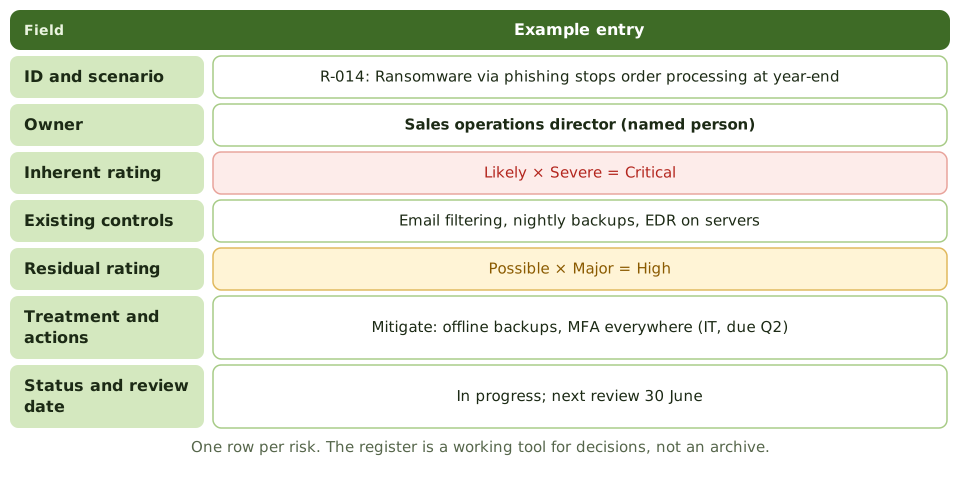
Keeping it alive
Using it for decisions
- 1Top-risk reports for the steering committee and board.
- 2Trends: which risks are rising or falling.
- 3Overdue treatment actions and who owns them.
- 4Accepted risks and their expiry dates.
- 5Input to budget and roadmap priorities.
How the exam asks about it
| If the question asks… | Answer |
|---|---|
| Main purpose of a risk register | Central record to track and manage risks |
| Key fields | Owner, ratings, treatment, status, review date |
| When to update it | Continuously: assessments, incidents, changes |
| Best link for information risks | Integrated with the enterprise risk register |
| Who can see it | Restricted; it shows the organisation's weaknesses |
Key takeaways
- ✓A risk register is the central record of identified risks, their owners, ratings, treatments and status.
- ✓Typical fields: ID and scenario, owner, inherent and residual ratings, existing controls, treatment decision, actions, due dates, status, review date.
- ✓Information risks should sit in, or link to, the enterprise risk register so they're seen alongside other business risks.
- ✓The register is updated after assessments, incidents, changes and treatment progress; stale registers mislead.
- ✓It feeds reporting: top risks, trends, overdue actions and accepted risks.
- ✓Access to the register should be controlled; it's effectively a map of the organisation's weaknesses.
Exam traps
- !A register that's only updated once a year is a snapshot, not a management tool.
- !Listing risks without owners, ratings or actions isn't risk management.
- !Separate, unlinked security and enterprise registers hide information risk from the board.
- !The register itself is sensitive; protect it.
Continuous Risk Monitoring and Key Risk Indicators
How the security manager keeps risk information current: monitoring changes that trigger reassessment, and key risk indicators with thresholds that warn before risk becomes an incident.
Risk doesn't stand still
A risk assessment describes one moment. Threats evolve, systems change, suppliers come and go, and controls quietly degrade. Continuous monitoring keeps the risk picture current, so decisions aren't based on last year's facts.
What triggers reassessment
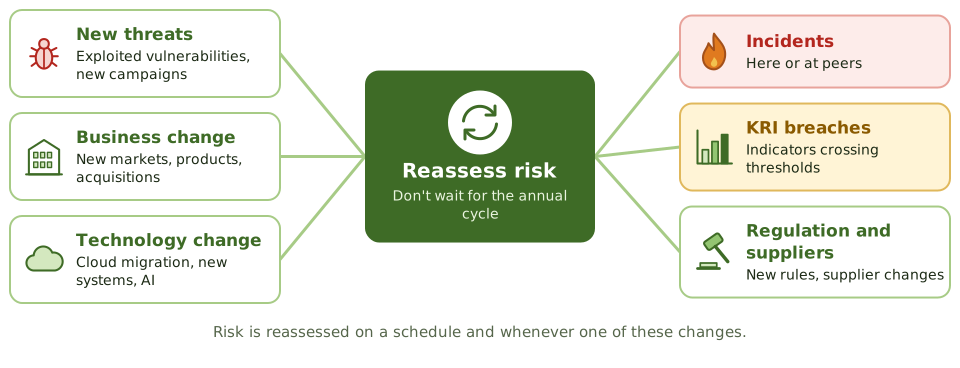
Key risk indicators
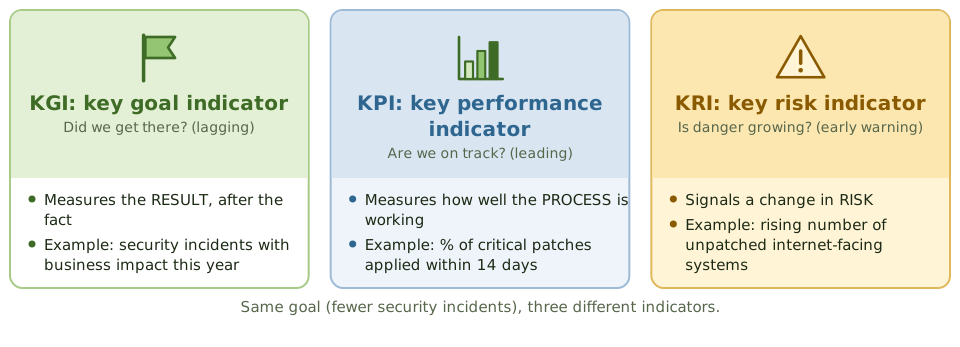
Thresholds make KRIs work
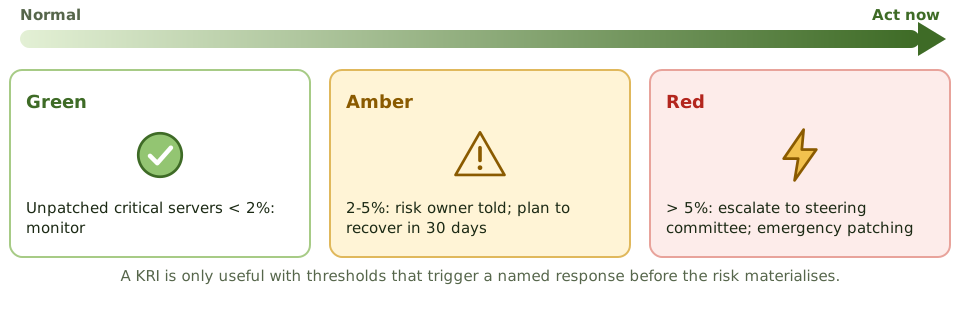
Examples of good KRIs
| Risk | KRI |
|---|---|
| Ransomware | % critical servers without offline backup in last 7 days |
| Account takeover | % privileged accounts without MFA |
| Insider data loss | Leavers with active accounts after 24 hours |
| Supplier breach | Critical suppliers overdue for security review |
| Phishing | Phishing simulation click rate; report rate |
How the exam asks about it
| If the question asks… | Answer |
|---|---|
| Indicator that warns risk is rising | Key risk indicator (KRI) |
| What makes a KRI useful | Linked to a risk, with thresholds and an owner |
| When to reassess risk | On schedule and when factors change |
| Best KRIs are… | Leading, giving early warning |
| KRI exceeds threshold | Trigger the agreed response / escalation |
Key takeaways
- ✓Risk changes constantly, so it's monitored continuously, not only at the annual assessment.
- ✓Triggers for reassessment include new threats, business and technology change, incidents, KRI breaches, regulation and supplier changes.
- ✓A key risk indicator (KRI) is a metric that signals a change in risk exposure, ideally before harm occurs (leading).
- ✓Good KRIs are linked to specific risks, measurable, timely, owned and have thresholds that trigger action.
- ✓KRIs differ from KPIs (process performance) and KGIs (goal achievement).
- ✓Monitoring also checks that controls keep working and that treatment actions are delivered.
Exam traps
- !A KRI without thresholds and a named response is just a number on a report.
- !Lagging indicators (losses already suffered) warn too late on their own.
- !Too many KRIs dilute attention; pick the few that track the top risks.
- !Monitoring that nobody reviews isn't monitoring.
Risk Reporting to Executives and the Board
How to report information risk so that executives and the board can make decisions: the right content for each audience, in business terms, with trends and clear asks.
Reports are for decisions
A risk report has one job: help someone decide. If the reader can't tell which risks matter, whether they're getting better or worse, and what they're being asked to do, the report has failed, however much data it contains.
Different readers, different reports
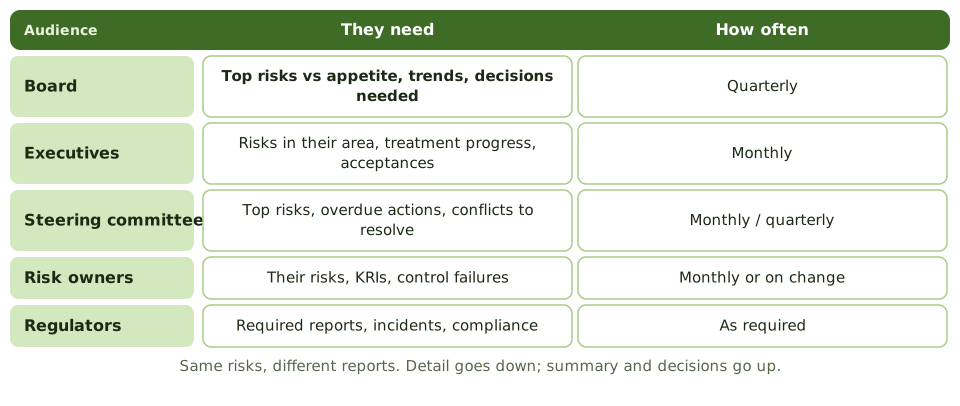
What a board report contains
- 1Top risks compared with appetite, on a heat map.
- 2Trends: what's moved since last time, and why.
- 3Significant incidents and lessons.
- 4Treatment progress, overdue actions, accepted risks.
- 5Non-compliance and emerging risks.
- 6Decisions needed from the board.
Business terms, not technical terms
| Technical | Business |
|---|---|
| '12,000 blocked intrusion attempts.' | 'Risk of a payments outage is down from High to Medium.' |
| 'CVSS 9.8 on edge devices.' | 'Our remote access could be used to stop production within days.' |
| 'SIEM coverage at 64%.' | 'A third of our critical systems could be breached without us noticing.' |
Timing and honesty
Significant changes are reported when they happen. Bad news reported early and accurately builds credibility.
How the exam asks about it
| If the question asks… | Answer |
|---|---|
| Most important content of a board report | Top risks vs appetite, in business terms |
| Main purpose of risk reporting | Support informed decisions |
| Significant new risk appears | Report promptly, outside the normal cycle |
| Best way to show progress | Trends over time |
| Tailoring reports | Content and detail matched to the audience |
Key takeaways
- ✓Risk reporting exists to support decisions; every report should make clear what, if anything, the reader needs to decide.
- ✓Tailor reports to the audience: the board needs top risks against appetite and trends; owners need detail on their risks.
- ✓Report in business terms (impact on objectives, money, customers, compliance), not technical detail.
- ✓Include trends, changes since the last report, overdue actions, accepted risks and non-compliance.
- ✓Be accurate and timely; report significant changes and incidents promptly, not only at the next scheduled report.
- ✓Honest reporting of bad news builds credibility; hiding it destroys trust.
Exam traps
- !Technical metrics (alerts blocked, patches applied) aren't board risk reporting.
- !A report without trends or comparison with appetite gives no basis for decisions.
- !Significant new risks shouldn't wait for the quarterly cycle.
- !Reporting only good news undermines the security manager's credibility.
Integrating Risk Management into Business and IT Processes
How the security manager embeds information risk management in the processes where decisions are already made (planning, projects, change, procurement, acquisitions), so risk is managed continuously rather than once a year.
Risk where decisions happen
Most new risk is created by decisions: a new project, a supplier, a system change, an acquisition. If risk is only assessed once a year, those decisions go unchecked in between. Integration puts a risk question inside each decision process.
Touchpoints
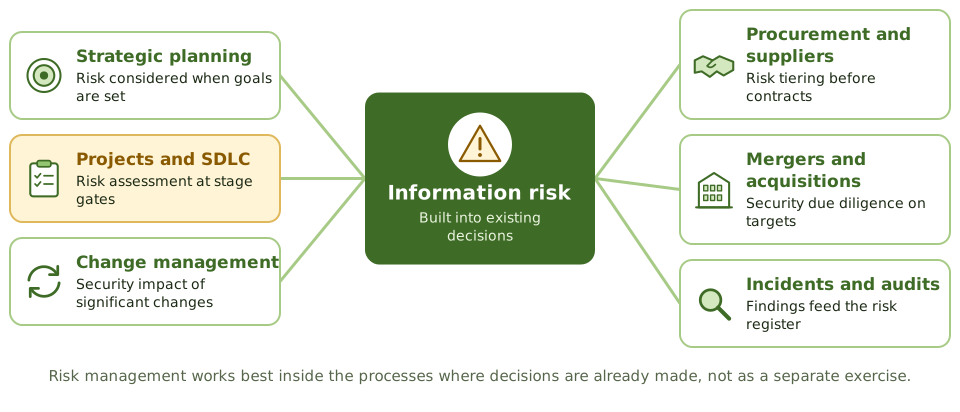
Projects and the SDLC
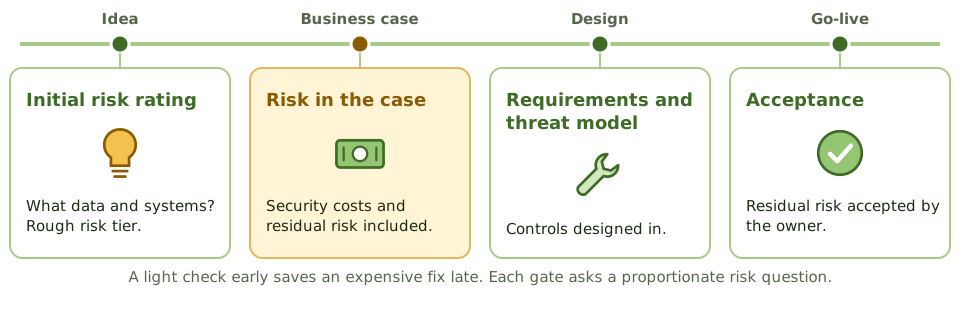
Making it easy
Signs it's working
- 1Risks are raised by the business, not only by security.
- 2Projects include security costs in their business cases.
- 3Few 'surprise' systems found by discovery tools.
- 4The risk register changes between annual assessments.
How the exam asks about it
| If the question asks… | Answer |
|---|---|
| Best way to keep risk assessment current | Integrate it into change, project and procurement processes |
| When to assess a new project's risk | Early, at initiation and design |
| How to avoid slowing the business | Proportionate, risk-tiered checkpoints |
| Who owns risks found in projects | The business / project owner |
| Goal of integration | Risk management becomes part of normal business processes |
Key takeaways
- ✓Facilitating the integration of information risk management into business and IT processes is a CISM task.
- ✓Risk is managed best where decisions happen: strategic planning, projects and the SDLC, change management, procurement, mergers and acquisitions.
- ✓Integration uses proportionate checkpoints: a quick risk rating for everything, deeper assessment only where the rating is high.
- ✓Standard templates, risk criteria and risk champions make it easy for the business to do it themselves.
- ✓Outputs from incidents, audits and tests flow back into the risk register.
- ✓The goal is that risk management becomes part of how the business works, not a separate activity run by security.
Exam traps
- !An annual risk assessment alone misses risks created by changes during the year.
- !Making every change go through a full risk assessment creates delays and workarounds; scale the effort to the risk.
- !Security reviewing a project after it's built is too late to influence the design cheaply.
- !Integration doesn't transfer ownership: business owners still own their risks.
Information Security Program
Program foundations · Assets and architecture · Frameworks and policies · Metrics · Controls · Awareness and training · External services · Communication and improvement
The Security Program: Charter, Scope and Objectives
What an information security program is, how it delivers the strategy, and how a charter gives it a clear mandate, scope, authority and objectives.
From strategy to program
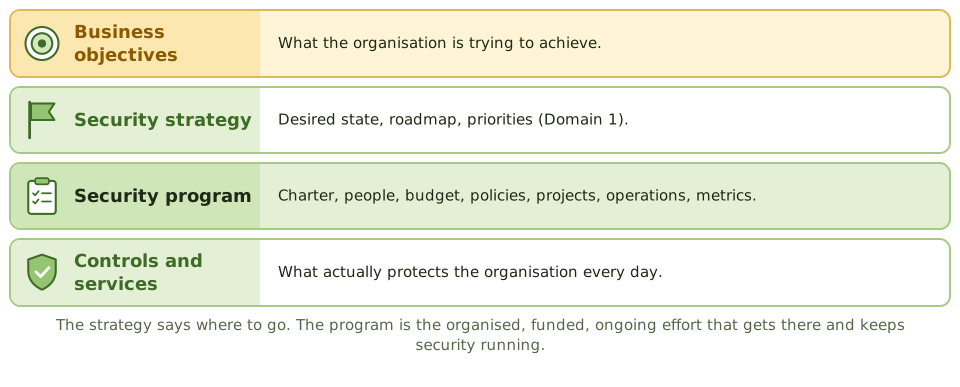
What the program includes
The charter
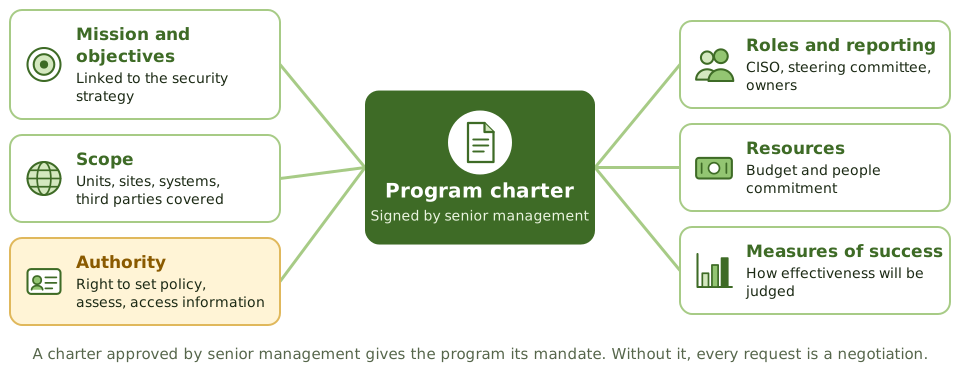
Getting scope right
Scope decides what the program protects. Anything left out, by accident or deliberately, needs to be a known, accepted decision.
Program objectives
- 1Derived from the strategy's desired state.
- 2Specific and measurable: 'MFA on 100% of remote access by Q4'.
- 3Aligned with the operational goals of other functions.
- 4Reviewed as the business changes.
How the exam asks about it
| If the question asks… | Answer |
|---|---|
| What the program must align with | The security strategy and business objectives |
| Document that establishes the program's mandate | A charter approved by senior management |
| Main purpose of defining scope | Clarify what is protected and who is responsible |
| Program vs project | Program is ongoing; projects are time-bound parts of it |
| Best basis for program objectives | The strategy's desired state |
Key takeaways
- ✓The information security program is the organised set of people, processes, technology and projects that delivers the security strategy and keeps security running.
- ✓Program objectives come from the strategy and must align with business objectives and with other business functions.
- ✓A charter approved by senior management gives the program its mandate: mission, scope, authority, roles, resources and measures of success.
- ✓Scope covers which business units, locations, systems, data and third parties are included; gaps in scope are gaps in protection.
- ✓The program combines ongoing operations (run) with time-bound projects (change).
- ✓Domain 3 is the largest part of the exam (33%); the 2026 outline puts extra emphasis on program development.
Exam traps
- !A program is not a single project; it's ongoing.
- !Program objectives come from the strategy and business needs, not from a product catalogue.
- !Without senior management approval, a charter has no authority.
- !Leaving parts of the organisation out of scope without a decision creates unmanaged risk.
Security Team Structure, Roles and Staffing
How the security manager organises the team, decides which roles are needed, builds skills and fills gaps through hiring, training, contractors or managed services.
People are the hardest resource
Tools can be bought in weeks; experienced security people take months to hire and years to develop. The security manager plans the team as carefully as the budget, matching skills to the roadmap.
Security functions
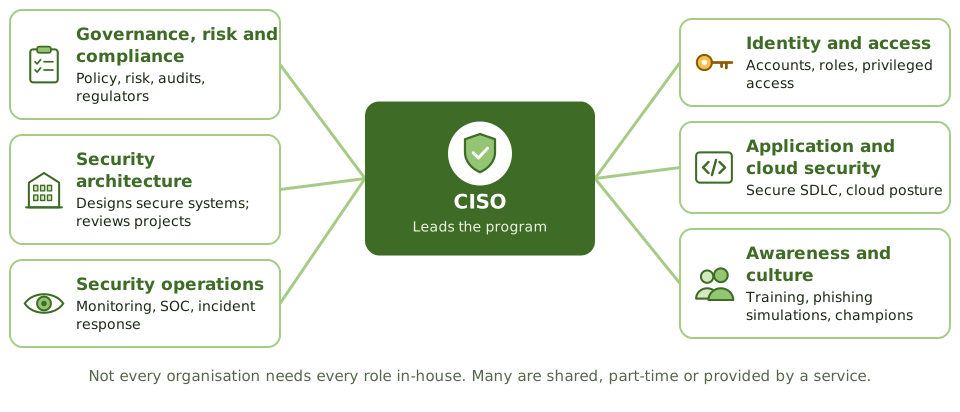
How to organise
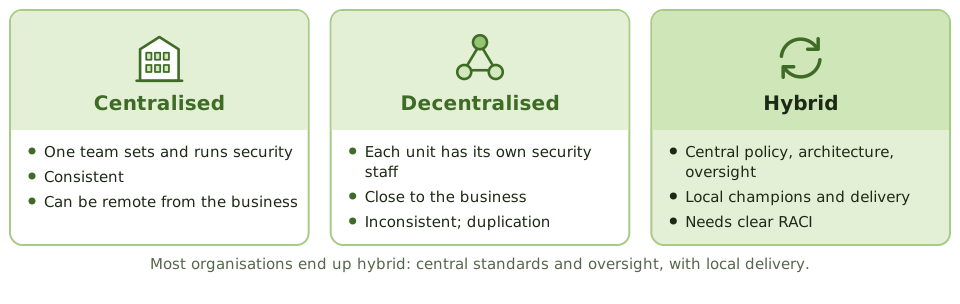
Filling skills gaps
| Option | Best for | Watch out for |
|---|---|---|
| Hire | Core, long-term capabilities | Time to hire; salary competition |
| Train and develop | Growing existing staff; retention | Time away; may then leave |
| Contractors / consultants | Projects, peaks, specialist skills | Knowledge leaves with them |
| Managed services | 24x7 monitoring, scarce skills | Contract oversight; accountability stays |
Keeping the team resilient
- 1Document procedures and decisions.
- 2Cross-train so every critical task has a backup person.
- 3Succession plans for key roles.
- 4Career paths and training budgets to retain staff.
- 5Separate incompatible duties within security.
How the exam asks about it
| If the question asks… | Answer |
|---|---|
| First step in planning security staffing | Assess skills needed for the strategy vs skills available |
| Best way to reduce key-person risk | Cross-training, documentation, succession |
| Benefit of a managed security service | Access to scarce skills and 24x7 coverage |
| Common team model | Hybrid: central standards, local delivery |
| Security admin also approves access | Segregation-of-duties conflict |
Key takeaways
- ✓Program resources include people, tools and technologies; people are usually the hardest to find and keep.
- ✓Common security functions: governance, risk and compliance; architecture; operations and incident response; identity and access; application and cloud security; awareness.
- ✓Team models are centralised, decentralised or hybrid; most organisations use a hybrid with central standards and local delivery.
- ✓A skills assessment against the roadmap shows gaps, filled by hiring, training, contractors or managed services.
- ✓Avoid key-person dependency with documentation, cross-training and succession plans.
- ✓Segregation of duties applies inside security too: the people who administer access shouldn't also approve or audit it.
Exam traps
- !Buying tools without the people to run them is a common failure.
- !Outsourcing a function doesn't remove the need for in-house people who can manage the supplier.
- !One person who knows everything is a single point of failure.
- !Security administration combined with approving or auditing access is a segregation-of-duties conflict.
Working with Legal, HR, IT, Audit and the Business
How the security manager integrates security into the processes of other functions, so the program is delivered through them rather than around them.
Delivered through others
The security team can't hire, fire, sign contracts, patch every server or run every project. Most security controls live inside other functions' processes. The program works when security requirements are built into those processes.
Key partners
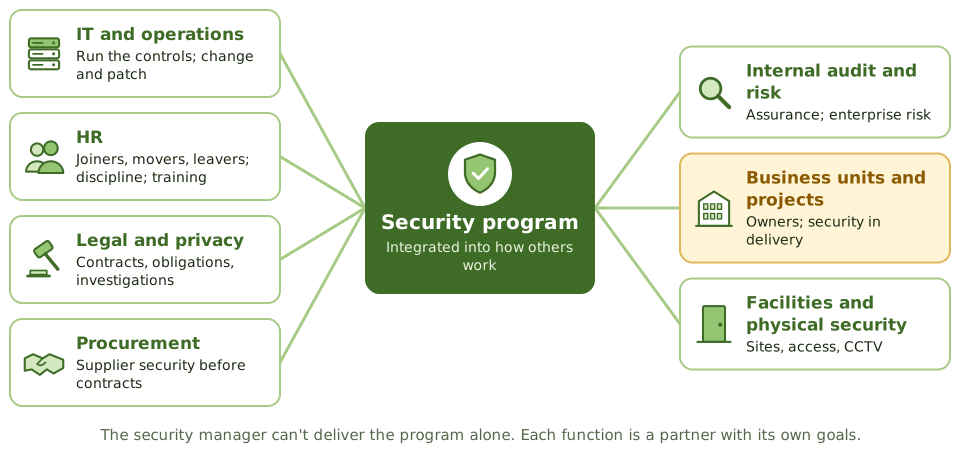
Where security plugs in
| Function | Process | Security requirement |
|---|---|---|
| HR | Hiring, moving, leaving | Background checks; access changes; prompt removal |
| Procurement | Buying services | Supplier assessment; security clauses |
| Legal | Contracts, investigations | Data protection terms; evidence handling |
| IT | Change, projects, operations | Security review; patching; logging |
| Business units | New products, processes | Risk assessment; owner decisions |
Making partnerships work
- 1Learn each function's goals and pressures.
- 2Make the secure way the easy way inside their process.
- 3Agree responsibilities explicitly (RACI, service agreements).
- 4Share metrics that matter to both sides.
- 5Escalate through governance, not through blame.
How the exam asks about it
| If the question asks… | Answer |
|---|---|
| Best way to embed security in the organisation | Integrate requirements into business processes |
| Who should trigger removal of a leaver's access | HR, through a defined process |
| When security should be involved in procurement | Before the contract is signed |
| Gaining cooperation from another function | Show how security supports their objectives |
| Security slows a process | Redesign the control to fit the process (e.g. risk tiers) |
Key takeaways
- ✓The program succeeds by integrating security requirements into other functions' processes, not by doing everything itself.
- ✓Key partners: IT, HR, legal and privacy, procurement, internal audit and risk, facilities, and business units.
- ✓Each partner has its own goals; show how security helps them meet theirs.
- ✓Integration points include hiring and leaving (HR), contracts (procurement and legal), change and projects (IT), and assurance (audit).
- ✓Agree responsibilities explicitly, for example in RACI charts or service agreements.
- ✓Aligning the program with the operational objectives of other business functions is a CISM task in its own right.
Exam traps
- !Security as a separate gatekeeper at the end of processes creates delays and workarounds.
- !HR owns the people processes; security defines the security requirements within them.
- !Procurement must involve security before contracts are signed, not after.
- !Internal audit is a partner, but must stay independent.
Program Implementation: From Plan to Operating Controls
How roadmap initiatives become controls that actually operate: planning, building, integrating with existing systems and processes, handing over to owners, and proving they work.
Installed isn't implemented
Organisations are full of security tools that were bought, installed and then left half-configured. 'Control implementation and integration' is a named CISM topic because turning plans into working controls is where programs most often stumble.
The implementation path
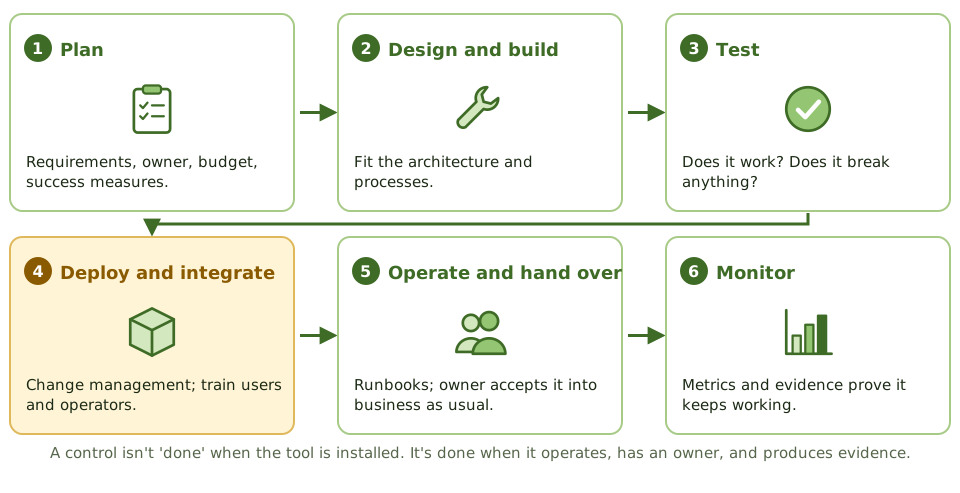
Integration is the hard part
Handover to business as usual
- 1A named operational owner who accepts it.
- 2Runbooks and procedures.
- 3Service levels and monitoring.
- 4Budget for ongoing running costs.
Did it work?
Post-implementation review asks whether the control meets its objective and reduces the risk it was meant to, not just whether the project was on time and on budget.
How the exam asks about it
| If the question asks… | Answer |
|---|---|
| Best indicator a control is implemented | It operates as designed and produces evidence |
| Risk of skipping change management | New outages or vulnerabilities |
| Key requirement before project closure | Named operational owner and runbooks |
| How to judge success | Against the control objective and risk reduced |
| New security tool fails to integrate | Review against architecture before buying |
Key takeaways
- ✓Implementing a control means it operates reliably, has an owner and produces evidence, not just that a tool is installed.
- ✓Security initiatives are run as projects with scope, budget, timeline, sponsor and success measures.
- ✓Integration with existing architecture, processes and other controls is where many implementations fail.
- ✓Changes go through change management; users and operators are trained before go-live.
- ✓Handover to business as usual needs runbooks, a named owner and agreed service levels.
- ✓Post-implementation monitoring confirms the control meets its objective; problems feed back into improvement.
Exam traps
- !Installed is not the same as effective.
- !Skipping change management to deliver security faster creates its own risks.
- !Projects that end without a named operational owner leave controls nobody runs.
- !Measure success against the control objective, not against project milestones.
Information Asset Identification and Valuation
Why the asset inventory is the foundation of the program, what counts as an information asset, and how owners value assets so protection matches their importance.
The foundation of everything
Risk assessments need a list of assets. So does classification, access control, backup, incident response and recovery. If the inventory is incomplete, every one of those has blind spots. That's why asset identification sits at the start of the program.
What counts as an asset
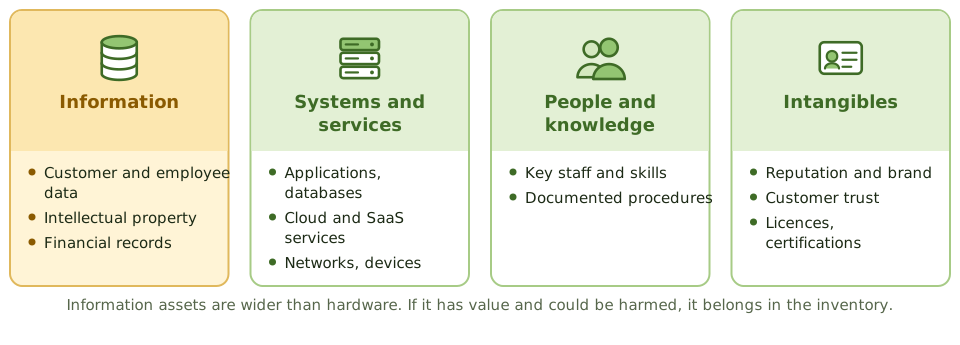
Valuing assets
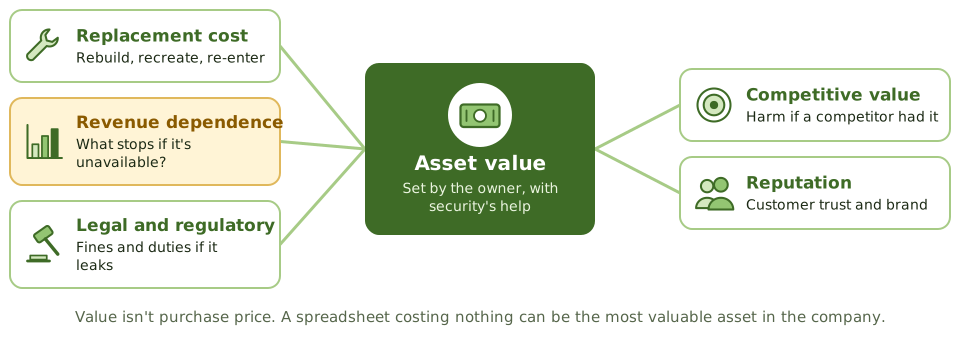
Keeping the inventory complete
Owners make it work
- 1Every asset has a named owner (a person).
- 2The owner sets value and classification.
- 3The owner approves access and accepts residual risk.
- 4Unowned assets are escalated, not ignored.
How the exam asks about it
| If the question asks… | Answer |
|---|---|
| First step in an information security program | Identify and inventory information assets |
| Basis for asset value | Business impact if compromised |
| Who assigns value and classification | The asset owner |
| Best way to keep the inventory complete | Automated discovery reconciled with the inventory |
| Shadow SaaS found | Bring into inventory, assess, assign owner |
Key takeaways
- ✓You can't protect what you don't know you have: identifying assets is the foundation of risk assessment, classification and controls.
- ✓Information assets include data, systems and services, people and knowledge, and intangibles such as reputation.
- ✓Every asset needs a named owner who is accountable for it and decides its value and classification.
- ✓Asset value is based on business impact (revenue, legal, competitive, reputational), not on purchase price.
- ✓The inventory is kept current through discovery tools, procurement and change processes, and regular reconciliation.
- ✓Cloud services, SaaS and shadow IT must be included, or they become unmanaged risk.
Exam traps
- !The first step in protecting information is identifying it, not buying controls.
- !Asset value isn't the cost of the hardware; it's the impact on the business.
- !An inventory without owners can't drive protection decisions.
- !A one-off inventory goes stale quickly; it must be maintained.
Data Classification: Owners, Custodians and Users
How classification makes protection proportionate to sensitivity and criticality, who decides it, and how labels drive handling rules across the organisation.
Why classify?
Protecting every file to the highest level would be expensive and frustrating; protecting nothing would be reckless. Classification sorts information by how much harm it could cause, so the program spends its effort where it matters.
A typical scheme
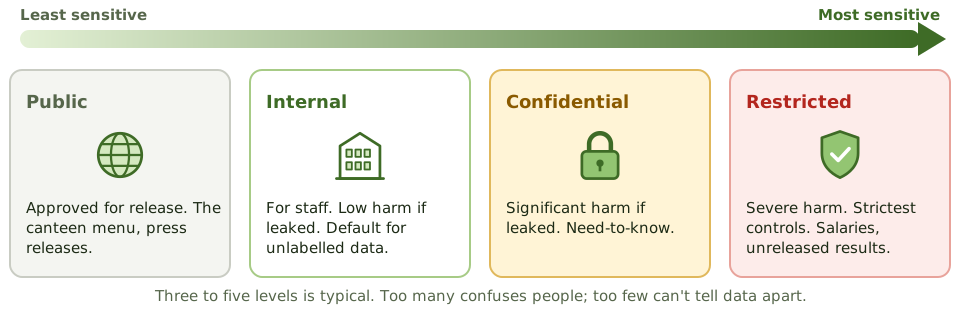
Who does what
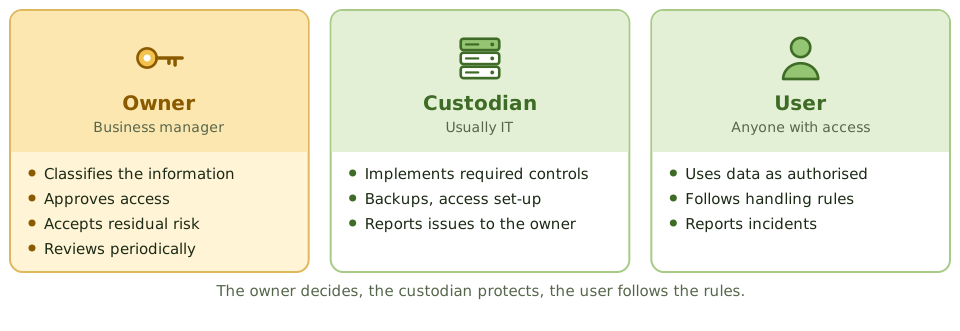
Levels drive handling rules
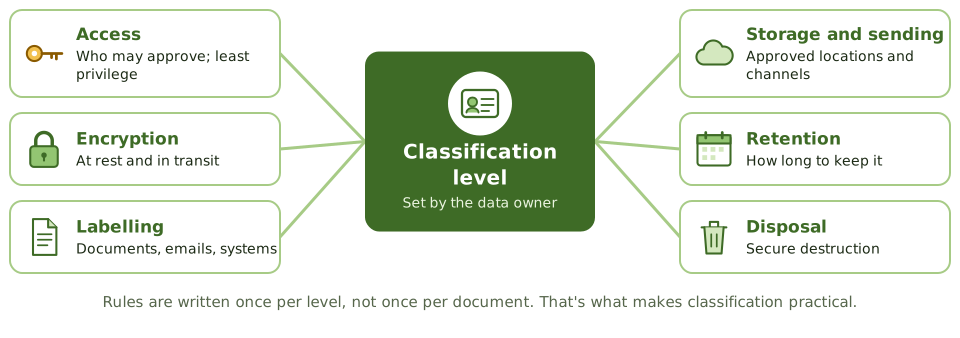
Making it work in practice
- 1Keep the scheme simple: three to five levels.
- 2Default unlabelled data to a protective level such as internal.
- 3Use tools: automatic labelling, DLP rules linked to labels.
- 4Train users with real examples from their work.
- 5Review classifications when data's value changes.
How the exam asks about it
| If the question asks… | Answer |
|---|---|
| Who decides classification | The information owner |
| Main benefit of classification | Cost-effective, proportionate protection |
| Custodian's role | Implement controls required by the owner |
| First step before classifying | Identify and inventory information |
| Data becomes less sensitive over time | Owner reviews and reclassifies |
Key takeaways
- ✓Data classification groups information by sensitivity (harm if disclosed) and criticality (harm if unavailable or corrupted), so protection is proportionate.
- ✓The information owner, a business manager, decides the classification and reviews it periodically.
- ✓Custodians (usually IT) implement the controls the classification requires; users follow the handling rules.
- ✓Each level has handling rules for access, encryption, labelling, storage, transmission, retention and disposal.
- ✓Typical schemes have three to five levels; simple schemes are applied more consistently.
- ✓Classification makes cost-effective protection possible: strong controls where they matter, lighter ones elsewhere.
Exam traps
- !IT or security doesn't decide classification; the owner does.
- !Too many levels confuse users and lead to inconsistent labelling.
- !Classification must be reviewed: sensitivity changes over time (e.g. results become public).
- !Aggregated data can be more sensitive than its parts.
Data Lifecycle: Retention, Archiving and Secure Disposal
How information is protected from creation to destruction, how retention schedules balance legal duties with risk, and how to dispose of data so it can't be recovered.
Protection follows the data
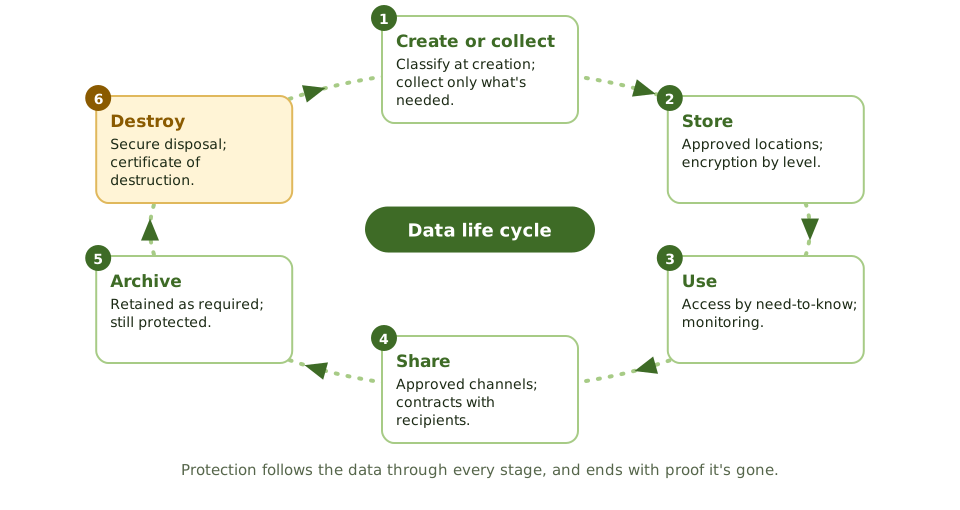
Retention schedules
| Record | Typical driver | Example period |
|---|---|---|
| Financial records | Tax and company law | 6-10 years |
| Employee records | Employment law | Duration + a few years |
| Customer data | Contract, privacy law | As long as needed for the purpose |
| Security logs | Investigation, regulation | 1 year+, sector rules vary |
| CCTV footage | Privacy, security need | 30 days unless an incident |
Too long is a risk too
Secure disposal
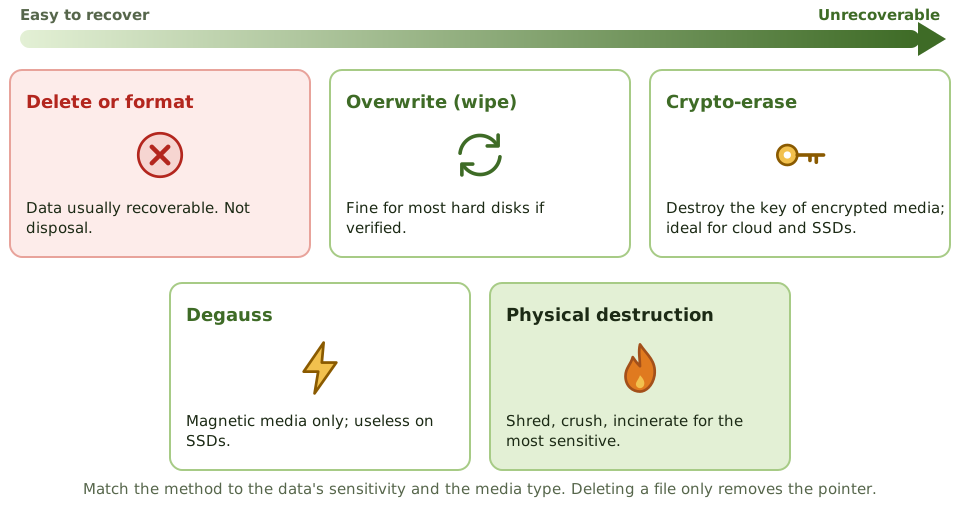
How the exam asks about it
| If the question asks… | Answer |
|---|---|
| Basis for retention periods | Legal, regulatory, contractual and business requirements |
| Risk of keeping data too long | Greater breach impact; privacy non-compliance |
| Litigation expected | Apply a legal hold; suspend deletion |
| Disposing of SSDs | Crypto-erase / secure erase or physical destruction |
| Proof of disposal | Certificate of destruction |
Key takeaways
- ✓Data moves through a life cycle: create or collect, store, use, share, archive and destroy; protection must follow it at every stage.
- ✓Retention schedules set how long each type of record is kept, based on legal, regulatory, contractual and business needs.
- ✓Keeping data longer than needed increases risk and may break privacy law (storage limitation).
- ✓Legal holds suspend normal deletion when litigation or investigation is expected.
- ✓Disposal must make data unrecoverable: wiping, crypto-erasure, degaussing or physical destruction, matched to the media and sensitivity.
- ✓Disposal of devices and media, including by suppliers, is documented with certificates of destruction.
Exam traps
- !Deleting or formatting doesn't remove data; it can usually be recovered.
- !Degaussing doesn't work on solid-state drives.
- !'Keep everything forever' is a risk, not a safe default.
- !A legal hold overrides the normal retention schedule.
Enterprise Architecture for Security Managers
What enterprise architecture is, why the 2026 CISM outline adds it, and how the security manager uses it to build security into how the organisation's business, data, applications and technology fit together.
Why architecture matters to security
Enterprise architecture is the organisation's blueprint: how processes, data, applications and technology fit together, and how they should evolve. Decisions made there (cloud-first, a new ERP, shared identity) shape security for years. The 2026 CISM outline adds enterprise architecture so security managers engage at that level.
Four architecture domains
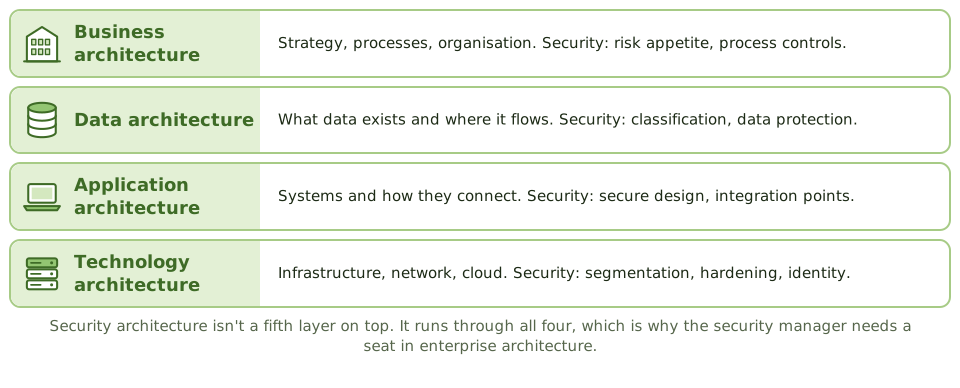
Current state to target state
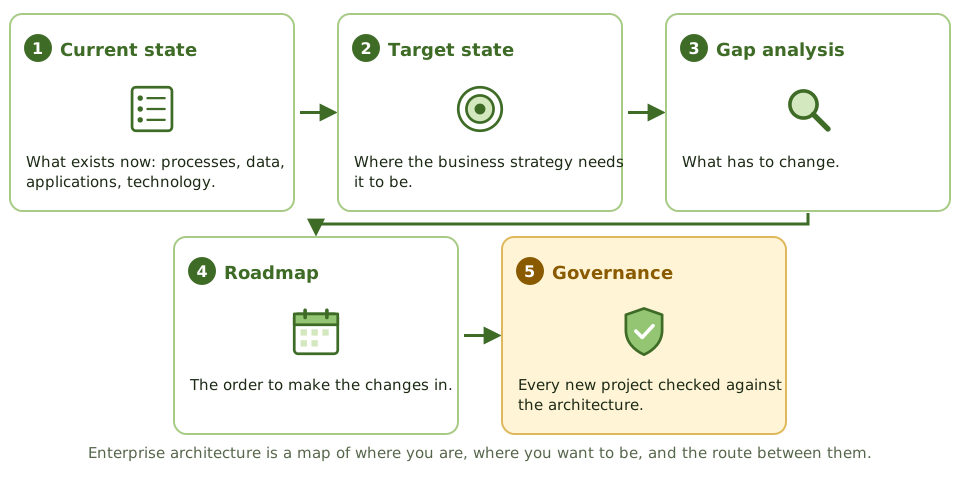
TOGAF and Zachman
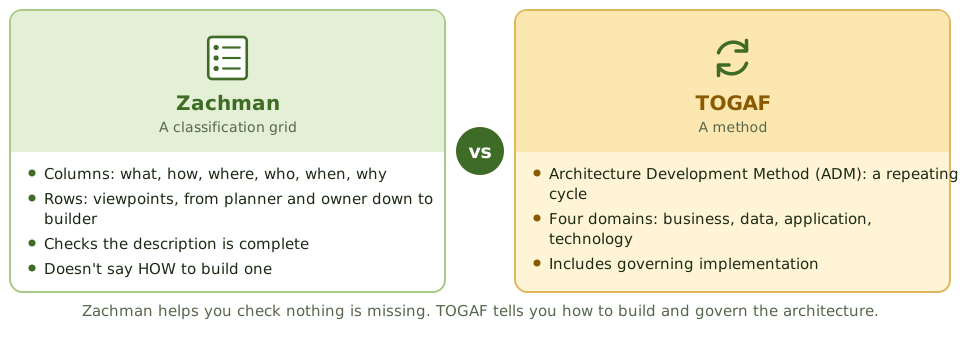
How the security manager uses EA
How the exam asks about it
| If the question asks… | Answer |
|---|---|
| Main benefit of involving security in EA | Security built in at design; consistent across the enterprise |
| Framework with a development method | TOGAF (ADM) |
| Classification grid for architecture | Zachman |
| Best evidence EA is used | Projects reviewed against it before approval |
| Security architecture relates to EA how? | It aligns with and supports it |
Key takeaways
- ✓Enterprise architecture (EA) describes how an organisation's business processes, data, applications and technology fit together, now and in the target state.
- ✓The 2026 CISM outline adds enterprise architecture as a new content area: security managers are expected to work within it, not around it.
- ✓TOGAF provides a method (the Architecture Development Method) across business, data, application and technology domains; Zachman is a classification grid.
- ✓Security should be built into each architecture domain and into architecture governance, so every project is checked against security requirements.
- ✓EA helps security by giving an accurate picture of assets, data flows and dependencies, and a place to set standard secure patterns.
- ✓Security architecture (next article) is the security-specific view that aligns with the enterprise architecture.
Exam traps
- !Security added after the architecture is decided is costlier and weaker.
- !Zachman is a grid for classifying descriptions, not a method; TOGAF's ADM is the method.
- !An architecture nobody checks projects against has little value.
- !Security architecture must align with enterprise architecture, not run as a separate parallel design.
Information Security Architecture: Principles and SABSA
What an information security architecture is, the design principles behind it, how SABSA links security mechanisms to business requirements, and how the security manager governs it.
What security architecture is
Security architecture is the blueprint for how security controls and services fit together across the organisation: identity, network zones, encryption, logging, monitoring. It turns the strategy's goals into a coherent design, so projects don't each invent their own security.
SABSA, from business to components
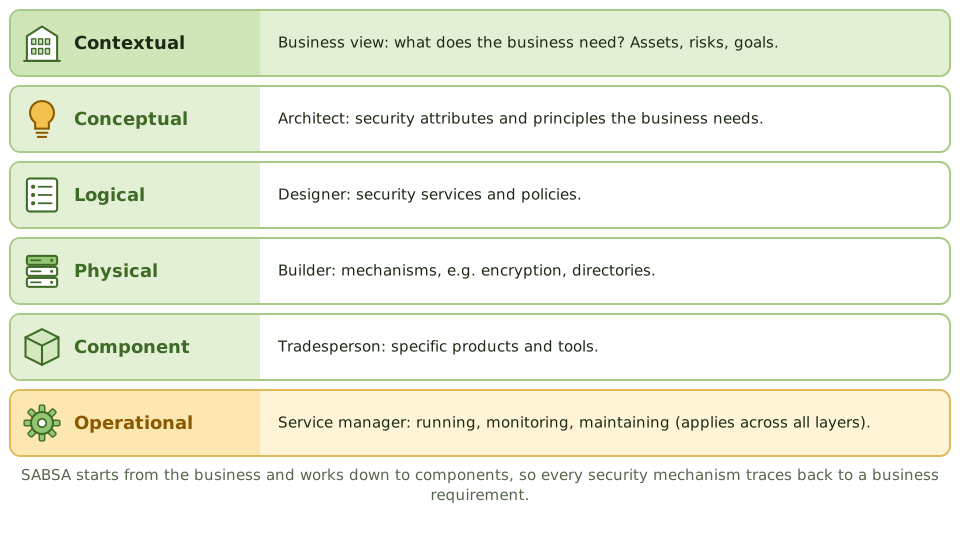
Design principles
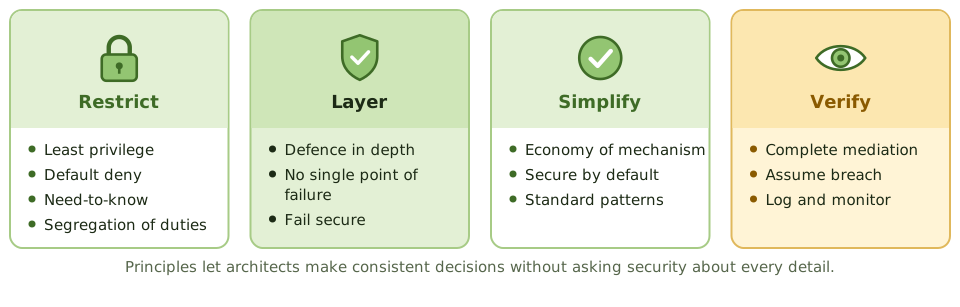
Reference architectures and patterns
Governing the architecture
- 1Security reviews at project initiation and design.
- 2Architecture review board includes security.
- 3Exceptions recorded with owner and expiry.
- 4Architecture updated as threats and technology change.
How the exam asks about it
| If the question asks… | Answer |
|---|---|
| Business-driven security architecture framework | SABSA |
| Top layer of SABSA | Contextual (business requirements) |
| Main benefit of a security architecture | Consistent controls aligned with business needs |
| System fails; what should happen | Fail secure: default to a safe state |
| Project deviates from the architecture | Risk-assess and approve the exception |
Key takeaways
- ✓Information security architecture describes how security controls and services are structured across the enterprise to meet business requirements.
- ✓It's a new content area in the 2026 CISM outline, alongside enterprise architecture.
- ✓SABSA is a business-driven security architecture framework with six layers: contextual, conceptual, logical, physical, component and operational.
- ✓Design principles (least privilege, defence in depth, secure by default, fail secure, complete mediation, simplicity) guide consistent decisions.
- ✓Reference architectures and standard patterns let projects reuse approved secure designs.
- ✓Architecture is governed: projects are reviewed against it, and exceptions are risk-assessed.
Exam traps
- !Starting from products (component layer) rather than business requirements (contextual) is backwards.
- !Security architecture must align with enterprise architecture, not compete with it.
- !Fail secure means failing to a safe state (e.g. deny access), not staying open.
- !A reference architecture nobody is required to follow doesn't change anything.
Defence in Depth and Zero Trust
Two architecture strategies every security manager uses: layering independent controls so one failure isn't fatal, and zero trust, which stops trusting anything just because it's inside the network.
Don't rely on one wall
Every control eventually fails: a patch is missed, a password is phished, a rule is misconfigured. Architecture strategies assume this. Defence in depth adds layers; zero trust stops treating anything as safe just because of where it sits.
Defence in depth
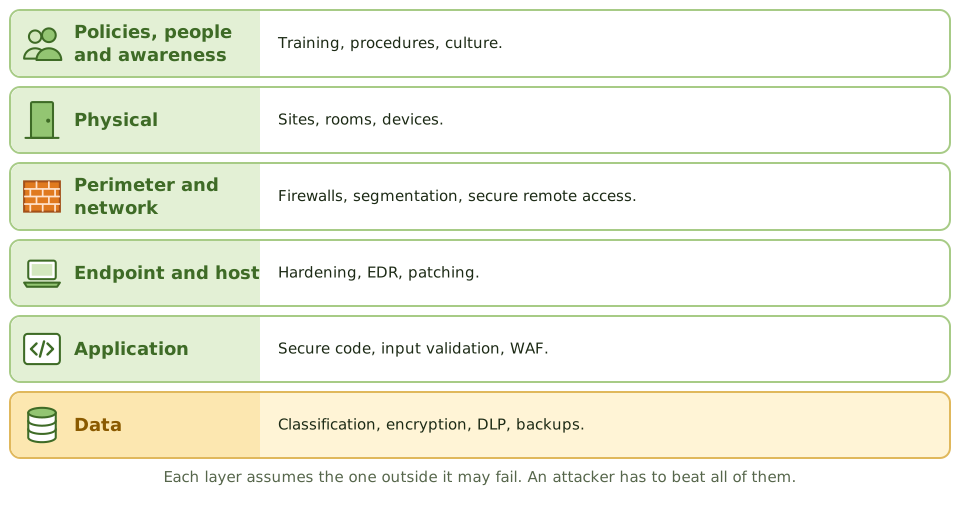
What makes layers work
Zero trust
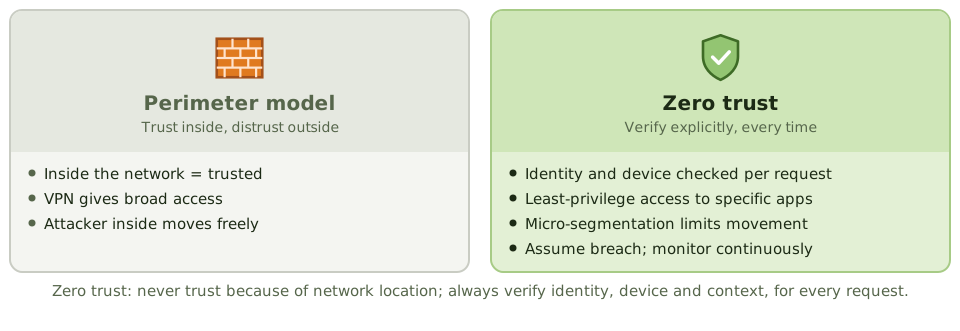
Adopting zero trust in stages
- 1 Identity Strong MFA, single identity provider
- 2 Devices Inventory and health checks
- 3 Access Per-application, least privilege
- 4 Segment Micro-segmentation
- 5 Monitor Continuous verification and analytics
How the exam asks about it
| If the question asks… | Answer |
|---|---|
| Purpose of defence in depth | One control's failure doesn't lead to compromise |
| Core idea of zero trust | Never trust by location; always verify |
| Main control plane in zero trust | Identity (plus device health) |
| Zero trust principle about attackers | Assume breach |
| How zero trust is adopted | Gradually, as a strategy, not one product |
Key takeaways
- ✓Defence in depth layers independent controls (people, physical, network, endpoint, application, data) so a single failure doesn't lead to compromise.
- ✓Layers should include preventive, detective and corrective controls, and should be genuinely independent.
- ✓Zero trust removes implicit trust based on network location: every request is verified using identity, device and context.
- ✓Zero trust principles: verify explicitly, least-privilege access, assume breach.
- ✓Identity becomes the main control plane; strong authentication and device health checks are foundations.
- ✓Zero trust is a strategy adopted in stages, not a product bought in one go.
Exam traps
- !Two firewalls from the same rule set aren't really two layers; layers should be independent.
- !Zero trust doesn't mean trusting nobody to do anything; it means verifying every access.
- !A VPN that gives full network access is the opposite of zero trust.
- !No vendor sells 'zero trust in a box'; it's an architecture and a journey.
Cloud Security and Shared Responsibility
How security responsibilities split between the organisation and its cloud providers, the risks the security manager must govern, and the controls that matter most in cloud environments.
Renting, not owning
Cloud computing hands parts of the technology stack to a provider. That changes who runs what, but not who is accountable for the data. The security manager's job is to know exactly where the line falls for each service, and govern the customer's side.
Who looks after what
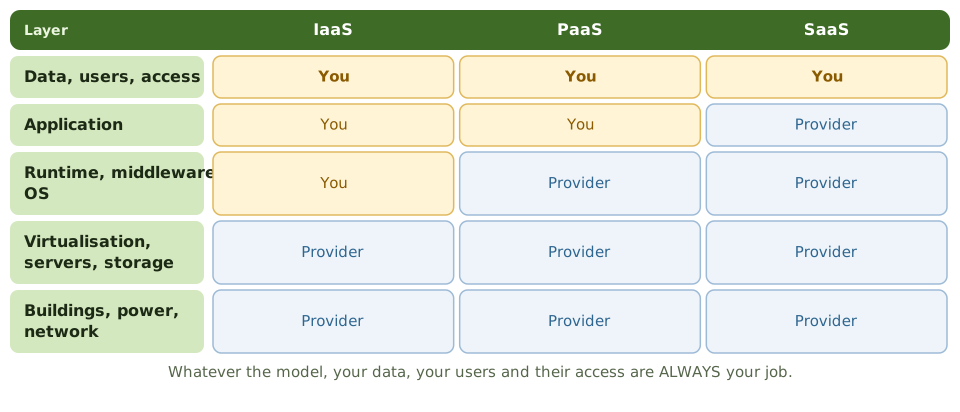
The customer's side
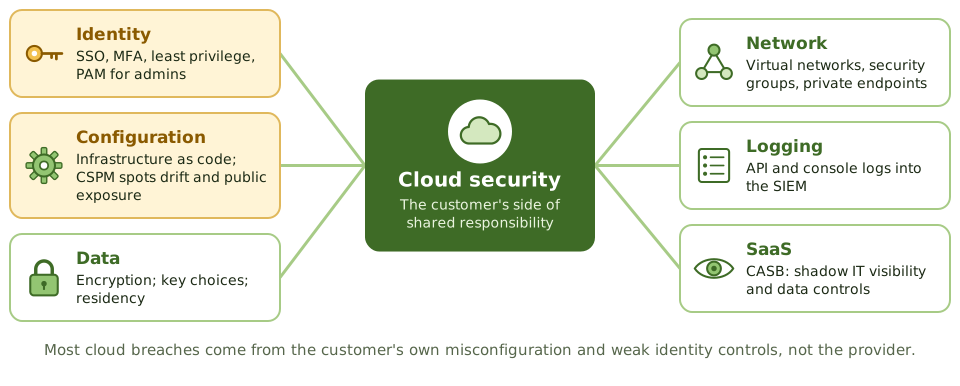
Cloud governance
Misconfiguration is the big risk
Preventive guardrails (policies that block risky settings) plus continuous posture monitoring catch most misconfigurations.
How the exam asks about it
| If the question asks… | Answer |
|---|---|
| What the customer is always responsible for | Its data, users and access |
| Most common cause of cloud breaches | Customer misconfiguration and weak identity |
| Tool that detects cloud misconfiguration | Cloud security posture management (CSPM) |
| Assurance over a large provider | Independent reports, checked for scope |
| Does moving to cloud transfer accountability? | No |
Key takeaways
- ✓In IaaS, PaaS and SaaS the provider takes on different layers, but the customer always remains responsible for its data, users and their access.
- ✓The shared responsibility split must be understood and documented; gaps appear where each side assumes the other covers something.
- ✓Most cloud incidents come from the customer's misconfiguration and weak identity controls, not from the provider.
- ✓Key cloud controls: strong identity and MFA, configuration monitoring (CSPM), encryption and key management, logging, and visibility of SaaS use (CASB).
- ✓Governance covers approved services, data location, exit plans and assurance from providers (SOC 2, ISO 27001 for the services used).
- ✓Accountability for data protection stays with the organisation, whatever the contract says.
Exam traps
- !Moving to the cloud doesn't transfer accountability for protecting data.
- !In SaaS, the customer still manages user access and data classification.
- !A provider's certificate must cover the specific services and regions in use.
- !Shadow cloud services bypass governance; discover and bring them in.
Control Frameworks: NIST SP 800-53, CIS Controls and ISO 27002
The detailed control catalogues a security manager uses to build the program, how they differ, and how to map them so one control set meets several obligations.
From outcomes to controls
Domain 1's frameworks (NIST CSF, ISO 27001, COBIT) describe what security must achieve and how to manage it. Control catalogues answer the next question: which specific safeguards? 'Industry standards and frameworks for information security' is a named Domain 3 topic.
The main catalogues
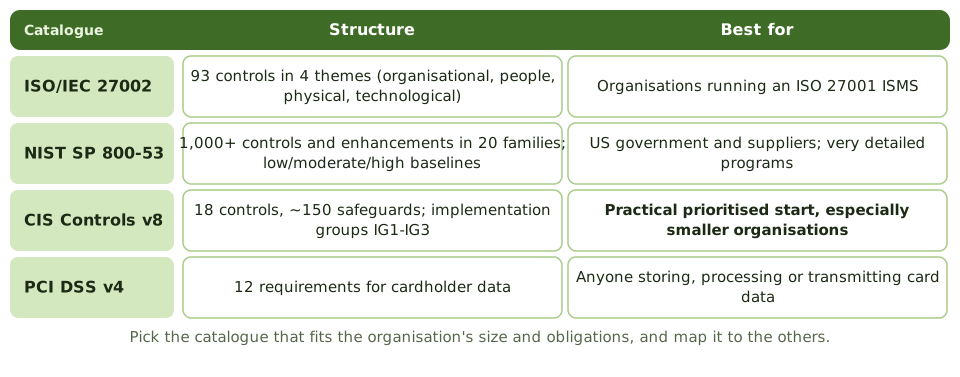
CIS implementation groups
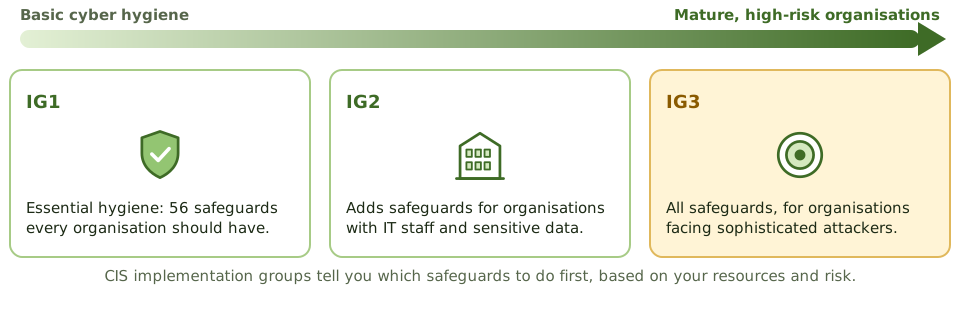
Mapping one control to many requirements
| Control | ISO 27001 / 27002 | NIST CSF 2.0 | CIS v8 | PCI DSS v4 |
|---|---|---|---|---|
| Periodic access review | 5.18 Access rights | PR.AA | 5 and 6 (account and access mgmt) | 7.2.4 |
| MFA for remote access | 8.5 Secure authentication | PR.AA | 6.4 | 8.4.3 |
Choosing and using a catalogue
- 1Start from the risk assessment and obligations.
- 2Use CIS IG1 as a quick baseline if the program is immature.
- 3Use ISO 27002 if running an ISO 27001 ISMS.
- 4Use NIST SP 800-53 where regulation or customers require it.
- 5Map everything to one internal control set.
How the exam asks about it
| If the question asks… | Answer |
|---|---|
| Prioritised controls for a small organisation | CIS Controls (IG1) |
| Detailed US federal control catalogue | NIST SP 800-53 |
| Guidance supporting ISO 27001 Annex A | ISO/IEC 27002 |
| Benefit of mapping frameworks | One control set meets several requirements |
| How controls should be selected | Based on risk, not by implementing everything |
Key takeaways
- ✓Control catalogues list specific safeguards; governance frameworks (NIST CSF, ISO 27001, COBIT) say what to achieve and how to manage it.
- ✓ISO/IEC 27002 gives guidance on 93 controls in four themes, matching ISO 27001 Annex A.
- ✓NIST SP 800-53 is a very detailed catalogue (20 families) with low, moderate and high baselines, used widely by US government and its suppliers.
- ✓The CIS Controls (v8) are 18 prioritised controls with implementation groups IG1 to IG3; IG1 is essential hygiene for everyone.
- ✓Industry standards such as PCI DSS add mandatory requirements for specific data.
- ✓Mapping catalogues to each other avoids duplicate work and shows coverage of several requirements at once.
Exam traps
- !Implementing a whole catalogue without risk-based selection wastes effort.
- !ISO 27002 is guidance; certification is against ISO 27001.
- !CIS IG1 is a starting point, not the finish line, for organisations with significant risk.
- !Control catalogues don't replace a risk assessment; they help answer it.
Security Policy Development and Lifecycle
How the security manager writes, approves, communicates and maintains information security policies so they guide behaviour and support the rest of the documentation.
What policies are for
Policies are management's instructions to the organisation: what must be protected, who is responsible, and what is expected of everyone. They give the security program authority. Everything else (standards, procedures, guidelines) supports them.
The documentation hierarchy
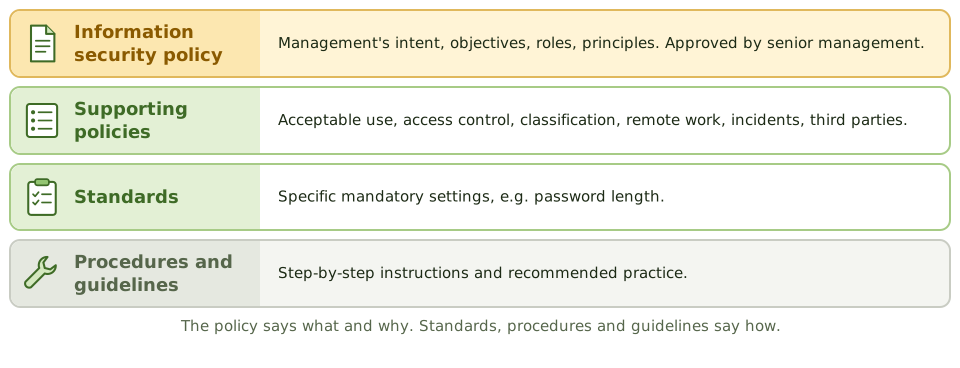
The policy life cycle
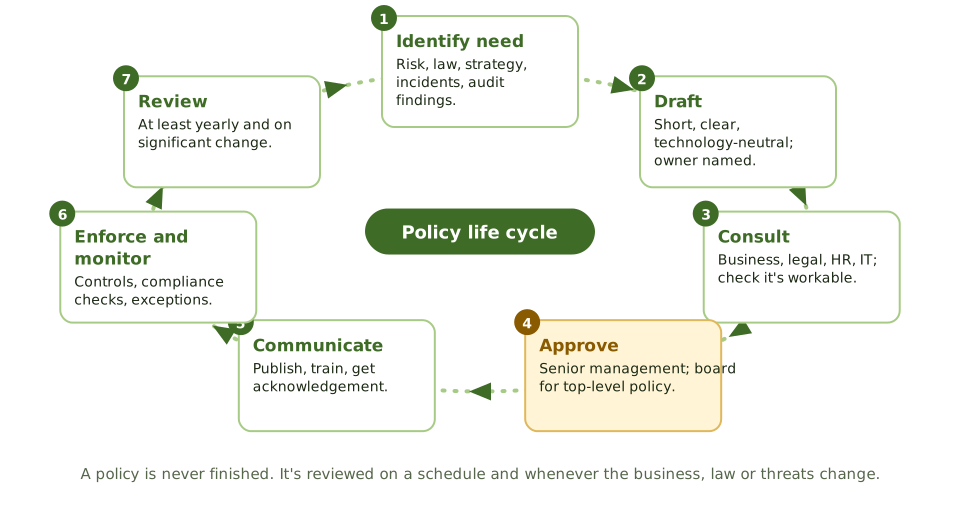
What makes a good policy
A common policy set
| Policy | Covers |
|---|---|
| Information security policy | Overall intent, scope, roles, principles |
| Acceptable use | Rules for using systems, email, internet, devices |
| Access control | Granting, reviewing, removing access |
| Data classification and handling | Levels and handling rules |
| Incident response | Reporting and handling incidents |
| Third-party security | Supplier requirements and oversight |
How the exam asks about it
| If the question asks… | Answer |
|---|---|
| Who approves the information security policy | Senior management (or the board) |
| Most important attribute of a policy | Alignment with business objectives and management intent |
| Where product-specific settings belong | Standards, not policy |
| When to review policies | At least annually and on significant change |
| First step when developing policy | Understand business needs, risks and requirements |
Key takeaways
- ✓Policies state management's intent and direction; standards, procedures and guidelines support them.
- ✓The information security policy is approved by senior management (the top-level policy often by the board) and signed or endorsed visibly.
- ✓Good policies are short, clear, technology-neutral, aligned with business objectives and enforceable.
- ✓The life cycle: identify need, draft, consult, approve, communicate, enforce and monitor, review.
- ✓Policies are reviewed at least annually and when the business, laws, technology or threats change significantly.
- ✓Every policy has an owner, a version, an effective date and a review date.
Exam traps
- !Policies don't name products or settings; standards do.
- !A policy written by security without consulting the business is often unworkable and ignored.
- !Approval by the CISO alone lacks authority; senior management approves.
- !A policy that isn't communicated or enforced is ineffective.
Security Standards and Baseline Requirements
How standards turn policy into specific, measurable requirements, and how security baselines define the minimum secure configuration for each type of system.
From intent to specifics
A policy says 'access must be strongly authenticated'. A standard says how: 'MFA for all remote and privileged access; passwords at least 14 characters; lockout after 10 failed attempts'. Standards make policy measurable and auditable.
Examples of standards
| Area | Example requirement |
|---|---|
| Authentication | MFA for remote and privileged access |
| Encryption | AES-256 at rest; TLS 1.2+ in transit |
| Logging | Security events kept 12 months; sent to SIEM |
| Patching | Critical patches on internet-facing systems within 7 days |
| Secure development | Code review and static analysis before release |
Security baselines
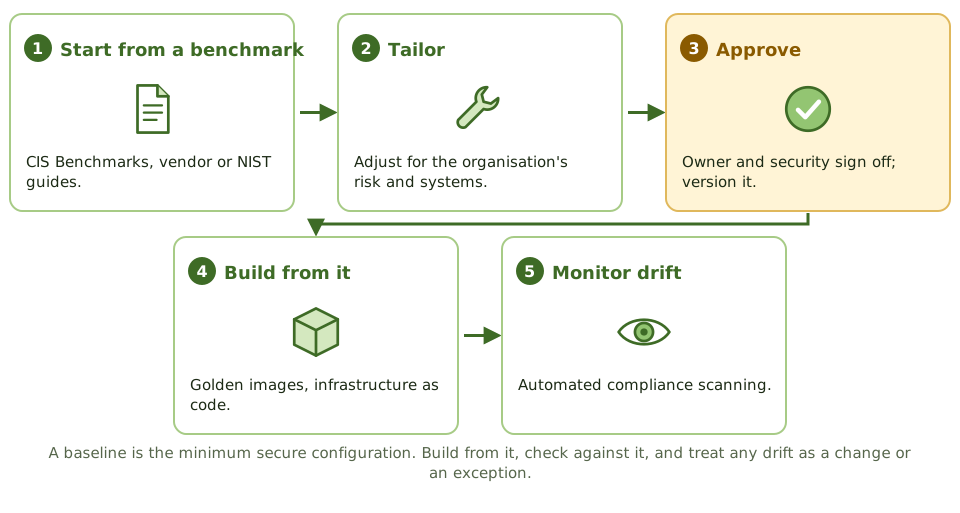
Using baselines well
How the exam asks about it
| If the question asks… | Answer |
|---|---|
| Document setting minimum password length | A standard |
| Minimum secure configuration for a system type | A security baseline |
| Good starting point for baselines | Recognised benchmarks such as CIS Benchmarks |
| How to detect configuration drift | Automated compliance scanning against the baseline |
| A system can't meet the baseline | Approved exception with compensating controls |
Key takeaways
- ✓Standards make policies specific and measurable: password length, encryption algorithms, logging requirements.
- ✓Standards are mandatory; they're approved by the security function or management under the authority of the policy.
- ✓A security baseline is the minimum secure configuration for a type of system (OS, database, cloud service, network device).
- ✓Baselines usually start from recognised benchmarks such as CIS Benchmarks, then are tailored to the organisation's risk.
- ✓Systems are built from baselines (golden images, infrastructure as code) and monitored for configuration drift.
- ✓Standards and baselines change more often than policies, as technology and threats evolve.
Exam traps
- !Standards belong under policy; they must not contradict it.
- !A baseline is a minimum, not a target; higher-risk systems may need more.
- !Configuration drift goes unnoticed without automated monitoring.
- !Deviations from a baseline need a change record or an approved exception.
Procedures, Guidelines and Acceptable Use
How procedures turn standards into repeatable steps, how guidelines help people make good choices, and what an acceptable use policy must cover for every user.
The lower levels of the pyramid
Policies and standards say what must happen. Procedures say exactly how, step by step, so different people get the same result. Guidelines help people choose well where no rule applies.
Procedures vs guidelines
Acceptable use policy
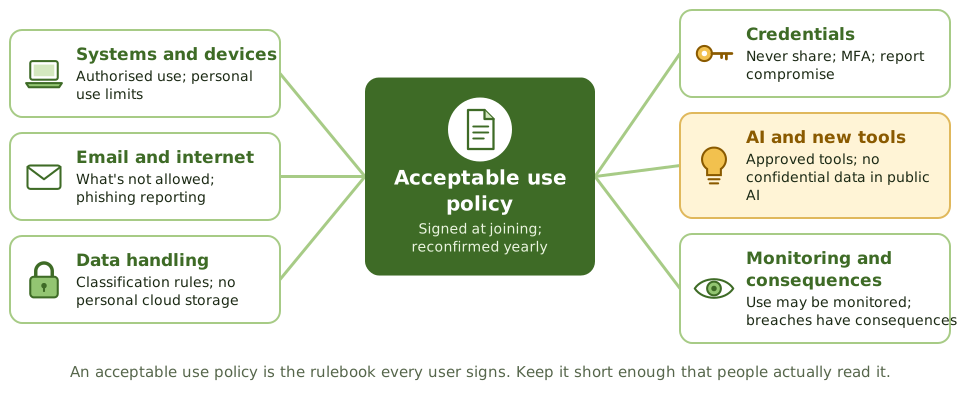
Keeping procedures alive
- 1Written with the people who do the work.
- 2Tested, especially emergency and incident procedures.
- 3Reviewed after incidents, audits and system changes.
- 4Version-controlled and easy to find when needed.
How the exam asks about it
| If the question asks… | Answer |
|---|---|
| Document with step-by-step instructions | Procedure |
| Document that isn't mandatory | Guideline |
| Document every user signs at joining | Acceptable use policy |
| Who owns a procedure | The process owner |
| Best way to keep procedures effective | Test and update them regularly |
Key takeaways
- ✓Procedures are step-by-step instructions for carrying out a task consistently; they're mandatory for the people who perform them.
- ✓Procedures are owned by the process owner and kept close to where the work happens.
- ✓Guidelines are recommended practice; they're advisory and help people make good decisions where no rule fits.
- ✓The acceptable use policy (AUP) sets rules for every user: systems, email, internet, data handling, credentials and now AI tools.
- ✓Users acknowledge the AUP when they join and periodically after; it supports enforcement and accountability.
- ✓Procedures must be tested and updated, especially those used in emergencies such as incident response.
Exam traps
- !Guidelines are optional; procedures and standards are mandatory.
- !Procedures written once and never tested fail when they're needed.
- !An AUP nobody has acknowledged weakens disciplinary action.
- !The AUP should state that use may be monitored; secret monitoring can break privacy law and trust.
Policy Enforcement, Exceptions and Review
How the security manager makes policies stick: technical enforcement, compliance monitoring, a controlled exception process, consequences, and regular review.
A rule nobody enforces isn't a rule
Every policy needs a way to make it real. The most reliable is technical: the system simply won't allow the forbidden thing. Where that's impossible, compliance is monitored and there are consequences for breaking the rules.
Ways to enforce
| Method | Example |
|---|---|
| Technical control | MFA enforced by the identity platform; USB storage blocked |
| Automated monitoring | DLP alerts; configuration compliance scans |
| Process gate | Project can't go live without a security sign-off |
| Review and audit | Access recertification; internal audit |
| Consequences | Defined disciplinary process with HR |
Managing compliance
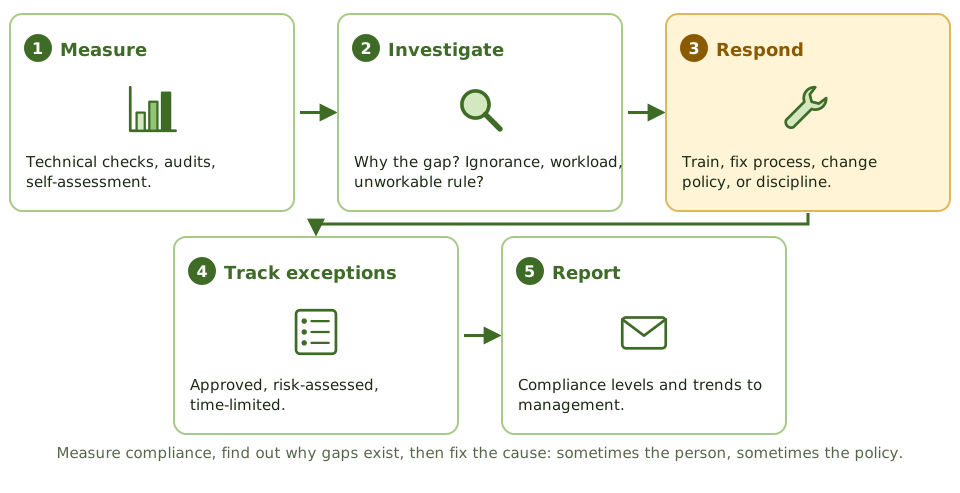
The exception process
Reviewing policies
- 1At least annually, and after significant change.
- 2Use compliance data, exceptions and incidents as evidence.
- 3Many exceptions to one rule? The rule may need changing.
- 4Re-communicate after changes; get fresh acknowledgement.
How the exam asks about it
| If the question asks… | Answer |
|---|---|
| Most reliable way to enforce a policy | Technical controls |
| Many staff violate the same policy | Investigate why; the policy or process may be wrong |
| Requirements for a policy exception | Risk assessment, right-level approval, time limit |
| Inputs to policy review | Compliance results, exceptions, incidents, changes |
| Consequences for violations | Defined, fair, applied consistently |
Key takeaways
- ✓Policies work only if they're enforced: preferably by technical controls, otherwise by monitoring and consequences.
- ✓Compliance is measured through technical checks, audits and self-assessments, and reported to management.
- ✓Widespread non-compliance may mean the policy is unworkable; investigate the cause before disciplining.
- ✓Exceptions are formal: risk-assessed, approved at the right level, time-limited, with compensating controls where possible.
- ✓Disciplinary consequences must be defined, fair and applied consistently, including to senior staff.
- ✓Policies are reviewed at least yearly and after significant changes, using compliance data and incidents as input.
Exam traps
- !Unenforced policies teach people that policies don't matter.
- !Granting permanent, undocumented exceptions creates hidden risk.
- !When most people break a rule, fixing the rule may be the right answer.
- !Technical enforcement is more reliable than relying on people to remember.
Designing Security Metrics: KPIs, KRIs and KCIs
How to choose security metrics that drive decisions: the main types, what makes a metric useful, and how to avoid measuring activity instead of outcomes.
Why measure?
Metrics tell the security manager, and management, whether the program is achieving its objectives, where it's weak, and whether investments are paying off. 'Information security program metrics' is a named CISM topic.
Four kinds of indicator
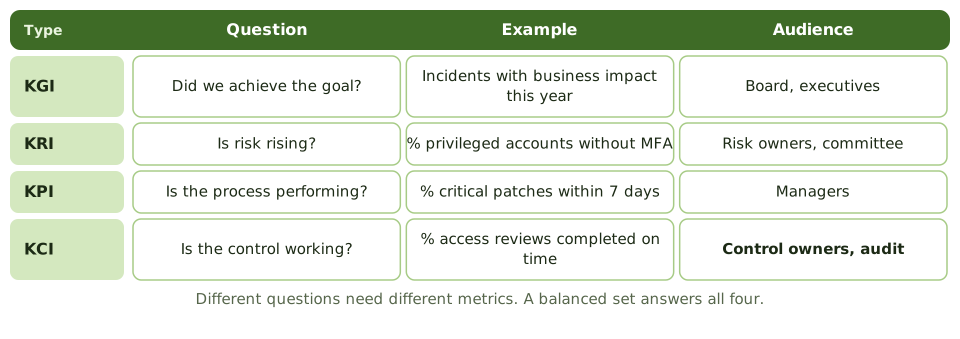
What makes a metric useful
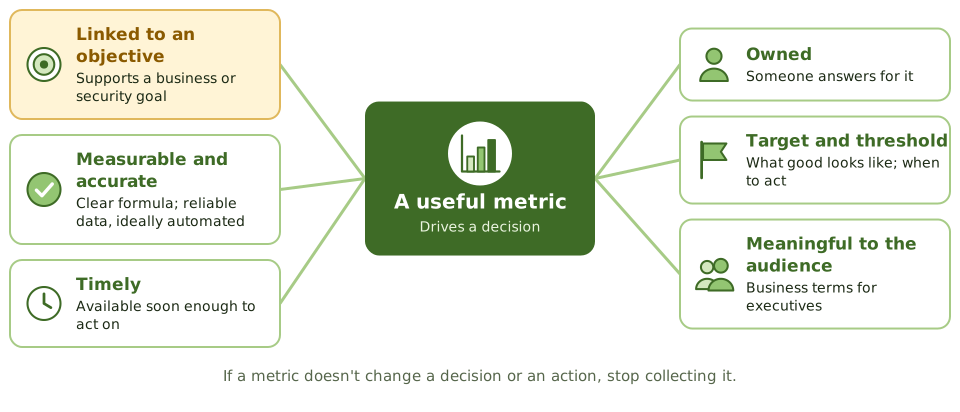
Metrics for each level
| Level | Audience | Example |
|---|---|---|
| Strategic | Board, executives | Top risks vs appetite; business impact of incidents |
| Management | CISO, steering committee | Program milestones; % critical systems meeting baseline |
| Operational | Security and IT teams | Mean time to patch; alert triage time |
Outcome, not activity
How the exam asks about it
| If the question asks… | Answer |
|---|---|
| Most important characteristic of a security metric | Linked to objectives; supports decisions |
| Indicator showing a control works | Key control indicator (KCI) |
| Indicator showing rising risk | Key risk indicator (KRI) |
| Best metrics for the board | Strategic, business-linked outcomes |
| Weak metric | Activity counts with no link to outcomes |
Key takeaways
- ✓Security metrics exist to support decisions about the program; a metric that changes no decision isn't worth collecting.
- ✓Main types: KGIs (goal achieved?), KRIs (risk rising?), KPIs (process performing?) and KCIs (control working?).
- ✓Good metrics are linked to objectives, measurable, accurate, timely, owned, have targets and thresholds, and suit their audience.
- ✓Strategic metrics for the board link to business goals; operational and technical metrics serve managers and engineers.
- ✓Prefer outcome measures (fewer successful phishing attacks) over activity measures (training sessions held).
- ✓Defining and monitoring management and operational metrics for the program is a CISM task.
Exam traps
- !Counting activity (alerts handled, scans run) isn't measuring effectiveness.
- !Technical metrics aren't suitable for board reporting without translation.
- !A metric without a target or threshold doesn't tell anyone whether to act.
- !Metrics that are easy to game encourage the wrong behaviour.
Collecting, Analysing and Reporting Metrics
How the security manager turns raw data into reliable metrics, analyses trends, and reports them so stakeholders act on what they show.
From data to decisions
Data alone isn't a metric, and a metric alone isn't a decision. The security manager runs a repeatable process that turns raw data from tools and processes into trustworthy information people act on. Evaluating and reporting metrics to key stakeholders is a CISM task.
The metrics process
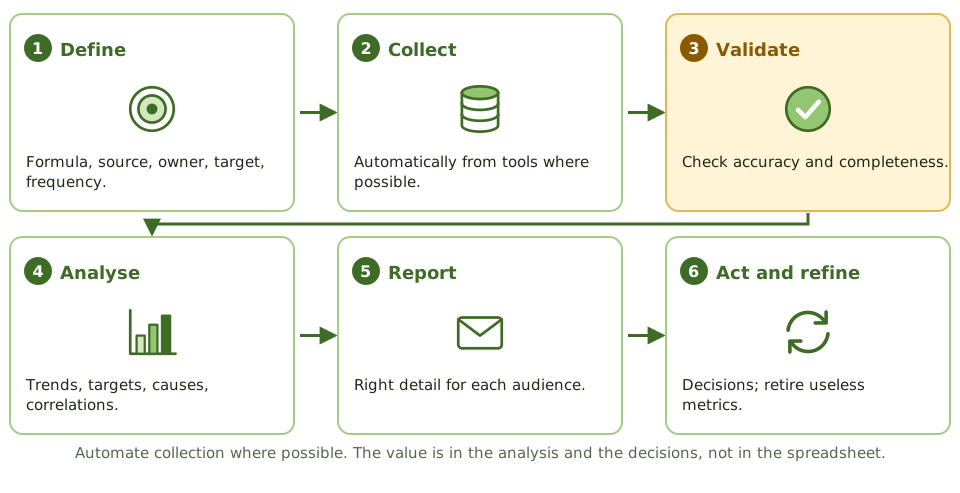
Getting good data
Analysing and reporting
- 1Show trends over time, not single snapshots.
- 2Compare against targets and thresholds.
- 3Explain causes, not just numbers.
- 4Summarise for executives; detail for teams.
- 5Highlight the decisions or actions needed.
How the exam asks about it
| If the question asks… | Answer |
|---|---|
| Most reliable way to collect metrics | Automated collection from source systems |
| Before reporting metrics | Validate accuracy and completeness |
| Most useful presentation | Trends against targets |
| Metric no longer drives decisions | Retire or replace it |
| Audience for detailed technical metrics | Operational teams, not the board |
Key takeaways
- ✓The metrics process: define, collect, validate, analyse, report, act and refine.
- ✓Automated collection from source systems is more reliable and cheaper than manual collection.
- ✓Validate data before reporting: inaccurate metrics destroy credibility and lead to bad decisions.
- ✓Trends over time say more than single values; compare against targets and thresholds.
- ✓Reports are tailored: summaries and business impact for executives, detail for operational teams.
- ✓Metrics are reviewed periodically; retire those that no longer drive decisions.
Exam traps
- !Self-reported data from the team being measured may be biased; verify independently.
- !A single data point says little; show trends.
- !Reporting too many metrics hides the important ones.
- !Metrics that nobody acts on are a waste of effort.
Security Maturity Models and Program Assessment
How maturity models describe how well-run the security program is, how to set realistic targets per area, and how assessments feed the strategy and roadmap.
How well run is the program?
Two organisations can both 'have' incident response. In one, it depends on whoever is on shift; in the other, it's documented, practised, measured and improved. Maturity models put a number on that difference, giving a common language for current state, target and progress.
The levels
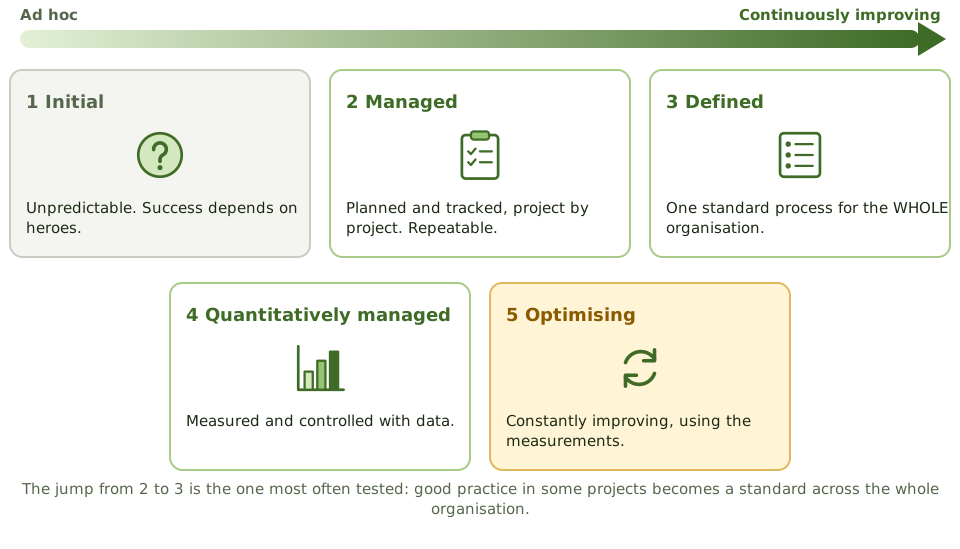
Current vs target, area by area
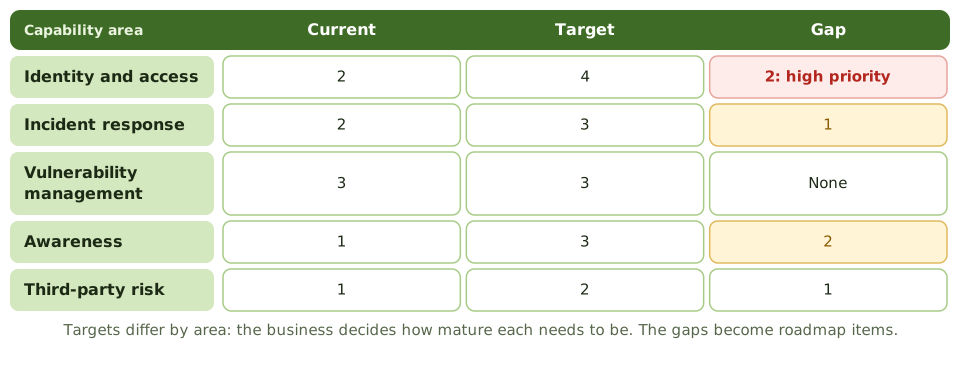
Running an assessment
- 1Choose the model and capability areas (COBIT, CMMI, NIST CSF tiers, C2M2).
- 2Gather evidence: documents, interviews, records, tests.
- 3Rate each area consistently, with evidence for each rating.
- 4Agree targets with the business, based on risk.
- 5Turn gaps into roadmap initiatives and reassess yearly.
Other program assessments
How the exam asks about it
| If the question asks… | Answer |
|---|---|
| Level with standard organisation-wide processes | Level 3: defined |
| How to set target maturity | By business need and risk, per area |
| Main use of a maturity assessment | Define current state and gaps for the strategy |
| Self-assessed maturity seems high | Validate with evidence / independent review |
| Does maturity prove controls work? | No; it shows process discipline |
Key takeaways
- ✓Maturity models rate how well defined, managed and improved processes are, usually on a 0 or 1 to 5 scale.
- ✓CMMI-style levels: initial, managed, defined, quantitatively managed, optimising; COBIT 2019 uses capability levels 0 to 5.
- ✓Targets are set per capability area by business need and risk; not everything needs level 5.
- ✓Maturity assessments define the current and desired state for the strategy, and the gaps become roadmap items.
- ✓Other program assessments include NIST CSF profiles, ISO 27001 internal audits, and external benchmarks.
- ✓Maturity shows process discipline; it doesn't prove that every individual control works.
Exam traps
- !Recommending the highest maturity everywhere ignores cost and need.
- !Level 3 means one standard process across the organisation, not just good practice in some teams.
- !Maturity scores self-assessed without evidence tend to be inflated.
- !A mature process can still contain a badly designed control.
Control Types and Categories
How controls are classified by function (deterrent, preventive, detective, corrective, compensating) and by type (administrative, technical, physical), and why good designs layer them.
What a control is
A control is any measure that reduces the likelihood or impact of a risk: a policy, a process, a technology or a physical barrier. Classifying controls helps the security manager check that the design is balanced and that nothing relies on a single kind of protection.
Controls by when they act
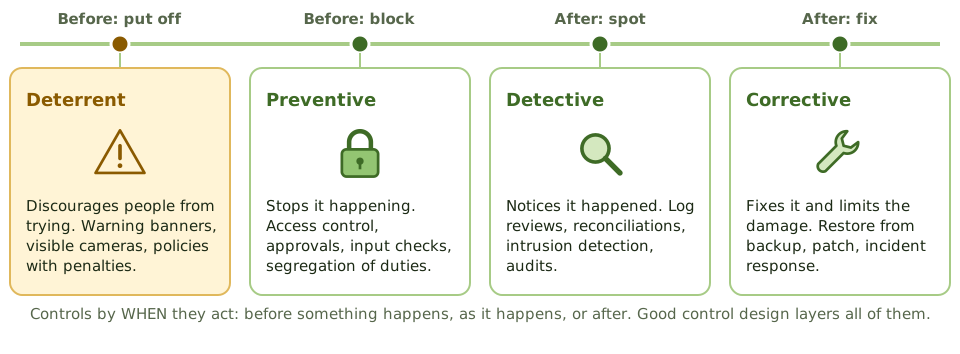
Function and type together
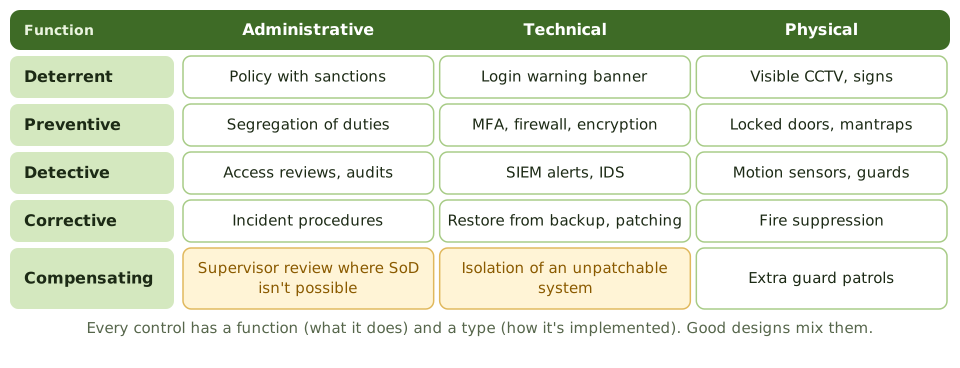
Compensating controls
When the preferred control isn't feasible (too costly, technically impossible, too small a team), a compensating control reduces the same risk another way.
Choosing the mix
- 1Prefer prevention where it's cost-effective.
- 2Add detection: prevention eventually fails.
- 3Plan correction: some events will happen anyway.
- 4Prefer automated controls, protected by change management.
- 5Mix administrative, technical and physical controls.
How the exam asks about it
| If the question asks… | Answer |
|---|---|
| Control that stops an event happening | Preventive |
| Reconciliation or log review | Detective |
| Restoring from backup | Corrective |
| Substitute when the main control isn't possible | Compensating |
| Why automated controls are preferred | Consistency, if change is controlled |
Key takeaways
- ✓By function: deterrent (discourage), preventive (stop), detective (find), corrective (fix and recover), compensating (substitute for a control that isn't feasible).
- ✓By type: administrative (policies, procedures, training), technical or logical (systems), physical (locks, guards, environment).
- ✓Preventive controls are usually preferred because stopping an event is cheaper than dealing with it, but prevention fails, so detection and correction are essential.
- ✓Compensating controls reduce risk when the preferred control isn't possible; they must address the same risk.
- ✓Automated controls are more consistent than manual ones, as long as change management protects them.
- ✓Control objectives state what a control must achieve; the control is how.
Exam traps
- !Logs nobody reviews aren't a detective control.
- !Backups are corrective (recovery), not preventive.
- !A compensating control must address the same risk as the control it replaces.
- !Warning banners deter; they don't prevent.
Control Design and Selection Based on Risk and Cost
How the security manager designs and selects controls: starting from risk and control objectives, weighing effectiveness against cost and usability, and designing in ownership and evidence from the start.
Start from the risk
Control design and selection is a named CISM topic. The question isn't 'what's the best product?' but 'what's the most cost-effective way to bring this risk within appetite, in a way people will actually use?'
The selection process
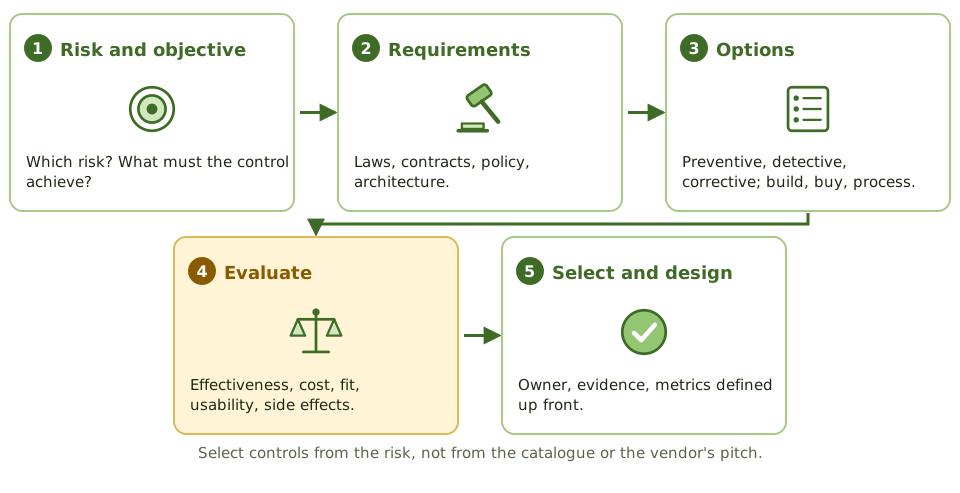
Evaluation criteria
| Criterion | Question |
|---|---|
| Effectiveness | How much does it reduce likelihood or impact? |
| Cost | Total cost of ownership, including people |
| Fit | Works with our architecture and processes? |
| Usability | Will people use it or work around it? |
| Requirements | Mandated by law, contract or policy? |
| Side effects | New risks, performance impact, single points of failure |
Design for operation
How the exam asks about it
| If the question asks… | Answer |
|---|---|
| Primary basis for selecting controls | Risk assessment and control objectives |
| Most important factor in control selection | Effectiveness against the risk, at reasonable cost |
| Control is effective but users bypass it | Redesign for usability; address the cause |
| What to define when designing a control | Owner, evidence and metrics |
| Control costs more than the risk | Usually not justified unless required |
Key takeaways
- ✓Controls are selected to treat specific risks and meet control objectives, not because a catalogue lists them.
- ✓Selection criteria: effectiveness against the risk, cost (total cost of ownership), fit with architecture and processes, usability, legal requirements and side effects.
- ✓Prefer controls that address root causes and protect several risks at once.
- ✓Design controls with an owner, evidence and metrics from the start, so they can be operated and tested.
- ✓Usability matters: controls that obstruct work are bypassed.
- ✓Determining whether controls are appropriate and effectively manage risk is a core CISM task.
Exam traps
- !Choosing the most technically advanced control isn't the same as choosing the right one.
- !A control that costs more than the risk it reduces is rarely justified, unless required.
- !Controls that nobody can operate or evidence fail in practice and in audit.
- !Ignoring user impact leads to workarounds that create new risks.
Control Testing: Design vs Operating Effectiveness
How the security manager evaluates controls: whether they're designed to meet their objective, whether they actually operate as designed over time, and which testing methods give reliable evidence.
Two different questions
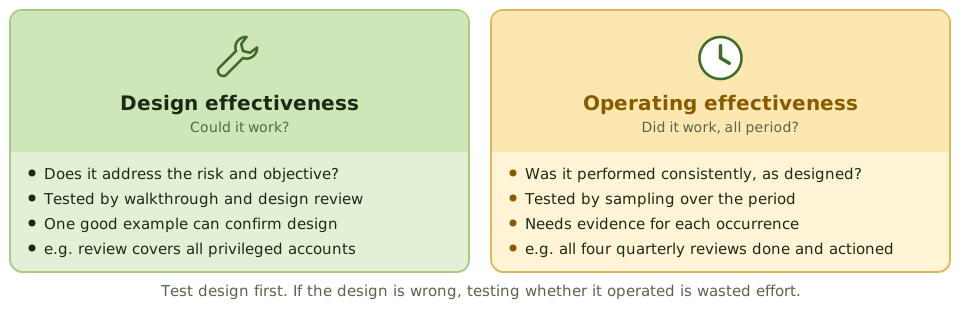
Testing methods
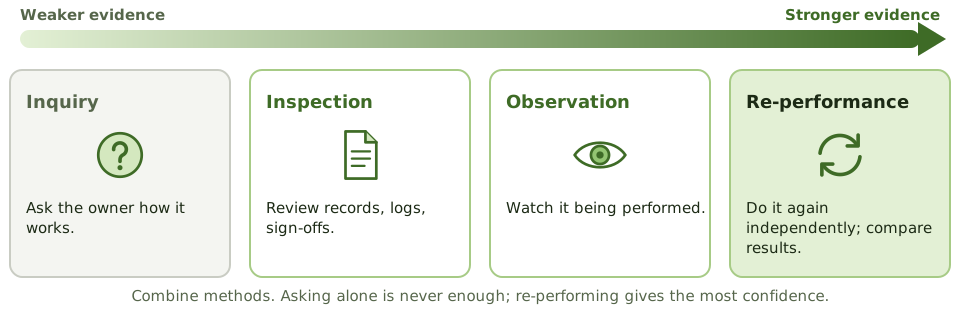
Who tests
| Tester | Strength | Limitation |
|---|---|---|
| Control owner (self-assessment) | Cheap, frequent | Not independent |
| Security / second line | Expertise, some independence | Part of management |
| Internal audit | Independent | Periodic, limited coverage |
| Automated monitoring | Continuous, complete | Only for technical controls |
An example
Results feed the risk register, metrics and the improvement plan.
Continuous control monitoring
- 1Automated checks of technical controls, daily or continuously.
- 2e.g. MFA coverage, backup success, configuration compliance.
- 3Exceptions raise alerts or tickets immediately.
- 4Frees people to test complex manual controls.
How the exam asks about it
| If the question asks… | Answer |
|---|---|
| Would the control meet its objective if performed? | Design effectiveness |
| Was the control performed consistently over time? | Operating effectiveness |
| Strongest testing method | Re-performance |
| Weakest testing method | Inquiry |
| What to test first | Design |
Key takeaways
- ✓Design effectiveness asks whether a control, if performed as intended, would meet its objective.
- ✓Operating effectiveness asks whether it was actually performed consistently, as designed, over the period.
- ✓Test design first; a badly designed control isn't worth testing for operation.
- ✓Testing methods, from weakest to strongest: inquiry, inspection, observation, re-performance.
- ✓Continuous control monitoring automates testing for technical controls and catches failures quickly.
- ✓Control testing and evaluation is a named CISM topic; results feed risk ratings, metrics and improvement.
Exam traps
- !Inquiry alone is never sufficient evidence.
- !A control that operated perfectly but is badly designed still leaves the risk.
- !One successful example proves design, not operation over a period.
- !Control owners testing their own controls lack independence; use second- or third-line testing for key controls.
Identity and Access Management
The security manager's view of IAM: the identity life cycle, strong authentication, least-privilege authorisation, privileged access and access reviews, and the governance that ties them together.
Identity is the new perimeter
With cloud services, remote working and SaaS, there's no single network edge to defend. Most attacks now start with a stolen, weak or over-privileged account. That makes identity and access management one of the program's most important control areas.
The parts of IAM
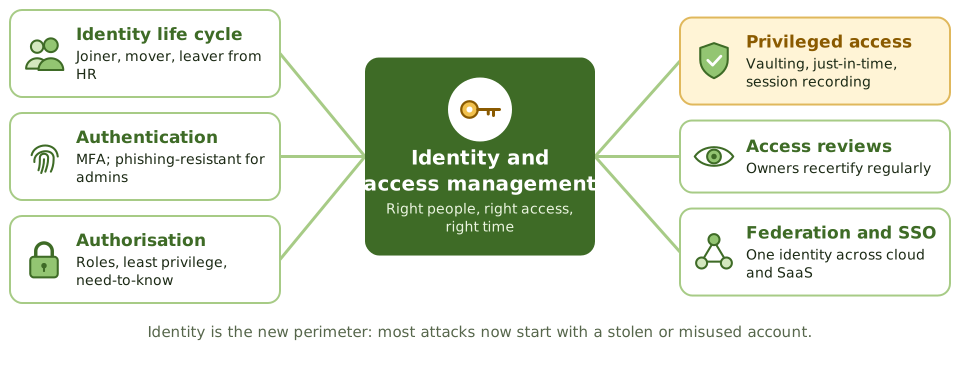
Joiners, movers, leavers
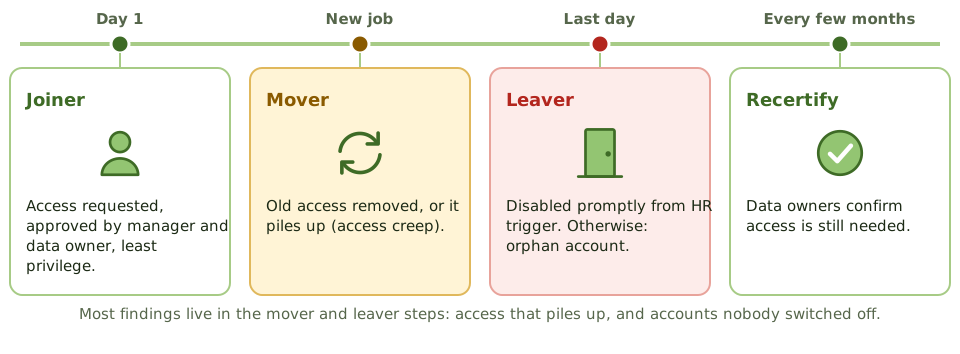
Privileged access
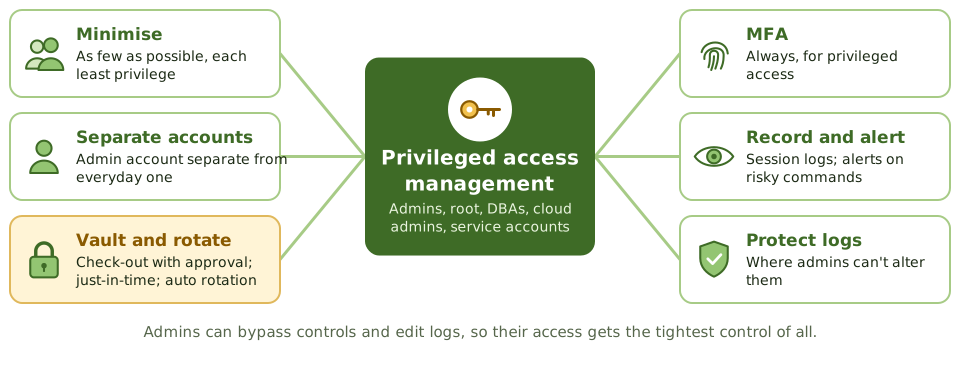
Governance of access
- 1Information owners approve access and recertify it.
- 2Access requests and approvals are recorded.
- 3Leavers disabled within hours, triggered by HR.
- 4Machine identities have owners and rotated credentials.
- 5Metrics: MFA coverage, orphan accounts, review completion.
How the exam asks about it
| If the question asks… | Answer |
|---|---|
| Who approves access to data | The information owner |
| Best control over admin accounts | Privileged access management |
| Best way to detect access creep | Periodic access reviews by owners |
| Trigger for removing a leaver's access | HR notification, automated where possible |
| Strongest MFA for admins | Phishing-resistant (FIDO2 / smart card) |
Key takeaways
- ✓IAM makes sure the right people (and machines) have the right access, for the right reasons, at the right time, and that it's removed when no longer needed.
- ✓The identity life cycle (joiner, mover, leaver) should be driven by HR, with access approved by information owners.
- ✓MFA is a baseline control; phishing-resistant MFA (FIDO2, passkeys, smart cards) is expected for privileged and remote access.
- ✓Authorisation follows least privilege and need-to-know, typically through role-based access.
- ✓Privileged access management (PAM) vaults admin credentials, grants just-in-time access and records sessions.
- ✓Regular access reviews by owners catch access creep and orphan accounts; results are evidence for auditors.
Exam traps
- !Access is approved by the information owner, not by IT or the security administrator.
- !Access reviews done only by IT don't confirm business need.
- !Service accounts and API keys are identities too, and are often forgotten.
- !SSO without MFA concentrates risk in one password.
Network and Endpoint Security Controls
The core network and endpoint controls a security program needs, what each protects against, and what the security manager monitors to know they're working.
The manager's view
The security manager doesn't configure firewalls, but must make sure the right network and endpoint controls exist, cover everything they should, have owners and are measured. CISA covers the technical detail; CISM focuses on choosing, governing and evaluating them.
Core controls
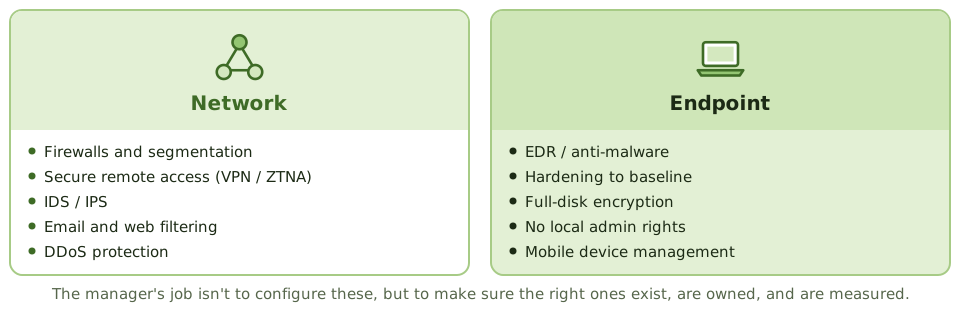
Segmentation limits damage
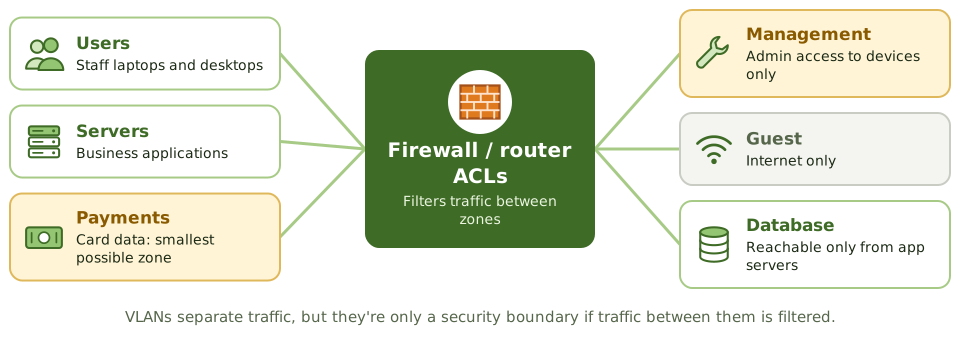
What each stops
| Control | Main threat addressed |
|---|---|
| Email filtering | Phishing and malicious attachments |
| EDR | Malware, ransomware, attacker activity on hosts |
| Segmentation | Lateral movement after a breach |
| Secure remote access with MFA | Credential theft and VPN attacks |
| Full-disk encryption | Data loss from lost or stolen devices |
| DDoS protection | Service outages from traffic floods |
Measuring coverage and effect
- 1% of endpoints with healthy EDR.
- 2% of laptops encrypted.
- 3Critical systems in segmented zones.
- 4Users with local admin rights.
- 5Mean time to contain detected endpoint threats.
How the exam asks about it
| If the question asks… | Answer |
|---|---|
| Control that limits lateral movement | Network segmentation |
| Endpoint tool that detects malicious behaviour | EDR |
| Best control for data on lost laptops | Full-disk encryption |
| Main weakness of endpoint programs | Incomplete coverage |
| Best measure of endpoint control | Coverage against the asset inventory |
Key takeaways
- ✓Network controls include firewalls and segmentation, secure remote access, intrusion detection and prevention, email and web filtering, and DDoS protection.
- ✓Segmentation limits how far an attacker can move; critical systems sit in their own zones.
- ✓Endpoint controls include EDR, hardening to baselines, full-disk encryption, no local admin rights, application control and mobile device management.
- ✓EDR detects and responds to malicious behaviour, not just known malware signatures.
- ✓Coverage gaps are the main weakness: an unmanaged device or unsegmented network undoes the rest.
- ✓Managers track coverage and effectiveness metrics, such as EDR coverage, critical-system segmentation and encrypted laptops.
Exam traps
- !A firewall at the perimeter doesn't stop an attacker who is already inside; segmentation does.
- !Signature-based antivirus alone misses new malware.
- !Users with local admin rights can disable endpoint protection.
- !Controls that cover 90% of devices leave the attacker the other 10%.
Application Security and the Secure SDLC
How the security manager builds security into how software is built and bought: requirements, threat modelling, secure coding, testing, release gates and the supply chain of code.
Built in, not bolted on
Most breaches of web applications exploit flaws that could have been prevented during design or coding. The security manager's role is to make the secure way the normal way of building and buying software, through requirements, tools, training and gates.
The secure SDLC
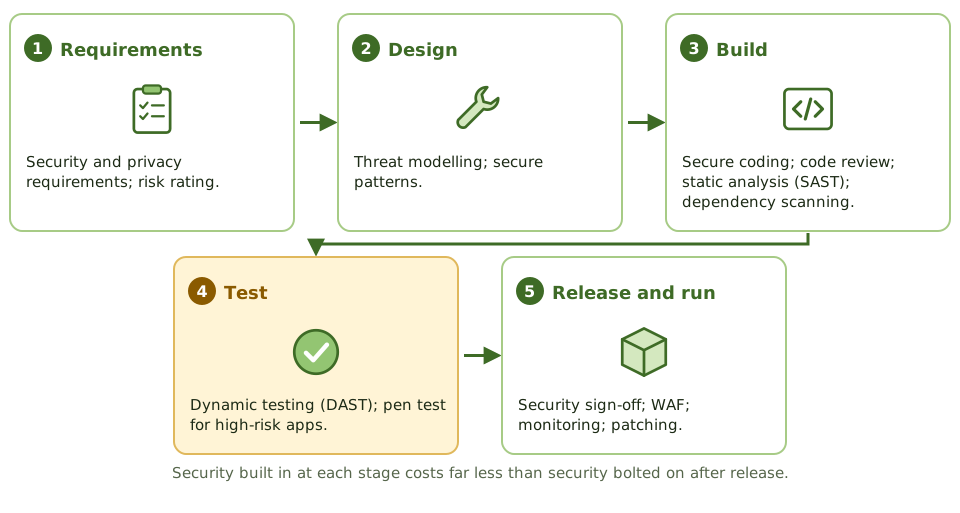
Shift left in DevSecOps
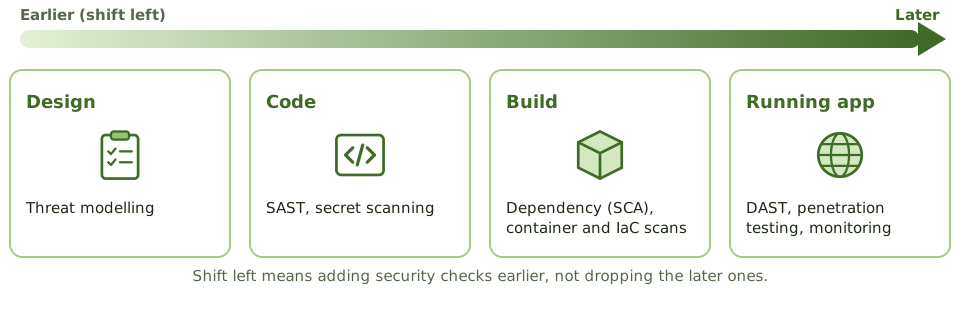
The software supply chain
Program-level controls
- 1Secure coding standard and developer training.
- 2Security requirements in project templates.
- 3Automated security tests that can block releases.
- 4Risk-based pen testing of high-risk applications.
- 5Metrics: open critical flaws, time to fix, coverage of scanning.
How the exam asks about it
| If the question asks… | Answer |
|---|---|
| When to address security in development | From requirements onward |
| Most cost-effective time to fix a flaw | Design |
| Testing source code for flaws | Static analysis (SAST) |
| Inventory of software components | SBOM |
| Role of a WAF | Compensating layer, not a replacement for secure code |
Key takeaways
- ✓Security is integrated into each stage of the software development life cycle (SDLC), from requirements to operation.
- ✓Fixing a flaw in design costs a fraction of fixing it after release.
- ✓Key practices: security requirements, threat modelling, secure coding standards, code review, SAST, DAST, dependency scanning and penetration testing.
- ✓In DevOps, security checks are automated in the pipeline (DevSecOps), and 'shift left' adds them earlier without removing later ones.
- ✓Third-party and open-source components need inventory (SBOM) and vulnerability tracking.
- ✓Purchased software also needs security requirements in contracts and testing before use.
Exam traps
- !A web application firewall is a compensating layer, not a substitute for secure code.
- !Shift left means testing earlier, not skipping testing later.
- !Developers shouldn't approve and deploy their own code to production without review.
- !Ignoring open-source dependencies leaves known vulnerabilities in production.
Configuration, Change and Patch Management
How three IT processes keep systems in a known secure state, why they matter so much to security, and what the security manager watches to know they're working.
Keeping systems in a known good state
Most systems start secure and drift: settings change, patches are missed, emergency fixes become permanent. Three IT processes keep production in a known, approved state. The security manager doesn't run them, but depends on them and must make sure security is built in.
Three processes, one goal
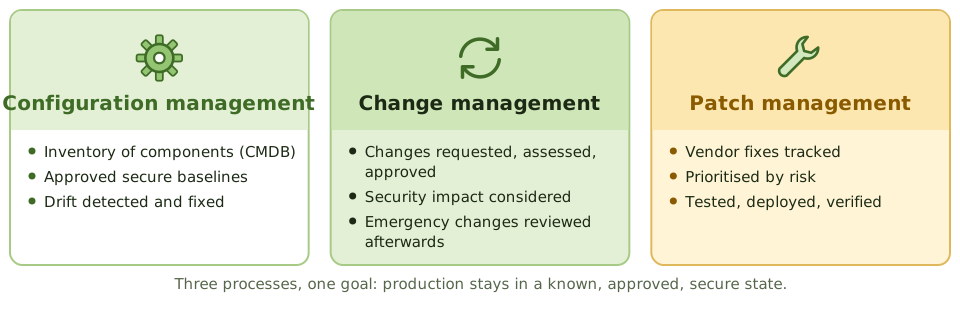
Patch management
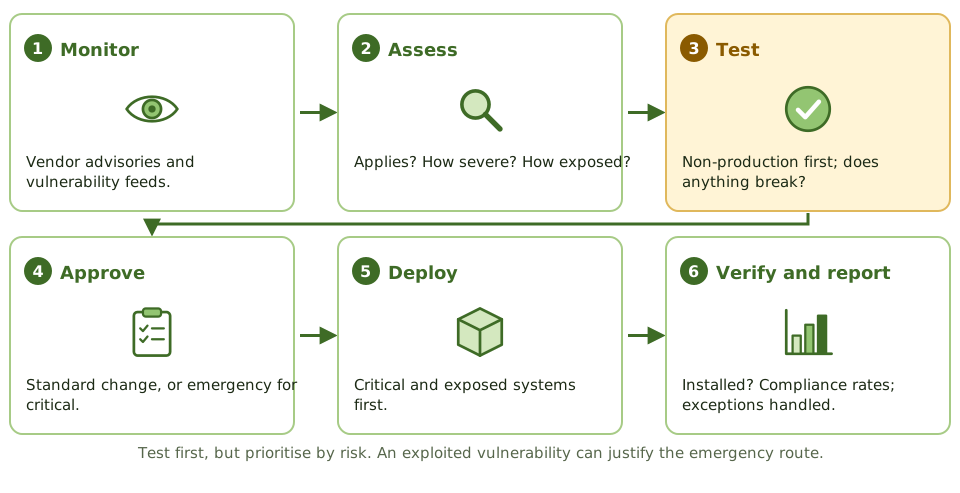
Security's role in each
| Process | Security contributes |
|---|---|
| Configuration | Secure baselines; drift monitoring |
| Change | Security impact assessment for significant changes; seat on the change board |
| Patch | Risk-based prioritisation; patch SLAs; exceptions |
| All three | Metrics and escalation when they slip |
When patching isn't possible
- 1Isolate the system (segmentation).
- 2Add monitoring and virtual patching (IPS, WAF).
- 3Document risk acceptance with an expiry.
- 4Plan replacement for end-of-life systems.
How the exam asks about it
| If the question asks… | Answer |
|---|---|
| Step before deploying a patch to production | Test it |
| How to prioritise patches | By risk: exploitation, exposure, criticality |
| System can't be patched | Compensating controls and documented acceptance |
| Emergency change made without approval | Document and review it afterwards |
| Detecting unauthorised configuration change | Compare against the baseline (drift monitoring) |
Key takeaways
- ✓Configuration management keeps an inventory of components and their approved secure configurations (baselines), and detects drift.
- ✓Change management makes sure every change is requested, assessed (including for security impact), approved, tested and recorded.
- ✓Patch management tracks vendor fixes, prioritises them by risk, tests and deploys them, and verifies installation.
- ✓Unpatched systems and misconfigurations are among the most common causes of breaches.
- ✓Emergency changes and patches may skip prior approval but must be documented and reviewed afterwards.
- ✓Systems that can't be patched need compensating controls and documented risk acceptance.
Exam traps
- !Patching purely by severity score, ignoring exploitation and exposure, is inefficient.
- !Applying patches straight to production without testing risks outages.
- !Unsupported (end-of-life) systems that no longer get patches need replacement or isolation.
- !A change process that security isn't part of can introduce new vulnerabilities unnoticed.
Cryptography for Security Managers
What a security manager needs to decide about cryptography: where to encrypt, which standards to allow, how keys are managed, and how to prepare for change such as post-quantum algorithms.
Decisions, not mathematics
The security manager doesn't need to design algorithms. They need to decide what must be encrypted, which standards are allowed, who controls the keys, and how the organisation will cope when an algorithm becomes unsafe. Those are governance decisions with long consequences.
What cryptography gives you
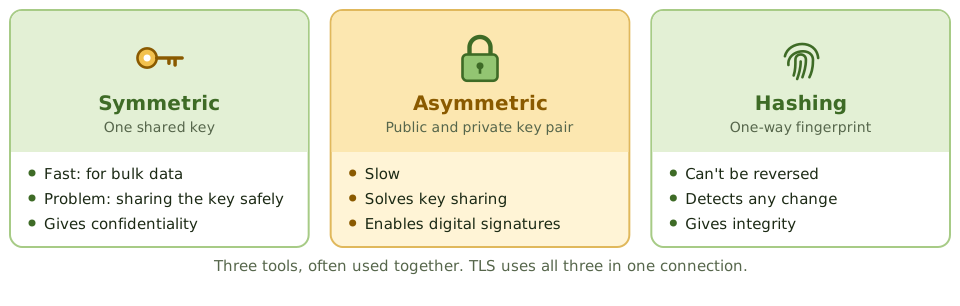
The cryptography program
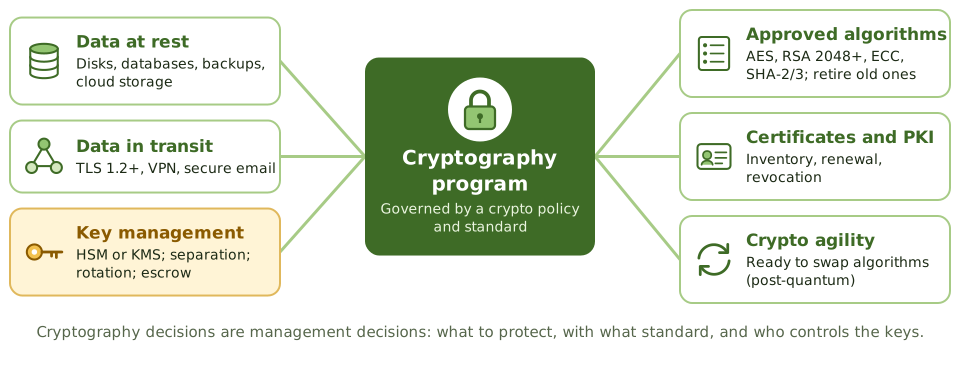
Key management
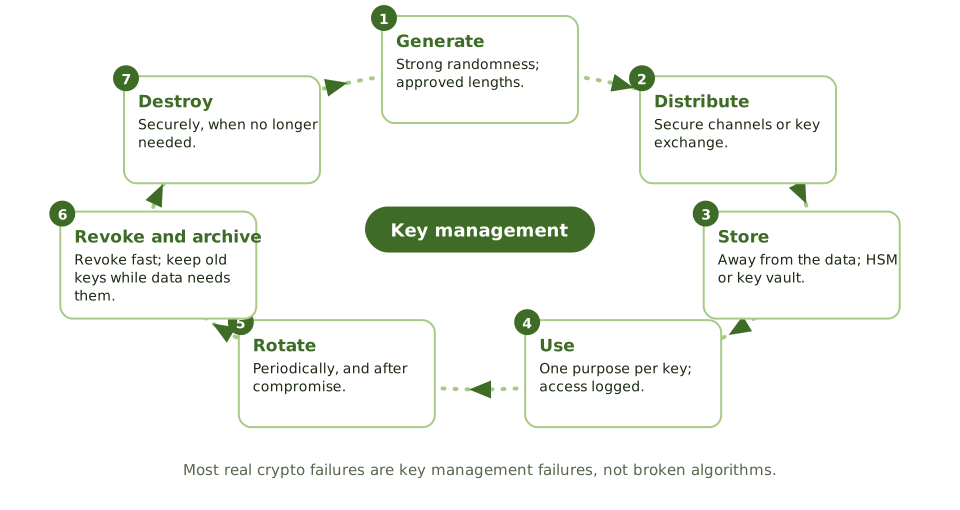
Preparing for change
How the exam asks about it
| If the question asks… | Answer |
|---|---|
| Most common weakness in encryption programs | Key management |
| Where encryption keys should be stored | HSM or KMS, separate from the data |
| What decides where encryption is required | Data classification and risk |
| Control providing non-repudiation | Digital signatures |
| Preparing for post-quantum | Crypto inventory and agility |
Key takeaways
- ✓Cryptography provides confidentiality (encryption), integrity (hashing, MACs), authentication and non-repudiation (digital signatures).
- ✓A cryptography policy and standard set where encryption is required, which algorithms and key lengths are approved, and how keys are managed.
- ✓Key management is where most crypto fails: keys belong in HSMs or key management services, separate from the data, with controlled access and rotation.
- ✓Encryption follows classification: required for confidential data at rest and in transit, and for portable devices.
- ✓Certificates need an inventory and renewal process; expired certificates cause outages.
- ✓Crypto agility, the ability to swap algorithms, prepares for deprecated algorithms and post-quantum migration.
Exam traps
- !Encryption without good key management gives little protection.
- !Keys stored with the encrypted data protect almost nothing if the system is breached.
- !Encryption gives confidentiality; non-repudiation needs digital signatures.
- !Escrowing signing keys undermines non-repudiation; escrow is for encryption keys.
Security Testing: Scanning, Pen Testing and Tracking Remediation
How the security manager plans a security testing program (scans, reviews, penetration tests, red teams), authorises tests properly, and makes sure findings get fixed.
Prove it, don't assume it
Controls that look good on paper can fail in practice. Security testing gives evidence of how the organisation would fare against a real attacker. The security manager plans a program of tests that matches the risk, gets them authorised, and makes sure findings are fixed.
Types of testing
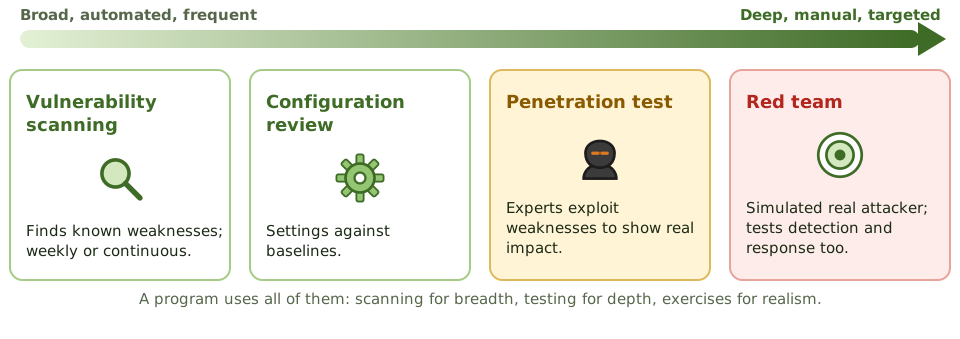
Scanning vs penetration testing
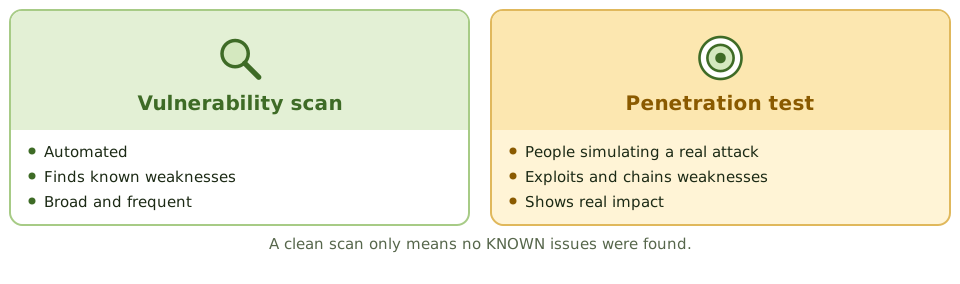
Authorisation and planning
Fixing what's found
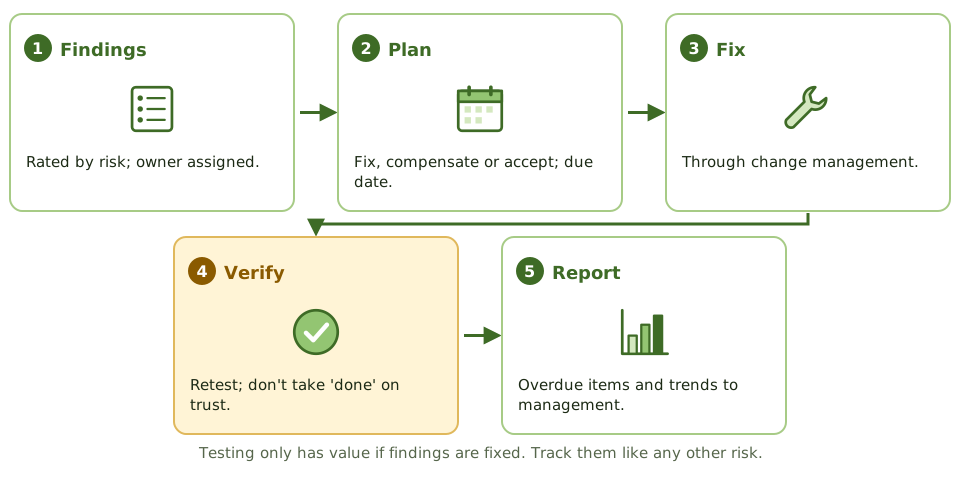
How the exam asks about it
| If the question asks… | Answer |
|---|---|
| Most important requirement before a pen test | Written management authorisation and agreed scope |
| Test that also checks detection and response | Red team exercise |
| How to decide testing frequency | By risk and after significant change |
| How to confirm a finding is fixed | Retest / verify |
| Main purpose of security testing | Evidence of control effectiveness |
Key takeaways
- ✓A testing program combines vulnerability scanning (breadth), configuration review, penetration testing (depth) and red teaming (realism).
- ✓Penetration testing exploits weaknesses to show real impact; red teaming also tests detection and response.
- ✓Every test needs written authorisation from management with scope and rules of engagement.
- ✓Testing is risk-based: higher-risk systems are tested more often and more deeply, and after major change.
- ✓Findings are tracked like risks: owner, plan, due date, retest to verify.
- ✓Test results feed control evaluation, metrics, the risk register and the roadmap.
Exam traps
- !Testing without written authorisation can be illegal and disruptive.
- !A clean scan doesn't mean the system is secure.
- !Findings closed without retesting may not be fixed.
- !Testers shouldn't fix what they find during the test; they report it.
Security Awareness Program Design
How the security manager designs an awareness program that changes behaviour: starting from human risk, setting measurable objectives, using varied delivery and measuring outcomes rather than attendance.
People as a control
Many incidents start with a person: clicking a link, sharing a password, sending a file to the wrong address. But people also spot and report attacks no tool would catch. Awareness turns the workforce from the weakest link into an early-warning network.
The program cycle
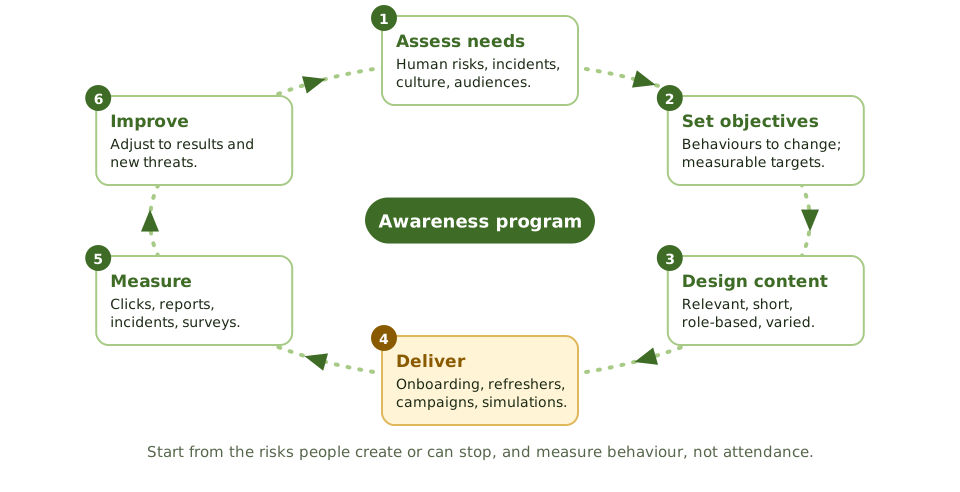
Delivery through the year
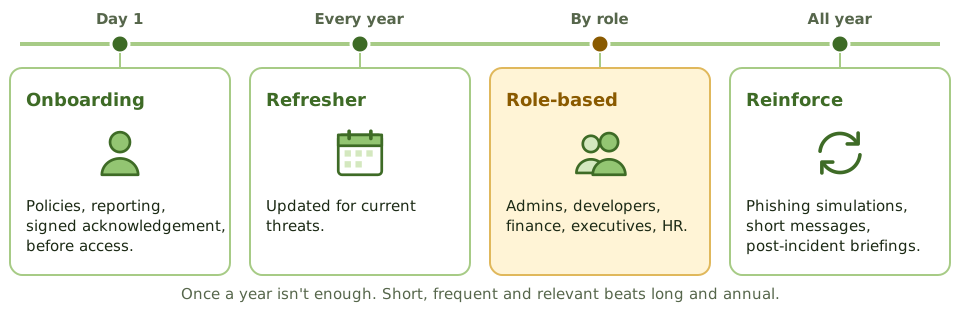
Measure behaviour, not attendance
| Activity measure (weak) | Behaviour measure (strong) |
|---|---|
| Training completion rate | Phishing simulation report rate |
| Hours of training delivered | Click rate trend on simulations |
| Posters displayed | Incidents caused by user error |
| Quiz pass rate | Time from phishing email to first report |
What makes it work
How the exam asks about it
| If the question asks… | Answer |
|---|---|
| Best measure of awareness effectiveness | Behaviour change (e.g. reporting rate, fewer incidents) |
| First step in designing awareness | Assess the human risks and audiences |
| When new staff should be trained | At onboarding, before access |
| Most important success factor | Senior management support and participation |
| Staff who report mistakes | Encourage; no-blame culture |
Key takeaways
- ✓Establishing, promoting and maintaining an awareness and training program is a CISM task; people are both a major risk and a strong control.
- ✓Design starts from the human risks: which behaviours cause incidents, and which behaviours can stop them.
- ✓Objectives are behavioural and measurable, such as 'raise phishing report rate to 70%'.
- ✓Content is relevant, short, frequent, varied and tailored to audiences; onboarding before access, then regular reinforcement.
- ✓Measure behaviour (reporting, click rates, incidents, policy exceptions), not completion rates alone.
- ✓Senior management participation and a no-blame reporting culture make awareness work.
Exam traps
- !Annual compliance training alone rarely changes behaviour.
- !100% completion says nothing about effectiveness.
- !Generic content ignores the risks of specific roles.
- !Shaming people who click discourages reporting, which is the behaviour you want most.
Role-Based Security Training
Why different roles need different training, what to cover for executives, finance, IT, developers and others, and how the security team keeps its own skills current.
One size doesn't fit all
A receptionist, a payroll clerk, a database administrator and the CEO face very different threats and hold very different powers. Role-based training puts the most effort where a mistake would do the most damage.
Training by role
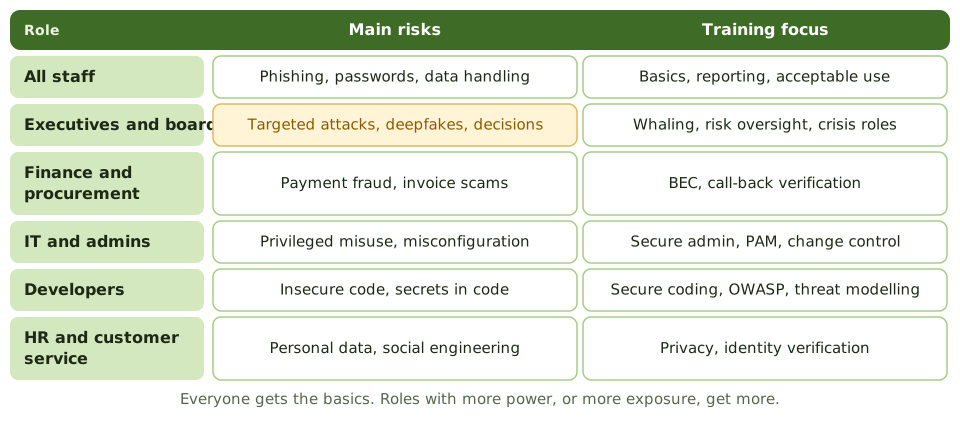
Executives and the board
- 1How they're targeted: whaling, deepfakes, impersonation.
- 2Their governance duties: risk appetite, oversight, approval.
- 3Their role in a crisis: decisions, communications, regulators.
- 4Short, scenario-based sessions; tabletop exercises.
Developing the security team
How the exam asks about it
| If the question asks… | Answer |
|---|---|
| Why role-based training | Addresses role-specific risks and privileges |
| Training for finance staff | Payment fraud and business email compromise |
| Training for developers | Secure coding |
| Executives skip training | Senior management must take part; they're targets |
| Source of training needs | Risk assessments, incidents, audits, role changes |
Key takeaways
- ✓Everyone needs basic awareness; roles with more privilege or exposure need targeted training.
- ✓High-risk roles include executives (targeted attacks), finance (payment fraud), IT administrators (privileged access), developers (secure code) and staff handling personal data.
- ✓Executives and board members need training on their oversight duties and crisis roles, as well as on being targets.
- ✓The security team itself needs ongoing technical training and certifications to keep pace with threats.
- ✓Training needs come from risk assessments, incidents, audits and role changes.
- ✓Completion and effectiveness are tracked per role; people moving roles get the new role's training.
Exam traps
- !One generic course for everyone misses the biggest role-specific risks.
- !Executives are often exempted from training but are prime targets.
- !Developers without secure coding training repeat the same vulnerabilities.
- !Training the security team is part of the program budget, not a perk.
Phishing Simulations and Social Engineering Defences
How social engineering works on people, how to run phishing simulations that teach rather than shame, and the layered technical and process defences that back up awareness.
Hacking the human
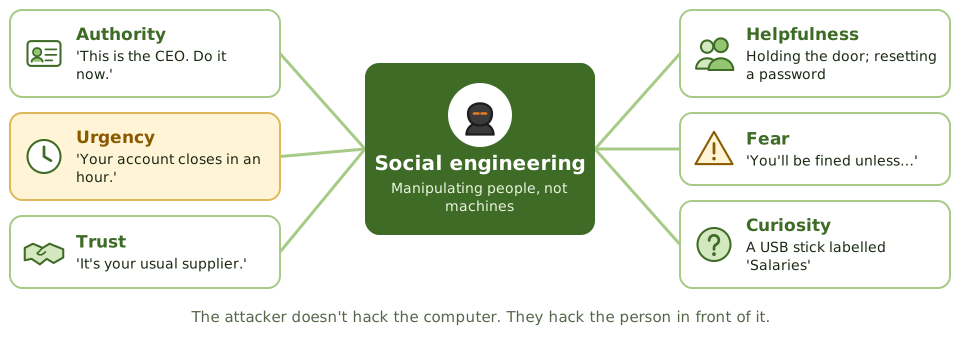
Running simulations well
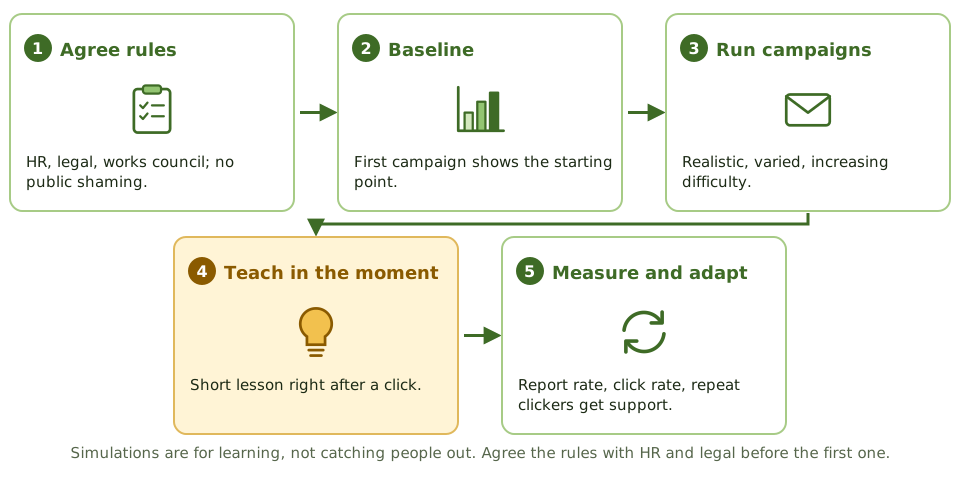
Click rate vs report rate
Layered defences
| Layer | Controls |
|---|---|
| Technical | Email filtering, sandboxing, DMARC/SPF/DKIM, phishing-resistant MFA |
| Process | Call-back on known numbers, dual approval for payments and bank changes |
| People | Awareness, simulations, easy reporting |
How the exam asks about it
| If the question asks… | Answer |
|---|---|
| Main purpose of phishing simulations | Measure and improve user behaviour |
| Best indicator of a healthy reporting culture | Rising report rate and speed |
| Best control against business email compromise | Independent verification and dual approval |
| Most effective control against social engineering | Security awareness, backed by technical and process controls |
| Simulation results used to shame staff | Wrong; it undermines reporting |
Key takeaways
- ✓Social engineering exploits trust, authority, urgency, fear, helpfulness and curiosity rather than technical flaws.
- ✓Phishing simulations measure and improve how people respond; the report rate matters more than the click rate.
- ✓Run simulations with agreed rules (HR, legal), realistic content, immediate teaching and no public shaming.
- ✓Awareness is backed by technical controls (email filtering, DMARC, phishing-resistant MFA) and process controls (call-back verification, dual approval).
- ✓Business email compromise and deepfake impersonation are best stopped by verification procedures, not training alone.
- ✓Repeat clickers get extra support; persistent deliberate disregard goes through the normal disciplinary process.
Exam traps
- !Click rate alone is a misleading measure; report rate and speed show a healthy culture.
- !Simulations used to punish people destroy trust and reporting.
- !Calling the number in a suspicious email isn't independent verification.
- !Training can't be the only defence; layer technical and process controls.
Third-Party Risk Management and Due Diligence
How the security manager governs the risk of suppliers and service providers: tiering, due diligence, contractual requirements, monitoring and exit, scaled to each supplier's risk.
Your risk, their hands
Most organisations rely on dozens or hundreds of suppliers: cloud platforms, payroll, IT support, marketing agencies. Each one that touches data or systems carries part of the organisation's risk. Many major breaches start at a supplier.
The third-party life cycle
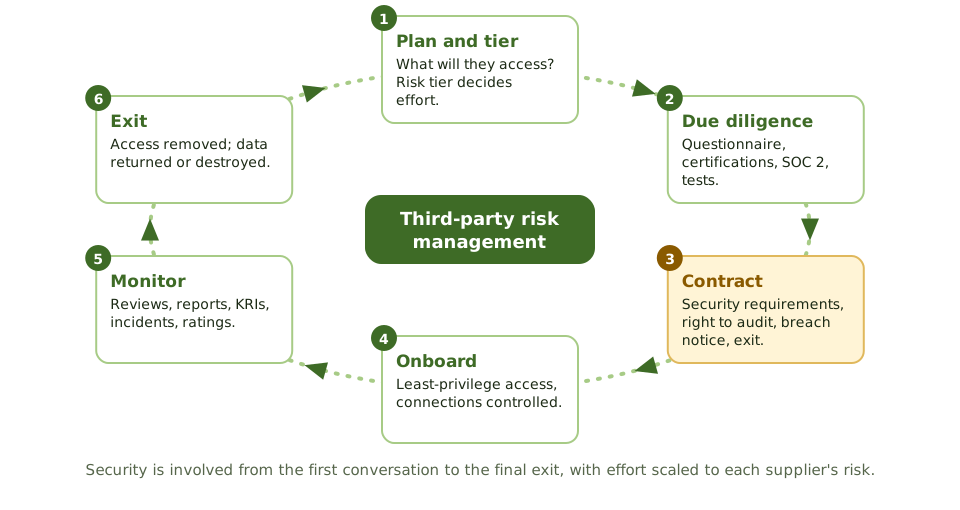
Tier suppliers by risk
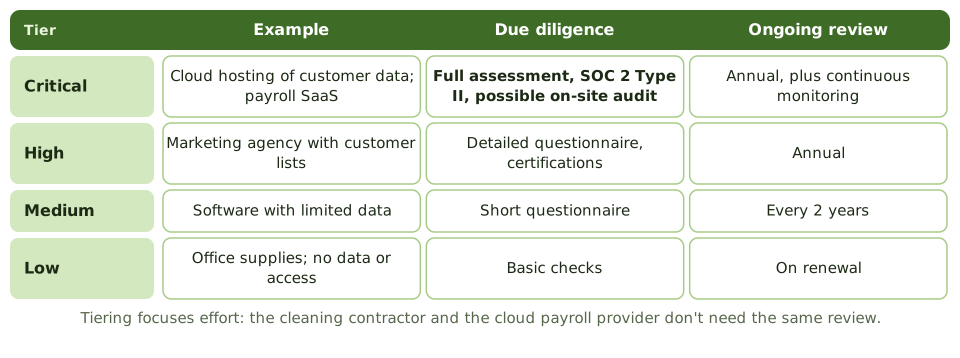
Due diligence evidence
| Evidence | Gives you |
|---|---|
| Security questionnaire | Supplier's own description; needs verification |
| ISO 27001 certificate | Management system certified, for the stated scope |
| SOC 2 Type II report | Independent testing of controls over a period |
| Penetration test summary | Evidence of testing and remediation |
| On-site or remote audit | Direct verification (right to audit) |
Monitoring throughout
- 1Periodic reassessment by tier.
- 2Breach and incident notification within agreed times.
- 3Review of new SOC reports and certificates.
- 4Security ratings and threat intelligence on suppliers.
- 5Access reviews for supplier accounts.
How the exam asks about it
| If the question asks… | Answer |
|---|---|
| When to assess a supplier's security | Before signing the contract |
| How to focus third-party effort | Tier suppliers by risk |
| Best independent assurance over a provider | SOC 2 Type II report, checked for scope |
| Who is accountable after outsourcing | The organisation |
| Supplier risk changes mid-contract | Reassess and act under the contract |
Key takeaways
- ✓Management of external services (providers, suppliers, third and fourth parties) is a named CISM topic; outsourcing work doesn't outsource accountability.
- ✓Third-party risk management covers the whole life cycle: plan and tier, due diligence, contract, onboard, monitor, exit.
- ✓Tiering by risk (data access, criticality, connectivity) scales effort so critical suppliers get the most scrutiny.
- ✓Due diligence uses questionnaires, certifications (ISO 27001), SOC 2 reports, evidence review and sometimes audits.
- ✓Monitoring continues throughout: periodic reviews, incident notification, performance against security requirements.
- ✓Integrating security requirements into contracts and monitoring third parties' adherence are CISM tasks.
Exam traps
- !Due diligence happens before the contract is signed, not after.
- !A supplier's certificate must cover the services you actually use.
- !Assessing every supplier the same way wastes effort and misses critical ones.
- !The organisation stays accountable for its data and customers, whatever the contract says.
Vendor Contracts, SLAs and Right to Audit
How to build security into supplier contracts: requirements, right to audit, breach notification, data handling, service levels and exit, so they can be enforced later.
Write it in, before signing
Once a contract is signed, the organisation's leverage drops sharply. Security requirements, audit rights and breach notification duties have to be agreed before signature, which is why security must be part of procurement from the start.
Key security clauses
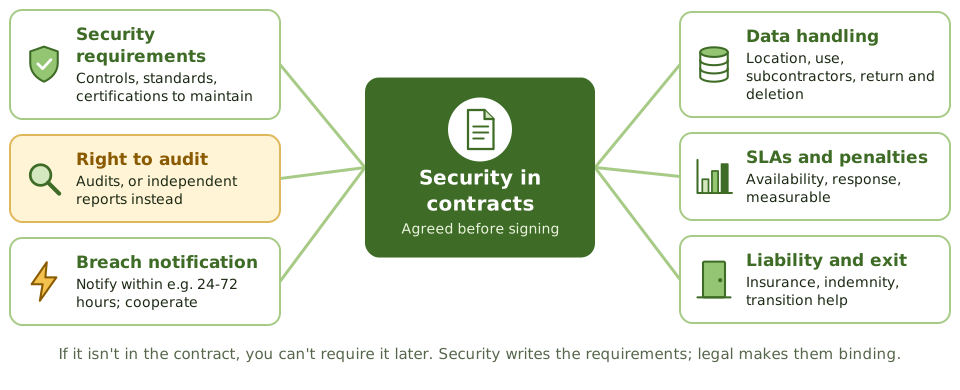
Measurable service levels
| SLA | Example target |
|---|---|
| Availability | 99.9% per month, measured by customer monitoring |
| Security incident notification | Within 24 hours of detection |
| Critical vulnerability remediation | Within 14 days |
| Access removal for leavers | Within 1 business day |
| Evidence | Annual SOC 2 Type II report |
Right to audit, in practice
How the exam asks about it
| If the question asks… | Answer |
|---|---|
| Most important clause for verifying controls | Right to audit |
| When to agree security requirements | Before the contract is signed |
| Large cloud provider won't allow audits | Rely on independent reports, checked for scope |
| SLA requirement | Measurable and monitored |
| Clause protecting data at the end | Exit: return or destruction of data |
Key takeaways
- ✓Security requirements must be written into the contract before signing; they're hard to add later.
- ✓Key clauses: security requirements and certifications, right to audit, breach notification, data handling and location, subcontractor approval, SLAs, liability and exit.
- ✓A right-to-audit clause lets the organisation, its auditors and regulators verify controls; large providers may offer independent reports instead.
- ✓SLAs must be measurable, monitored and backed by consequences; security-related SLAs include incident response and patch times.
- ✓Exit clauses cover return or destruction of data, transition assistance and access removal.
- ✓Monitoring external parties' adherence to these requirements is a CISM task; contracts are only as good as their enforcement.
Exam traps
- !Without a right-to-audit clause, you only see what the supplier chooses to show.
- !An SLA that can't be measured can't be enforced.
- !Penalties compensate for failures; they don't fix the security risk.
- !Missing exit terms leave data with the supplier after the relationship ends.
Fourth-Party and Supply Chain Risk
Risk that comes from your suppliers' suppliers, concentrations on shared providers, and compromised software, and what a security manager can realistically do about it.
The chain behind the supplier
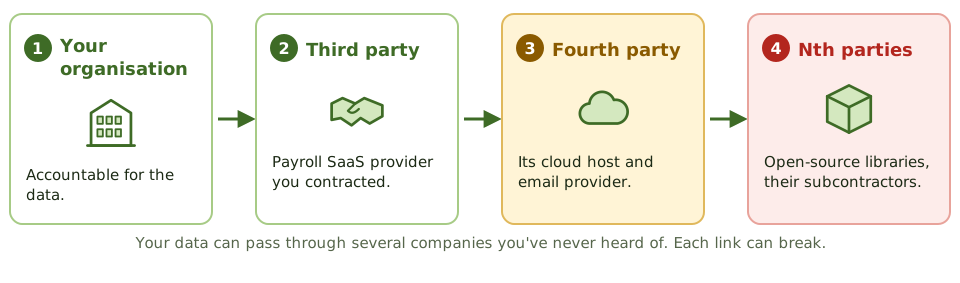
Four kinds of supply chain risk
What you can do
| Risk | Control |
|---|---|
| Unknown subcontractors | Disclosure and approval of material subcontractors; flow-down clauses |
| Compromised software | SBOMs, trusted sources, signed updates, monitoring, segmentation |
| Concentration | Map dependencies; diversify or plan alternatives for critical services |
| Supplier failure | Continuity requirements, escrow, exit plans |
An example
Knowing your dependencies before an incident is what makes a fast response possible.
How the exam asks about it
| If the question asks… | Answer |
|---|---|
| Your supplier's subcontractor | Fourth party |
| Best way to manage fourth-party risk | Require suppliers to manage and disclose their subcontractors |
| Many services depend on one provider | Concentration risk |
| Control for compromised software components | SBOM and dependency monitoring |
| Plan for critical supplier failure | Continuity and exit planning |
Key takeaways
- ✓Fourth parties are your suppliers' suppliers; your data and services may depend on companies you've never contracted.
- ✓Supply chain attacks compromise one trusted supplier or software product to reach many victims.
- ✓Concentration risk arises when many critical services depend on the same provider.
- ✓Controls: require suppliers to disclose and manage their subcontractors, flow down security requirements, and approve material changes.
- ✓For software, use SBOMs, trusted sources, signed updates and monitoring of vendor advisories.
- ✓Plan for supplier failure: continuity arrangements, alternatives and exit plans for critical dependencies.
Exam traps
- !Assessing only direct suppliers leaves the wider chain invisible.
- !Signed, trusted updates can still be malicious if the vendor itself is compromised; layer detection too.
- !Diversifying providers reduces concentration risk but adds complexity and cost.
- !You can't audit every fourth party; require your suppliers to manage theirs.
Outsourcing and Managed Security Services
When outsourcing security functions makes sense, what managed security providers typically do, and how the organisation keeps accountability and control.
Why outsource security?
Running a 24x7 security operations centre needs at least eight to ten skilled analysts, plus tools and threat intelligence. For many organisations, a managed service gives better coverage for less money. The question is how to outsource the work without losing control.
What's commonly outsourced
| Service | Why |
|---|---|
| SOC monitoring / MDR | 24x7 coverage, analysts, threat intelligence |
| Vulnerability scanning | Tools and expertise as a service |
| Penetration testing | Independence and specialist skills |
| Incident response retainer | Experts on call for major incidents |
| Security awareness platforms | Content and simulation tools |
Who does what
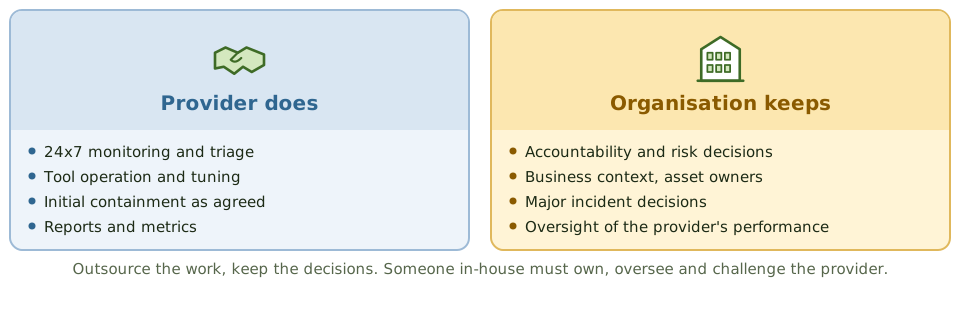
Making it work
- 1A RACI agreed for detection, escalation and containment.
- 2Measurable SLAs: time to detect, notify and contain.
- 3Business context shared: critical assets, owners, normal patterns.
- 4Regular service reviews with metrics and sample checks.
- 5Exit terms: logs, rules and knowledge transferable.
How the exam asks about it
| If the question asks… | Answer |
|---|---|
| Main benefit of an MSSP | 24x7 coverage and scarce skills |
| Who is accountable after outsourcing | The organisation |
| Most important thing to keep in-house | Oversight, decisions and business context |
| How to measure the provider | SLAs and regular service reviews |
| Plan before signing | Exit and transferability of data and rules |
Key takeaways
- ✓Managed security service providers (MSSPs) and MDR services offer 24x7 monitoring, scarce skills and scale that many organisations can't build.
- ✓Commonly outsourced: SOC monitoring, managed detection and response, vulnerability scanning, penetration testing, incident response retainers.
- ✓Accountability, risk decisions and business context stay with the organisation.
- ✓Clear responsibilities (RACI), measurable SLAs, escalation paths and reporting are agreed in the contract.
- ✓Keep in-house expertise to manage the provider, interpret results and make decisions.
- ✓Plan for exit: data, logs, detection rules and knowledge must be transferable.
Exam traps
- !Outsourcing a function doesn't outsource accountability for it.
- !A provider without business context can't judge which alerts matter; give them it.
- !Without in-house oversight, poor provider performance goes unnoticed.
- !Lock-in: if detection rules and logs belong to the provider, leaving is painful.
Security Stakeholder Communication
How the security manager plans communication with every stakeholder group, tailors the message, and uses communication to build support for the program.
Communication is part of the program
Security depends on people far outside the security team: executives who fund it, owners who decide risk, IT teams who run controls, staff who follow policy. Communication is how the security manager gets them all pulling the same way.
Plan by stakeholder
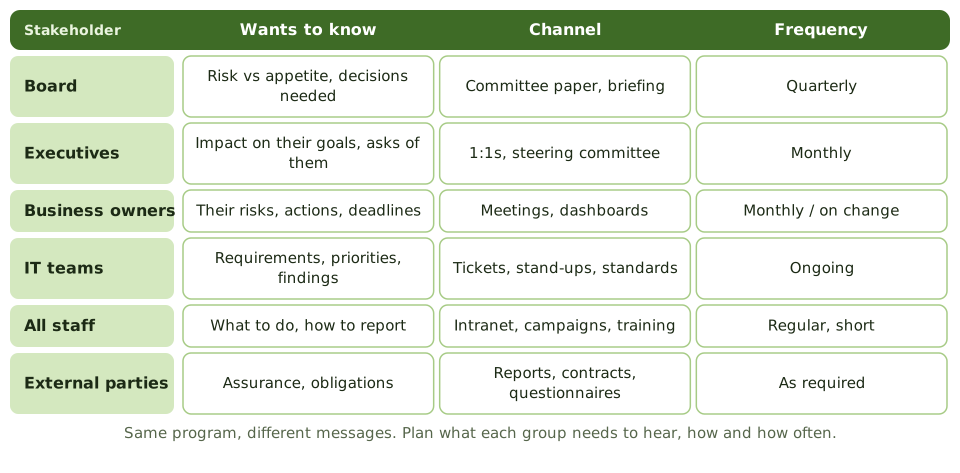
Making messages land
Listen as well as tell
- 1Regular conversations with business leaders.
- 2Feedback from awareness campaigns and surveys.
- 3Security champions as two-way channels.
- 4Post-incident reviews with affected teams.
How the exam asks about it
| If the question asks… | Answer |
|---|---|
| First step in a communication plan | Identify stakeholders and their needs |
| Best way to communicate with executives | Business impact, in business terms, with clear asks |
| Purpose of two-way communication | Understand business needs and obstacles |
| Staff ignore security messages | Make them relevant; find the cause |
| What builds credibility | Consistent, honest, timely communication |
Key takeaways
- ✓Program communications and reporting is a named CISM topic: the program succeeds only if stakeholders understand and support it.
- ✓A communication plan identifies stakeholders, what each needs to know, the channel, frequency and owner.
- ✓Tailor messages: business impact and decisions for executives, actions for owners, practical guidance for staff.
- ✓Communication is two-way: listening to the business reveals needs, pain points and risks.
- ✓Use plain language and real examples; avoid jargon and fear.
- ✓Consistent, honest communication builds the credibility that wins resources and cooperation.
Exam traps
- !One technical report sent to everyone serves nobody.
- !Communicating only during incidents makes security look like bad news.
- !Fear-based messaging wins attention once and trust never.
- !Ignoring feedback from the business leads to controls people work around.
Executive Dashboards and Board Reporting
How to report on the security program's effectiveness to executives and the board: one-page dashboards, trends, progress against the strategy, and the decisions leaders need to take.
What leaders need
Directors and executives have limited time and many topics. They need to know three things: are we within our risk appetite, is the program delivering what we approved, and what do you need from us? Everything else is supporting detail.
A one-page board view
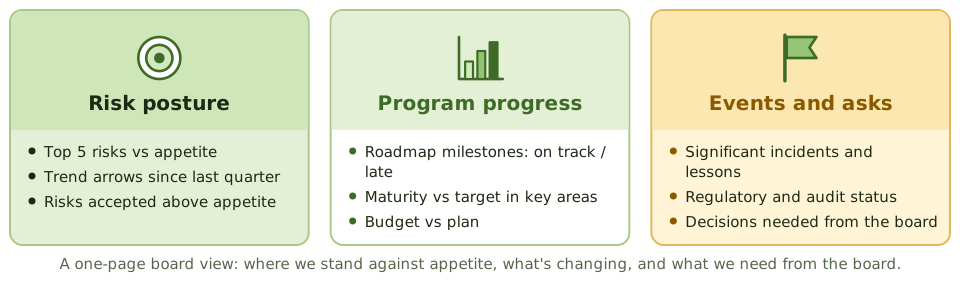
Effectiveness, not activity
| Activity (avoid at board level) | Effectiveness (use) |
|---|---|
| '2.3 million attacks blocked' | 'Ransomware risk reduced from High to Medium' |
| '412 patches deployed' | 'Critical exposure window down from 30 to 6 days' |
| 'Training completed by 98%' | 'Phishing report rate up from 15% to 60%' |
| 'New SIEM installed' | 'Time to detect intrusions down from weeks to hours' |
Design principles
How the exam asks about it
| If the question asks… | Answer |
|---|---|
| Most important content for the board | Risk vs appetite and decisions needed |
| Best way to show program effectiveness | Trends in outcomes against objectives |
| Board-level metric | Business-linked outcomes, not technical counts |
| Program is behind plan | Report it honestly with a recovery plan |
| Format for executives | Concise dashboard with detail available |
Key takeaways
- ✓Preparing and presenting reports on program activities, trends and overall effectiveness is a CISM task.
- ✓Board and executive reporting focuses on risk posture against appetite, program progress, significant events and decisions needed.
- ✓Dashboards show trends and status at a glance, with detail available underneath for those who want it.
- ✓Report effectiveness (risk reduced, maturity improved, objectives met), not just activity.
- ✓Be honest about problems and setbacks; credibility is the security manager's most valuable asset.
- ✓Reports should end with clear asks: decisions, approvals or support needed.
Exam traps
- !Technical metrics (blocked attacks, patches deployed) aren't board-level effectiveness measures.
- !A dashboard of green lights with no trends or context gives false comfort.
- !Reporting only good news erodes trust when problems surface.
- !Too much detail buries the message; use one page plus appendix.
Continuous Improvement of the Security Program
How the security program keeps getting better: Plan-Do-Check-Act, the evidence that drives improvement, management review, and keeping the program aligned as the business and threats change.
Never finished
Threats evolve, the business changes, controls degrade and people move on. A security program that stands still slowly falls behind. Continuous improvement builds learning into how the program runs, so it gets better every cycle.
Plan-Do-Check-Act
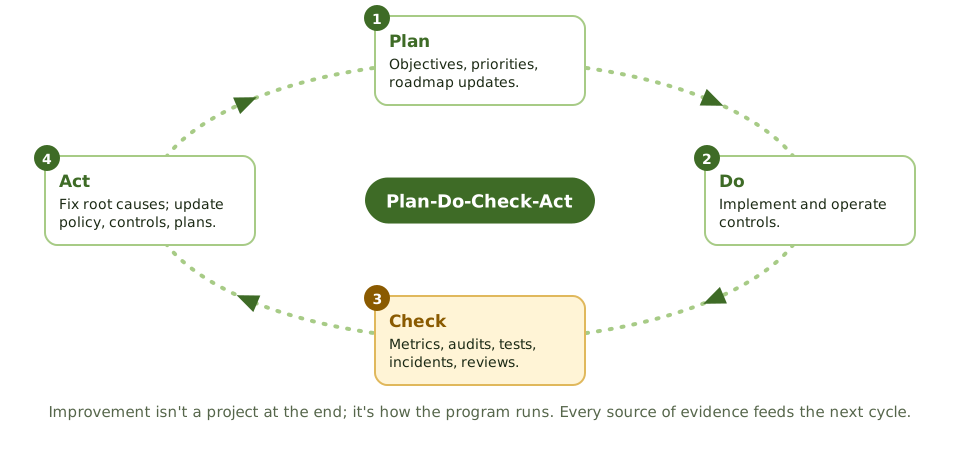
Where improvement comes from
Management review
- 1Held at planned intervals (at least yearly).
- 2Reviews: objectives, metrics, audit results, incidents, risks, changes.
- 3Decides: is the program still suitable, adequate and effective?
- 4Outputs: improvement decisions, resources, updated objectives.
How the exam asks about it
| If the question asks… | Answer |
|---|---|
| Model for continuous improvement | Plan-Do-Check-Act |
| Same finding repeats every year | Fix the root cause |
| Who decides program suitability and effectiveness | Management, through management review |
| When to realign the program | When strategy, appetite, regulation or technology change |
| Proactive source of improvement | Near misses and others' incidents |
Key takeaways
- ✓Continuous improvement follows Plan-Do-Check-Act: plan objectives, do the work, check results, act on what's learned.
- ✓Inputs include metrics, audits, assessments, tests, incidents, near misses, exceptions, stakeholder feedback and changes in threats and the business.
- ✓Management review, as in ISO 27001, periodically decides whether the program is still suitable, adequate and effective.
- ✓Fix root causes, not just symptoms, and track improvement actions to completion.
- ✓The program is re-aligned when the business strategy, risk appetite, regulation or technology changes.
- ✓Mature programs learn from near misses and other organisations' incidents, not only their own.
Exam traps
- !Improvement actions without owners and dates rarely happen.
- !Repeating the same audit finding year after year means the root cause wasn't fixed.
- !Waiting for an incident to drive improvement is reactive and costly.
- !A program aligned to last year's strategy can drift out of alignment without anyone noticing.
Incident Management
Incident readiness · Business continuity · Disaster recovery · Training and testing · Detection and investigation · Containment and communication · Recovery and review
Event vs Incident vs Breach
The vocabulary of incident management: what separates an event from an incident and an incident from a breach, why the distinctions matter legally and operationally, and how incident management differs from business continuity.
Getting the words right
Security teams see millions of events a day. A handful are incidents, and very few are breaches. Using the words precisely decides who gets woken up, which plans start, and when legal deadlines begin.
Three levels
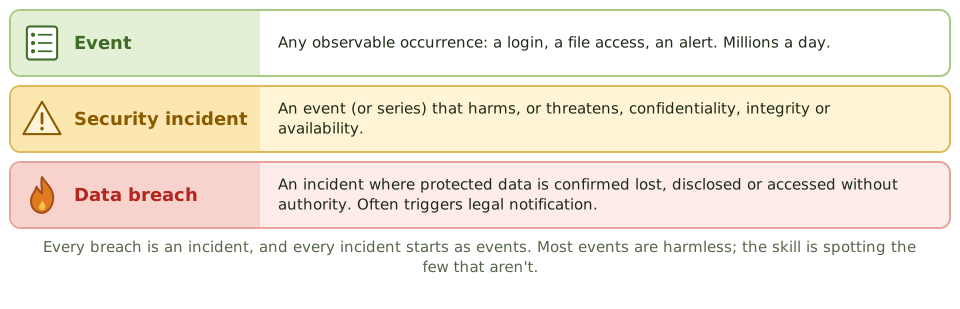
Examples
| Situation | Classification |
|---|---|
| A user mistypes a password twice | Event |
| 10,000 failed logins against one account | Event; possible incident (brute force) |
| Malware found on a laptop and contained | Incident |
| Ransomware encrypts file servers | Incident (major) |
| Attacker exfiltrates customer records | Incident and data breach |
Why the distinctions matter
Incident management vs continuity
- 1Incident management: detect, contain, eradicate, recover, learn.
- 2Business continuity: keep critical processes running during disruption.
- 3Disaster recovery: restore IT systems and data.
- 4A major incident can trigger all three; the plans must link.
How the exam asks about it
| If the question asks… | Answer |
|---|---|
| Any observable occurrence | Event |
| Harm or threat to CIA | Security incident |
| Confirmed unauthorised access to protected data | Data breach |
| Why classify quickly | Escalation and legal deadlines |
| Main goal of incident management | Limit damage and restore normal operations |
Key takeaways
- ✓An event is any observable occurrence; most are harmless.
- ✓A security incident is an event or series of events that harms, or threatens to harm, confidentiality, integrity or availability.
- ✓A data breach is an incident where protected data is confirmed to have been accessed, disclosed or lost without authority; it often triggers legal notification duties.
- ✓Clear definitions decide what gets escalated, who is involved and which clocks start, such as GDPR's 72 hours.
- ✓Incident management aims to limit damage and restore normal operations; business continuity keeps critical processes running during major disruption.
- ✓Domain 4 is 29% of the exam: readiness (plans, BIA, BCP, DRP, classification, testing) and operations (detect, investigate, contain, communicate, recover, review).
Exam traps
- !Not every event is an incident, and not every incident is a breach.
- !Calling something a 'breach' too early can trigger legal consequences; involve legal before declaring one.
- !The notification clock usually starts at awareness of a breach, so classification must be quick.
- !Incident response and business continuity are linked but different plans.
Developing the Incident Response Plan
How the security manager builds an incident response plan: its purpose, contents, the life cycle it supports, and how it aligns with business continuity and disaster recovery plans.
Plan before you need it
Incidents happen at the worst times, under pressure, with incomplete information. A plan agreed in calm conditions tells people what to do, who decides, and who to call, so the first hours aren't wasted arguing.
The incident life cycle
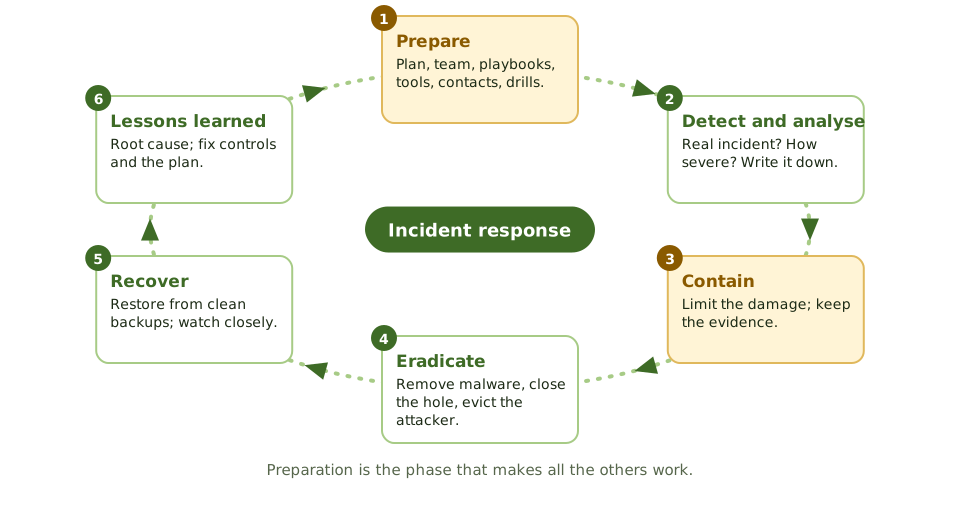
What the plan contains
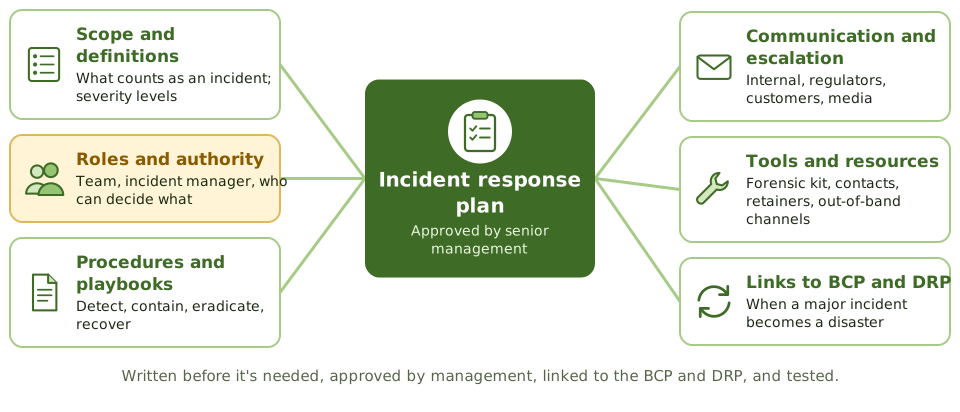
Developing the plan
- 1 Sponsor Senior management commitment
- 2 Inputs Risk assessment, BIA, laws, past incidents
- 3 Draft With IT, legal, HR, comms, business
- 4 Approve Senior management
- 5 Train and test Tabletops, simulations
- 6 Maintain After incidents, tests, changes
Aligning with BCP and DRP
How the exam asks about it
| If the question asks… | Answer |
|---|---|
| Most important phase of incident response | Preparation |
| Who approves the incident response plan | Senior management |
| The IRP must align with… | The BCP and DRP |
| Where to keep plan copies | Accessible offline / out of band |
| When to update the plan | After incidents, tests and significant change |
Key takeaways
- ✓Establishing and maintaining an incident response plan aligned with the BCP and DRP is a CISM task.
- ✓The plan defines scope and definitions, roles and authority, procedures, communication and escalation, tools and resources, and links to BCP and DRP.
- ✓It supports the incident life cycle: prepare, detect and analyse, contain, eradicate, recover, and learn.
- ✓Senior management approves the plan, giving the team the authority it needs during a crisis.
- ✓Preparation is the most important phase: plan, team, tools, contacts and practice before anything happens.
- ✓The plan is tested, reviewed after incidents and exercises, and kept available offline.
Exam traps
- !A plan written during an incident is too late.
- !A plan without defined authority leads to arguments when fast decisions are needed.
- !Storing the only copy on systems an incident could take down makes it useless.
- !The IRP, BCP and DRP must be aligned; a ransomware attack can trigger all three.
Incident Response Team Roles and Authority
Who belongs on the incident response team, what each role does, how teams are structured and staffed, and why authority must be agreed before an incident.
More than a technical team
A serious incident pulls in far more than the security team: lawyers about notification, communications about customers, executives about shutting down revenue-earning systems. The team and its authority are agreed in advance, so nobody has to ask permission at 3 a.m.
Who's on the team
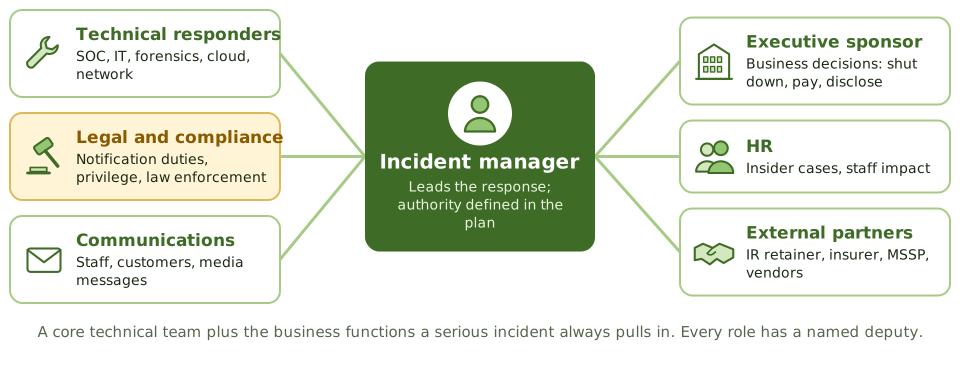
Decide authority in advance
| Decision | Who has authority (example) |
|---|---|
| Isolate an infected server | Incident manager / SOC lead |
| Take a customer-facing service offline | Executive sponsor (or delegate) |
| Notify the regulator | Legal with executive approval |
| Involve law enforcement | Legal and executive sponsor |
| Engage the IR retainer | CISO |
Team models
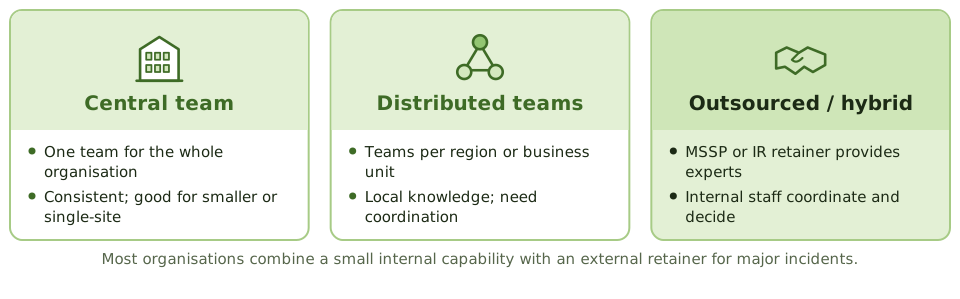
Equipping the team
- 1Named members and deputies with current contact details.
- 2Out-of-band communication (phones, separate chat).
- 3Tools and access ready: EDR, logs, forensics, cloud consoles.
- 4Retainers: IR firm, legal counsel, cyber insurer hotline.
- 5Training and regular exercises.
How the exam asks about it
| If the question asks… | Answer |
|---|---|
| Most important thing to define before an incident | Roles, responsibilities and authority |
| Non-technical members of the IR team | Legal, communications, HR, executive sponsor |
| Benefit of an IR retainer | Expert help available quickly in major incidents |
| Contact lists should be… | Current and accessible out of band |
| Who leads the response | The incident manager |
Key takeaways
- ✓Organising, training, equipping and assigning responsibilities to incident response teams is a CISM task.
- ✓The team includes an incident manager, technical responders and business functions: legal, communications, HR, an executive sponsor and external partners.
- ✓Authority must be defined in advance: who can isolate systems, shut down services, call law enforcement or approve notifications.
- ✓Team models: central, distributed, or hybrid with an external IR retainer for major incidents.
- ✓Every role needs a named deputy and up-to-date contact details, including out-of-band channels.
- ✓Equip the team before incidents: tools, access, forensic capability, retainers and documentation.
Exam traps
- !Without pre-agreed authority, containment is delayed while people argue.
- !Incident response isn't only technical; legal and communications are core members.
- !Contact lists stored only in email or chat fail if those systems are compromised.
- !An IR retainer arranged during an incident costs more and arrives later.
Incident Classification and Severity Levels
How incidents are categorised by type and rated by severity, so the right people respond at the right speed, and how classification supports reporting and trend analysis.
Why classify?
Not every incident deserves a midnight call to the CEO, and some do. Classification decides how fast to respond, who gets involved and who must be told. Agreed in advance, it removes guesswork when the clock is running.
Severity levels
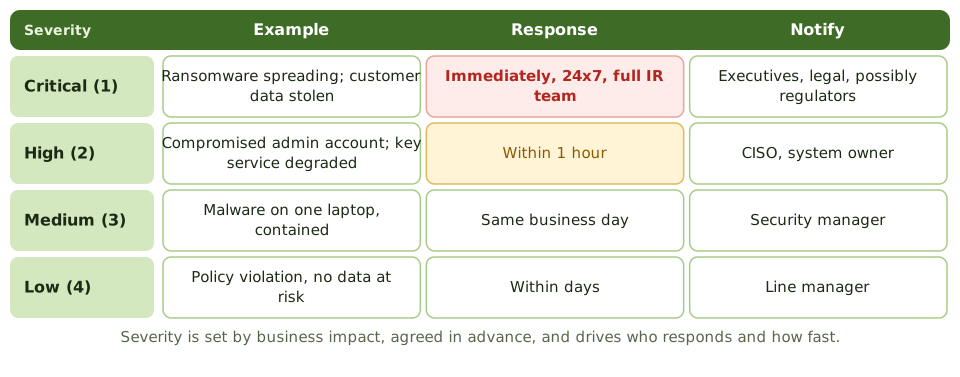
What drives severity
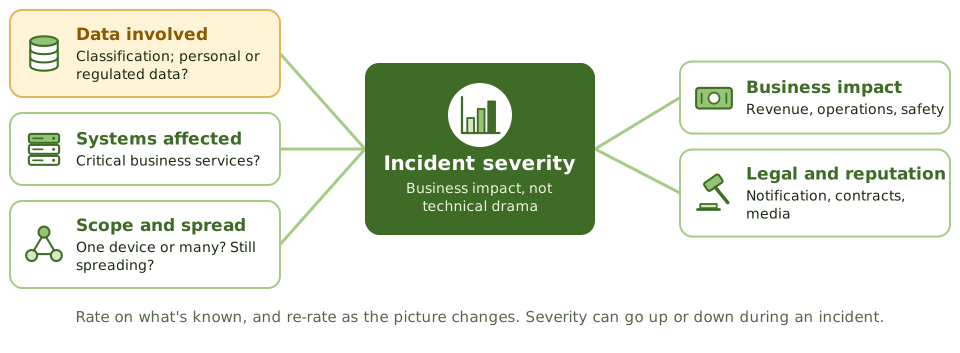
Categories
| Category | Examples |
|---|---|
| Malware | Ransomware, trojans, worms |
| Unauthorised access | Compromised accounts, intrusions |
| Data loss or leakage | Misdirected email, exfiltration, lost device |
| Denial of service | DDoS, resource exhaustion |
| Insider misuse | Abuse of legitimate access |
| Physical | Theft of equipment, unauthorised entry |
Re-rate as facts emerge
Severity is a live judgement, reviewed at each update.
How the exam asks about it
| If the question asks… | Answer |
|---|---|
| Main basis for incident severity | Business impact |
| Why define severity levels in advance | Consistent, timely response and escalation |
| New facts show greater impact | Re-classify and escalate |
| Benefit of consistent categories | Trend analysis and reporting |
| What severity determines | Response time, responders, notifications |
Key takeaways
- ✓Establishing and maintaining an incident classification and categorisation process is a CISM task.
- ✓Categories describe the type (malware, unauthorised access, data loss, denial of service, insider, physical); severity describes the business impact.
- ✓Severity criteria are agreed in advance: data involved, systems affected, scope and spread, business impact, legal and reputational exposure.
- ✓Each severity level sets response times, who responds, who is notified and when to escalate to BCP or DRP.
- ✓Severity is reassessed as facts emerge; incidents can be upgraded or downgraded.
- ✓Consistent categories make trend analysis and reporting possible.
Exam traps
- !Severity is about business impact, not how technically interesting an incident is.
- !Rating an incident once and never revisiting it leads to under-response.
- !Without agreed criteria, different analysts rate similar incidents differently.
- !Vague categories ('other') make trend analysis useless.
Incident Response Playbooks and Decision Trees
How playbooks translate the incident response plan into specific, repeatable steps for common incident types, with clear decision points, owners and escalation.
From plan to first moves
The incident response plan describes the overall approach. Under pressure, responders need something more concrete: for this type of incident, what do we do first, what do we check, and who decides the hard questions? That's a playbook.
A ransomware playbook
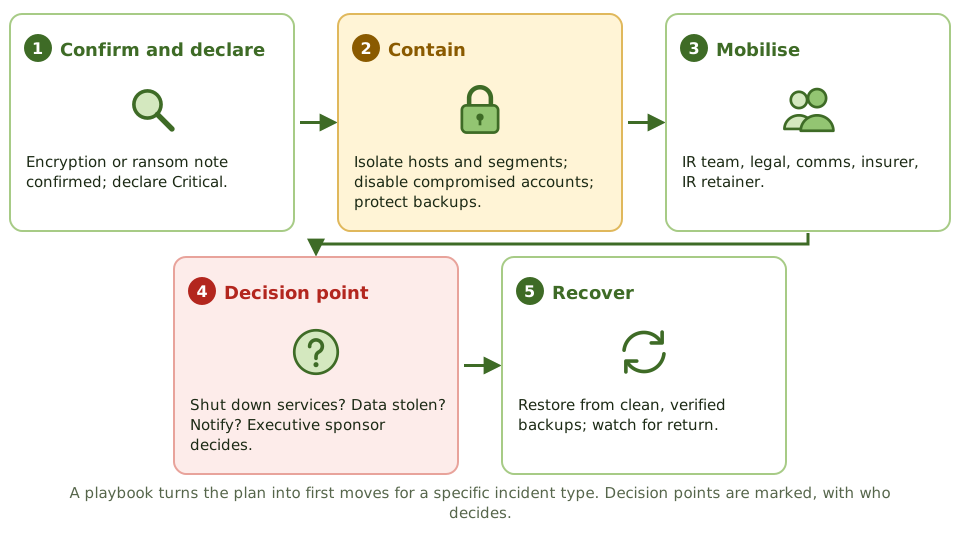
What a playbook contains
Which playbooks first?
| Incident type | Why prioritise |
|---|---|
| Ransomware | High impact; very likely |
| Business email compromise | Common; direct financial loss |
| Compromised account / credentials | Most common initial access |
| Data loss / exfiltration | Legal notification duties |
| Cloud misconfiguration exposure | Common; fast-moving |
Automation with guardrails
- 1SOAR runs routine steps: enrich alerts, block known-bad indicators, open tickets.
- 2Humans decide high-impact actions: shutting down services, notifications.
- 3Automated containment has limits and an override.
How the exam asks about it
| If the question asks… | Answer |
|---|---|
| Document with step-by-step actions for an incident type | Playbook |
| Which playbooks to write first | Most likely and most damaging incident types |
| Benefit of decision trees | Fast, consistent decisions with clear owners |
| Role of SOAR | Automate routine response steps |
| How to keep playbooks effective | Test in exercises; update after use |
Key takeaways
- ✓The plan sets the framework; playbooks give step-by-step actions for specific incident types such as ransomware, phishing, data loss or account compromise.
- ✓Playbooks include triggers, first actions, containment options, decision points with owners, communication steps and recovery criteria.
- ✓Decision trees make hard choices (shut down? notify? involve law enforcement?) quick and consistent.
- ✓Playbooks are prioritised by risk: write them first for the most likely and most damaging incidents.
- ✓Automation (SOAR) can run routine playbook steps, with humans deciding the high-impact ones.
- ✓Playbooks are tested in exercises and updated after every real use.
Exam traps
- !A playbook can't cover every situation; responders still need judgement and the authority to deviate.
- !Untested playbooks fail on details: wrong contacts, missing access, outdated systems.
- !Automating containment without guardrails can cause outages.
- !Playbooks that ignore legal and communication steps leave the organisation exposed.
Escalation and Communication Plans
How the security manager plans incident communications in advance: escalation paths and timings, internal and external audiences, approved templates, and secure channels that still work during an attack.
Decide who talks, before you need to
In an incident, information is incomplete and pressure is high. Without a plan, executives hear about it from the news, staff speculate on social media, and regulators get notified late. A communication plan decides in advance who is told what, when, how and by whom.
Escalation by severity
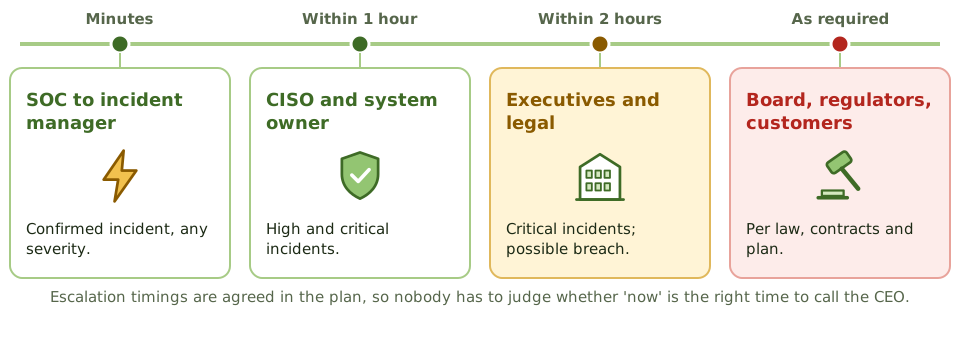
Audiences and owners
| Audience | Owner | Typical content |
|---|---|---|
| Executives and board | CISO / incident manager | Facts, impact, decisions needed |
| Staff | Communications / HR | What to do and not do; don't speculate |
| Regulators | Legal / compliance | Required notifications on time |
| Customers and partners | Communications with legal | What happened, impact, what to do |
| Insurer | Legal / risk | Notice per policy terms |
| Media | Designated spokesperson | Approved statements only |
Prepared and protected
How the exam asks about it
| If the question asks… | Answer |
|---|---|
| Who speaks to the media | Designated, authorised spokespeople |
| Email may be compromised | Use out-of-band communication |
| Why pre-approve templates | Faster, accurate, legally reviewed messages |
| Who handles regulator notification | Legal / compliance, with executive approval |
| Basis for escalation timings | Incident severity, defined in the plan |
Key takeaways
- ✓Establishing and maintaining incident communication plans for internal and external parties is a CISM task.
- ✓Escalation paths and timings are defined by severity, so the right people learn in time without debate.
- ✓Communication plans cover internal audiences (staff, executives, board) and external ones (regulators, customers, partners, insurers, law enforcement, media).
- ✓Pre-approved templates and designated spokespeople speed communication and keep it accurate.
- ✓Out-of-band channels are essential: email and chat may be compromised or down.
- ✓Legal reviews external statements; only authorised people speak externally.
Exam traps
- !Staff shouldn't talk to the media or the attacker unless authorised.
- !Using compromised email to coordinate the response tips off the attacker.
- !Escalating too late can miss legal deadlines and leave leaders blindsided.
- !Silence or inaccurate statements damage trust more than prompt, honest updates.
Business Impact Analysis
How the BIA identifies critical business processes, measures how disruption hurts over time, sets recovery priorities and objectives, and maps the dependencies that recovery needs.
What would hurt most, and how fast?
If everything stopped tomorrow, what would you restore first? The BIA answers that question with evidence. It looks at each business process, asks how damage grows the longer it's down, and turns the answers into recovery priorities everyone agrees on.
The BIA steps
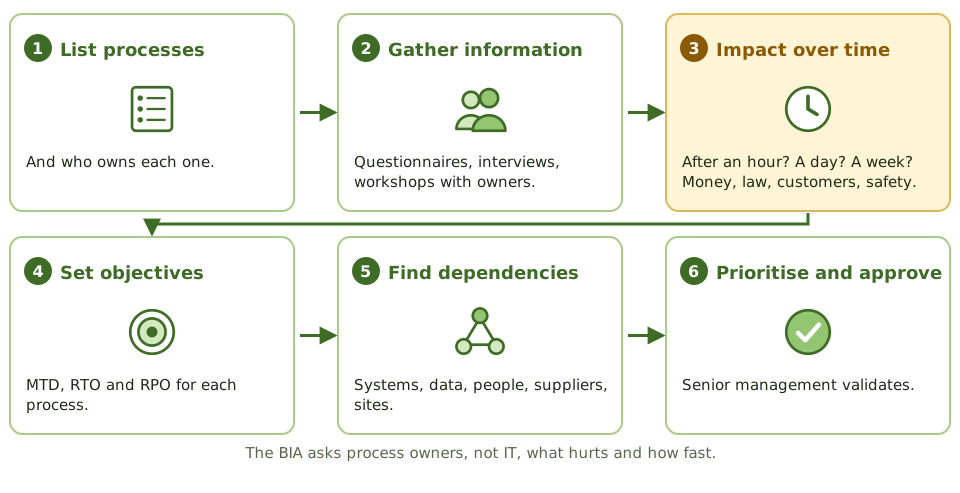
Impact grows over time
| Process | 4 hours | 1 day | 1 week |
|---|---|---|---|
| Online payments | Lost sales 200k | Lost sales 1.2m; complaints | Regulator; customers leave |
| Payroll | None | Minor | Staff unpaid; legal breach |
| Marketing website | None | Minor | Moderate reputation |
Criticality and dependencies
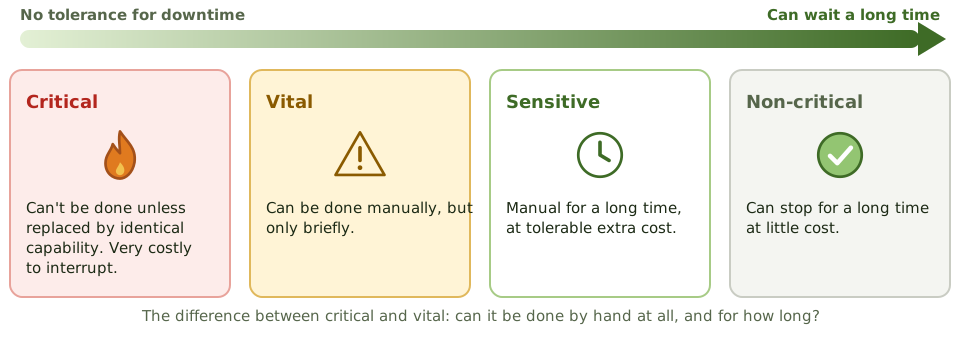
Who provides what
How the exam asks about it
| If the question asks… | Answer |
|---|---|
| Primary purpose of a BIA | Identify critical processes and impact to set recovery priorities |
| Main source of BIA information | Business process owners |
| Outputs used to plan recovery | MTD, RTO and RPO per process |
| BIA vs risk assessment | BIA: impact. Risk assessment: threats and likelihood |
| When to update the BIA | Periodically and after major business change |
Key takeaways
- ✓The business impact analysis (BIA) identifies critical processes, the impact of disruption over time, and the resources they depend on.
- ✓It produces recovery priorities and objectives (MTD, RTO, RPO) that drive incident response, BCP and DRP.
- ✓Impact includes financial loss, regulatory penalties, customer harm, reputation and safety, assessed at intervals (hours, days, weeks).
- ✓Information comes from business process owners, through interviews, questionnaires and workshops; senior management validates the results.
- ✓Dependencies (systems, data, people, suppliers, sites) must be mapped, or recovery stalls.
- ✓The BIA is reviewed periodically and after major business change.
Exam traps
- !The BIA is about business impact, not threats; identifying threats is the risk assessment.
- !Process owners, not IT, are the main source of BIA information.
- !IT systems inherit their recovery priority from the processes they support.
- !A BIA that ignores suppliers and key people produces plans that can't be executed.
RTO, RPO, MTD and Recovery Prioritisation
The recovery objectives that come out of the BIA, what each one drives, and how the security manager balances recovery speed against cost.
Two questions after a disaster
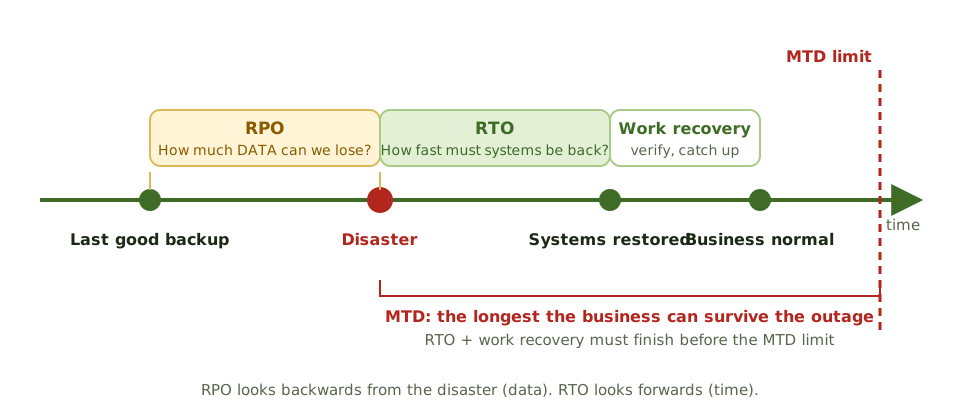
The definitions
| Objective | Meaning | Drives |
|---|---|---|
| RPO | Maximum data loss, in time | Backup and replication frequency |
| RTO | Maximum time to restore | Recovery strategy and site |
| MTD | Longest outage before unacceptable harm | Upper limit for RTO |
| SDO | Service level during recovery | Recovery capacity |
| MTO | Longest time in recovery mode | How long alternate arrangements must last |
Finding the right balance
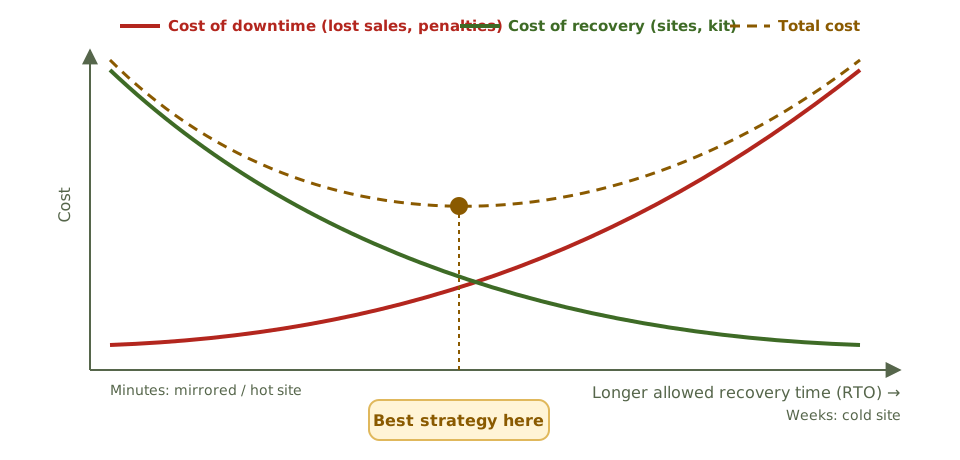
Recovery order
- 1 Foundations Network, identity, DNS, security tools
- 2 Critical apps Lowest RTO first
- 3 Data Restore and reconcile to RPO
- 4 Other services By priority
How the exam asks about it
| If the question asks… | Answer |
|---|---|
| Metric that sets backup frequency | RPO |
| Metric that sets the recovery site type | RTO |
| Relationship of RTO to MTD | RTO must be less than MTD |
| RPO of zero requires | Synchronous replication / mirroring |
| How to choose recovery targets | Balance downtime cost against recovery cost |
Key takeaways
- ✓Recovery point objective (RPO): the maximum acceptable data loss, measured in time; it drives backup and replication frequency.
- ✓Recovery time objective (RTO): the maximum acceptable time to restore a system or process; it drives the recovery strategy and site.
- ✓Maximum tolerable downtime (MTD): the longest a process can be down before damage is unacceptable; RTO must be shorter than MTD.
- ✓Service delivery objective (SDO) is the reduced service level acceptable during recovery; maximum tolerable outage (MTO) is how long you can run in that mode.
- ✓Lower RTO and RPO cost more; the best strategy balances the cost of downtime against the cost of recovery.
- ✓Recovery is prioritised by business criticality, respecting dependencies (identity and network before applications).
Exam traps
- !RPO is about data (how far back); RTO is about time (how fast). Don't swap them.
- !An RPO of zero needs synchronous replication; daily backups give up to 24 hours of loss.
- !Shorter isn't automatically better; targets must be justified by the cost of downtime.
- !Restoring applications before the identity service and network they depend on wastes time.
Business Continuity Planning and Strategies
How business continuity keeps critical processes running through disruption: the BCP life cycle, strategies for losing sites, IT, people or suppliers, and how the BCP fits with incident response and DR.
Keeping the business running
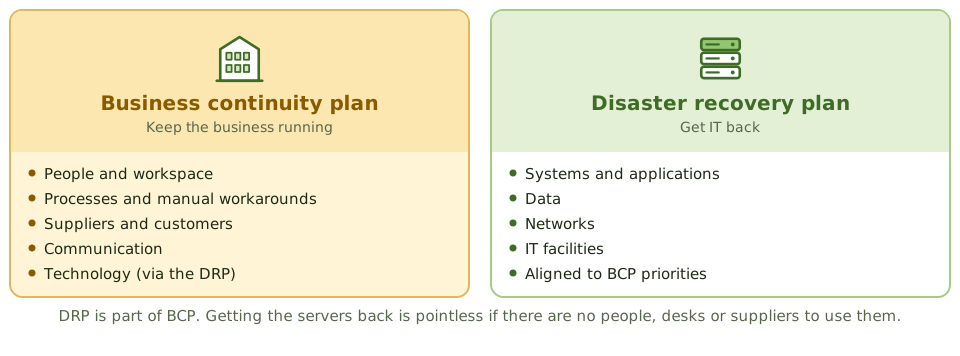
The BCP life cycle
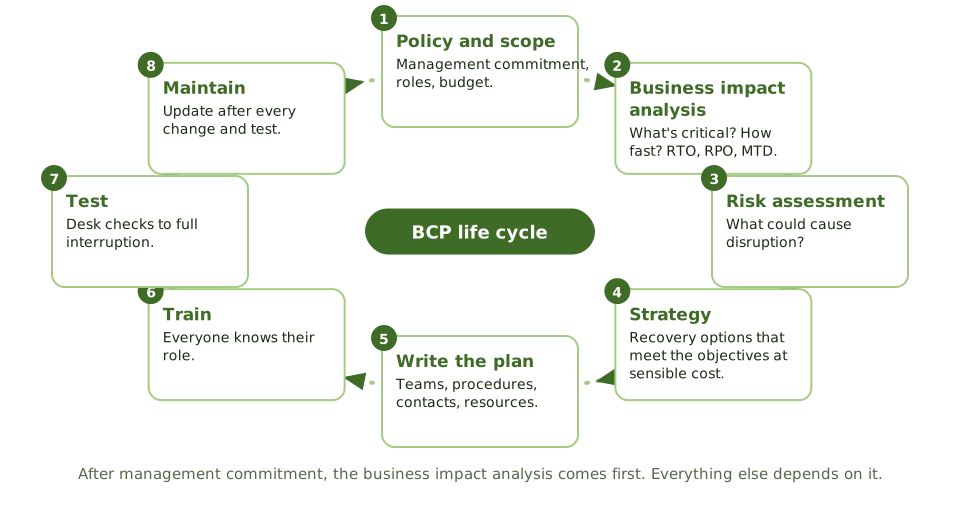
Continuity strategies
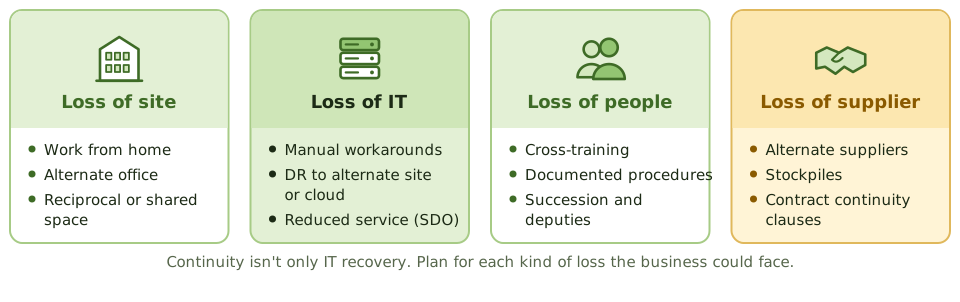
What the plan contains
- 1Activation criteria and who can declare.
- 2Roles, teams and deputies.
- 3Procedures for critical processes, including manual workarounds.
- 4Contact lists: staff, suppliers, customers, authorities.
- 5Resources needed and where to find them.
- 6How to return to normal operations.
An example
Good strategies combine options across site, IT, people and suppliers.
How the exam asks about it
| If the question asks… | Answer |
|---|---|
| First step after management commitment | Business impact analysis |
| Who is accountable for continuity | Senior management |
| BCP vs DRP | BCP: business processes. DRP: IT systems and data |
| Standard for business continuity management | ISO 22301 |
| Most important ongoing activity | Testing and maintenance |
Key takeaways
- ✓Business continuity planning (BCP) keeps critical business processes running, or resumes them, after a disruption; DR focuses on restoring IT.
- ✓The BCP life cycle: policy and scope, BIA, risk assessment, strategy, plan development, training, testing and maintenance.
- ✓Strategies cover loss of site, IT, people and suppliers, chosen to meet the BIA's objectives at acceptable cost.
- ✓Senior management is accountable for continuity; process owners own their recovery requirements.
- ✓The BCP aligns with the incident response plan and DRP, with shared triggers and contacts.
- ✓ISO 22301 is the international standard for business continuity management systems.
Exam traps
- !BCP isn't just IT recovery; people, sites, processes and suppliers count too.
- !The first step after management commitment is the BIA, not choosing a recovery site.
- !A plan that's never tested gives little assurance.
- !Plans stored only on systems that may be down are useless; keep copies accessible offline.
Crisis Management and Continuity Governance
How organisations manage a crisis at executive level: the strategic-tactical-operational structure, the crisis team's decisions, and the governance that keeps continuity plans current.
When an incident becomes a crisis
Most incidents are handled by the IR team. A crisis is different: it threatens the organisation itself, its finances, reputation, safety or licence to operate. Decisions then belong to executives, and they need a structure that lets them decide quickly without getting lost in technical detail.
Three levels of response
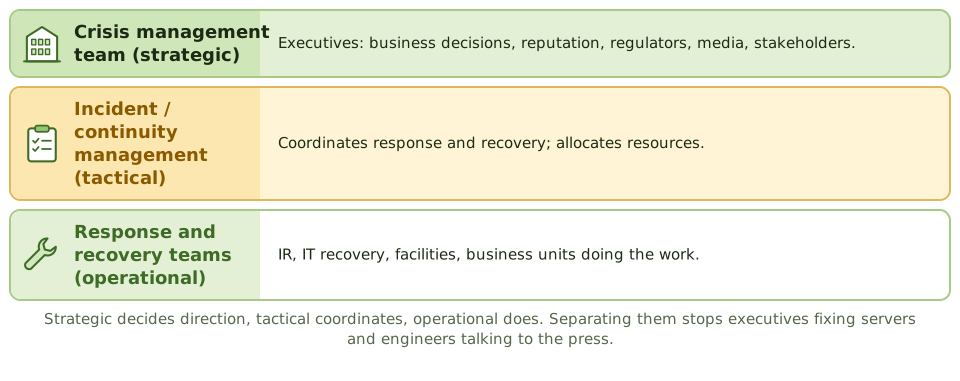
What the crisis team decides
Continuity governance
- 1Policy approved by senior management.
- 2Named owners for each plan.
- 3Testing schedule tracked and reported.
- 4Plans updated after changes, tests and incidents.
- 5Internal audit reviews the program.
How the exam asks about it
| If the question asks… | Answer |
|---|---|
| First priority in any disaster | Safety of people |
| Who leads crisis decisions | Executive crisis management team |
| Strategic level of response | Crisis management team |
| Who speaks publicly | Designated spokesperson |
| How to prepare the crisis team | Regular exercises |
Key takeaways
- ✓A crisis threatens the organisation as a whole (finances, reputation, safety, licence to operate) and needs executive leadership.
- ✓Response is organised in three levels: strategic (crisis management team), tactical (incident and continuity coordination), operational (response and recovery teams).
- ✓The crisis team makes business decisions: shutting down operations, paying or not, public statements, regulator engagement.
- ✓Crisis communications protect trust: timely, honest, consistent messages through designated spokespeople.
- ✓Continuity governance assigns ownership, approves plans, monitors testing and ensures plans stay current.
- ✓Safety of people always comes first.
Exam traps
- !Executives shouldn't run technical recovery; engineers shouldn't make public statements.
- !A crisis team that first meets during a crisis performs badly; exercise it.
- !Reputation decisions belong to executives, not to the security team.
- !In any disaster, human safety is the first priority, before systems or data.
Disaster Recovery Planning
How the DRP restores IT systems and data to meet the BIA's objectives: its contents, recovery teams, the link to incident response, and the special challenge of recovering from cyberattacks.
Getting IT back
When systems are lost, the disaster recovery plan is the step-by-step recipe for bringing them back, in the order the business needs, within the time and data-loss limits the BIA set. It's written so a competent stranger could follow it.
What's in the DRP
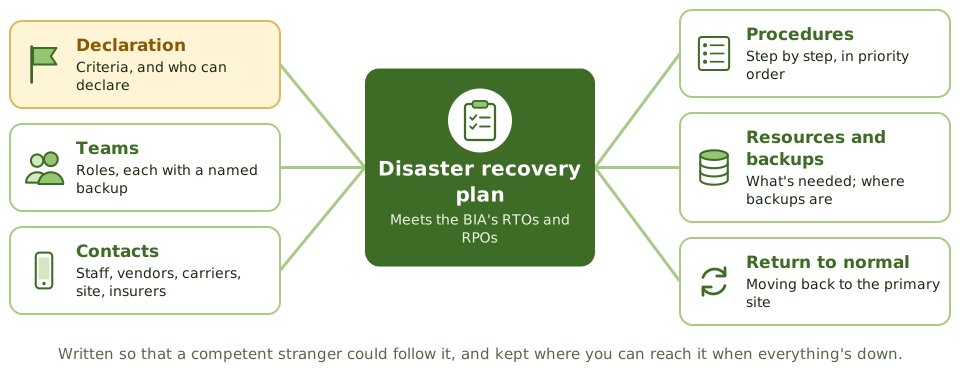
Recovery teams
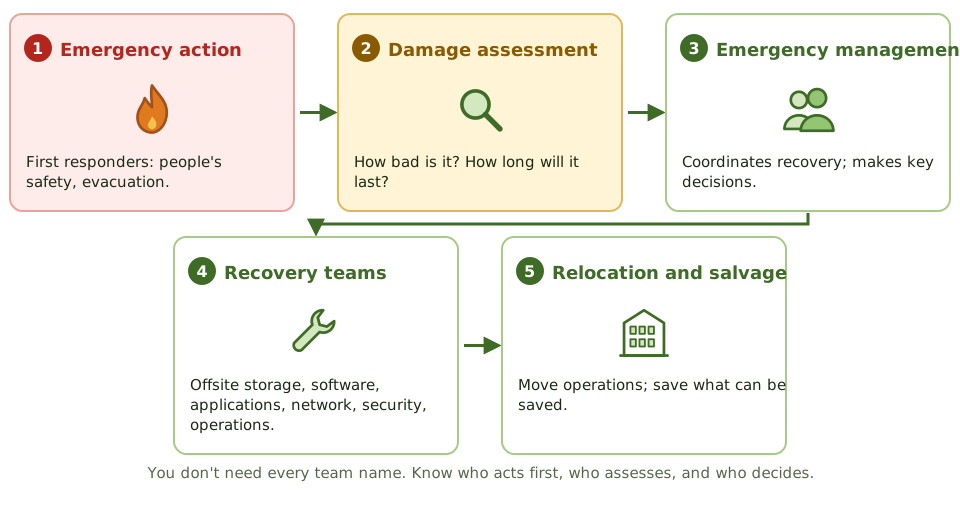
Recovering from a cyberattack
Keeping the DRP usable
- 1Detailed enough for a competent stranger.
- 2Deputies for every role.
- 3Copies offline and with key staff.
- 4Updated after system changes and tests.
- 5Covers return to the primary site.
How the exam asks about it
| If the question asks… | Answer |
|---|---|
| Basis for DRP priorities and timing | BIA objectives (RTO, RPO) |
| Main extra risk in cyber recovery | Restoring infected backups or an attacker still present |
| Who can declare a disaster | Authorised people named in the plan |
| DRP relationship to BCP | DRP is part of the BCP |
| Where to keep DRP copies | Offline / offsite, accessible to the team |
Key takeaways
- ✓The disaster recovery plan (DRP) restores IT systems, data and infrastructure within the RTOs and RPOs set by the BIA.
- ✓It covers declaration, teams and roles, contacts, recovery procedures in priority order, resources and backups, and return to normal.
- ✓The DRP is part of the BCP and aligned with the incident response plan, sharing triggers and contacts.
- ✓Cyber recovery differs from natural disasters: backups may be infected, the attacker may still be present, and systems must be rebuilt clean.
- ✓Procedures must be detailed enough for someone other than the usual administrator to follow, and every role needs a deputy.
- ✓The plan is tested, updated after changes and incidents, and kept accessible offline.
Exam traps
- !Restoring compromised systems from infected backups brings the attacker straight back.
- !A DRP only the usual administrator can follow fails when that person is unavailable.
- !The plan must cover returning to the primary site, not just failing over.
- !Who may declare a disaster must be defined in advance.
Recovery Sites: Hot, Warm and Cold
The options for where to recover (mirrored, hot, warm, cold, cloud, reciprocal), how fast and costly each is, and what the security manager checks before relying on one.
Where do we recover?
If the primary data centre or cloud region is lost, systems need somewhere else to run. The options range from a full duplicate running all the time to an empty room with power. The RTO from the BIA decides which the organisation needs.
Site options
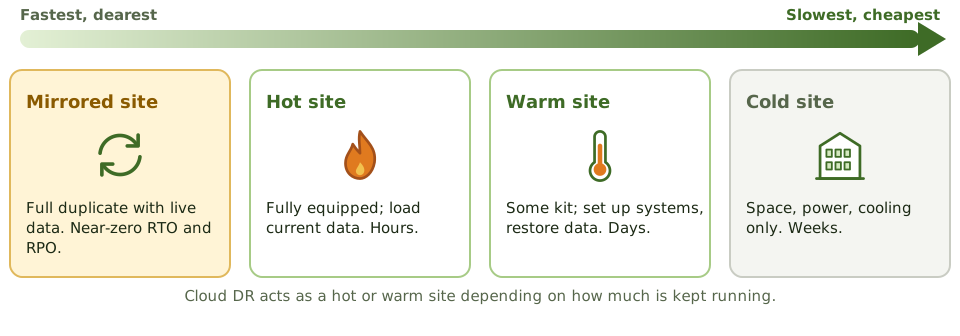
RTO drives the choice
| Option | Typical recovery | Cost |
|---|---|---|
| Mirrored / active-active | Near zero | Very high |
| Hot site / cloud standby | Hours | High |
| Warm site / cloud pilot light | Hours to days | Medium |
| Cold site | Weeks | Low |
| Reciprocal agreement | Uncertain | Low |
Checks before relying on a site
Cloud as a recovery site
- 1Pilot light: data replicated, minimal servers ready to scale.
- 2Warm standby: scaled-down copy running.
- 3Multi-region active-active for the most critical services.
- 4Check: capacity guarantees, identity and network access, tested runbooks.
How the exam asks about it
| If the question asks… | Answer |
|---|---|
| Site operational within hours | Hot site |
| Site with only space and power | Cold site |
| What drives the site choice | RTO from the BIA |
| Weakness of reciprocal agreements | Capacity, compatibility, enforceability |
| Key location requirement | Not exposed to the same regional risk |
Key takeaways
- ✓Site choice is driven by the RTO: the shorter the RTO, the more ready (and expensive) the site.
- ✓Mirrored sites give near-zero recovery; hot sites recover in hours; warm sites in days; cold sites in weeks.
- ✓Cloud DR can act as a hot or warm site depending on how much is kept running, and is now a common option.
- ✓Reciprocal agreements are cheap but often fail on capacity, compatibility and enforceability.
- ✓Recovery sites must be far enough away to avoid the same disaster, and as secure as the primary site.
- ✓Contracts for commercial sites cover capacity, oversubscription, testing rights, duration of use and security.
Exam traps
- !A cold site can't meet a short RTO.
- !A recovery site in the same flood plain or power grid can fail with the primary.
- !Shared commercial sites may be oversubscribed in a regional disaster.
- !A recovery site with weaker security becomes the easiest way in.
Backup Strategies and Cloud DR
How backups and replication meet the RPO, why ransomware changed backup strategy, the 3-2-1-1-0 rule, and how cloud services are used for disaster recovery.
Backups meet the RPO
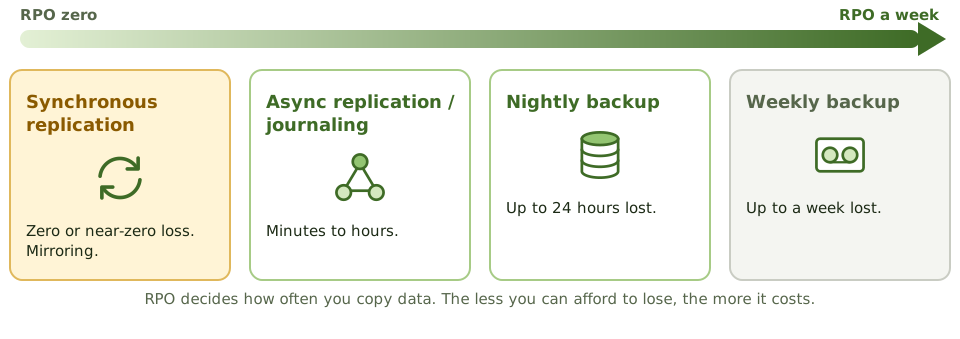
Backup types
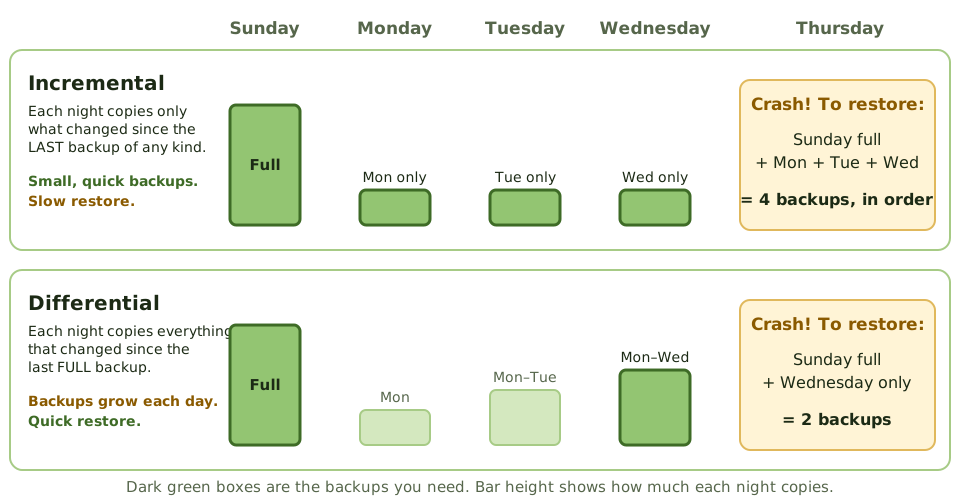
Ransomware changed the rules
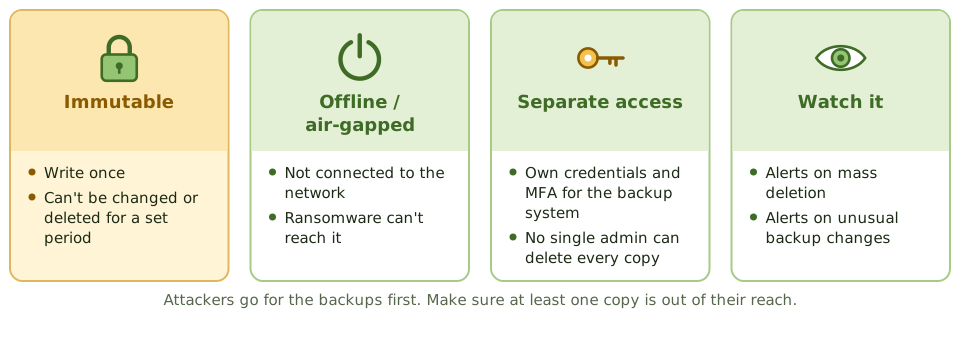
The 3-2-1-1-0 rule
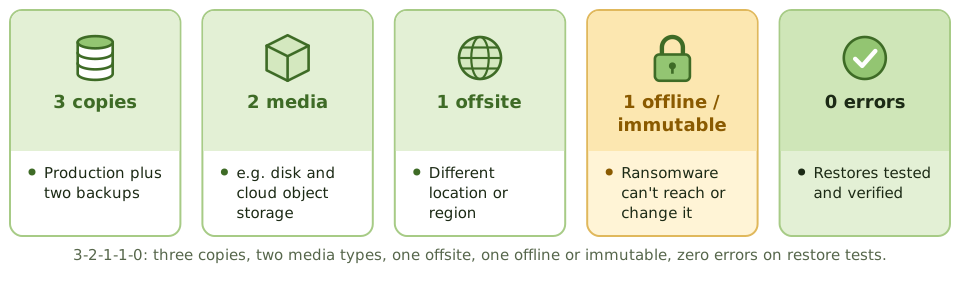
Cloud and SaaS
How the exam asks about it
| If the question asks… | Answer |
|---|---|
| Metric that sets backup frequency | RPO |
| Best protection for backups against ransomware | Offline or immutable copies, separate credentials |
| Best evidence backups work | Successful restore tests |
| Is replication a backup? | No; it copies errors and ransomware |
| Who protects SaaS data from deletion | Often the customer; check the shared model |
Key takeaways
- ✓Backup frequency and method are driven by the RPO: daily backups mean up to a day of lost data; replication can cut that to minutes or zero.
- ✓Full, incremental and differential backups trade backup time against restore time.
- ✓Replication and RAID aren't backups: they copy deletions, corruption and ransomware instantly.
- ✓Ransomware targets backups first, so at least one copy must be offline or immutable, with separate credentials.
- ✓The 3-2-1-1-0 rule: three copies, two media, one offsite, one offline or immutable, zero errors in restore tests.
- ✓Only a successful restore test proves a backup works; cloud DR still needs tested runbooks and the customer's own backups of SaaS data.
Exam traps
- !'Backup job succeeded' isn't proof that data can be restored.
- !Backups reachable with the same admin credentials as production get encrypted too.
- !SaaS providers protect their platform, not necessarily your data from deletion or ransomware.
- !Keeping backups in the same building or region doesn't protect against site disasters.
Incident Response Training
How the security manager prepares people for incidents: what each audience needs, how responders build and keep skills, and how training links to plans, playbooks and exercises.
Plans don't respond, people do
An incident response plan is only as good as the people who carry it out at 3 a.m. under pressure. Training makes sure everyone, from the receptionist who spots a phishing email to the CEO deciding whether to shut down a factory, knows their part.
Training by audience
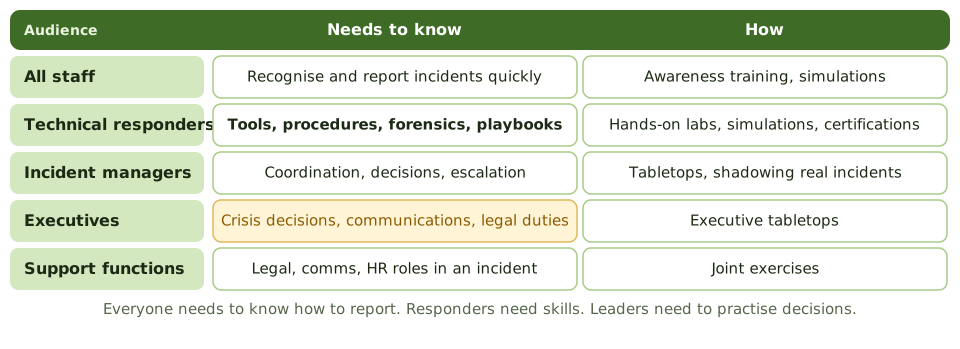
Building responder skills
Making training stick
- 1Based on the actual plan and playbooks.
- 2Deputies trained as well as primaries.
- 3Refreshed regularly and after plan changes.
- 4Tested through exercises; gaps fed back.
How the exam asks about it
| If the question asks… | Answer |
|---|---|
| Most important training for all staff | How to recognise and report incidents |
| Best way to prepare executives | Executive tabletop exercises |
| Who else needs IR training | Legal, communications, HR, deputies |
| Basis for IR training content | The plan and playbooks |
| How to measure training effectiveness | Exercises and real incident performance |
Key takeaways
- ✓Incident management training is a named CISM topic: plans only work if people know their roles and can perform them under pressure.
- ✓All staff need to recognise and report incidents; responders need technical skills; incident managers need coordination skills; executives need to practise crisis decisions.
- ✓Training is tied to the plan and playbooks, so people learn the procedures they'll actually use.
- ✓Responders keep skills current through hands-on labs, simulations, certifications and threat intelligence.
- ✓New team members are trained before going on call; deputies are trained as well as primaries.
- ✓Training effectiveness is measured in exercises and real incidents, and gaps feed back into the program.
Exam traps
- !Training only the security team leaves legal, communications and executives unprepared.
- !A plan nobody has been trained on fails on the first real incident.
- !Deputies who've never practised can't step in when the primary is unavailable.
- !Training once at onboarding isn't enough; skills fade and threats change.
Testing Plans: Tabletop, Functional and Full Interruption
How incident response, continuity and recovery plans are tested, from checklist reviews and tabletops to simulations, parallel tests and full interruption, and how to plan a test safely.
Why test?
Plans look complete on paper and then fail on details: a phone number that changed, a backup nobody can restore, a decision nobody is authorised to make. Testing finds those details while the stakes are low.
The ladder of tests
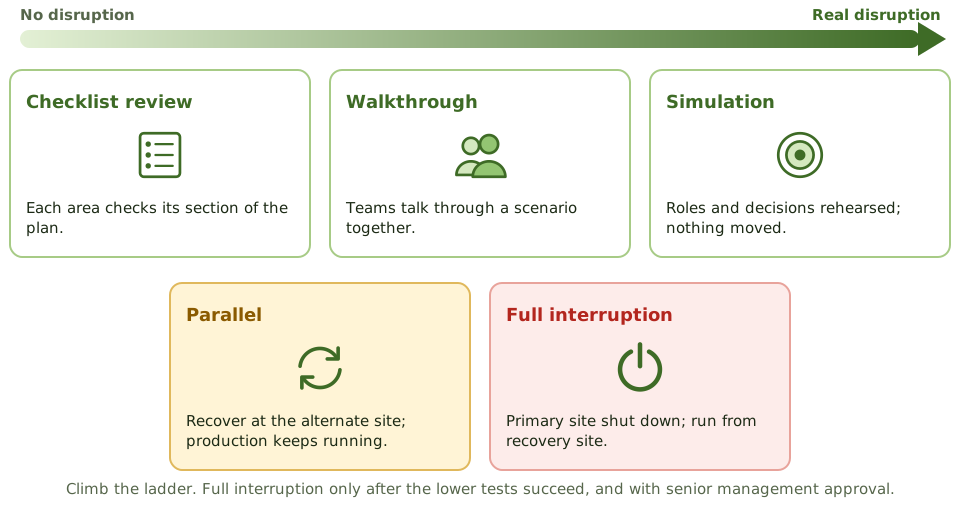
Each type in brief
| Test | What happens | Disruption |
|---|---|---|
| Checklist review | Owners check their sections are current | None |
| Tabletop / walkthrough | Team talks through a scenario | None |
| Simulation / functional | Roles and decisions rehearsed; some systems exercised | Low |
| Parallel | Recover at alternate site; production continues | Low |
| Full interruption | Primary shut down; run from recovery site | High |
Running a test
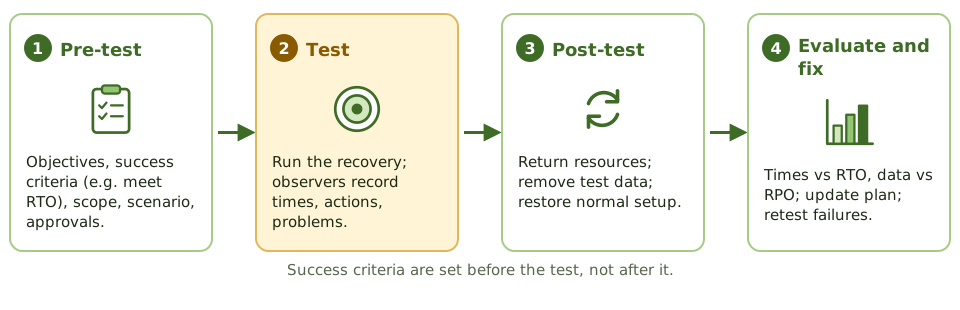
Scheduling tests
- 1At planned intervals: e.g. tabletops twice a year, technical recovery yearly.
- 2After significant changes: new systems, sites, suppliers.
- 3Scenarios based on current threats and BIA priorities.
- 4Increasing realism as maturity grows.
How the exam asks about it
| If the question asks… | Answer |
|---|---|
| Least disruptive test | Checklist review |
| Team talks through a scenario together | Tabletop / walkthrough |
| Recovery site runs while production continues | Parallel test |
| Most realistic, most risky | Full interruption test |
| When to define success criteria | Before the test |
Key takeaways
- ✓Testing and reviewing incident management plans at planned intervals is a CISM task; untested plans give little assurance.
- ✓Test types, from least to most disruptive: checklist review, tabletop or walkthrough, simulation or functional test, parallel test, full interruption test.
- ✓Start with low-disruption tests; full interruption only after lower-level tests succeed, with senior management approval.
- ✓Each test has objectives and success criteria (such as meeting the RTO) set in advance, plus pre-test, test and post-test phases.
- ✓Include the business, not just IT: tests prove processes can recover, not just servers.
- ✓Test regularly, after significant change, and with realistic scenarios such as ransomware.
Exam traps
- !A full interruption test should never be the first test.
- !A parallel test doesn't interrupt production; a full interruption test does.
- !A test that finds no problems probably wasn't realistic.
- !Success criteria defined after the test can't show whether it passed.
Evaluating Exercises and Improving Readiness
How to turn exercises into real improvement: observing, debriefing, measuring against objectives, reporting, and tracking fixes until the plan is proven to work.
The point of the exercise
Exercises aren't exams to pass. Their value lies in the gaps they reveal and what changes afterwards. A well-run evaluation turns a two-hour tabletop into concrete improvements, tracked until they're proven.
From exercise to improvement
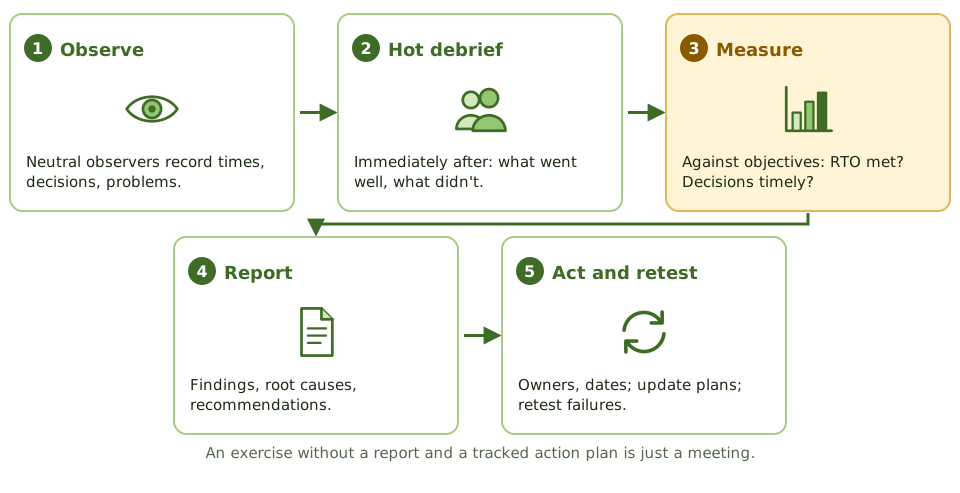
Readiness metrics
| Measure | Exercise 1 | Exercise 2 |
|---|---|---|
| Time to declare the incident | 95 min | 30 min |
| Time to reach executive sponsor | 3 h | 40 min |
| Critical system restored vs RTO (8 h) | 14 h | 7 h |
| Decisions without clear authority | 4 | 1 |
A blame-free culture
How the exam asks about it
| If the question asks… | Answer |
|---|---|
| Most important outcome of an exercise | Identify weaknesses and improve the plan |
| After fixing findings | Retest to verify |
| Who should observe exercises | Neutral observers |
| How to show readiness improving | Metrics across successive exercises |
| A test finds no issues | Question whether it was realistic |
Key takeaways
- ✓The value of an exercise lies in what it reveals and what changes afterwards.
- ✓Neutral observers record times, decisions and problems against the pre-agreed objectives.
- ✓A hot debrief right after the exercise captures fresh observations; a written report follows.
- ✓Findings get root causes, owners, dates and retests, tracked like any other risk.
- ✓Readiness metrics (time to detect, escalate, contain, recover) show improvement over successive exercises.
- ✓Results are reported to management, and plans, playbooks and training are updated.
Exam traps
- !Blaming individuals for exercise failures discourages honest participation; focus on process.
- !Fixing findings without retesting leaves the plan unproven.
- !Exercises with easy, unrealistic scenarios create false confidence.
- !Results not reported to management can't drive investment.
Security Event Detection and Monitoring Methods
How incidents are detected: monitoring sources, signature and behaviour-based detection, the role of people and third parties, and how the security manager measures and improves detection.
Time is damage
Attackers often spend days or weeks inside a network before they act. Every hour they go unnoticed, they reach more systems and data. Detection shortens that window, and it's the part of incident management where investment often pays back most.
Where detections come from
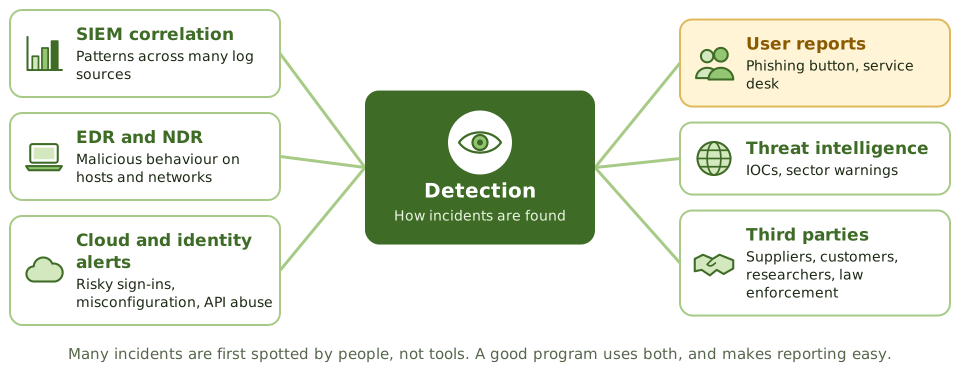
Signature vs behaviour
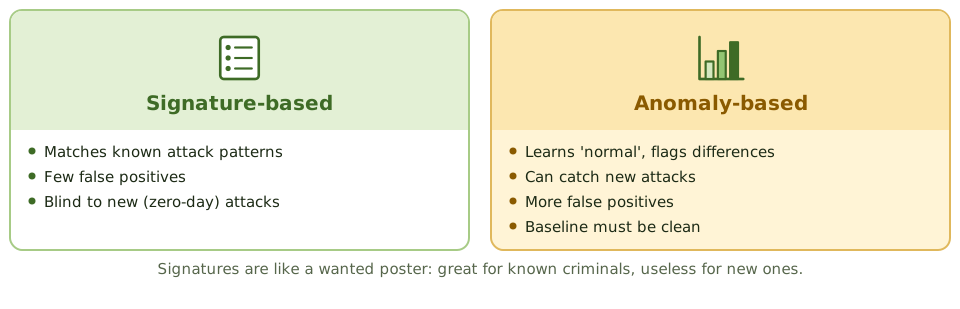
Making detection effective
Measuring detection
- 1Mean time to detect (MTTD).
- 2% of critical assets sending logs.
- 3Coverage of priority ATT&CK techniques.
- 4False-positive rate.
- 5How incidents were first detected (internal vs external).
How the exam asks about it
| If the question asks… | Answer |
|---|---|
| Main goal of monitoring | Timely identification of incidents |
| Detection method that finds new attacks | Behaviour / anomaly-based |
| Effect of too many false positives | Alert fatigue; real alerts missed |
| Key detection metric | Mean time to detect |
| Breaches mostly reported by outsiders | Detection capability is weak |
Key takeaways
- ✓Developing and implementing processes for timely identification of incidents is a CISM task; the faster an incident is found, the less damage it does.
- ✓Detection sources include SIEM correlation, EDR and network detection, cloud and identity alerts, user reports, threat intelligence and third parties.
- ✓Signature-based detection catches known threats; behaviour and anomaly detection can catch new ones but produce more false positives.
- ✓Coverage matters: critical systems, identities and cloud services must send the right logs.
- ✓Tuning reduces false positives, which otherwise cause alert fatigue and missed real attacks.
- ✓Key metric: mean time to detect (MTTD), along with detection coverage and the source of first detection.
Exam traps
- !Logs that aren't collected or reviewed detect nothing.
- !Too many false positives lead to real alerts being ignored.
- !Learning about a breach from a third party is a sign detection is weak.
- !Signature-based tools alone miss new attacks.
SIEM, the SOC and Event Correlation
The tools and team that turn logs into detected incidents: how a SIEM correlates events, how a security operations centre is organised, and what the security manager must decide about them.
From logs to incidents
Modern organisations produce billions of log entries. On their own, they're noise. A SIEM turns them into a searchable, correlated view, and a SOC turns that view into decisions. Together they're the core of incident management tools and techniques.
How a SIEM works
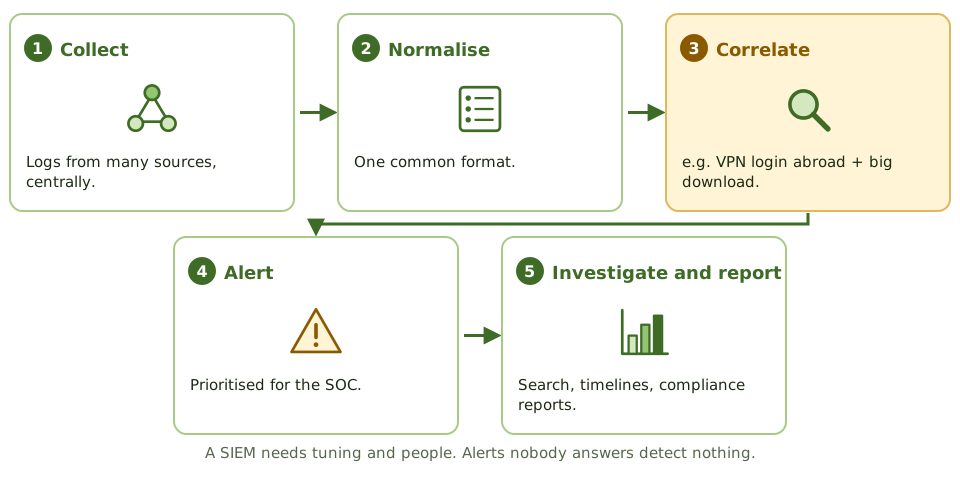
The SOC
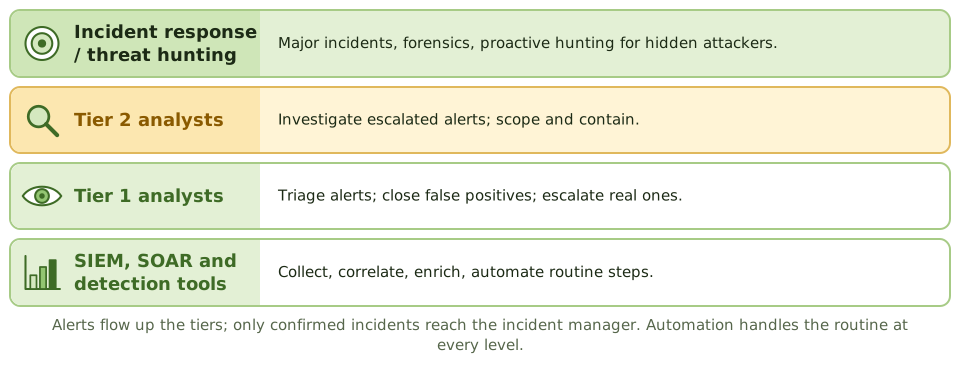
Decisions for the security manager
| Decision | Considerations |
|---|---|
| Build, buy or hybrid SOC | 24x7 needs, skills, cost, control |
| Log sources and retention | Coverage of critical assets; legal retention; cost |
| Use cases | Mapped to top risks and attacker techniques |
| Automation (SOAR) | Which steps to automate; guardrails |
| Metrics | MTTD, MTTR, coverage, false positives |
Correlation in action
Correlation is the SIEM's main value: spotting patterns no single log shows.
How the exam asks about it
| If the question asks… | Answer |
|---|---|
| Primary purpose of a SIEM | Collect and correlate events to detect incidents |
| Why time sync (NTP) matters | So events across systems can be correlated |
| Tool that automates response steps | SOAR |
| SOC is outsourced; who is accountable | The organisation |
| SIEM produces too many alerts | Tune use cases; reduce false positives |
Key takeaways
- ✓A SIEM collects, normalises and correlates logs from many sources to detect incidents and support investigations.
- ✓Correlation links events that look harmless alone, such as a foreign login followed by a large download.
- ✓A security operations centre (SOC) monitors, triages and responds, often in tiers, with threat hunting and incident response above.
- ✓SOAR automates routine steps; humans make the high-impact decisions.
- ✓Options: in-house SOC, outsourced (MSSP/MDR) or hybrid; accountability stays with the organisation.
- ✓Incident management tools and techniques are a named CISM topic: the manager decides coverage, staffing, tuning and metrics.
Exam traps
- !A SIEM without tuning and people produces noise, not detection.
- !Logs stored where administrators can change them aren't reliable evidence.
- !Without time synchronisation, events from different systems can't be correlated.
- !Outsourcing the SOC doesn't outsource accountability or business context.
Threat Intelligence and Indicators of Compromise
How threat intelligence and indicators of compromise feed detection and investigation, why some indicators matter more than others, and how to share intelligence safely.
Clues left behind
Attackers leave traces: malicious files, connections to their servers, odd accounts. Indicators of compromise describe those traces so defenders can find them. Threat intelligence tells you which indicators and techniques are being used right now, and against whom.
IOCs and IOAs
Not all indicators are equal
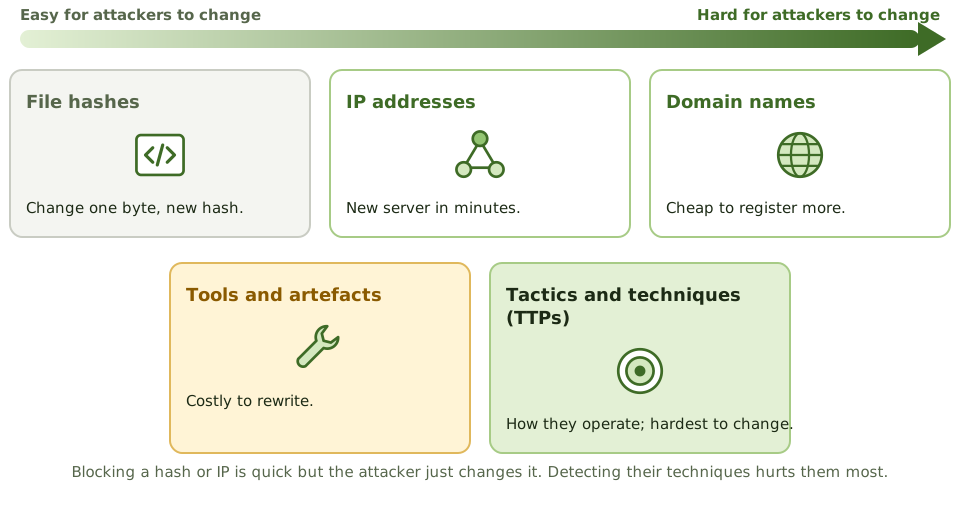
Using intelligence in an incident
- 1 Find IOC From the first infected host
- 2 Search estate SIEM and EDR for all occurrences
- 3 Scope Which systems and accounts are affected
- 4 Block Domains, IPs, hashes
- 5 Hunt TTPs Same techniques elsewhere?
Sharing intelligence
- 1Sector ISACs, national CERTs, trusted peer groups.
- 2Traffic Light Protocol (TLP) marks how widely information may be shared.
- 3Legal review before sharing details of your own incidents.
- 4Feedback improves the quality of shared intelligence.
How the exam asks about it
| If the question asks… | Answer |
|---|---|
| Evidence that a breach may have occurred | Indicator of compromise |
| Hardest indicator for attackers to change | Tactics, techniques and procedures (TTPs) |
| IOC found on one system | Search for it across the whole environment |
| Where to share intelligence | ISACs, CERTs, trusted groups, under TLP |
| Main limitation of IOC blocking | Attackers change indicators easily |
Key takeaways
- ✓Indicators of compromise (IOCs) are evidence that a system may have been breached: file hashes, IP addresses, domains, registry keys, unusual behaviour.
- ✓Indicators of attack (IOAs) focus on attacker behaviour and techniques, and can catch attacks before damage is done.
- ✓The 'pyramid of pain': hashes and IPs are easy for attackers to change; techniques (TTPs) are hard, so detecting TTPs is most valuable.
- ✓Intelligence feeds detection rules, threat hunting, investigation scoping and blocking.
- ✓Sharing through ISACs, CERTs and trusted groups helps everyone; follow traffic light protocol (TLP) and legal advice.
- ✓Intelligence must be relevant and timely; old or irrelevant IOCs create noise.
Exam traps
- !Blocking indicators alone won't stop a determined attacker; they change them.
- !Raw feeds without context create false positives.
- !Sharing incident details externally without legal review can create liability.
- !IOCs found during an incident must be searched for across the whole estate, not just the first system.
Incident Triage and Initial Investigation
How a reported event is validated, classified, scoped and prioritised quickly, and how the investigation that follows establishes what happened while preserving evidence and meeting legal requirements.
The first hour
When an alert or report arrives, the first decisions matter most. Triage decides quickly whether it's real, how serious it is and who needs to act. The investigation that follows builds the facts that every later decision depends on.
Triage
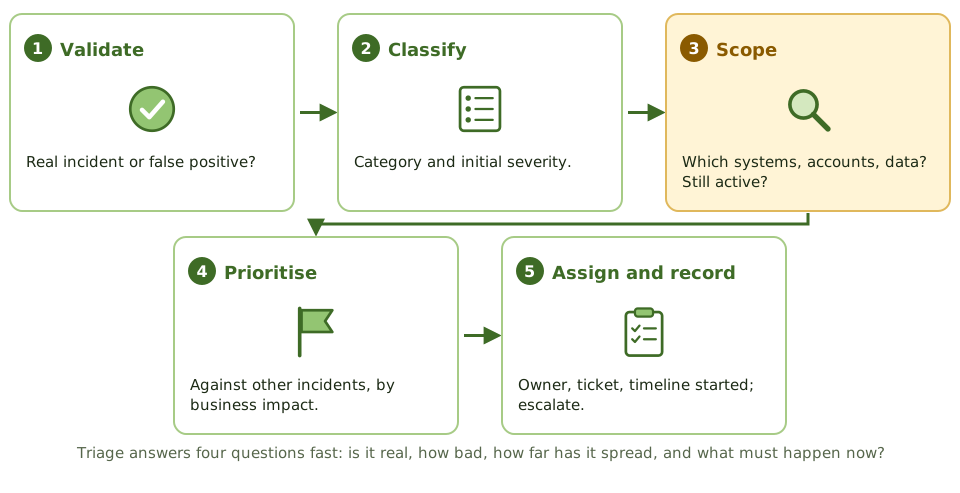
What the investigation must answer
| Question | Why it matters |
|---|---|
| How did they get in? | Close the entry point |
| When did it start? | Which backups are clean; notification timing |
| What did they access or take? | Breach notification; impact |
| Which systems and accounts? | Containment and eradication scope |
| Are they still here? | Containment urgency |
Investigate properly
How the exam asks about it
| If the question asks… | Answer |
|---|---|
| First step when an alert arrives | Validate it: real incident or false positive |
| Most important record during investigation | Timeline of events, actions and decisions |
| Before changing an affected system | Preserve evidence where possible |
| Suspected insider | Involve HR and legal; secure evidence discreetly |
| New facts widen the scope | Reassess severity and escalate |
Key takeaways
- ✓Triage quickly validates, classifies, scopes and prioritises a suspected incident, then assigns and records it.
- ✓Investigation establishes what happened, how, when, which assets and data were affected, and whether the attacker is still present.
- ✓Investigating and documenting incidents in line with legal and regulatory requirements is a CISM task.
- ✓Keep a timeline and record every action and decision from the start.
- ✓Preserve evidence from the beginning in case of legal action, regulatory reporting or insurance claims.
- ✓Scope widens as facts emerge; reassess severity and escalate as needed.
Exam traps
- !Rebooting or wiping a system during triage can destroy evidence.
- !Investigating only the first affected system misses the rest of the attack.
- !Undocumented actions can't be defended later, to regulators or in court.
- !Investigators shouldn't alert a suspected insider before evidence is secured and HR and legal are involved.
Evidence Preservation, Forensics and Chain of Custody
How the security manager makes sure incident evidence is collected, preserved and handled so it can be used in court, by regulators or by insurers, and when to bring in forensic specialists.
Assume it will be challenged
Incidents can end in court, in front of a regulator, in an insurance claim or at a disciplinary hearing. Evidence that was changed, mishandled or can't be traced will be challenged and may be thrown out. Handling it properly from the start keeps every option open.
Most fragile first
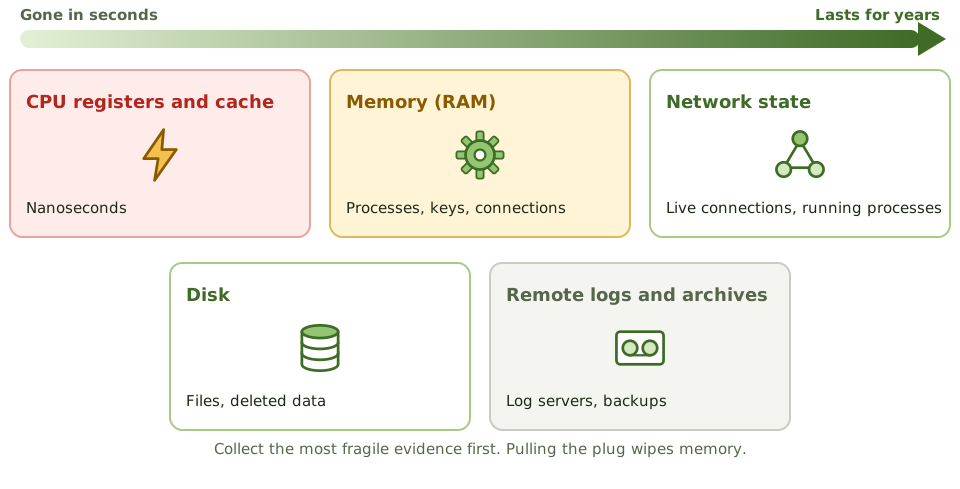
The forensic process
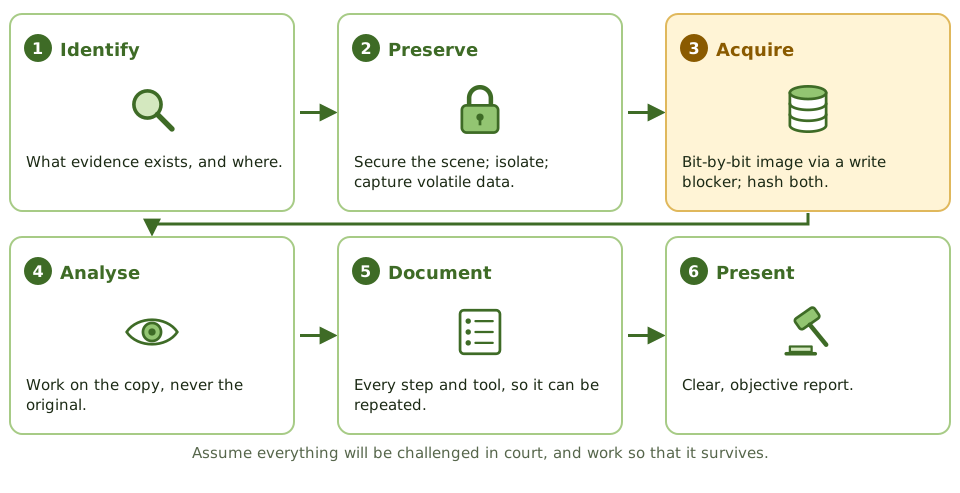
Chain of custody
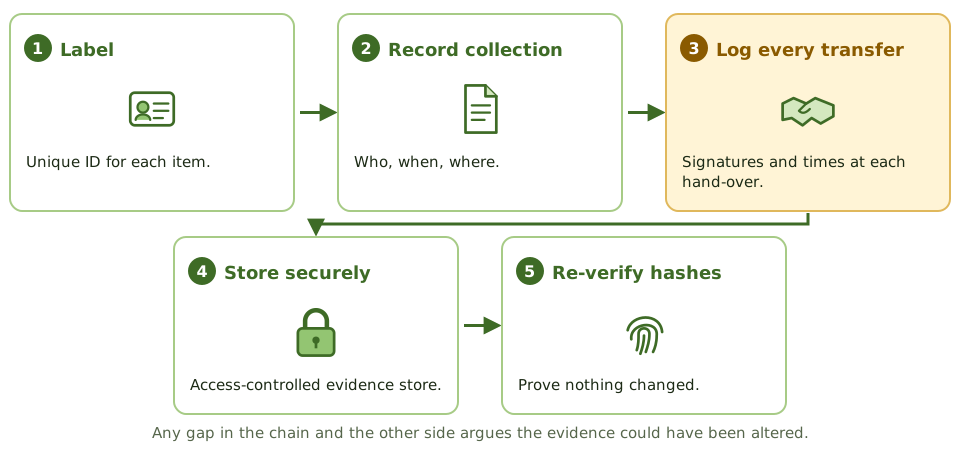
Forensic readiness
How the exam asks about it
| If the question asks… | Answer |
|---|---|
| What to collect first from a running system | Volatile data such as memory |
| Proving a copy is identical | Matching hash values |
| Record of who handled evidence | Chain of custody |
| Where analysis is performed | On a verified copy, not the original |
| Security manager's role | Forensic readiness; involve specialists |
Key takeaways
- ✓Evidence is preserved from the start whenever legal action, regulatory reporting, insurance or disciplinary action is possible.
- ✓Collect in order of volatility: memory and live state first, then disks, then logs and archives.
- ✓Forensic images are bit-by-bit copies made through write blockers, verified with matching hashes; analysis is done on copies.
- ✓Chain of custody records who collected, handled, transferred and stored each item, and when.
- ✓Evidence handling must be lawful and follow documented procedures (e.g. ISO/IEC 27037) by qualified people.
- ✓The security manager's role is forensic readiness: policies, tools, retainers and trained staff before an incident.
Exam traps
- !Pulling the plug loses memory evidence; let trained responders decide.
- !Analysing the original evidence, rather than a copy, can make it inadmissible.
- !Any gap in the chain of custody gives the other side grounds to challenge evidence.
- !Untrained staff 'having a look' often destroy the evidence they're trying to find.
Containment Strategies: Short-Term and Long-Term
How to stop an incident spreading: fast short-term containment, longer-term isolation and segmentation, and doing it without destroying evidence or causing more harm than the attack.
Stop the spread
Once an incident is confirmed, the first priority is usually containment: limiting how far it spreads and how much damage it does. Speed matters, but so does doing it in a way that keeps evidence and doesn't cause more harm than the attack itself.
Short-term and long-term
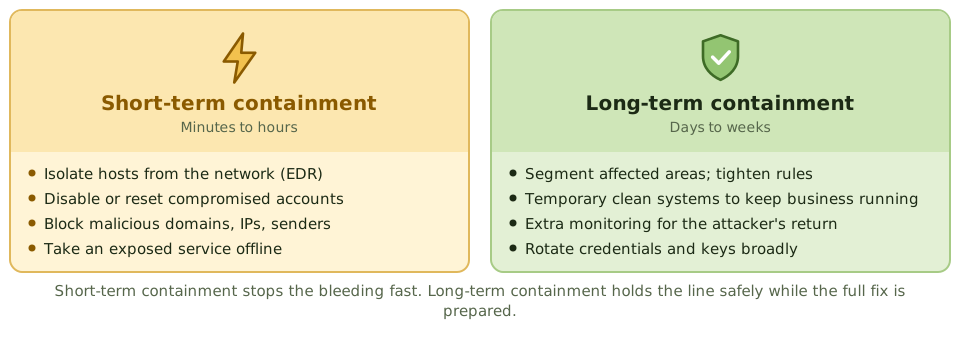
Contain, but keep the evidence
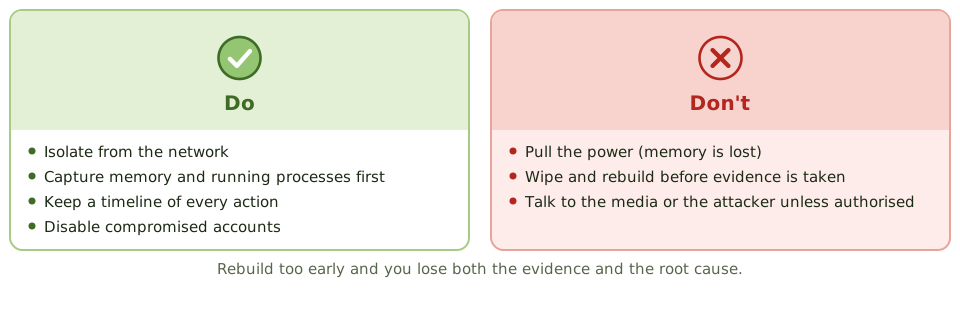
Containment by incident type
| Incident | Typical containment |
|---|---|
| Ransomware | Isolate hosts and segments; protect backups; disable spreading accounts |
| Compromised account | Disable or reset; revoke sessions and tokens; check MFA |
| Business email compromise | Remove forwarding rules; freeze pending payments |
| Data exfiltration | Block destinations; cut the access path; preserve logs |
| DDoS | Upstream filtering; scale; rate limiting |
Think a step ahead
- 1Scope first where possible: contain all affected systems together.
- 2Expect the attacker to react: they may escalate or destroy data.
- 3Use out-of-band channels if they may be watching email.
- 4Keep business impact in view; involve owners.
How the exam asks about it
| If the question asks… | Answer |
|---|---|
| First priority once an incident is confirmed | Contain it, preserving evidence |
| Why not wipe immediately | Destroys evidence and root-cause clues |
| Better than pulling the power | Network isolation |
| Containment for a compromised account | Disable/reset; revoke sessions and tokens |
| Why plan containment in advance | Speed, with pre-agreed authority |
Key takeaways
- ✓Incident containment methods are a named CISM topic; once an incident is confirmed, containment is usually the first priority.
- ✓Short-term containment stops the spread fast: isolate hosts, disable accounts, block indicators, take exposed services offline.
- ✓Long-term containment holds the line while eradication is prepared: segmentation, temporary clean systems, enhanced monitoring, credential rotation.
- ✓Containment should preserve evidence: isolate rather than wipe; capture volatile data where possible.
- ✓Containment strategies are planned in playbooks, with pre-agreed authority, so they can be applied quickly.
- ✓Watch for attacker reactions: some escalate or destroy data when they notice containment.
Exam traps
- !Wiping and rebuilding immediately destroys evidence and the chance to find the root cause.
- !Pulling the power loses memory evidence; network isolation is often better.
- !Containing only the first known system leaves others compromised.
- !Containment without authority causes delays; agree authority in the plan.
Making Containment Decisions
How hard containment choices are made: weighing the harm of acting against the harm of waiting, who decides, monitoring versus immediate action, and documenting the decision.
No free choices
Every containment option costs something. Isolating a payment server stops the attacker but also stops sales. Waiting to understand the attack keeps sales running but risks more damage. Containment decisions are business decisions informed by technical facts.
What to weigh
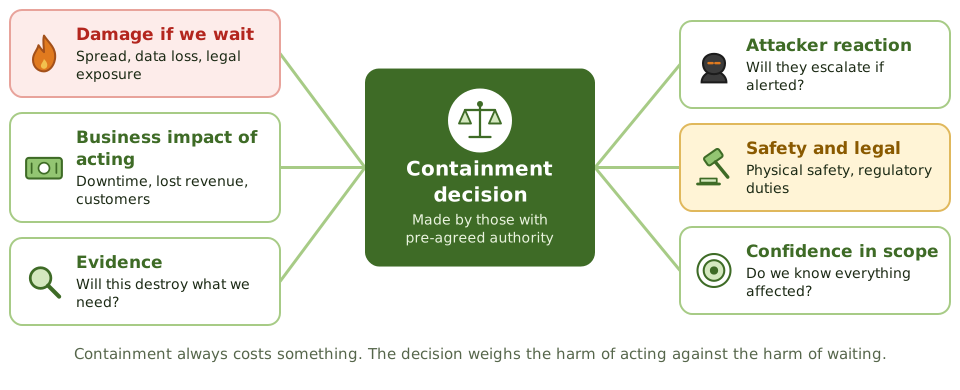
Who decides what
| Decision | Decision-maker (typical) |
|---|---|
| Isolate a workstation or server | Incident manager / SOC lead |
| Disable a privileged or executive account | Incident manager, informing the owner |
| Take a revenue-earning service offline | Executive sponsor or delegate |
| Monitor an active attacker instead of acting | Senior management with legal advice |
| Shut down an operational (OT) process | Operations leadership; safety first |
Act now, or watch?
How the exam asks about it
| If the question asks… | Answer |
|---|---|
| Main consideration in containment decisions | Balance damage of waiting vs impact of acting |
| Who decides to take a business service offline | Executive sponsor / business owner |
| Monitoring an attacker instead of containing | Senior management decision with legal advice |
| Data is actively being exfiltrated | Contain immediately |
| What to record | Facts, options, decision, decision-maker, reasons |
Key takeaways
- ✓Containment decisions balance the damage of waiting against the business impact of acting.
- ✓Factors: spread and data loss, downtime and revenue, evidence preservation, attacker reaction, safety and legal duties, confidence in scope.
- ✓Business decisions (taking revenue-earning systems offline) belong to the executive sponsor or delegate; technical containment to the incident manager, as the plan says.
- ✓Watching an attacker briefly to understand scope can be justified, but only as a senior management decision with legal advice.
- ✓Every containment decision is documented with its reasons, so it can be explained later.
- ✓When in doubt about safety or legal duties, containment takes priority over convenience.
Exam traps
- !Keeping systems running to avoid disruption while data is actively leaving is rarely defensible.
- !Deciding to 'watch and learn' is a senior management decision, not an analyst's.
- !Undocumented decisions look like negligence afterwards.
- !Containment that's technically perfect but ignores business impact loses management support.
Breach Notification and Regulatory Reporting
What organisations must report, to whom and how fast after a breach, how the security manager builds notification into the plan, and why legal leads the decisions.
The clock is running
Many laws now require organisations to report serious incidents and personal data breaches within days, sometimes hours. Missing the deadline can bring penalties on top of the breach itself. Notification has to be planned before the incident, not worked out during it.
Common deadlines
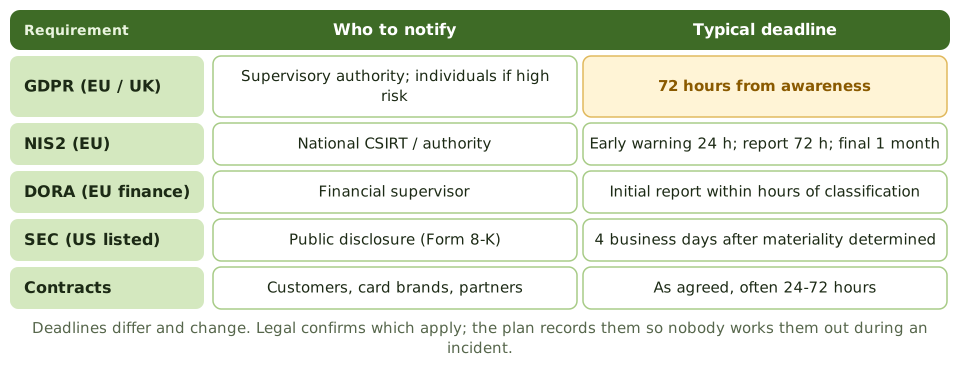
Who needs telling
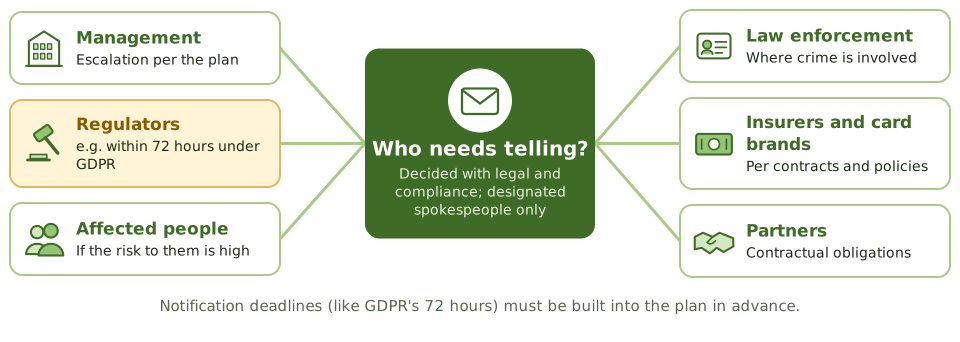
Building notification into the plan
- 1 Register All applicable requirements, by jurisdiction
- 2 Triggers Classification criteria that start the clock
- 3 Escalate Legal informed immediately
- 4 Templates Pre-drafted, legally reviewed
- 5 Decide and send Legal leads; executives approve
- 6 Record What, when, to whom, why
Notify with what you know
Most regimes allow an initial notification with incomplete information, followed by updates. Waiting for certainty usually means missing the deadline.
How the exam asks about it
| If the question asks… | Answer |
|---|---|
| GDPR notification deadline | 72 hours from awareness, to the supervisory authority |
| Who decides whether notification is required | Legal counsel, with management |
| Investigation not complete at the deadline | Notify with known facts; update later |
| When the notification clock starts | Usually at awareness |
| Best preparation | Requirements register and pre-approved process in the plan |
Key takeaways
- ✓Laws, regulations and contracts can require notification of regulators, affected individuals, customers and partners within strict deadlines.
- ✓Examples: GDPR (72 hours to the authority), NIS2 (24-hour early warning), DORA (financial sector), SEC (4 business days after materiality), and contract terms.
- ✓The clock often starts at awareness, so fast classification and escalation are essential.
- ✓Legal counsel leads notification decisions; the security manager supplies facts and builds the process into the plan.
- ✓Initial notifications can be made with incomplete information and updated later.
- ✓Records of what was known, decided and notified, and when, are evidence of compliance.
Exam traps
- !Waiting for the investigation to finish before notifying usually misses the deadline.
- !The security manager doesn't decide alone whether notification is legally required.
- !Encrypted data may reduce or remove notification duties, but only if keys weren't compromised; legal confirms.
- !Multinational incidents can trigger several regimes with different deadlines.
External Communications: Customers, Media and Law Enforcement
How an organisation communicates with customers, partners, the media and law enforcement during an incident: principles, spokespeople, timing, and decisions about involving the authorities.
Trust is on the line
Customers, partners and the public forgive incidents more readily than they forgive being misled. Clear, honest, timely communication can protect reputation through a serious breach; confused or defensive communication can destroy it.
Principles
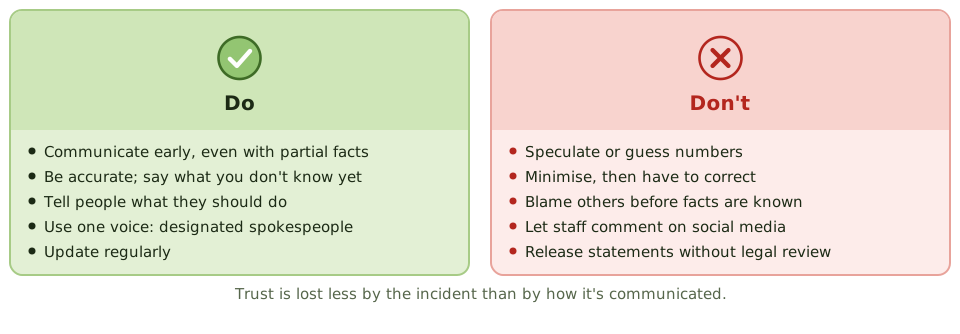
Audiences
| Audience | What they need | Who leads |
|---|---|---|
| Customers | What happened, impact on them, what to do | Communications with legal |
| Partners and suppliers | Impact on shared systems and data | Business owners, security |
| Media | Concise, approved statement | Designated spokesperson |
| Investors | Material impact, disclosures | Investor relations, legal |
| Law enforcement | Evidence and facts to investigate | Legal |
Law enforcement and attackers
How the exam asks about it
| If the question asks… | Answer |
|---|---|
| Who speaks to the media | A designated spokesperson |
| Most important principle in breach communication | Timely, accurate, honest communication |
| Who decides to involve law enforcement | Legal counsel and senior management |
| Staff approached by journalists | Refer them to the designated spokesperson |
| Risk of paying a ransom | No guarantee; may break sanctions laws |
Key takeaways
- ✓External communication protects trust; how an incident is communicated often matters more to reputation than the incident itself.
- ✓Principles: early, accurate, consistent, honest about what isn't known yet, and clear about what recipients should do.
- ✓Only designated spokespeople speak externally; statements are reviewed by legal and communications.
- ✓Customers and partners need practical guidance (reset passwords, watch for fraud); regulators get formal notifications.
- ✓Involving law enforcement is a decision for legal and senior management, weighing investigation support against publicity and disruption.
- ✓Ransom negotiations and payments involve legal, executives, insurers and specialists; sanctions laws may apply.
Exam traps
- !Speculating about numbers or causes, then correcting them, damages credibility badly.
- !Staff comments on social media can contradict official statements.
- !Communicating with the attacker without authority and specialist help is dangerous.
- !Paying a ransom may be illegal if the group is sanctioned, and doesn't guarantee data is deleted.
Eradication, Recovery and Return to Normal Operations
How the attacker and their tools are removed, how systems are restored and validated as clean, and how the organisation safely returns to normal operations.
Clean before you restore
After containment, two jobs remain: get the attacker completely out (eradication) and get the business back (recovery). Doing them in the wrong order, or skipping parts of either, is how organisations end up suffering the same incident twice.
From eradication to normal
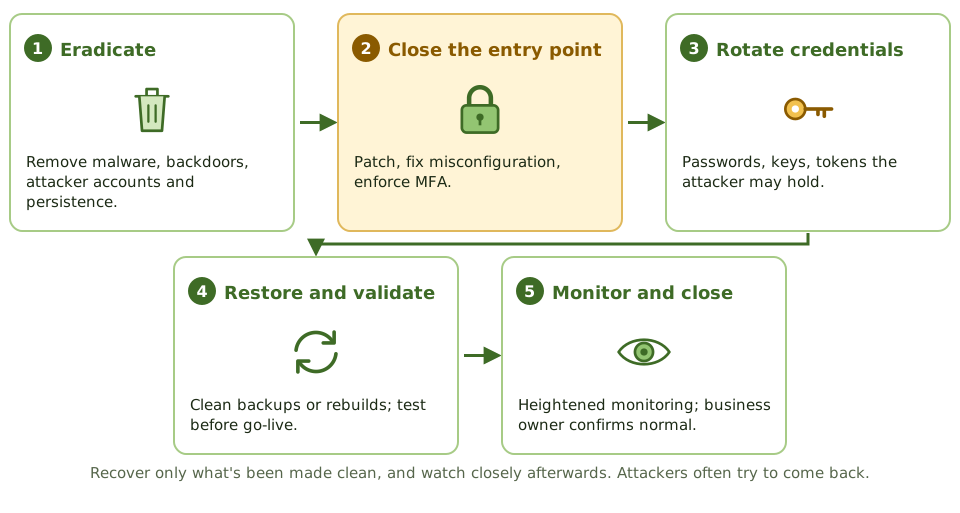
Validating before go-live
Returning to normal
- 1Restore in BIA priority order, dependencies first.
- 2Stand down manual workarounds in a controlled way.
- 3Reconcile transactions processed during the outage.
- 4Keep heightened monitoring for weeks.
- 5Owner sign-off before closing the incident.
How the exam asks about it
| If the question asks… | Answer |
|---|---|
| What must happen before restoring systems | Eradicate the threat and close the entry point |
| Common recovery failure | Not rotating compromised credentials |
| How to restore compromised systems | Clean backups or rebuild from known-good images |
| After recovery | Heightened monitoring for the attacker's return |
| Who confirms return to normal | The business owner |
Key takeaways
- ✓Incident eradication and recovery is a named CISM topic: remove the cause, restore services, confirm they're clean, return to normal.
- ✓Eradication removes malware, backdoors, attacker accounts and persistence, and closes the original entry point.
- ✓Credentials, keys and tokens the attacker may hold are rotated; otherwise they simply log back in.
- ✓Recovery uses clean backups or rebuilds from known-good images, validated before returning to production.
- ✓Heightened monitoring continues after recovery, because attackers often try to return.
- ✓The business owner confirms normal operations before the incident is closed; recovery follows BIA priorities.
Exam traps
- !Restoring before eradicating invites reinfection.
- !Fixing the symptom (the malware) without closing the entry point lets the attacker back in.
- !Forgetting to rotate credentials is one of the most common recovery failures.
- !IT declaring 'fixed' isn't enough; validation and owner sign-off are needed.
Post-Incident Review and Root Cause Analysis
How the post-incident review turns an incident into improvement: building the timeline, finding root causes, deciding corrective actions with owners and dates, and reassessing risk.
Don't waste the incident
Every incident is expensive. The post-incident review is how the organisation gets something back: an honest look at what happened, why, and what will change so it doesn't happen again, or is caught sooner next time.
The review
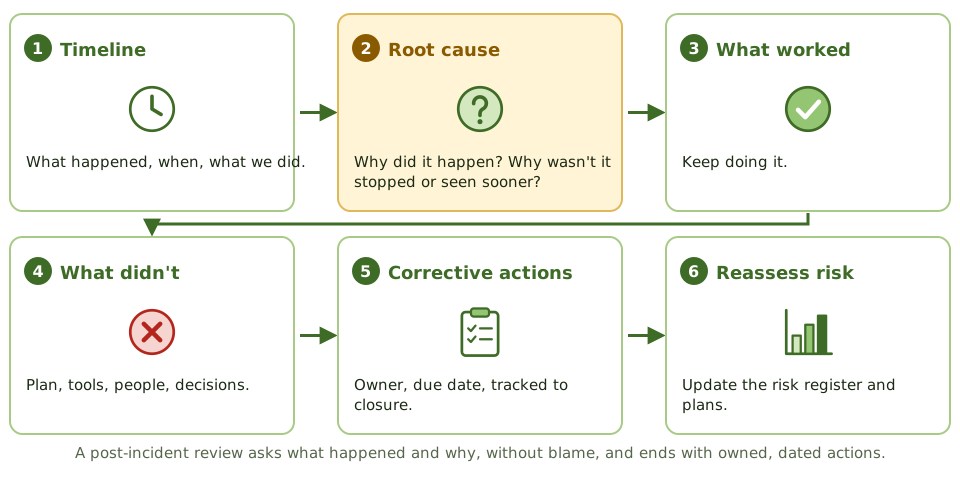
Finding the root cause
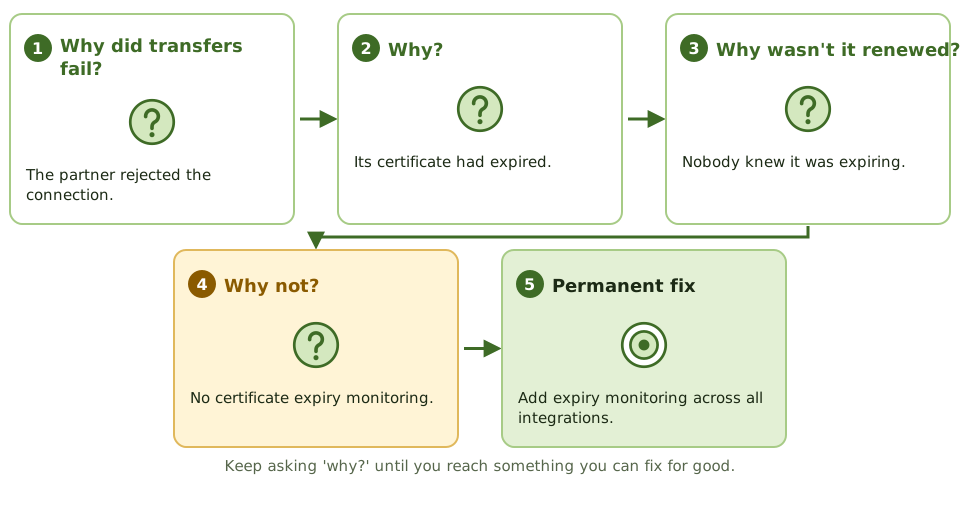
Immediate vs root cause
| Level | Example |
|---|---|
| Immediate cause | An employee clicked a phishing link |
| Contributing cause | No MFA on the VPN; alert ignored overnight |
| Root cause | No MFA standard enforced; SOC not staffed 24x7 |
| Corrective actions | Enforce MFA (IT, 30 days); MDR service for nights (CISO, 60 days) |
Running it well
How the exam asks about it
| If the question asks… | Answer |
|---|---|
| Main purpose of a post-incident review | Identify root causes and improvements |
| Technique for root cause analysis | Five whys / fishbone |
| Corrective actions need… | Owners, due dates, tracking |
| Review culture | Blameless, focused on process |
| What else to update after a review | Risk register, plans, playbooks, controls |
Key takeaways
- ✓Post-incident review practices are a named CISM topic; a CISM task is to conduct reviews covering root cause, lessons learned, corrective actions and risk reassessment.
- ✓The review reconstructs the timeline, identifies root and contributing causes, and asks what worked and what didn't.
- ✓Root cause analysis techniques: five whys, fishbone (Ishikawa) diagrams, timeline analysis.
- ✓Corrective actions have owners and due dates, and are tracked to closure like risks.
- ✓The risk register, plans, playbooks and controls are updated; results are reported to management.
- ✓Reviews are blameless, focusing on process, so people speak honestly.
Exam traps
- !Skipping the review means the same incident can happen again.
- !Stopping at the immediate cause (the phishing click) misses the root cause (no MFA, weak detection).
- !Blame-focused reviews make people hide information.
- !Actions without owners and dates rarely get done.
Lessons Learned and Incident Trend Analysis
How lessons from individual incidents become organisational knowledge, how trend analysis reveals patterns no single incident shows, and how both feed back into risk, the program and the plans.
From one incident to many
A single incident teaches specific lessons. Looking across dozens of incidents reveals patterns: the same root cause appearing again, one category rising, one business unit always slower to respond. That's where the biggest improvements come from.
Making lessons stick
Trend metrics
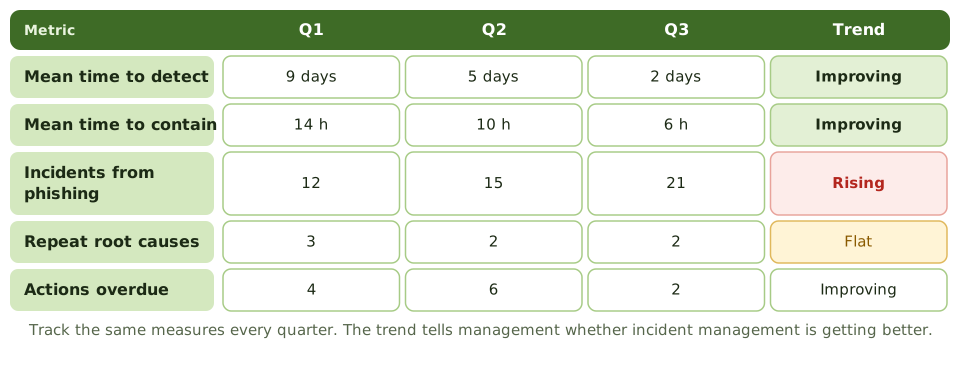
Turning trends into action
- 1Rising category: reassess the risk; adjust controls and training.
- 2Repeat root causes: fix the underlying process.
- 3Slow detection or containment: invest in tools, skills, playbooks.
- 4Overdue actions: escalate through governance.
How the exam asks about it
| If the question asks… | Answer |
|---|---|
| Main benefit of incident trend analysis | Reveals patterns and systemic weaknesses |
| What trends should feed | Risk assessment, program priorities, training, plans |
| Prerequisite for trend analysis | Consistent incident categorisation |
| Lessons recorded but not acted on | Not truly learned; track actions |
| Proactive source of lessons | Other organisations' incidents |
Key takeaways
- ✓Lessons learned are captured, shared and acted on, not just written in a report nobody reads.
- ✓A knowledge base of incidents, root causes and fixes speeds future response.
- ✓Trend analysis across incidents reveals patterns: rising categories, repeat root causes, weak areas, seasonal peaks.
- ✓Incident metrics (time to detect, contain and recover; incidents by category; repeat causes; overdue actions) show whether incident management is improving.
- ✓Trends feed the risk assessment, program priorities, training and plan updates, closing the loop with Domains 2 and 3.
- ✓Lessons from other organisations' incidents are valuable too, and cheaper.
Exam traps
- !Lessons recorded but never acted on aren't lessons learned.
- !Looking at incidents one at a time misses patterns.
- !Inconsistent categorisation makes trend analysis unreliable.
- !Only learning from your own incidents is reactive; learn from peers too.