Topics in this domain
- Exam Technique: Thinking Like a Risk Practitioner
- Aligning IT Risk Management with Business Strategy
- Organisational Structure, Roles and Decision Rights
- Risk Ownership and Accountability
- Segregation of Duties
- Risk Culture and Tone at the Top
- Ethics and Professional Conduct
- Policies, Standards, Procedures and Guidelines
- Policy Lifecycle, Exceptions and Enforcement
- Business Process Review: Ownership and Criticality
- Identifying and Valuing Organisational Assets
- Embedding Asset Management into Risk Governance
- Enterprise Risk Management: Purpose and Principles
- The Risk Practitioner's Role in ERM
- The Three Lines Model and Risk Oversight
- Risk Management Frameworks: ISO 31000, COSO ERM, NIST and COBIT
- Applying a Framework: the Risk Management Life Cycle
- Risk Appetite, Tolerance and Capacity
- Establishing and Maintaining the IT Risk Profile
- Making Risk-Based Business Decisions
- Legal, Regulatory and Contractual Requirements
- Connecting Governance to Risk Outcomes
Embedding Asset Management into Risk Governance
Why it matters
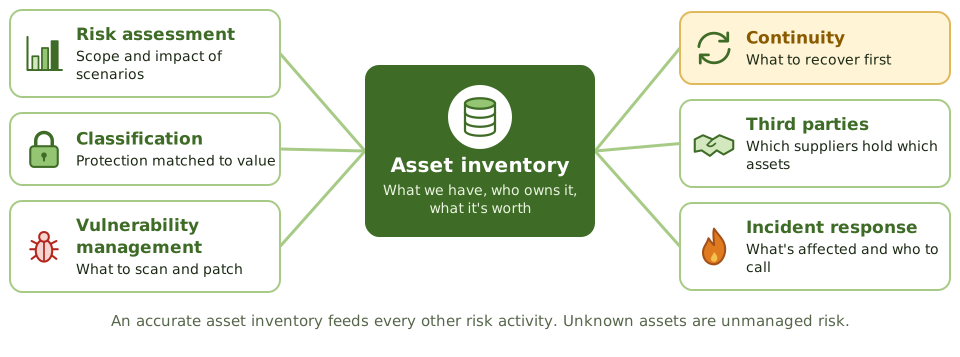
An accurate inventory feeds almost every other risk activity. Unknown assets, including shadow IT, are unmanaged risk.
Tracking the life cycle
Risks from poor asset management
| Gap | Resulting risk |
|---|---|
| Unknown devices or cloud services | Unpatched, unmonitored, unprotected |
| No owner | Nobody decides on risk or retirement |
| Inventory not updated on change | Wrong impact analysis during incidents |
| Poor disposal | Data leaks from retired equipment |
Keeping it accurate
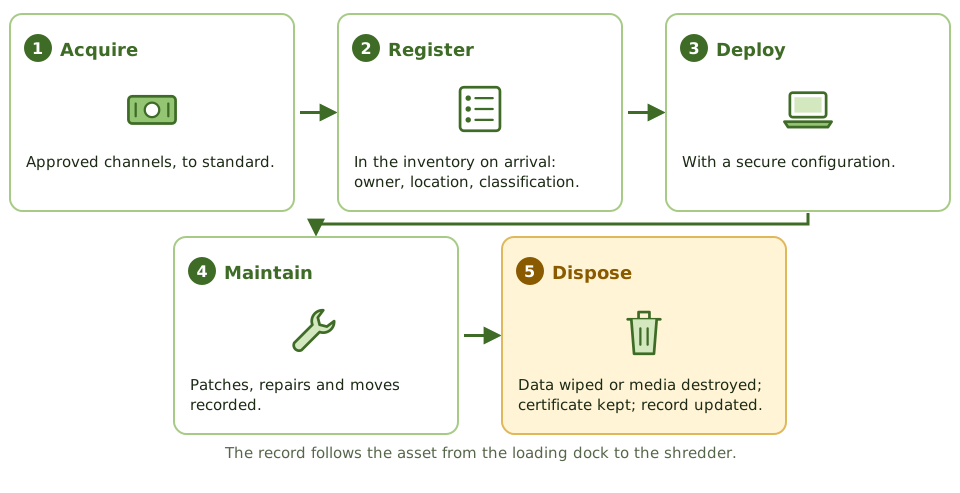
- Link the inventory to change management and procurement.
- Reconcile automated discovery results regularly.
- Require owners to confirm their assets periodically.
- Track disposals with certificates of destruction.
Example. A discovery scan finds 180 devices missing from the inventory, including an old file server holding HR data. It hadn’t been patched in three years because nobody knew it existed.
How the exam asks about it
| If the question asks… | The answer is usually… |
|---|---|
| GREATEST risk of an incomplete inventory | Unknown assets aren’t protected |
| BEST way to keep the inventory current | Link it to change management and automated discovery |
| Asset with no owner | Assign an owner before assessing or treating |
| Disposal control | Secure wiping or destruction, with evidence |
In short
- An accurate asset inventory feeds risk assessment, classification, vulnerability management, continuity and incident response.
- Assets must be tracked through their whole life cycle, from acquisition to disposal.
- Every asset needs an owner; ownerless assets are rarely patched, reviewed or retired.
- Unknown assets, including shadow IT, are unmanaged risk.
- Change management should update the inventory so it doesn't drift from reality.
Exam traps
- Treating the inventory as a one-off project rather than a continuous process.
- Forgetting disposal: data left on retired equipment.
- Allowing cloud services bought on credit cards to stay off the inventory.
- Accepting an inventory without owners as complete.
Slides
Click the slide and use the arrow keys. F toggles full screen.
Why it matters
Tracking the life cycle
1 / 8