Topics in this domain
- Risk Response Options: Accept, Mitigate, Transfer, Avoid
- Aligning Responses with Appetite and Tolerance
- Cost-Benefit Analysis of Risk Responses
- Bias in Risk Decisions and Reporting
- Risk Owners and Control Owners
- RACI and Escalation
- Third-Party Risk Governance and Due Diligence
- Contracts, SLAs and the Right to Audit
- Monitoring Third Parties and Planning Exit
- Managing Issues, Findings and Control Deviations
- Risk Acceptance, Exceptions and Exemptions
- Control Frameworks and Their Purpose
- Control Types and Functions
- Designing and Selecting Controls
- Implementing Controls and Why Implementations Fail
- Control Design versus Operating Effectiveness
- Control Testing: Objectives, Evidence and Frequency
- Building and Tracking Risk Action Plans
- Collecting and Aggregating Risk Data
- Validating Risk Data Quality
- KRIs, KPIs and KCIs
- Thresholds, Escalation Triggers and Appetite
- Metric Pitfalls and Misuse
- Continuous Monitoring versus Periodic Assessment
- Tailoring Risk Reports to the Audience
- Heat Maps, Dashboards and Scorecards
- Identifying and Assessing Emerging Risks
- Integrating Emerging Risk into Decisions
KRIs, KPIs and KCIs
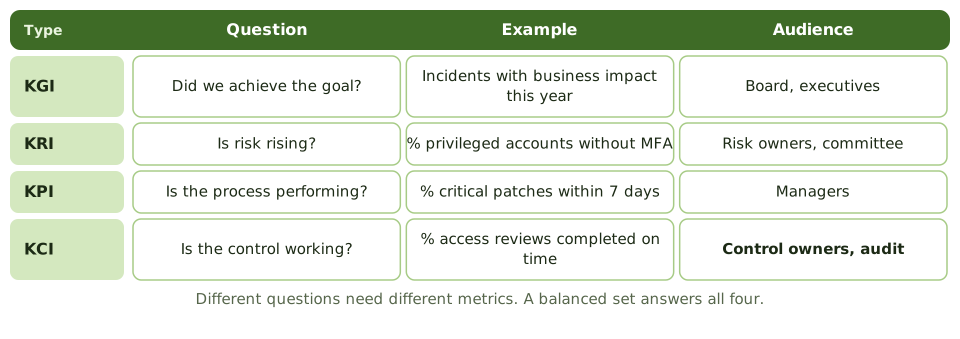
Four kinds of indicator
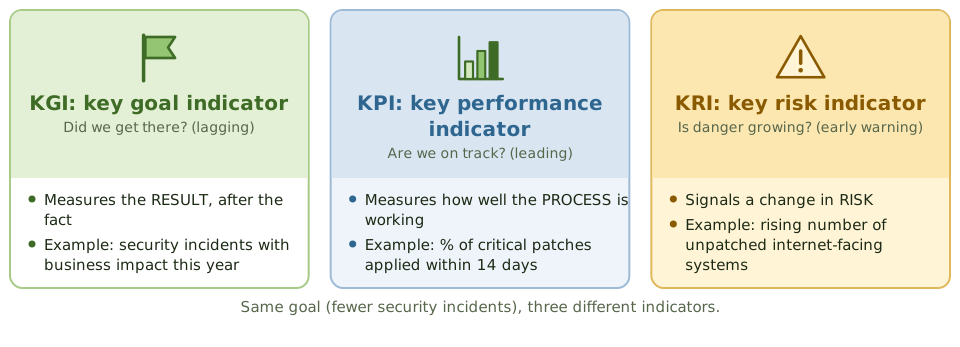
Same goal, different indicators
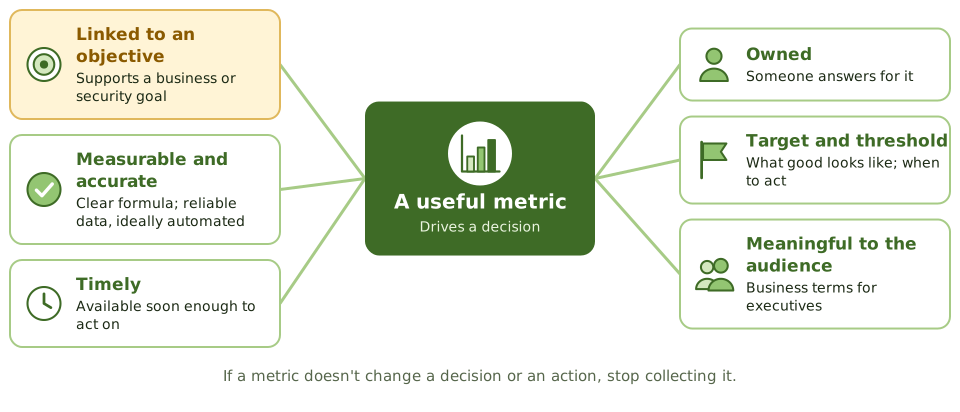
What makes a good indicator
Leading versus lagging
| Lagging (after the fact) | Leading (early warning) |
|---|---|
| Number of breaches last year | Privileged accounts without MFA |
| Outage hours last quarter | Failed backup tests this month |
| Fraud losses | Overdue supplier bank-detail verifications |
Example. A bank chose “percentage of high-risk vendors without a current assessment” as a KRI for third-party risk. When it rose from 5% to 22% after a reorganisation, assessments were restarted before any incident occurred.
How the exam asks about it
| If the question asks… | The answer is usually… |
|---|---|
| MOST useful characteristic of a KRI | It’s a leading indicator of risk change |
| Measures whether a control works | KCI |
| Measures process performance | KPI |
| Who should help choose KRIs | The risk owner |
In short
- KRIs signal changes in risk; KPIs measure process performance; KCIs measure control effectiveness; KGIs measure goal achievement.
- The best KRIs are leading indicators: they change before the risk materialises.
- Good indicators are linked to a risk or objective, measurable, timely, owned and have thresholds.
- Indicators should be chosen with the risk owner and reviewed as risks change.
- A small set of meaningful indicators beats a long list nobody reads.
Exam traps
- Using lagging measures such as incident counts as early warnings.
- Confusing a KPI (process performance) with a KRI (risk change).
- Indicators with no threshold or owner.
- Collecting indicators because the data is easy to get.
Slides
Click the slide and use the arrow keys. F toggles full screen.
Four kinds of indicator
Same goal, different indicators
What makes a good indicator
1 / 8