Topics in this domain
- Risk Management Concepts and Frameworks
- Inherent Risk, Residual Risk, Appetite and Tolerance
- Threat Actors, Motivations and Attack Vectors
- The Evolving Threat Landscape: AI, Cloud and Supply Chain
- Threat Modelling and Cyber Threat Intelligence
- Vulnerability Assessment and Scanning
- Control Deficiencies and Security Gap Analysis
- The Risk Assessment Process
- Qualitative Risk Analysis: Likelihood and Impact
- Quantitative Risk Analysis: SLE, ALE and Loss Estimation
- Risk Scenarios and Prioritisation
- Risk Treatment Options: Mitigate, Transfer, Avoid, Accept
- Risk Acceptance: Approval, Expiry and Review
- Cost-Benefit Analysis for Risk Treatment
- Risk Ownership vs Control Ownership
- RACI and Risk Escalation Paths
- The Risk Register
- Continuous Risk Monitoring and Key Risk Indicators
- Risk Reporting to Executives and the Board
- Integrating Risk Management into Business and IT Processes
Integrating Risk Management into Business and IT Processes
Risk where decisions happen
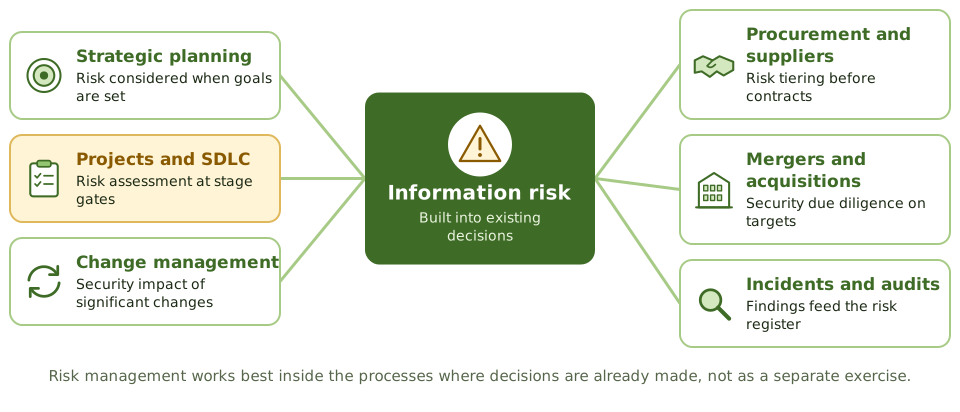
Most new risk is created by decisions: a new project, a new supplier, a system change, an acquisition. If risk is only assessed once a year, those decisions go unchecked in between. One CISM task is to facilitate the integration of information risk management into business and IT processes: putting a proportionate risk question inside each decision process.
Touchpoints
| Process | Risk integration |
|---|---|
| Strategic planning | Risk considered when goals and plans are set |
| Projects and the SDLC | Risk assessment at stage gates; security requirements in design |
| Change management | Security impact assessment for significant changes |
| Procurement and suppliers | Risk tiering and due diligence before contracts |
| Mergers and acquisitions | Security due diligence on targets before the deal |
| Incidents and audits | Findings feed back into the risk register |
Projects and the SDLC
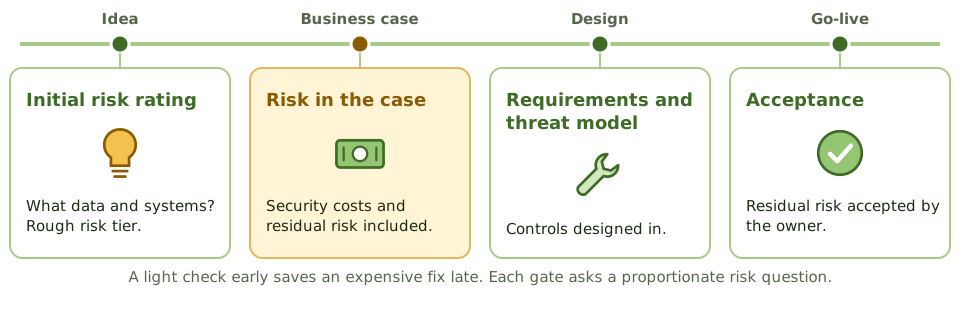
A light check early saves an expensive fix late:
- Idea: an initial risk rating. What data and systems are involved?
- Business case: security costs and residual risk included.
- Design: security requirements and threat modelling.
- Go-live: residual risk formally accepted by the owner.
Making it easy
- Proportionate: a quick rating first; a full assessment only for high-risk items. Forcing every change through a full assessment creates delays and workarounds.
- Standard tools: templates, questionnaires and common risk scales.
- Risk champions: trained people inside business units and IT teams.
- A feedback loop: incidents, audits and tests update the register.
Example. A company adds a five-question security screen to its project intake form. Low-risk projects pass straight through; about one in six triggers a full assessment. Security now hears about new cloud services before contracts are signed, instead of after go-live.
Signs it’s working
- Risks are raised by the business, not only by security.
- Projects include security costs in their business cases.
- Discovery tools find few “surprise” systems.
- The risk register changes between annual assessments.
Integration doesn’t transfer ownership: business owners still own the risks their decisions create.
How the exam asks about it
| If the question asks… | The answer is usually… |
|---|---|
| Best way to keep risk assessment current | Integrate it into change, project and procurement processes |
| When to assess a new project’s risk | Early, at initiation and design |
| How to avoid slowing the business | Proportionate, risk-tiered checkpoints |
| Who owns risks identified in projects? | The business or project owner |
| Goal of integration | Risk management becomes part of normal business processes |
In short
- Facilitating the integration of information risk management into business and IT processes is a CISM task.
- Risk is managed best where decisions happen: strategic planning, projects and the SDLC, change management, procurement, mergers and acquisitions.
- Integration uses proportionate checkpoints: a quick risk rating for everything, deeper assessment only where the rating is high.
- Standard templates, risk criteria and risk champions make it easy for the business to do it themselves.
- Outputs from incidents, audits and tests flow back into the risk register.
- The goal is that risk management becomes part of how the business works, not a separate activity run by security.
Exam traps
- An annual risk assessment alone misses risks created by changes during the year.
- Making every change go through a full risk assessment creates delays and workarounds; scale the effort to the risk.
- Security reviewing a project after it's built is too late to influence the design cheaply.
- Integration doesn't transfer ownership: business owners still own their risks.
Slides
Click the slide and use the arrow keys. F toggles full screen.
Touchpoints
Projects and the SDLC