Topics in this domain
- IT Risk Events, Loss Types and Business Outcomes
- Threat Sources, Actors and Motivations
- The Changing Threat Landscape and Threat Modelling
- Vulnerabilities, Control Deficiencies and Risk Conditions
- Identifying Internal and External Risk Factors
- Building IT Risk Scenarios
- Evaluating Scenarios for Completeness and Relevance
- Common Risk Scenario Errors
- Risk Assessment Concepts and Standards
- Qualitative, Semi-Quantitative and Quantitative Analysis
- Quantitative Methods: ALE, FAIR and Monte Carlo
- Risk Analysis Techniques: Bow-Tie, Fault Tree, Event Tree and Delphi
- Choosing a Consistent Assessment Methodology
- Translating Technical Events into Business Impact
- Business Impact Analysis for Risk Prioritisation
- Inherent and Residual Risk
- Evaluating Risk Against Business Objectives and Appetite
- Creating and Maintaining the IT Risk Register
- Using the Risk Register to Support Decisions
The Changing Threat Landscape and Threat Modelling
Threats keep changing
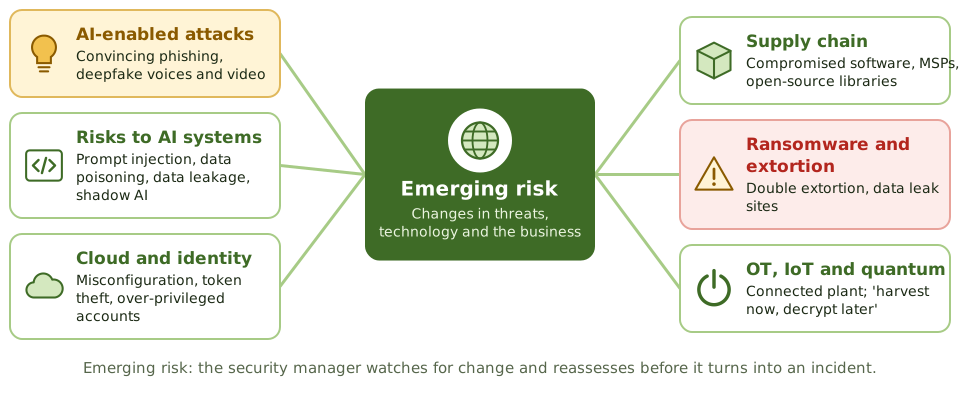
The threat landscape changes constantly. When it does, the affected risk scenarios must be reassessed, without waiting for the annual cycle.
Using threat intelligence
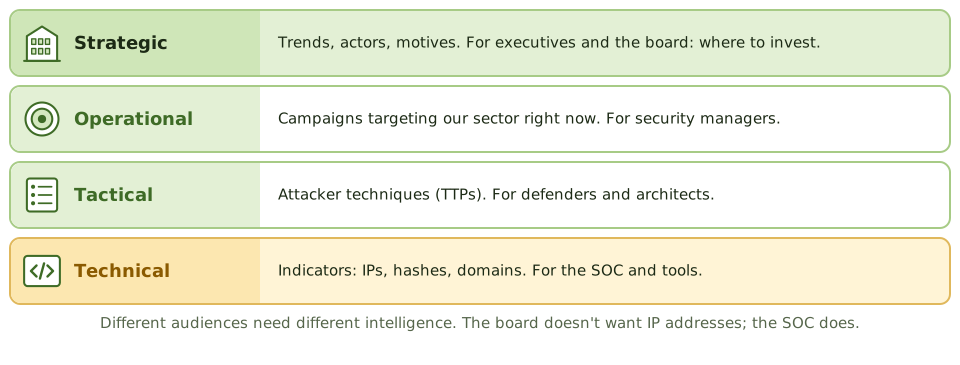
Threat intelligence is useful only when it’s filtered for relevance to the organisation’s sector, geography and technology.
Example. Intelligence shows a ransomware group exploiting a specific VPN product in the organisation’s sector. The practitioner raises the likelihood of the related scenario and recommends the owner prioritise patching and MFA.
How attacks unfold
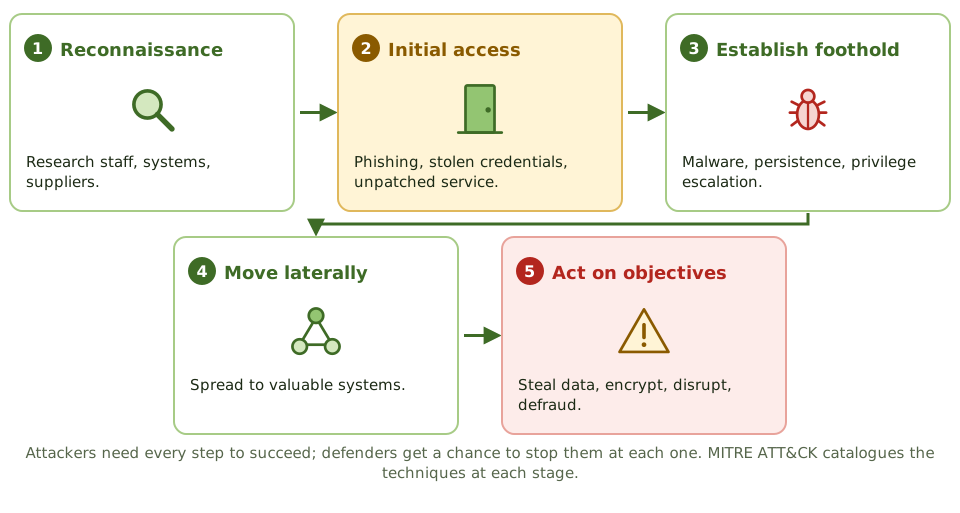
Threat modelling
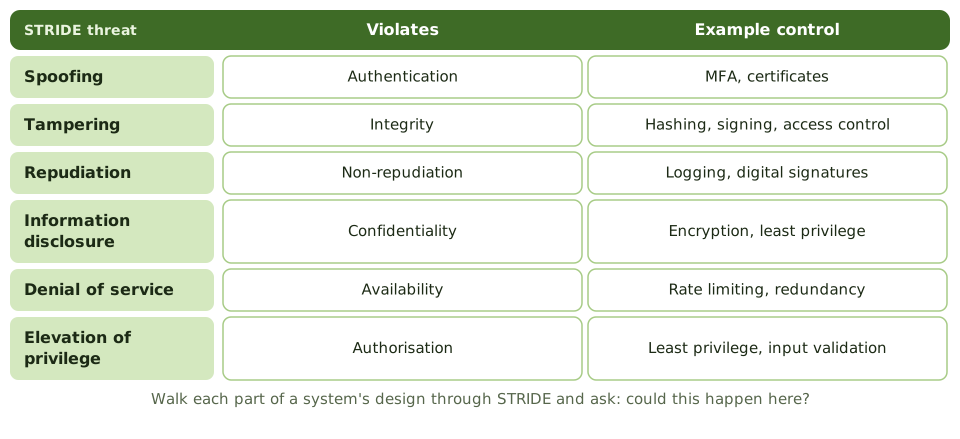
Threat modelling finds threats to a system during design, when fixes are cheapest.
How the exam asks about it
| If the question asks… | The answer is usually… |
|---|---|
| BEST time for threat modelling | During design |
| Most useful threat intelligence | Filtered for relevance to the organisation |
| Major new threat in the sector | Reassess the affected risk scenarios now |
| Intelligence for the board | Strategic trends and business implications |
In short
- The threat landscape changes constantly; risk assessments must be updated when it does.
- Threat intelligence is useful only when filtered for relevance to the organisation's sector, geography and technology.
- Different audiences need different levels of intelligence: strategic, operational, tactical and technical.
- Threat modelling finds threats to a system during design, when fixes are cheapest.
- Frameworks such as STRIDE and MITRE ATT&CK structure threat modelling and analysis.
Exam traps
- Collecting large volumes of threat feeds without filtering or using them.
- Threat modelling after go-live instead of during design.
- Waiting for the annual assessment to react to a major new threat.
- Giving the board technical indicators instead of strategic trends.
Slides
Click the slide and use the arrow keys. F toggles full screen.
Threats keep changing
Using threat intelligence
ExampleIntelligence shows a ransomware group exploiting a specific VPN product in the organisation's sector. The practitioner raises the likelihood of the related scenario and recommends the owner prioritise patching and MFA.
How attacks unfold
Threat modelling
1 / 8