Topics in this domain
- Enterprise Architecture and IT Risk
- Change Management Risk
- Assets, Configuration and Dependencies
- Incident and Problem Management Oversight
- Project Governance and IT Risk
- Governing the Secure SDLC
- DevOps, CI/CD and Agile Delivery Risk
- Testing, Release and Deployment Risk
- Data Classification, Ownership and Handling
- Data Lifecycle: Integrity, Retention and Disposal
- Business Continuity Planning and Governance
- Disaster Recovery and Testing Recovery Capability
- Emerging Technology Risk: Cloud, IoT and OT
- AI and Machine Learning Risk
- Setting Risk Boundaries for Innovation
- Core Security Concepts: CIA, IAM, Cryptography and Network Security
- Security Frameworks and Control Standards
- Security Awareness Culture and Measuring Training
- Privacy Governance and Data Protection Principles
- Developing a Data Protection Control Strategy
AI and Machine Learning Risk
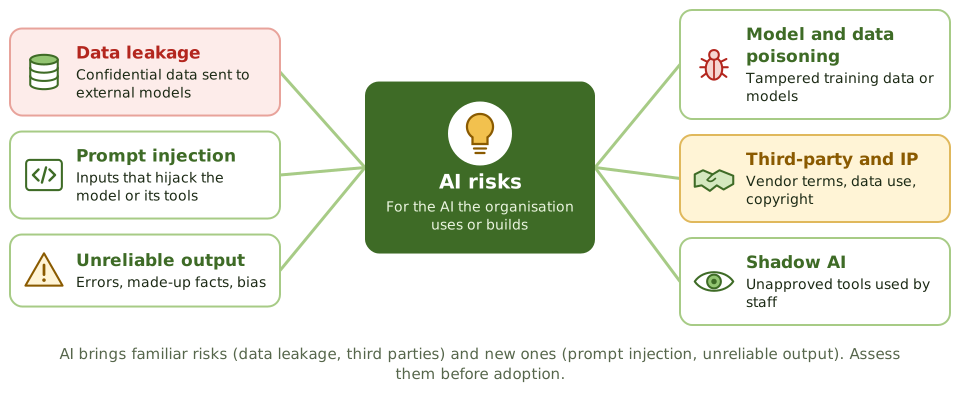
What can go wrong
Governing AI
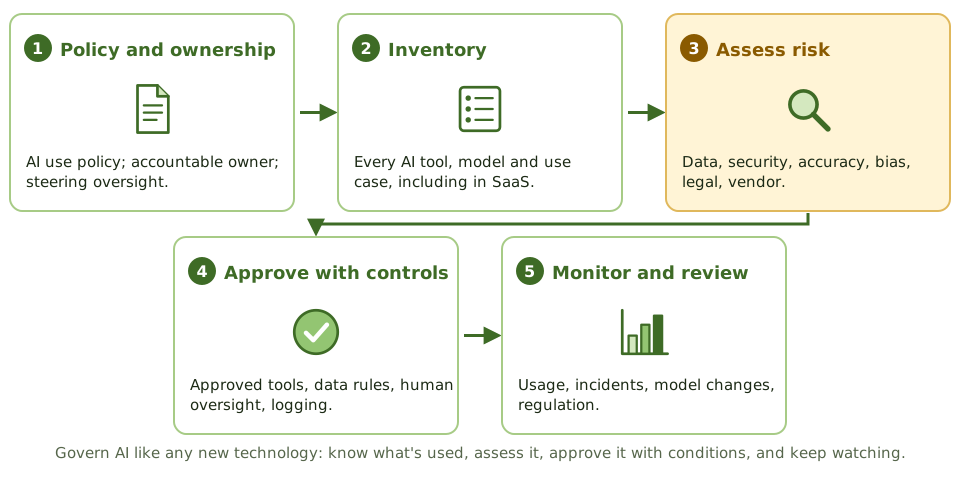
Banning AI outright tends to push use underground. Approved tools with clear data rules work better.
Risks and controls
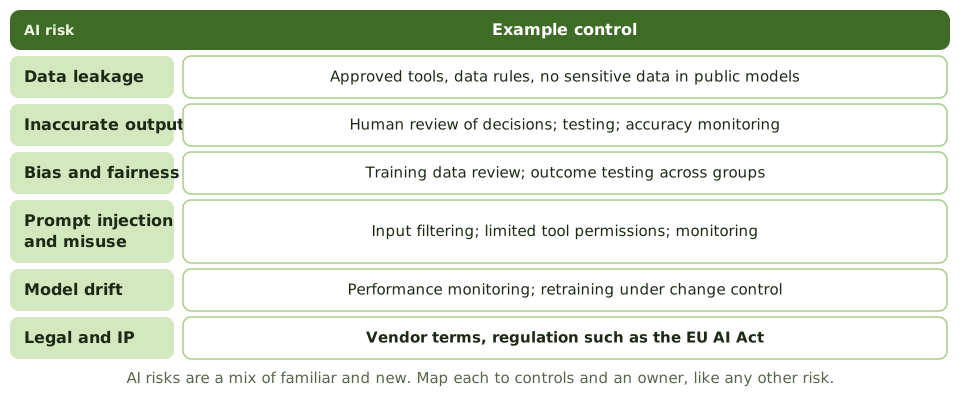
Example. A lender’s AI model began rejecting more applicants from certain postcodes. Monitoring of outcomes across groups caught it within a month; the model was retrained, and decisions above a threshold now get human review.
How the exam asks about it
| If the question asks… | The answer is usually… |
|---|---|
| FIRST step in governing AI use | Inventory AI uses and assign owners |
| Staff using public AI tools with company data | Assess the risk; provide approved options |
| Risk specific to machine learning | Bias, drift, poisoned training data |
| High-impact AI decisions | Human oversight and outcome testing |
In short
- AI brings familiar risks (data leakage, third parties) and new ones (unreliable output, bias, prompt injection, model drift).
- Govern AI with a policy, an inventory of uses, risk assessment, approval with controls and monitoring.
- High-impact AI decisions need human oversight and testing for accuracy and fairness.
- Shadow AI, staff using unapproved tools with company data, is a common early risk.
- Regulation such as the EU AI Act sets obligations by risk level.
Exam traps
- Banning AI outright, which pushes use underground.
- Approving AI tools without checking what happens to the data entered.
- Assuming AI output is accurate without testing or review.
- Treating AI as purely a technology issue rather than a business, legal and ethical one.
Slides
Click the slide and use the arrow keys. F toggles full screen.
What can go wrong
Governing AI
Risks and controls
ExampleA lender's AI model began rejecting more applicants from certain postcodes. Monitoring of outcomes across groups caught it within a month; the model was retrained, and decisions above a threshold now get human review.
1 / 7