Topics in this domain
- Enterprise Architecture and IT Risk
- Change Management Risk
- Assets, Configuration and Dependencies
- Incident and Problem Management Oversight
- Project Governance and IT Risk
- Governing the Secure SDLC
- DevOps, CI/CD and Agile Delivery Risk
- Testing, Release and Deployment Risk
- Data Classification, Ownership and Handling
- Data Lifecycle: Integrity, Retention and Disposal
- Business Continuity Planning and Governance
- Disaster Recovery and Testing Recovery Capability
- Emerging Technology Risk: Cloud, IoT and OT
- AI and Machine Learning Risk
- Setting Risk Boundaries for Innovation
- Core Security Concepts: CIA, IAM, Cryptography and Network Security
- Security Frameworks and Control Standards
- Security Awareness Culture and Measuring Training
- Privacy Governance and Data Protection Principles
- Developing a Data Protection Control Strategy
Governing the Secure SDLC
Security at every stage
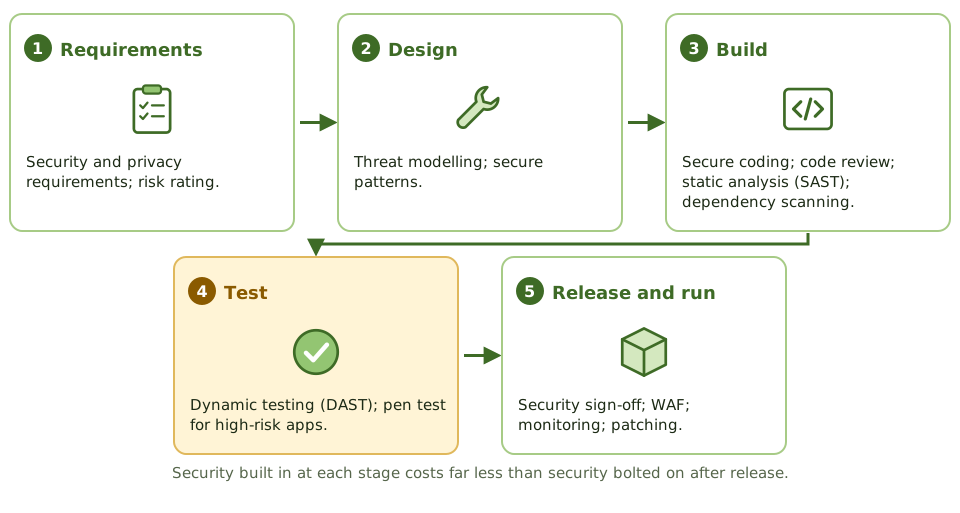
Application controls (input, processing and output controls) are defined as requirements, not afterthoughts.
Earlier is cheaper
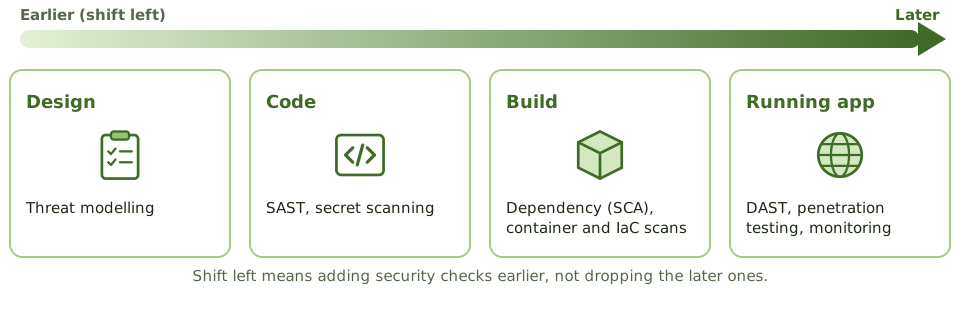
Governance that works
- Secure development standards, approved and trained.
- Security requirements in every specification.
- Gates with defined security evidence.
- Independent review before release.
- A software bill of materials for components.
Example. A security flaw found in production cost 30 times more to fix than the same flaw would have cost at design. After the review, threat modelling became a mandatory design gate for all customer-facing systems.
How the exam asks about it
| If the question asks… | The answer is usually… |
|---|---|
| MOST cost-effective time to add security | Requirements and design |
| BEST way to make sure security isn’t dropped | Defined gates with evidence |
| Open-source components | Inventory and scan them (SBOM) |
| Who approves code for release | Someone independent of the developer |
In short
- Security built in during requirements and design costs far less than security added after release.
- Each SDLC stage has security activities: requirements, threat modelling, secure coding, testing and release sign-off.
- Application controls (input, processing, output) are defined as requirements, not afterthoughts.
- Governance means defined standards, gates and evidence, not just good intentions.
- Third-party and open-source components need the same scrutiny as in-house code.
Exam traps
- Penetration testing just before go-live as the only security activity.
- No security requirements in the original specification.
- Ignoring open-source and third-party libraries.
- Developers approving their own code for release.
Slides
Click the slide and use the arrow keys. F toggles full screen.
Security at every stage
Earlier is cheaper
1 / 7