Topics in this domain
- Enterprise Architecture and IT Risk
- Change Management Risk
- Assets, Configuration and Dependencies
- Incident and Problem Management Oversight
- Project Governance and IT Risk
- Governing the Secure SDLC
- DevOps, CI/CD and Agile Delivery Risk
- Testing, Release and Deployment Risk
- Data Classification, Ownership and Handling
- Data Lifecycle: Integrity, Retention and Disposal
- Business Continuity Planning and Governance
- Disaster Recovery and Testing Recovery Capability
- Emerging Technology Risk: Cloud, IoT and OT
- AI and Machine Learning Risk
- Setting Risk Boundaries for Innovation
- Core Security Concepts: CIA, IAM, Cryptography and Network Security
- Security Frameworks and Control Standards
- Security Awareness Culture and Measuring Training
- Privacy Governance and Data Protection Principles
- Developing a Data Protection Control Strategy
Business Continuity Planning and Governance
The BCP life cycle
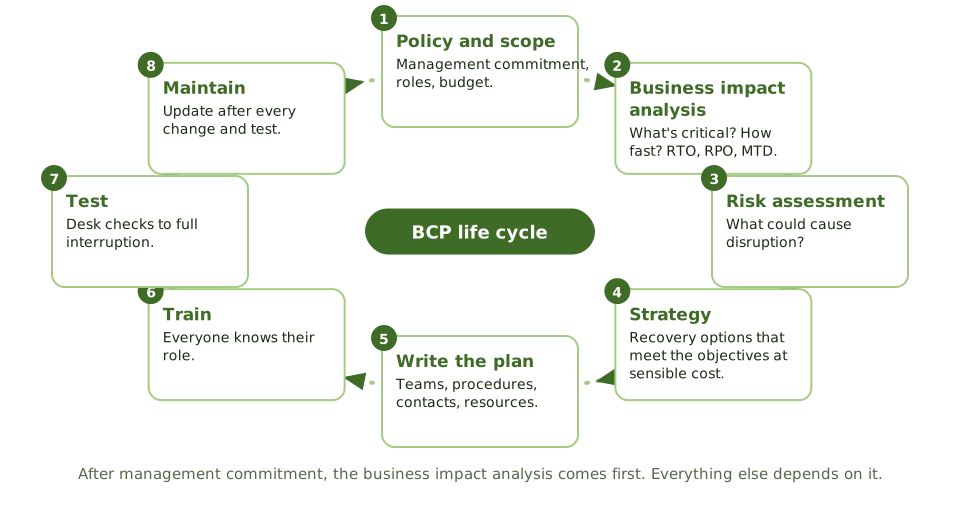
After management commitment, the business impact analysis comes first. It drives recovery objectives and strategies.
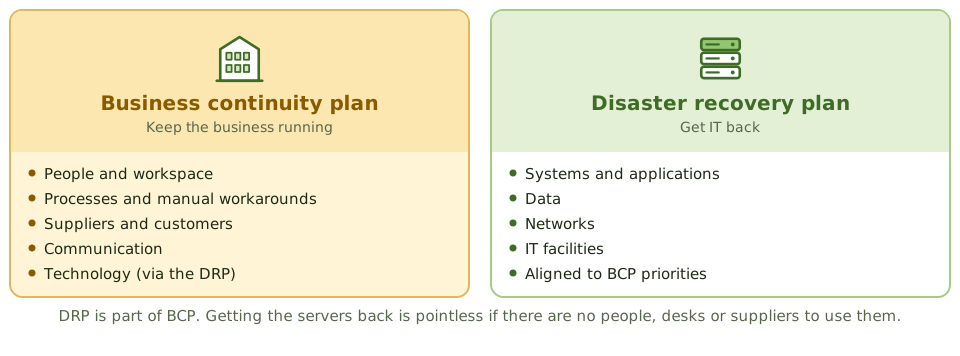
BCP and DRP
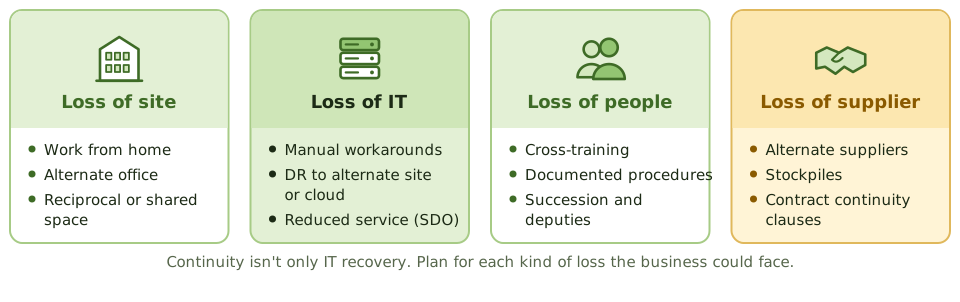
Strategies for each kind of loss
Governance
- Senior management sponsors and approves the program.
- Business owners own their process plans.
- Continuity risks appear in the risk register.
- Tests and lessons feed back into the plans.
Example. A regional bank’s continuity plan covered IT failover well, but the BIA had never considered the loss of its single cash-handling supplier. When that supplier failed, branches ran short for a week. Supplier continuity became a top-ten risk.
How the exam asks about it
| If the question asks… | The answer is usually… |
|---|---|
| FIRST step after management commitment | Business impact analysis |
| Who owns business continuity | Senior management and business owners |
| Relationship between BCP and DRP | DRP is part of BCP |
| Plan not updated after a reorganisation | A significant weakness; update and retest |
In short
- Business continuity keeps critical business processes running; disaster recovery restores IT within it.
- After management commitment, the BIA comes first and drives recovery objectives and strategies.
- Strategies cover loss of site, IT, people and suppliers, not only technology.
- Plans must be trained, tested and maintained after every significant change.
- Senior management owns continuity; the risk practitioner links it to the risk profile and appetite.
Exam traps
- Treating continuity as an IT-only project.
- Writing strategies before completing the BIA.
- Plans that cover technology but forget people and suppliers.
- Plans never updated after organisational change.
Slides
Click the slide and use the arrow keys. F toggles full screen.
The BCP life cycle
BCP and DRP
Strategies for each kind of loss
1 / 8