Topics in this domain
- Enterprise Architecture and IT Risk
- Change Management Risk
- Assets, Configuration and Dependencies
- Incident and Problem Management Oversight
- Vulnerability and Patch Management Risk
- Security Monitoring, Logging and Detection
- Project Governance and IT Risk
- Governing the Secure SDLC
- DevOps, CI/CD and Agile Delivery Risk
- Testing, Release and Deployment Risk
- Data Classification, Ownership and Handling
- Data Lifecycle: Integrity, Retention and Disposal
- Business Continuity Planning and Governance
- Disaster Recovery and Testing Recovery Capability
- Emerging Technology Risk: Cloud, IoT and OT
- AI and Machine Learning Risk
- Setting Risk Boundaries for Innovation
- Core Security Concepts: CIA, IAM, Cryptography and Network Security
- Security Frameworks and Control Standards
- Security Awareness Culture and Measuring Training
- Privacy Governance and Data Protection Principles
- Developing a Data Protection Control Strategy
- Identity and Access Management Risk
Vulnerability and Patch Management Risk
Known holes are the easy way in
Many breaches use vulnerabilities that had a fix available for months. Vulnerability and patch management is the process of finding those holes and closing them before attackers use them.
Example. A file transfer appliance has a critical flaw that criminals are actively exploiting. The patch has been available for six weeks, but it sits in a queue behind 300 “critical” findings on internal test servers.
A continuous cycle
Vulnerability management is a cycle that never stops. The diagram shows its six stages. Inventory what exists, and scan it regularly. Prioritise findings by risk. Remediate them by patching, reconfiguring or compensating within set deadlines. Verify the fix by rescanning. Report time to fix, overdue items and exceptions.
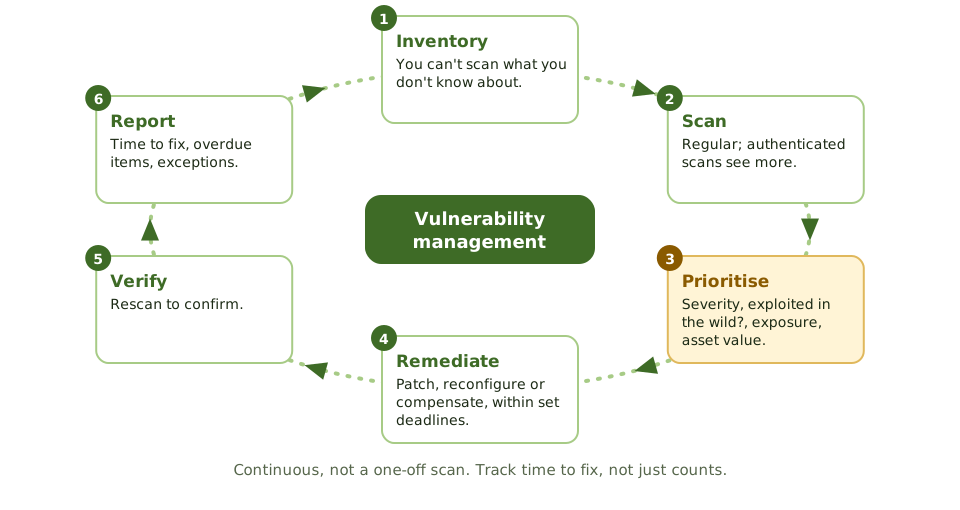
Scanning starts with a complete asset inventory: you can’t scan what you don’t know about. Authenticated scans see more than unauthenticated ones. Penetration tests then show whether weaknesses can actually be exploited.
Fix what matters first
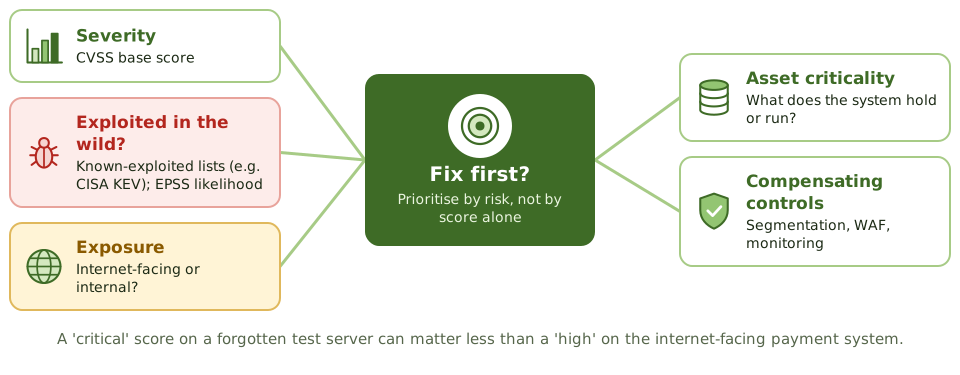
A severity score (such as Common Vulnerability Scoring System (CVSS)) describes the vulnerability, not your risk. Prioritise by:
- whether it is being exploited in the wild
- exposure: internet-facing or internal
- asset criticality: what the system holds or runs
- existing compensating controls
Remediation deadlines should be set in policy by risk level (for example, days for exploited critical flaws on exposed systems, weeks for lower risk), and an exploited vulnerability can justify the emergency change route.
When you can’t patch
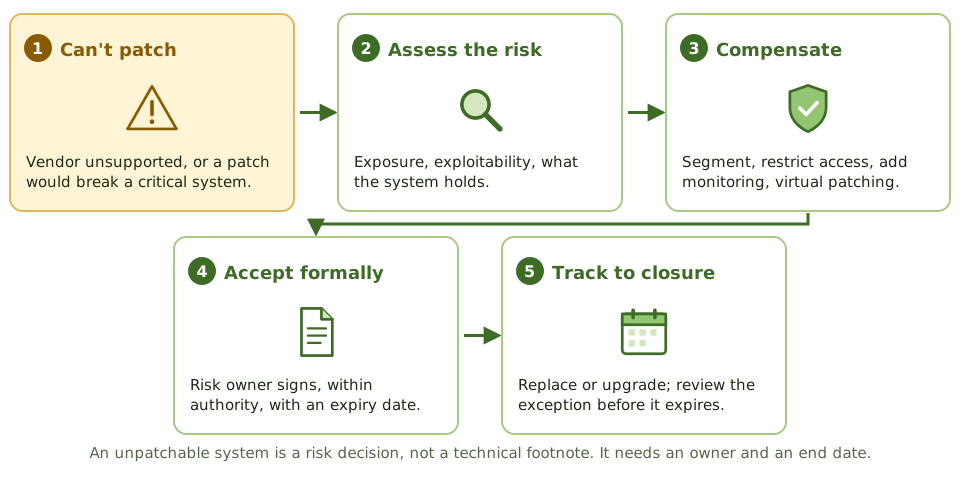
Some systems can’t be patched: the vendor no longer supports them, or a patch would break a critical process. That’s a risk decision, not a technical footnote. It needs compensating controls (segmentation, restricted access, monitoring, virtual patching), a formal acceptance by the risk owner with an expiry date, and a plan to replace or upgrade.
Metrics that mean something
| Weak metric | Better metric |
|---|---|
| Number of scans run | Share of assets scanned, including cloud |
| Total vulnerabilities found | Critical vulnerabilities past their deadline |
| Patches deployed | Average time to remediate, by severity |
| Exceptions granted | Exceptions past their expiry date |
How the exam asks about it
| If the question asks… | The answer is usually… |
|---|---|
| How to prioritise vulnerabilities | By risk: exploitation, exposure, asset value |
| The vendor no longer supports a system | Compensating controls, risk acceptance and a replacement plan |
| BEST vulnerability management key risk indicator (KRI) | Critical vulnerabilities open past deadline |
| FIRST requirement for scanning | A complete asset inventory |
| Emergency patch for an exploited flaw | Fast-track through emergency change management |
In short
- Vulnerability management is a continuous cycle: inventory, scan, prioritise, remediate, verify and report.
- Prioritise by risk: exploitation in the wild, exposure and asset criticality, not severity score alone.
- Remediation deadlines should be set by policy according to risk, and tracked.
- Systems that can't be patched need compensating controls and a formal, time-limited risk acceptance.
- Useful metrics are time to remediate and overdue critical vulnerabilities, not the number of scans run.
Exam traps
- Fixing vulnerabilities in order of CVSS score alone.
- Scanning only the assets you know about.
- Patching production without testing, or never patching because testing takes too long.
- Letting unpatchable systems sit with no owner or end date.
Slides
Click the slide and use the arrow keys. F toggles full screen.
Turn your phone sideways for a bigger view. Tap any diagram to enlarge it.
A continuous cycle
Fix what matters first
When you can't patch